
Laser Focus
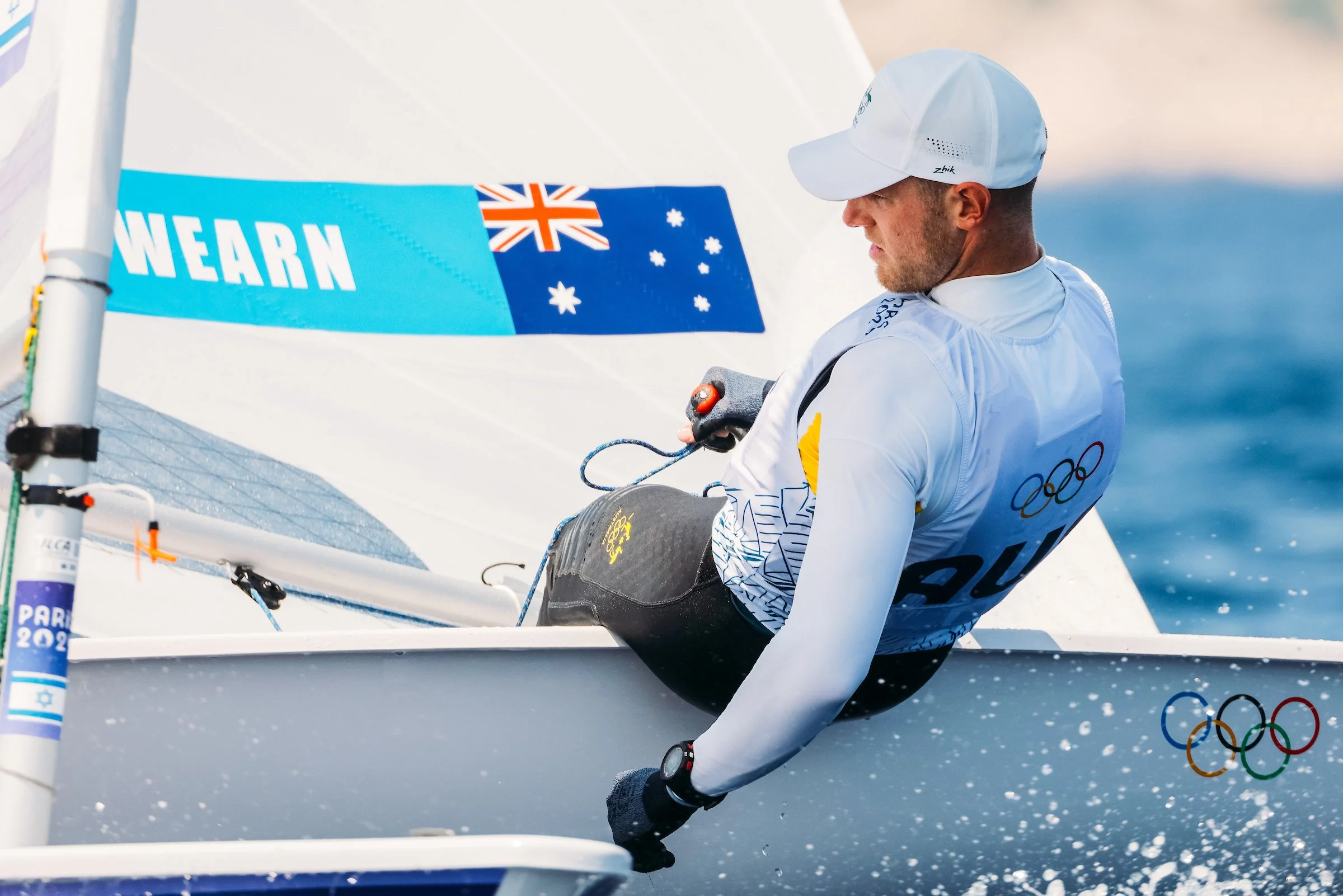
Over 225,000 ILCA or Laser dinghies have been built globally, making it one of the world's most popular single-handed racing sailboats, (perhaps 2nd behind the Sunfish in pure numbers) . Not bad for a boat designed in 1971 by Canadian Bruce Kirby And despite being considered by many to be slow, outdated, punishing on the body and user un-friendly compared to more modern design equivalents, its success continues to grow.
So why would one of Australia’s most reputable Museums decide to add to its collection a particular example of these common, identical, simple, plastic dinghies? It’s because the boat in question was sailed by Australian Matt Wearn
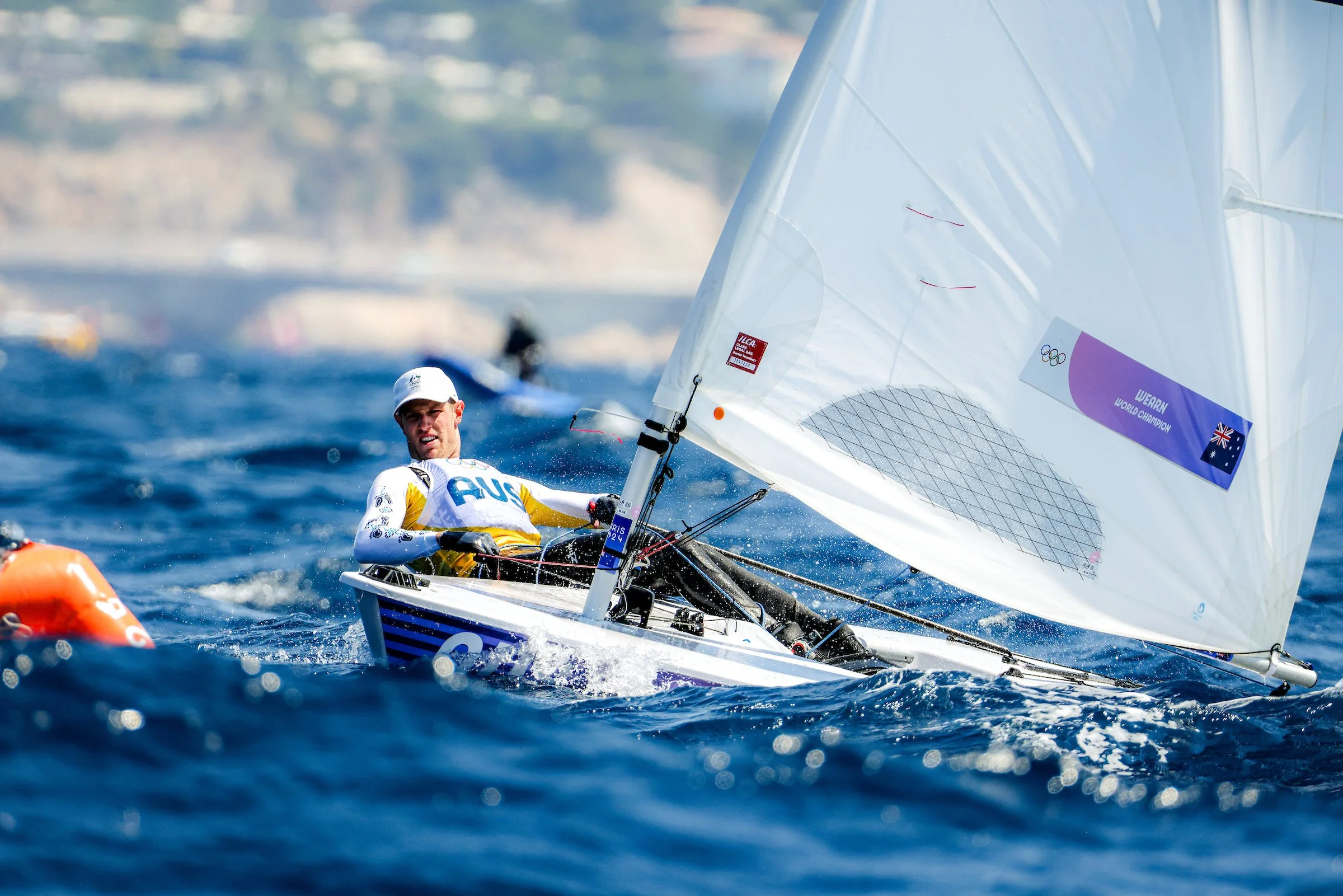
The West Australian became the first man to win back-to-back gold medals in a Laser, successfully defending his title from Tokyo 2020 at Paris 2024. This makes him the second most successful Laser sailor in Olympic history behind Robert Scheidt from Brazil who earned three Olympic medals in the Laser class (2 golds and 1 silver), including the first Laser Olympic gold in Atlanta 1996 and another gold in Athens 2004. So this boat represents a genuinely historic "first" in Olympic sailing.
And in a way, Australia now “owns” the men’s olympic class, having won every olympic gold since Tom Slingsby was victorious at Weymouth in 2012. He was followed by Tom Burton at Rio 2016, and Matt Wearn at Tokyo 2020 and Paris 2024. Wearn's boat represents the continuation of an extraordinary Australian dominance in this class—a unique story in Olympic sport.
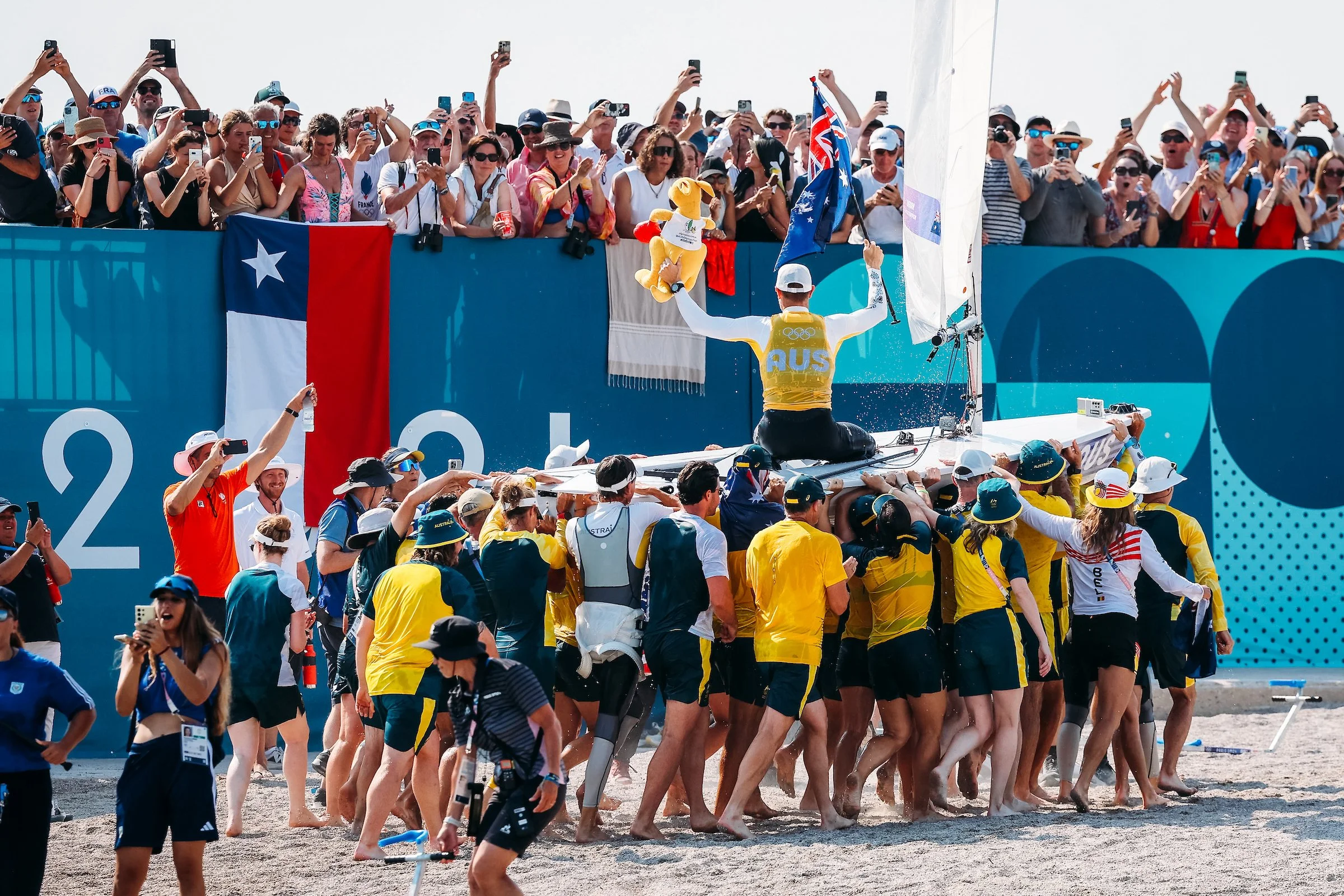
And It’s a story made more remarkable as between the Olympics, Wearn caught Covid which turned into Long Covid and Chronic Fatigue, writing off his whole 2022 season and taking until early 2023 to get back to competitive level, so the boat embodies a remarkable comeback story of resilience and determination. Adding such an important physical object to the collection of a maritime museum allows aspiring young sailors to connect to the story and and aspire to replicate it. Standing next to the actual boat that won will always be more inspirational than watching a video or looking at a photograph.
WA Museum Foundations funded the purchase of the dinghy and here is part of their press release last week.
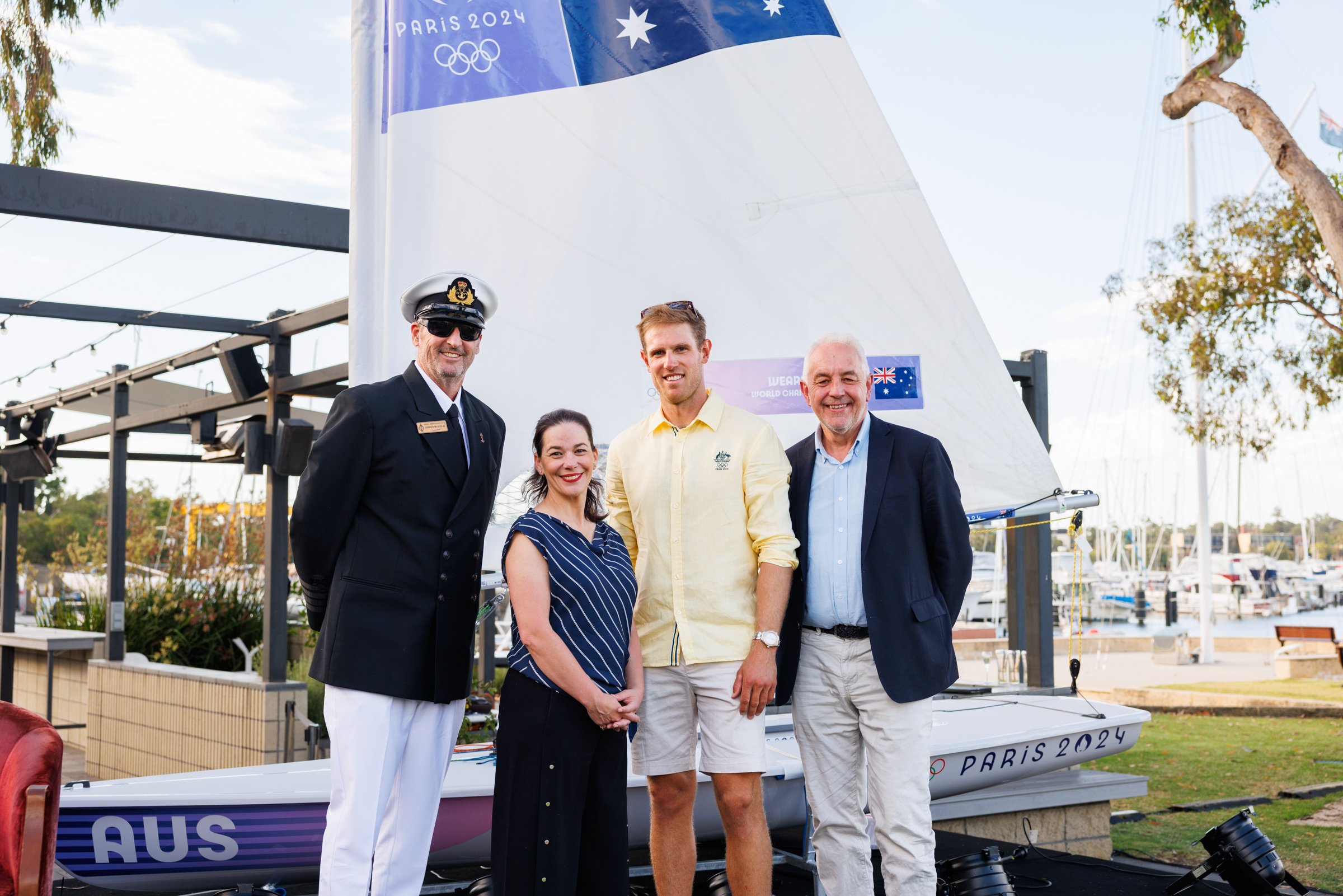
Last night we were honoured to gather at the Royal Perth Yacht Club to celebrate Olympic gold medallist Matt Wearn OAM / OLY and welcome his iconic Laser Dinghy into the Western Australian Museum’s State Collection. Hosted by Commodore Andrew McAullay, the evening reflected on Western Australia’s proud maritime tradition and the power of inspiration, from one generation of sailors to the next. Foundation CEO Coralie Bishop highlighted how the Marine Sustainability Fund helps the Museum preserve and advance Western Australia’s rich maritime heritage while supporting vital marine research, discovery, and inspiring stories of human achievement like Matt’s. Matt’s Laser Dinghy, the very boat that carried him to gold in Paris is more than an Olympic artefact. It’s a testament to talent, determination, and Western Australia’s enduring spirit of excellence on the water.
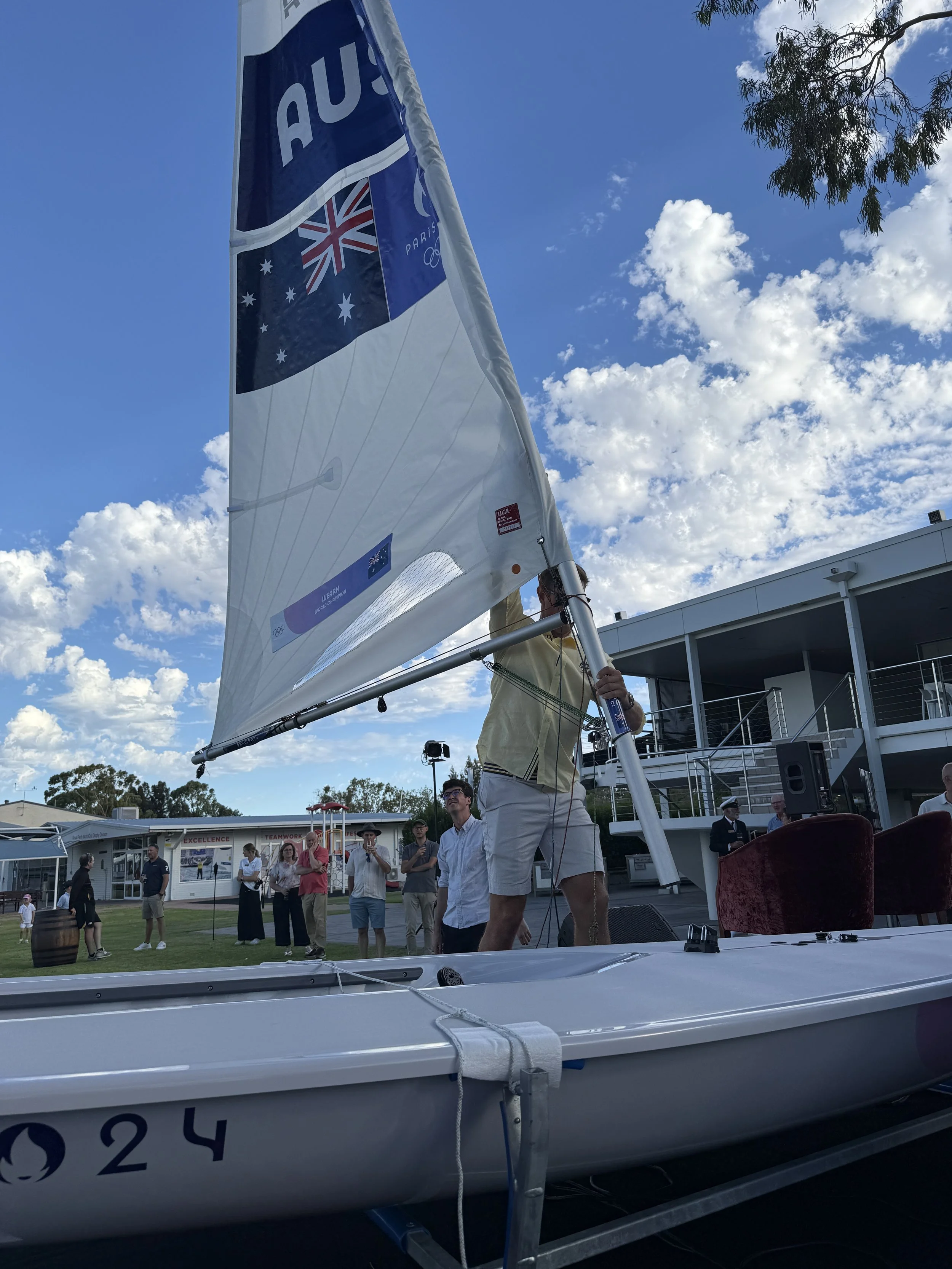
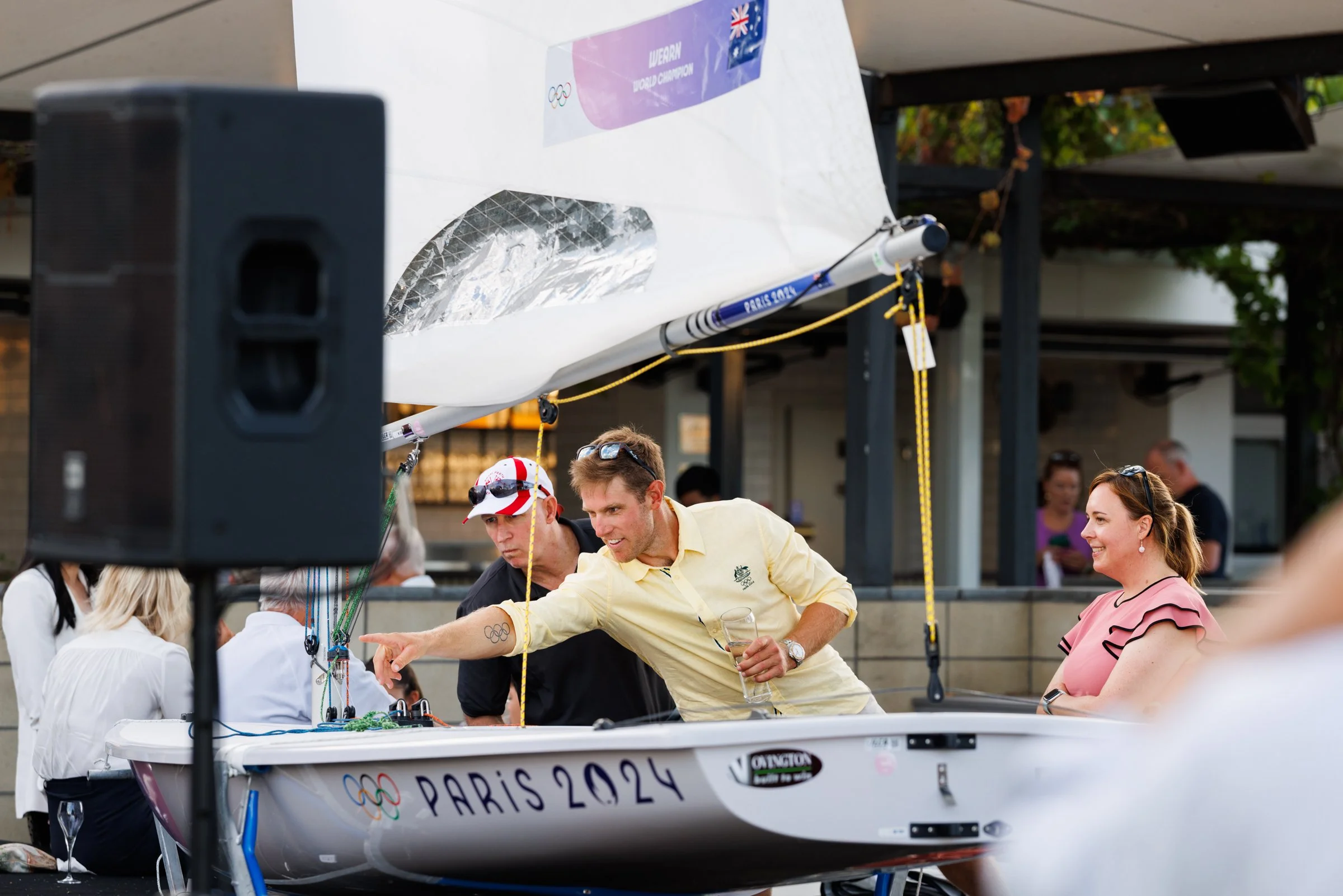
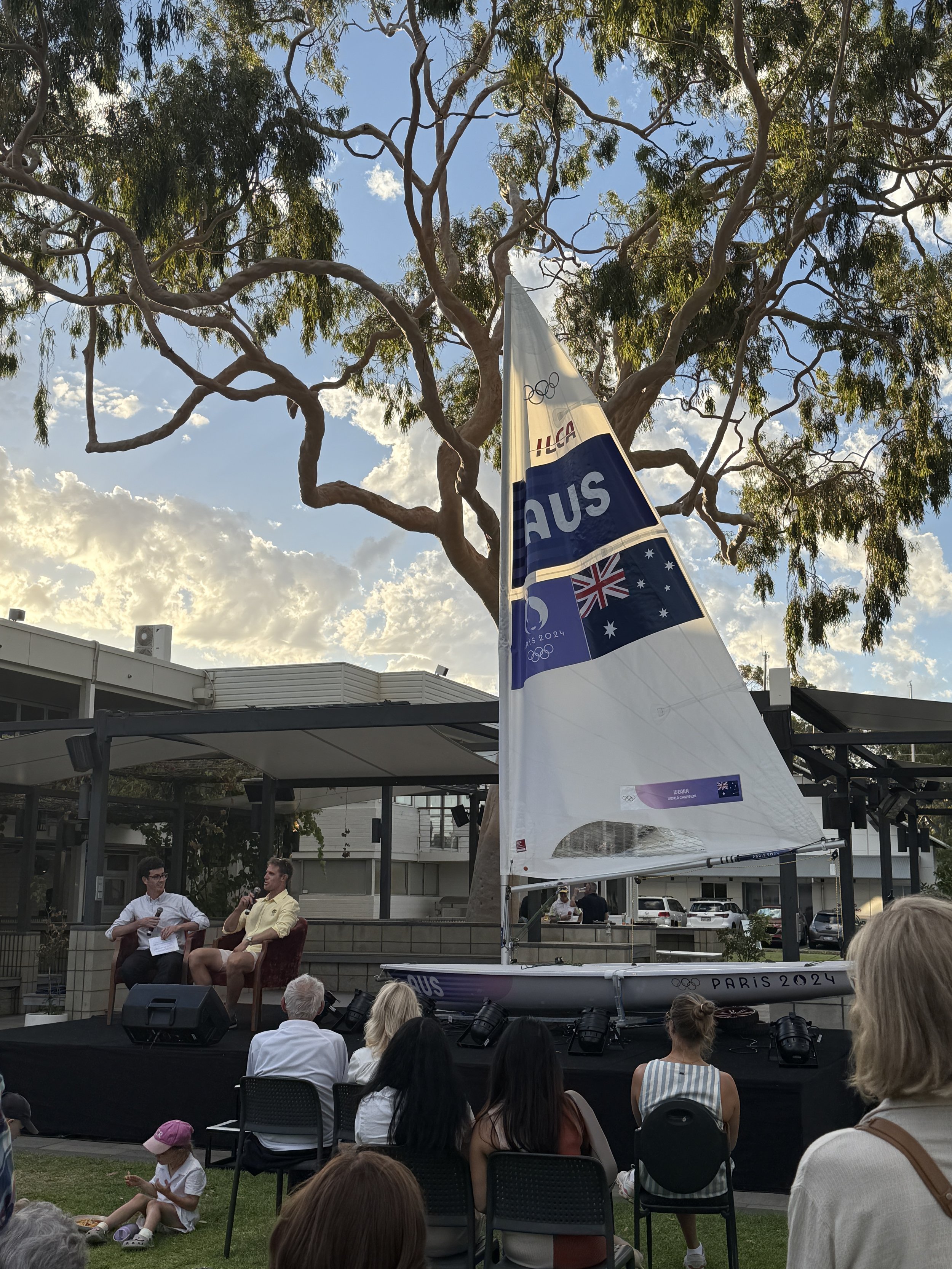
This ILCA laser dinghy was raced by Matt Wearn at the 2024 Paris Olympics. Wearn claimed gold at the event which was held in Marseilles from the 1st to the 7th of August. The event was marred with low winds, races 9 and 10 on the 5th of August were cancelled, and the medal race on the 6th of August was postponed. Wearn claimed his victory on the 7th of August in an event that saw competitors from 43 other nations. Wearn previously competed in the Tokyo 2020-1 Olympics winning gold in the Men’s laser category. Wearn was the flagbearer at the closing ceremony for the Paris Olympics.
Matt Wearn is an extremely experienced and successful competitive sailor. Born in Perth in 1995 Wearn began sailing at five years old. He had a successful run competing in the Optimist class at a young age, before moving to the Laser and competing in his first nationals in Sydney in 2010. The year after at age 15 he got an entry into the worlds in Perth. At the age of 23 in 2018 he won silver in the Laser World Championships, and again in 2019 and 2020. Wearn has an OAM and won Male-Able athlete of the year in 2024.
The hull of the ILCA laser is a one design, 13.8 ft (4.23m) long and weighs 56.7 Kgs. Three separate rigging options are categorised as 7, 6 and 4. The sail areas follow as 7.06, 5.76, and 4.70 metres. The ILCA laser hull is made of fibreglass. During construction, sheets of fibreglass are layered on a mould and a foam layer is placed in between the base of the mould and fibreglass deck. The ILCA laser is cat rigged (one sail) and sailed single handed (one person), with a removable dagger board, carbon fibre tiller, and rigging three parts – boom, top mast, and bottom mast.
In 2019 the laser was renamed the ILCA as a result of a trademark dispute between laser dinghy manufacturers.
It’s great to see Australian Museums investing in Australian sailing history, and they should be congratulated for the initiative. I guess in the scale of things this isn’t a huge financial commitment.
But all around the country, the harder decisions on what part of our maritime history is worth saving, and what should be allowed to rot, are often being avoided by public institutions, leaving it up to the community and wealth individuals to save what they can. Winning Olympic medals is wonderful and inspirational act that should be celebrated, but it’s just a very thin icing on a maritime cake that’s in danger of going rancid without governmental support.