L’Albufeira Rice Boats
Words and contemporary images Mark Chew
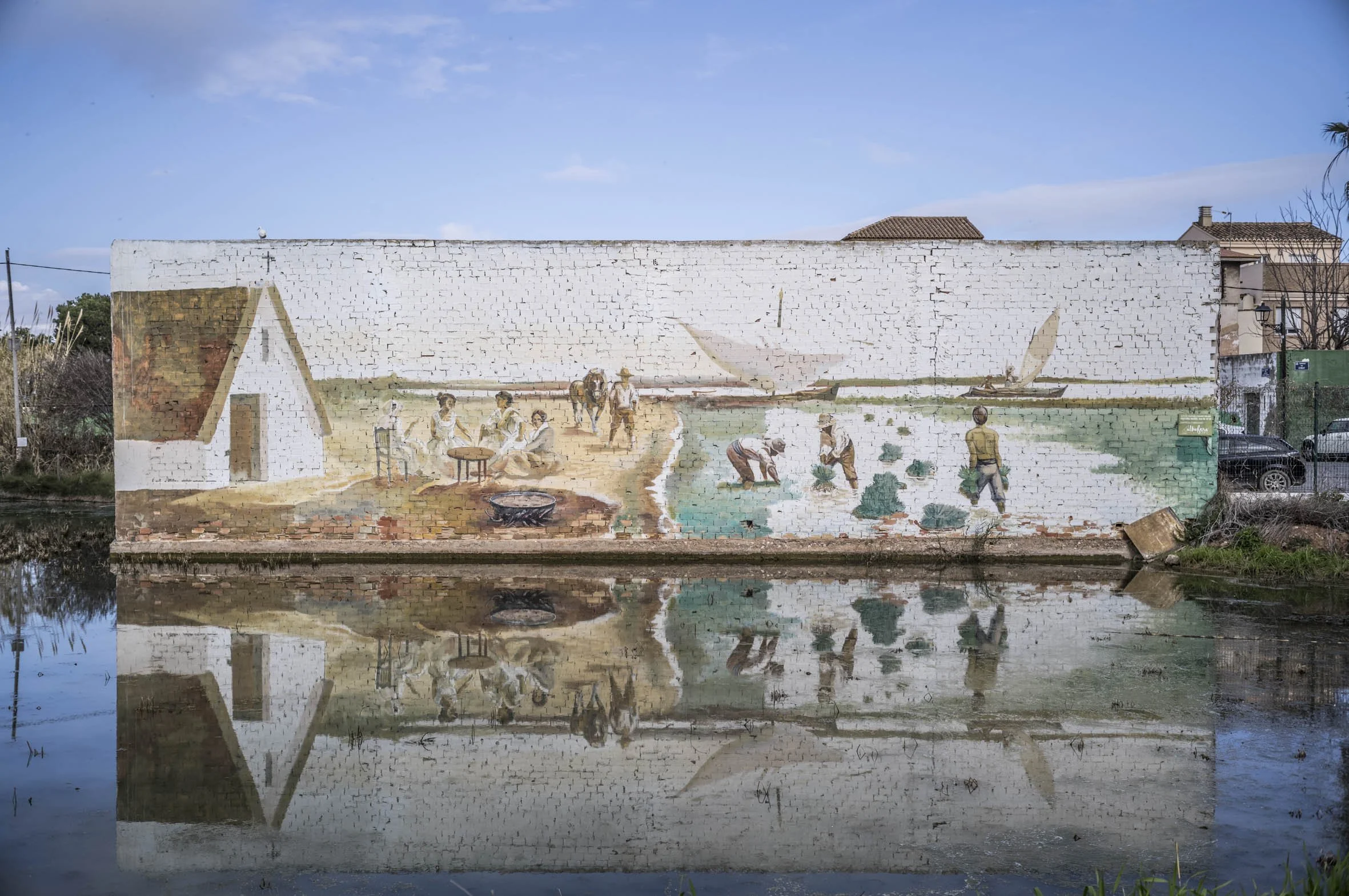
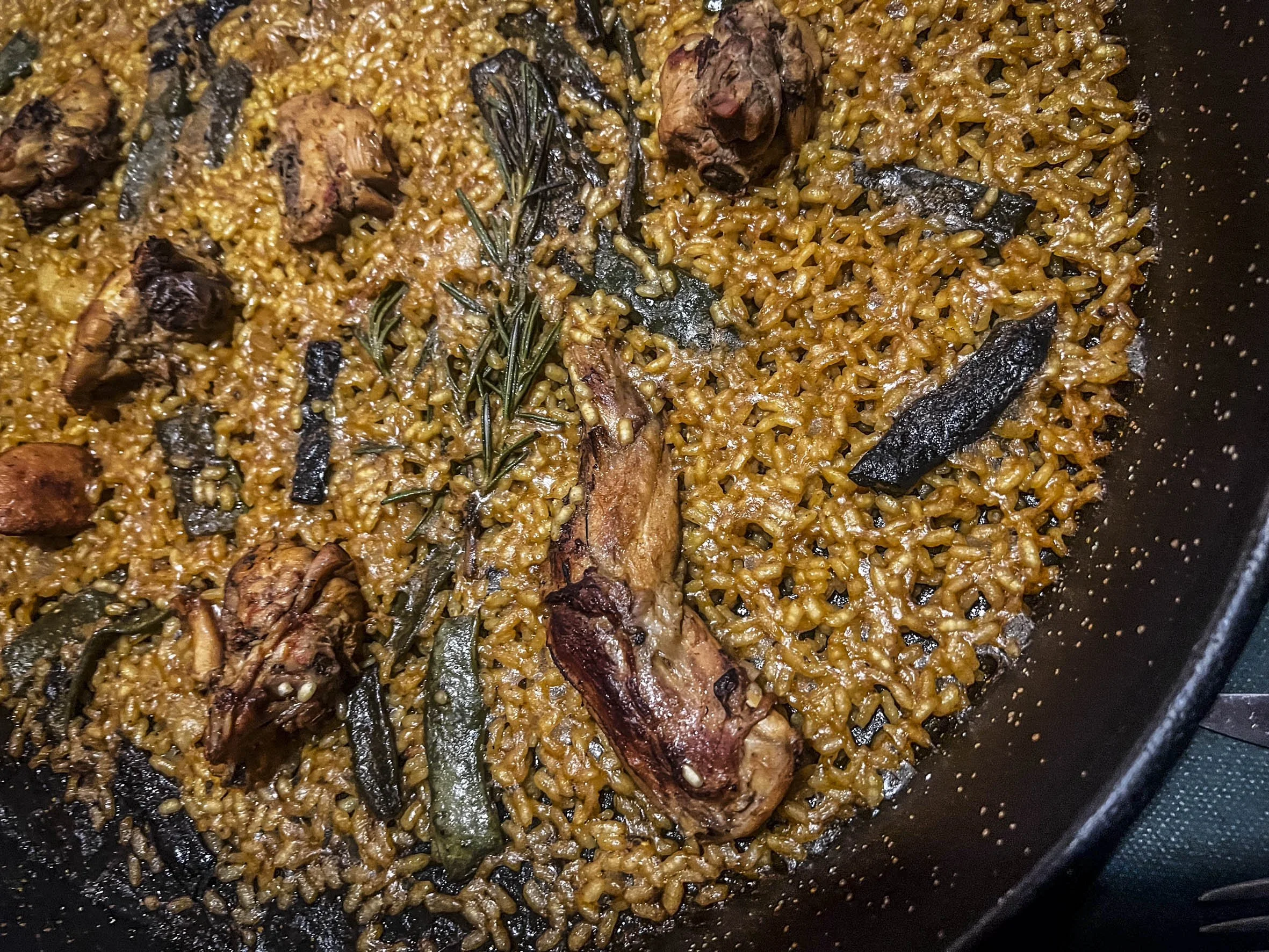
It arrives in a wide shallow pan, a tea towel protecting the waiter from the scaldingly hot handles as the blackened metal dish is lowered into the centre of the table for the diners to share. But it is what’s in it, that’s most important. In Spain there is little room for discussion. Paella, really means Paella Valenciana, the original and the best and it contains, chicken, rabbit, flat green beans (ferradura), large white beans (garrofó beans) and the short grained rice of the L’Abufeira region, just south of Valencia. Traditionally it’s cooked over an open fire creating a “Socarrat” or cruchy, toffee, texture in parts of the rice. You may, if you are feeling adventurous, add a few snails and some rosemary but nothing else!
Some other rice dishes have various seafood included, or perhaps an artichoke. That’s fine. They might even taste OK, but they are NOT Paella!
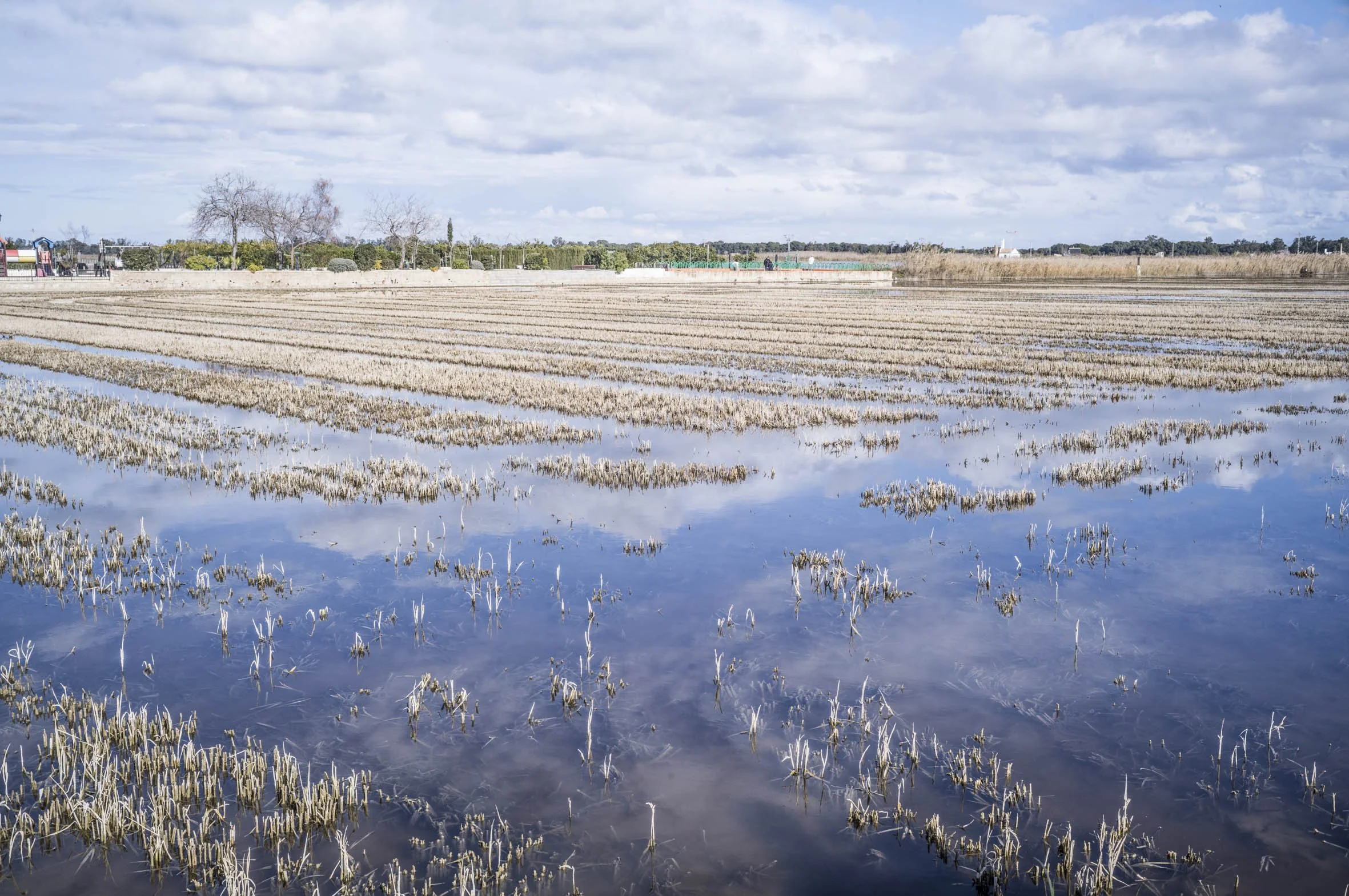
The heart of the dish is the special rice that is prized for its ability to absorb flavours while retaining its structure. The variatals go by names such as Bomba, Senia, and Bahía and come from a very small defined region of inland lakes and waterways about twenty kilometres south of the city that produce the protected D.O. Arroz de Valencia label.
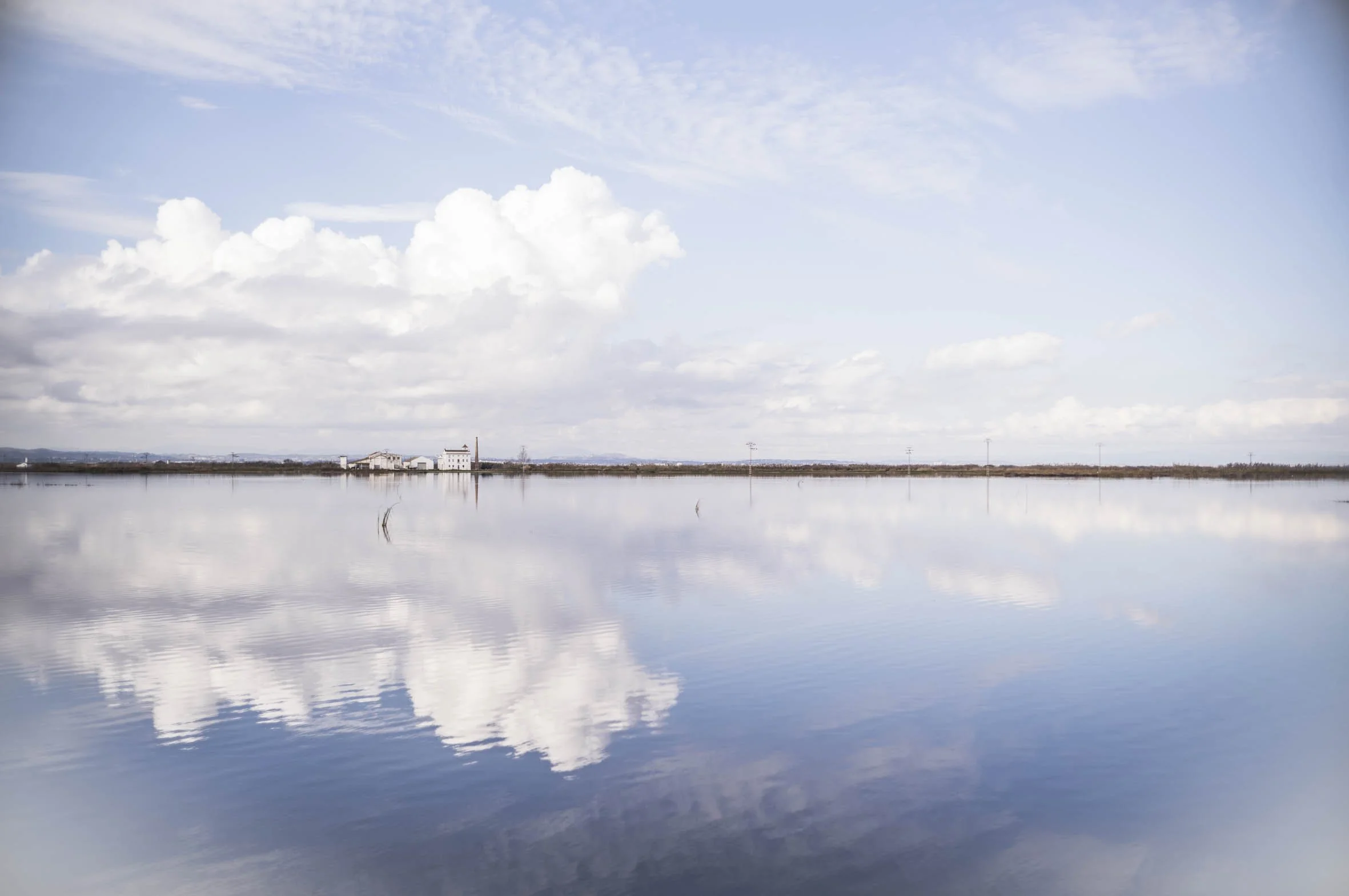
The Moors introduced rice cultivation to the area in the eighth century when they brought the grain to the Iberian Peninsula during their rule of Al-Andalus and the unique wetland conditions of L'Albufera proved ideal. The combination of freshwater from the lagoon and saltwater from the nearby Mediterranean created perfect conditions.
One weekend, as we were looking for an adventure, it occurred to me that an industry on water, that’s been going on for over 500 years, probably involved wooden boats. So we rugged up (it’s winter here) and climbed aboard our bicycles and cycled south.
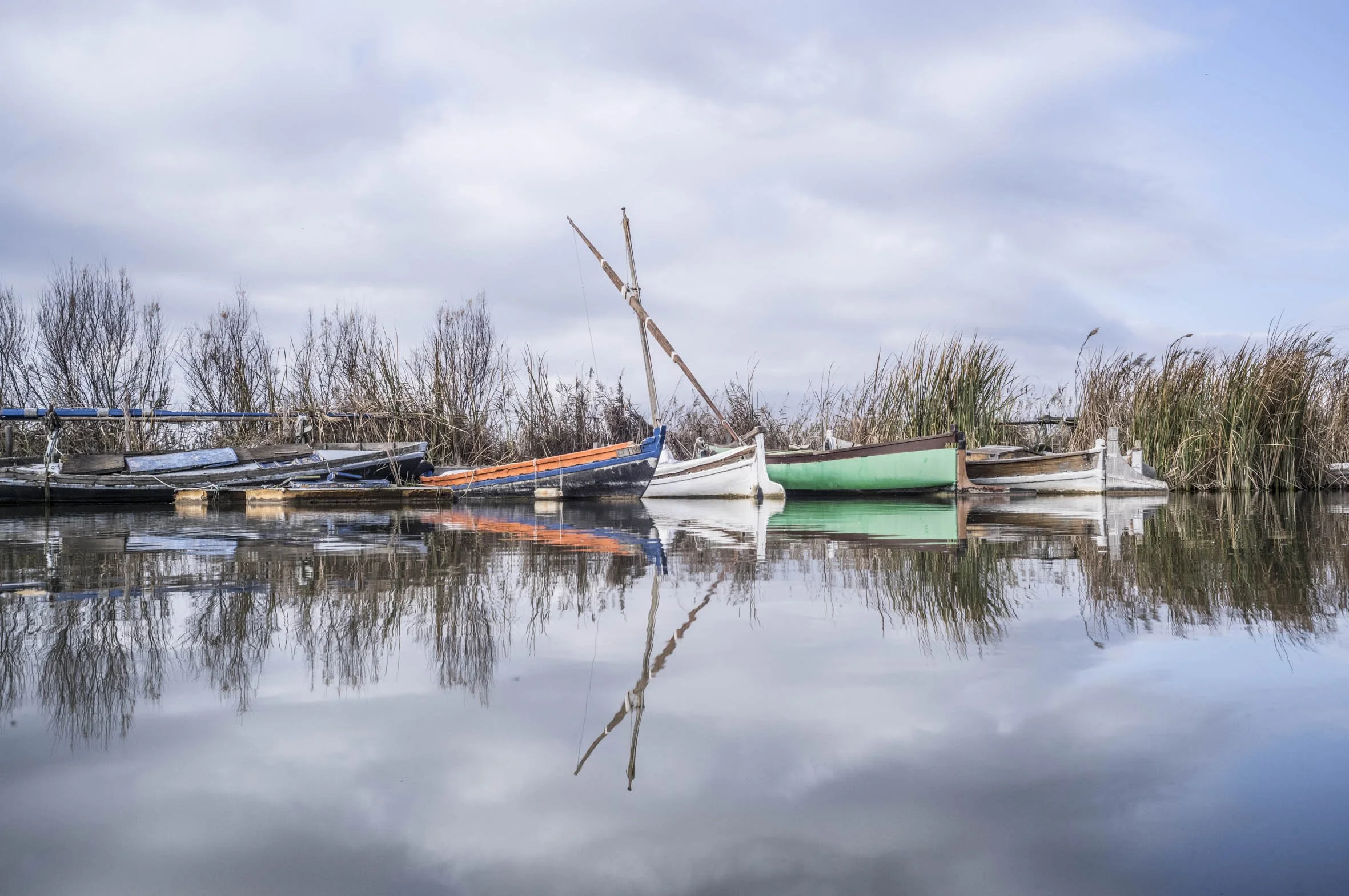
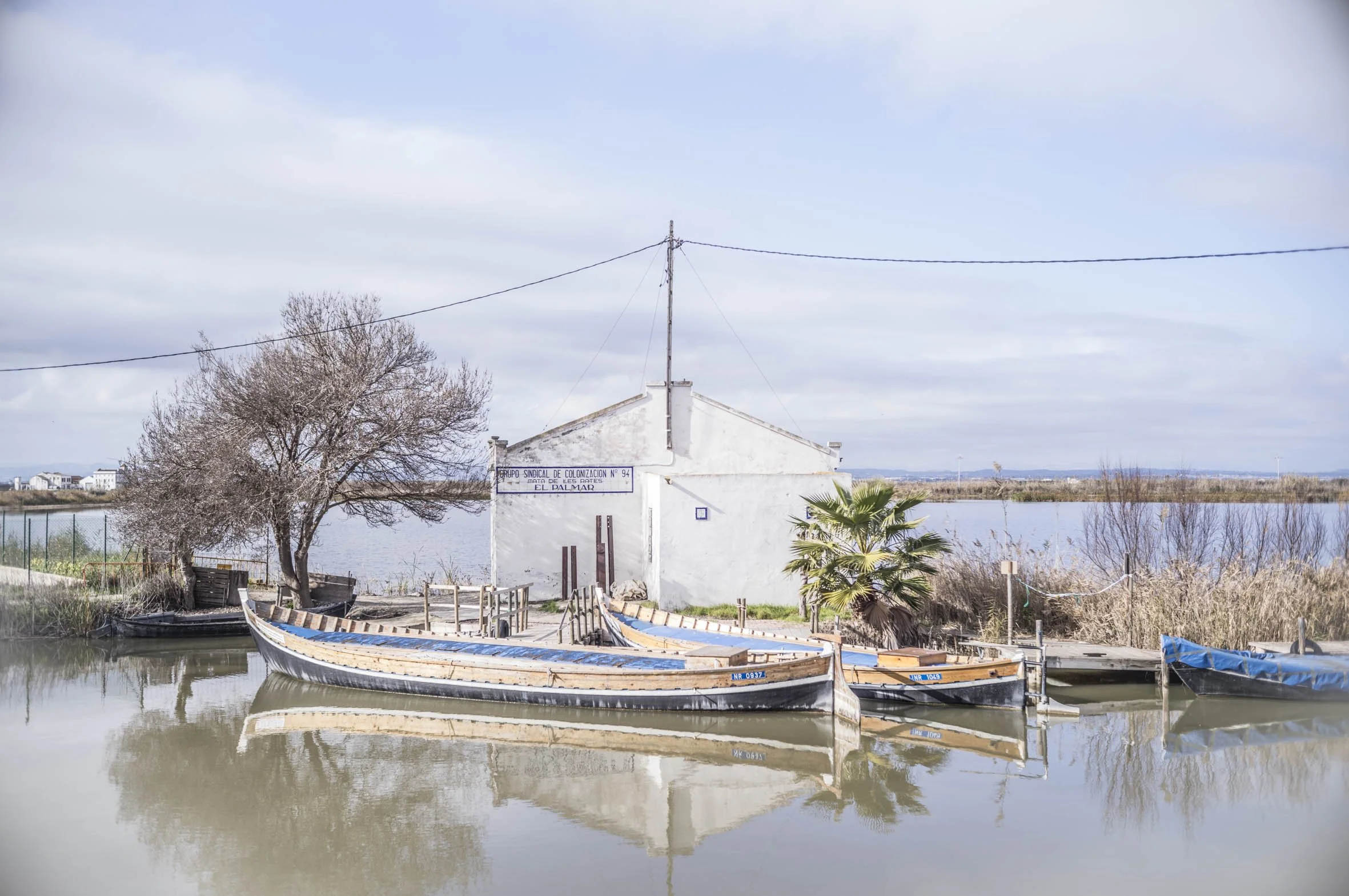
As with all wooden working boats the "albuferenc" boats (or "barcas" as they are known locally), have been designed by their function and environment rather than by individual people. This idea is supported by a quick bit of research into Japanese rice field boats called Tabune that share very similar design characteristics.
They are flat-bottomed, allowing them to work in the shallow waters of the lagoon and the canals running between rice fields and they're quite different from the heavier fishing boats once used used along the Mediterranean coast and on the beaches just a few miles to the east of the lagoon.
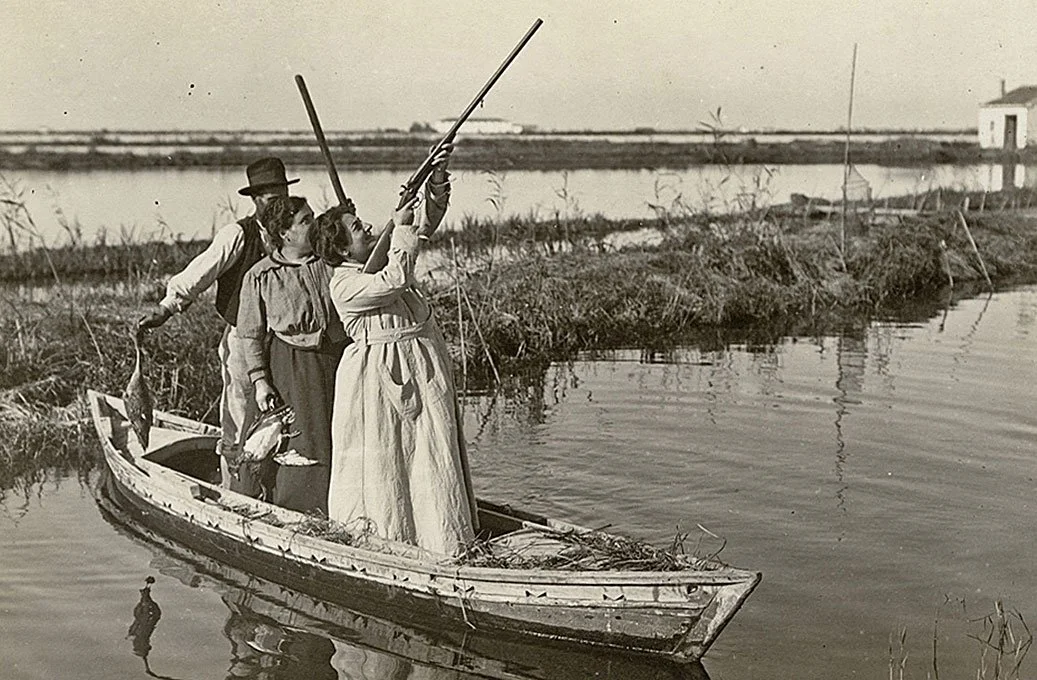
These boats were used for fishing, hunting, transporting goods and people, and specialised variants were developed specifically for planting rice and maintaining the fields and irrigation channels.
All boats are simply built on frames. The wood of the local carob tree, the olive and white mulberry were traditionally used for the keel, frames and other structural woodwork, while the planking is of pine. None of the boats had fish wells, but they carried pierced pottery vases (for young eels) and small, boat-shaped fish boxes were used to bring the catch in alive, to the markets.
In regards to the evolution of these boats, there seems to be little reliable historical information . The most important documented change over the past 50 years, is the installation of engines. The boats with pointed ends were less suitable for the use of outboards, as there is too little buoyancy in the stern to carry the weight, so most have simple diesel inboards. The slender shape of the hull makes the operation with a tiller awkward and so the rudder is operated via a rudder horn and a linkage or by control ropes. It’s not known how long the rope steering system has existed, but it could well be a legacy of the Islamic period, since this type of steering is common in boats of the Arab world. (click to enlarge)
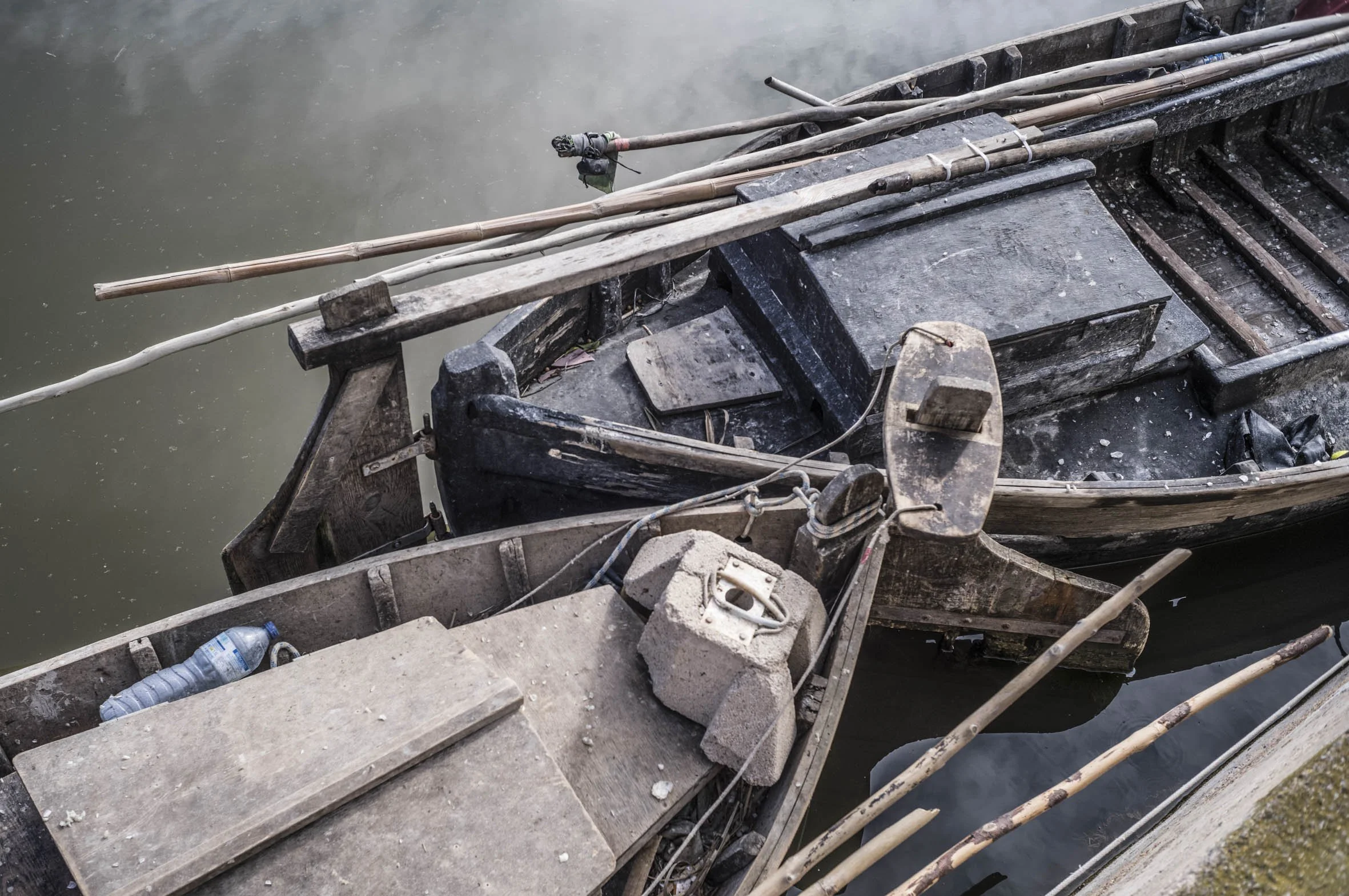
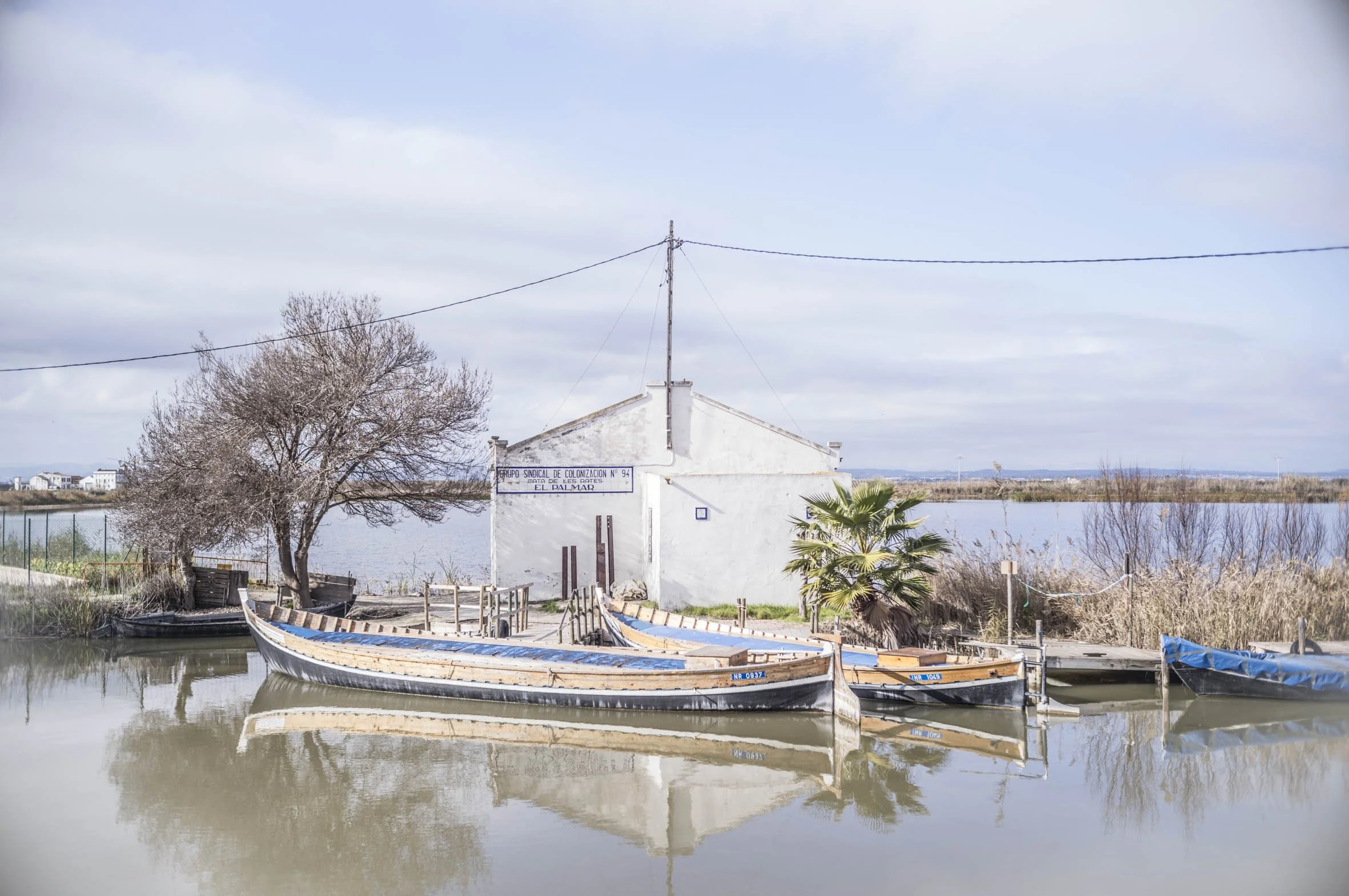
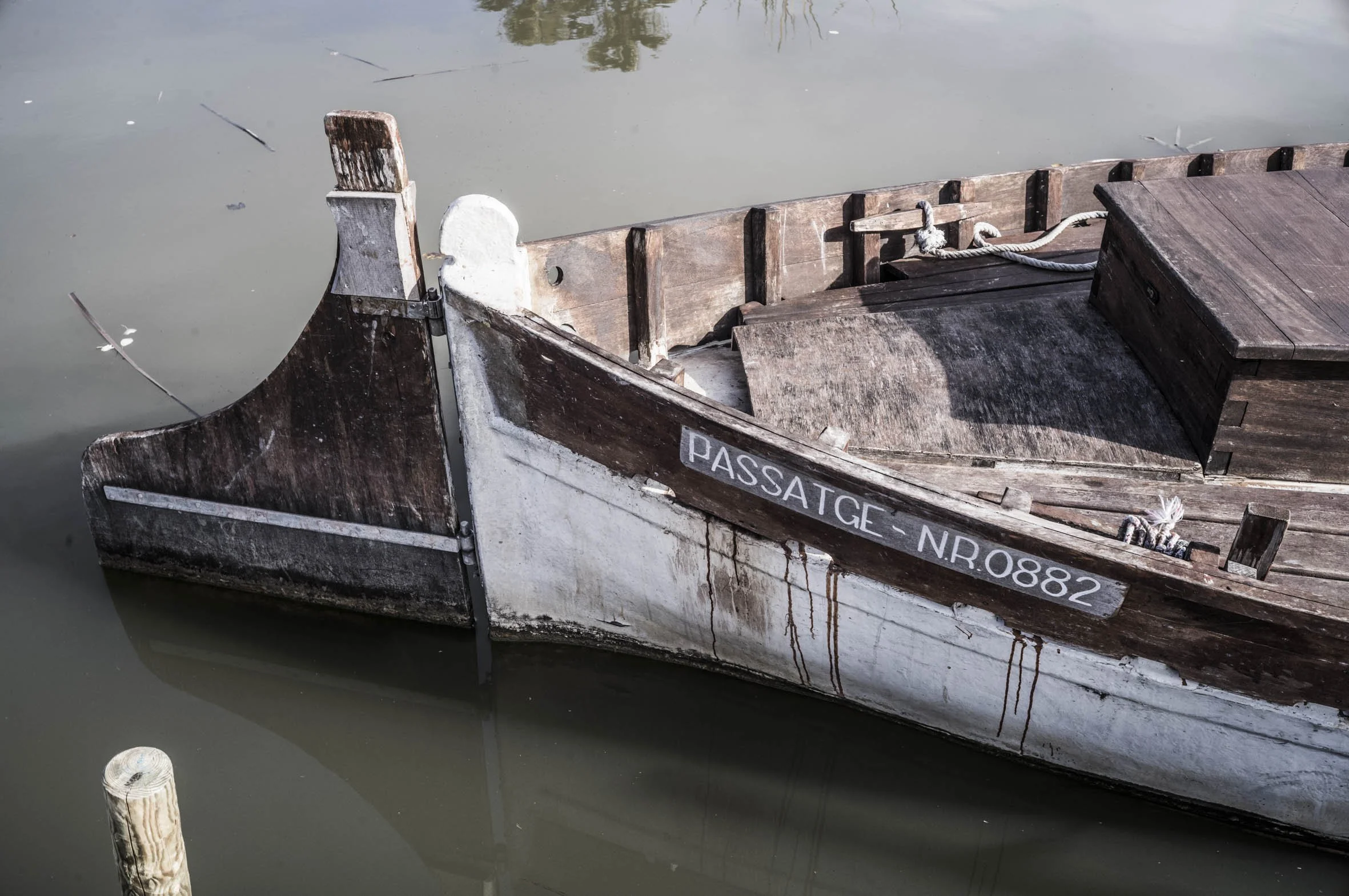
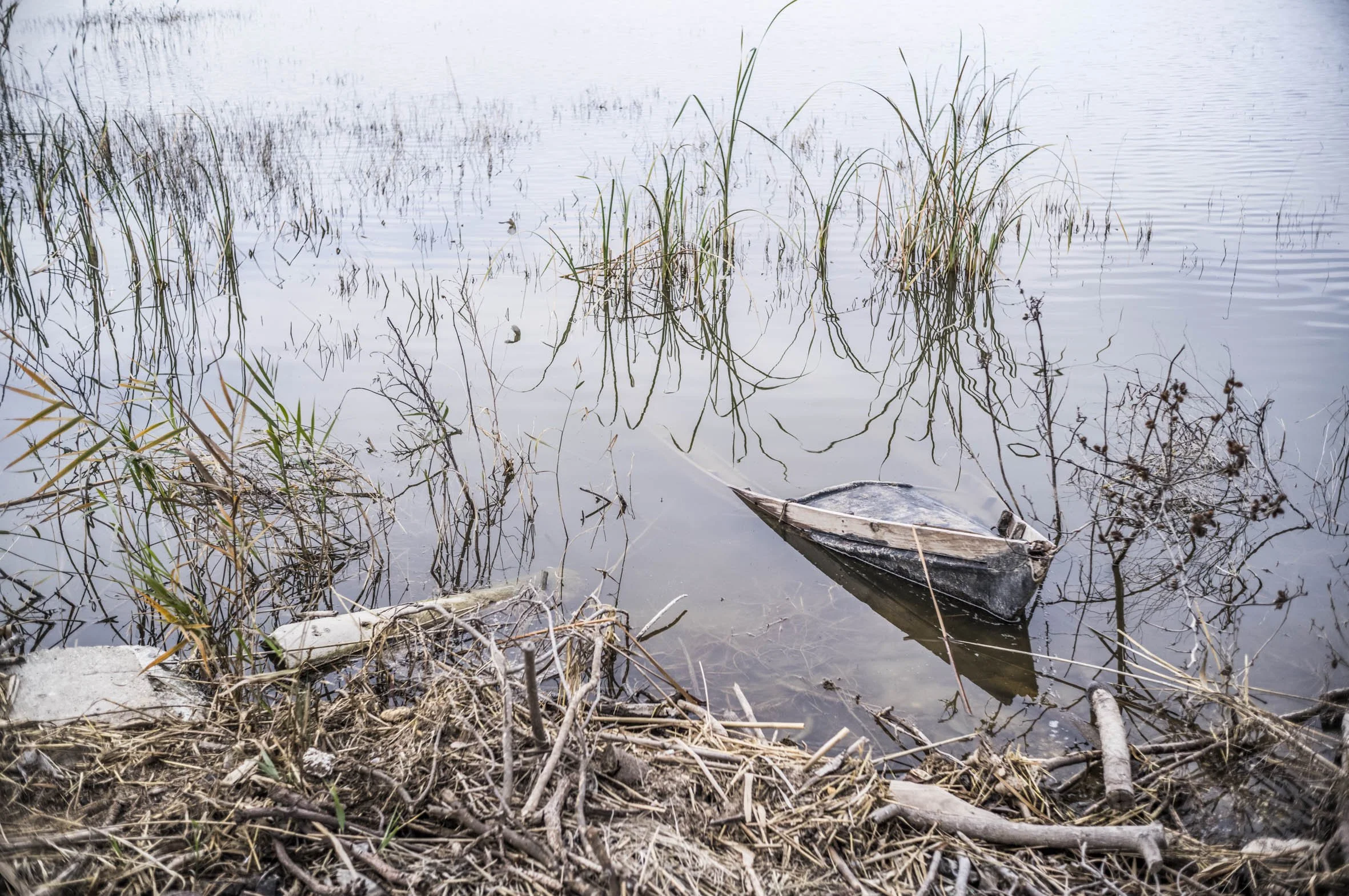
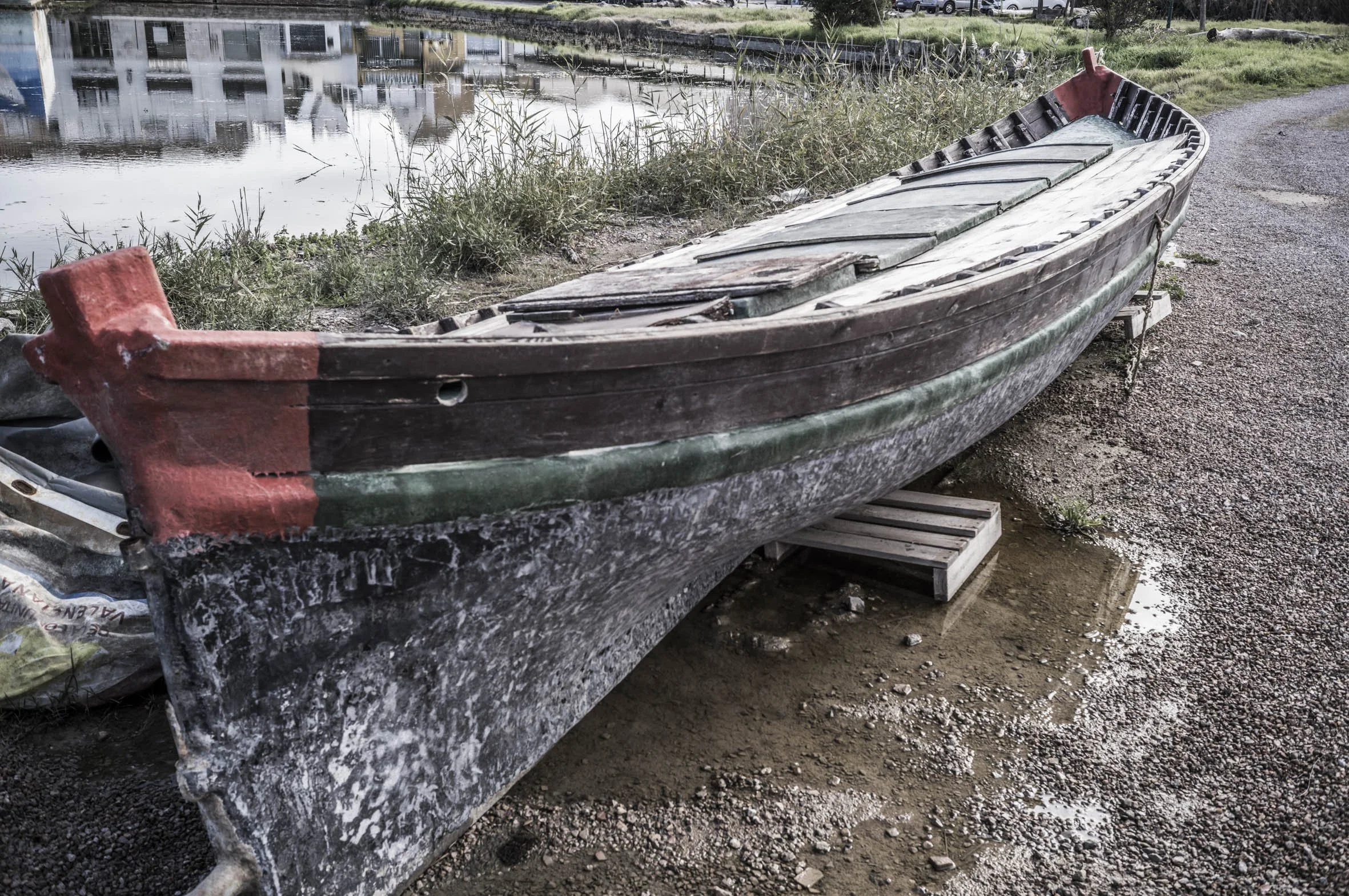
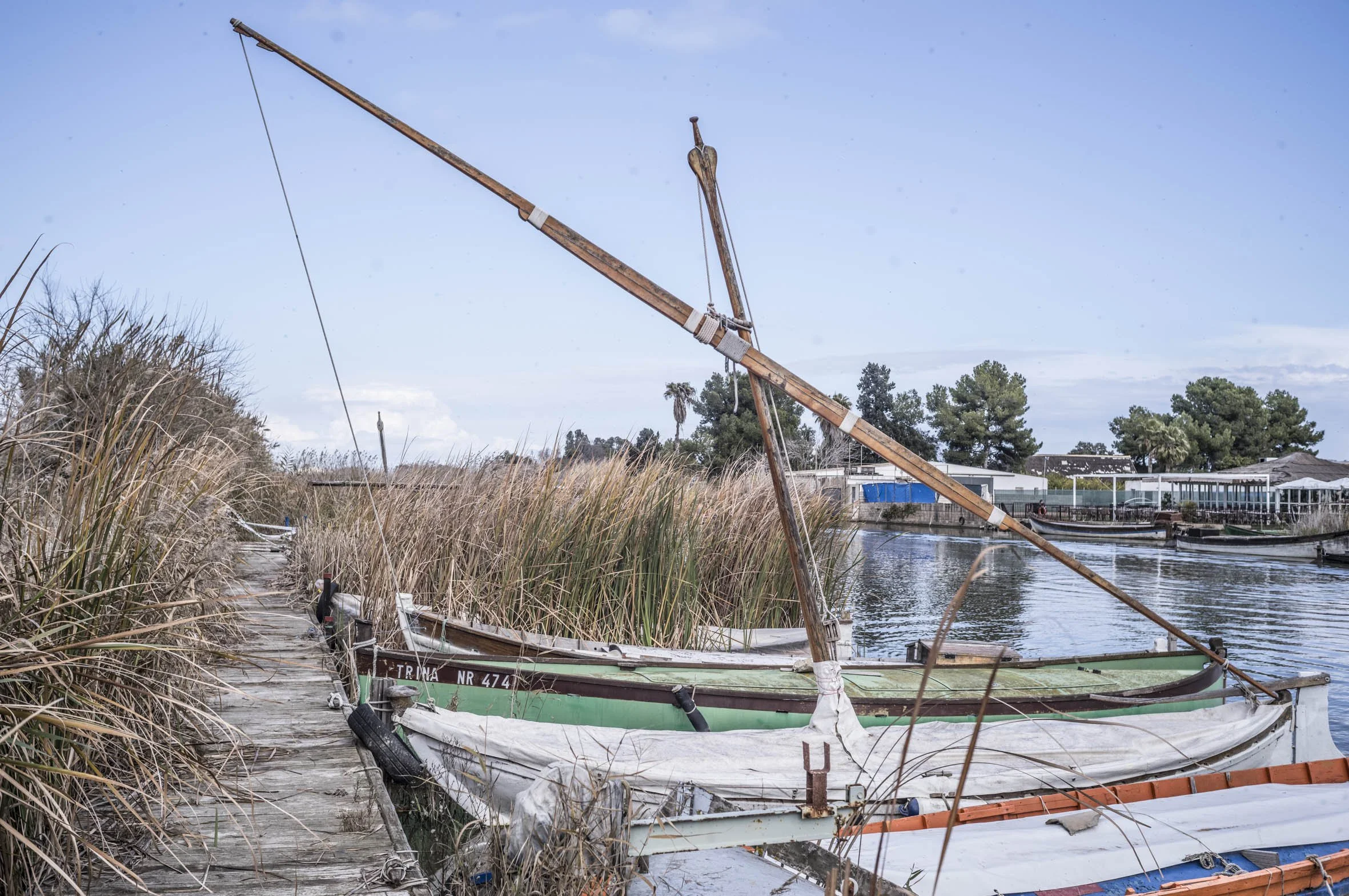
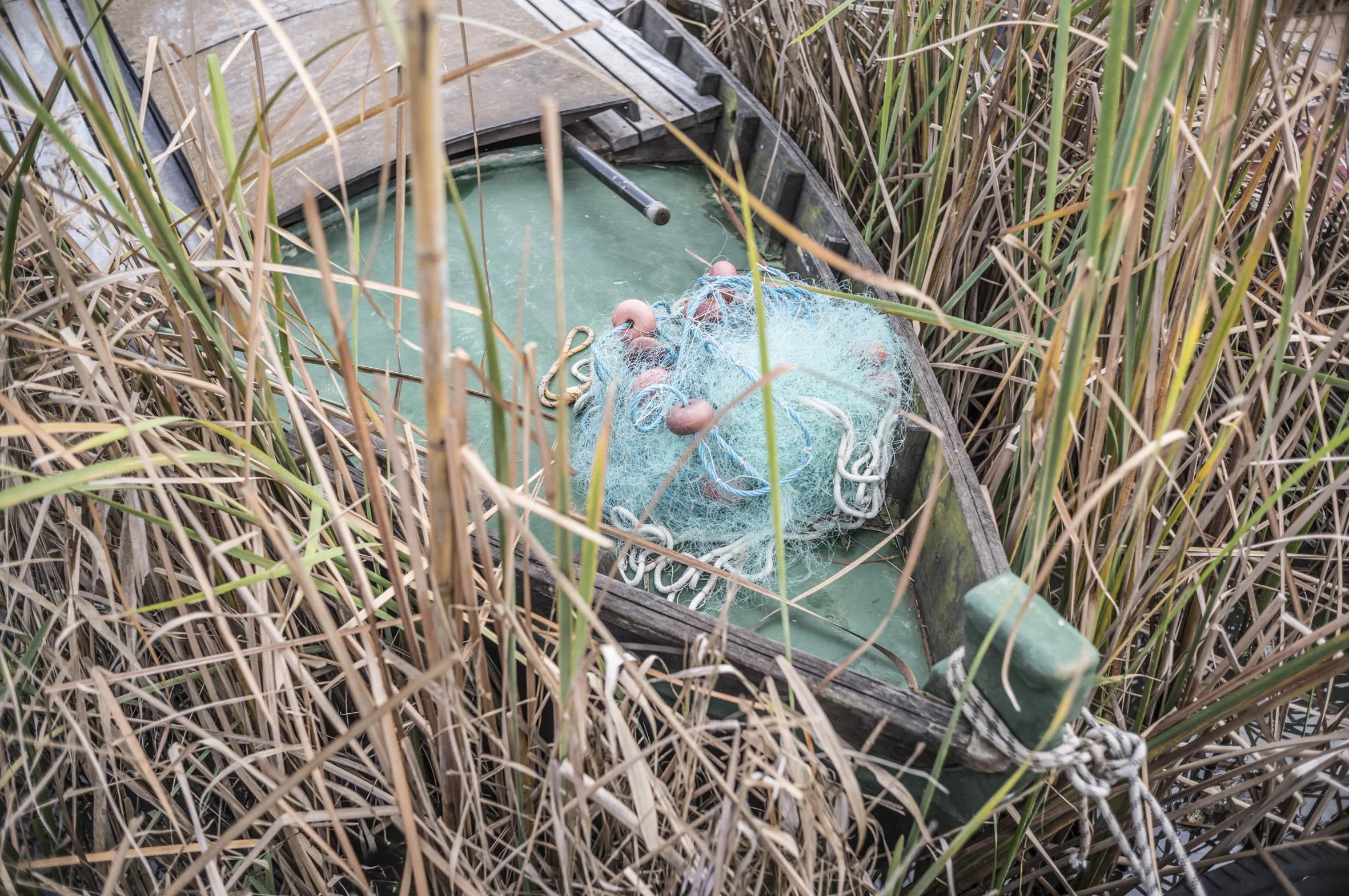
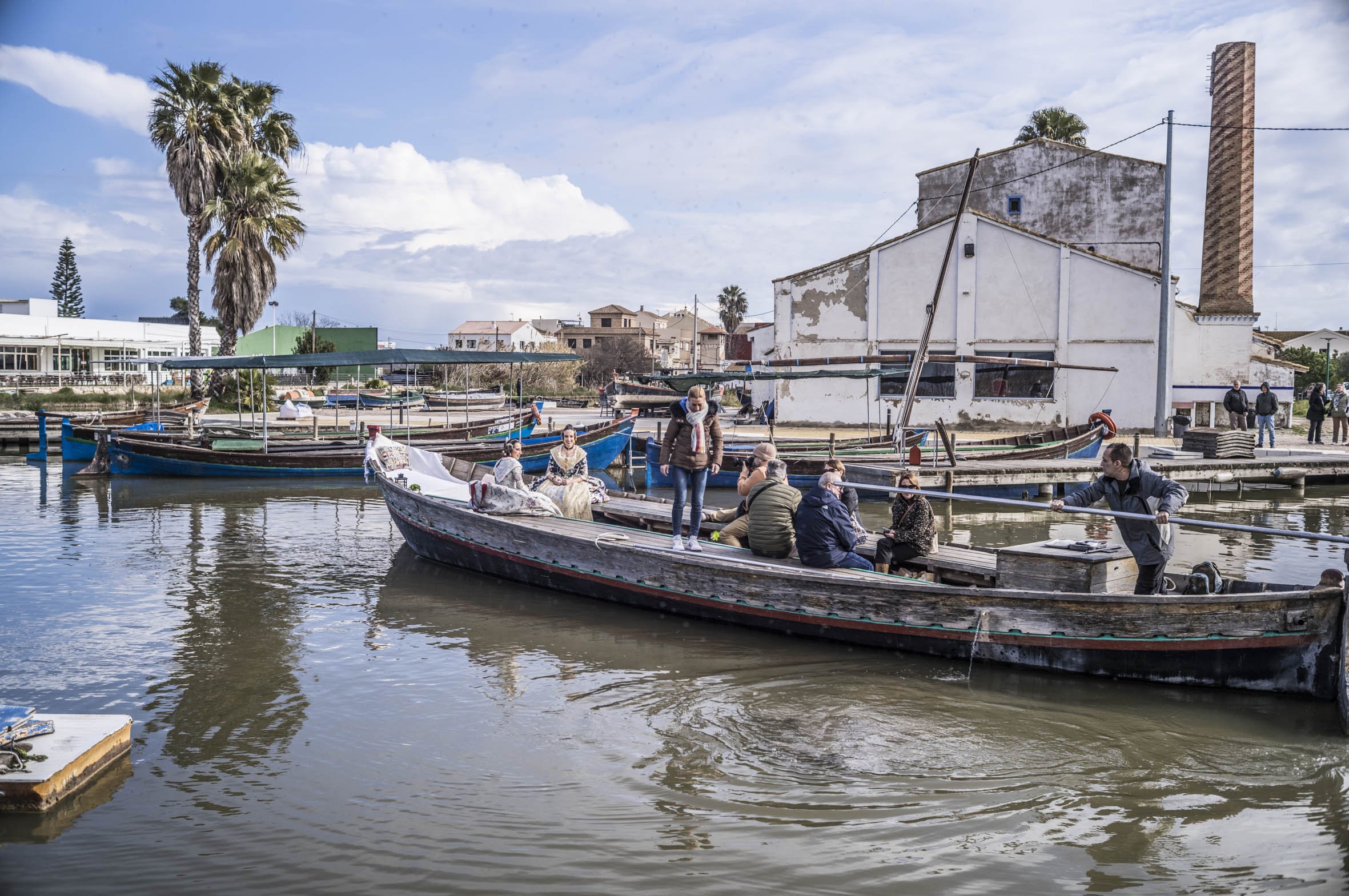
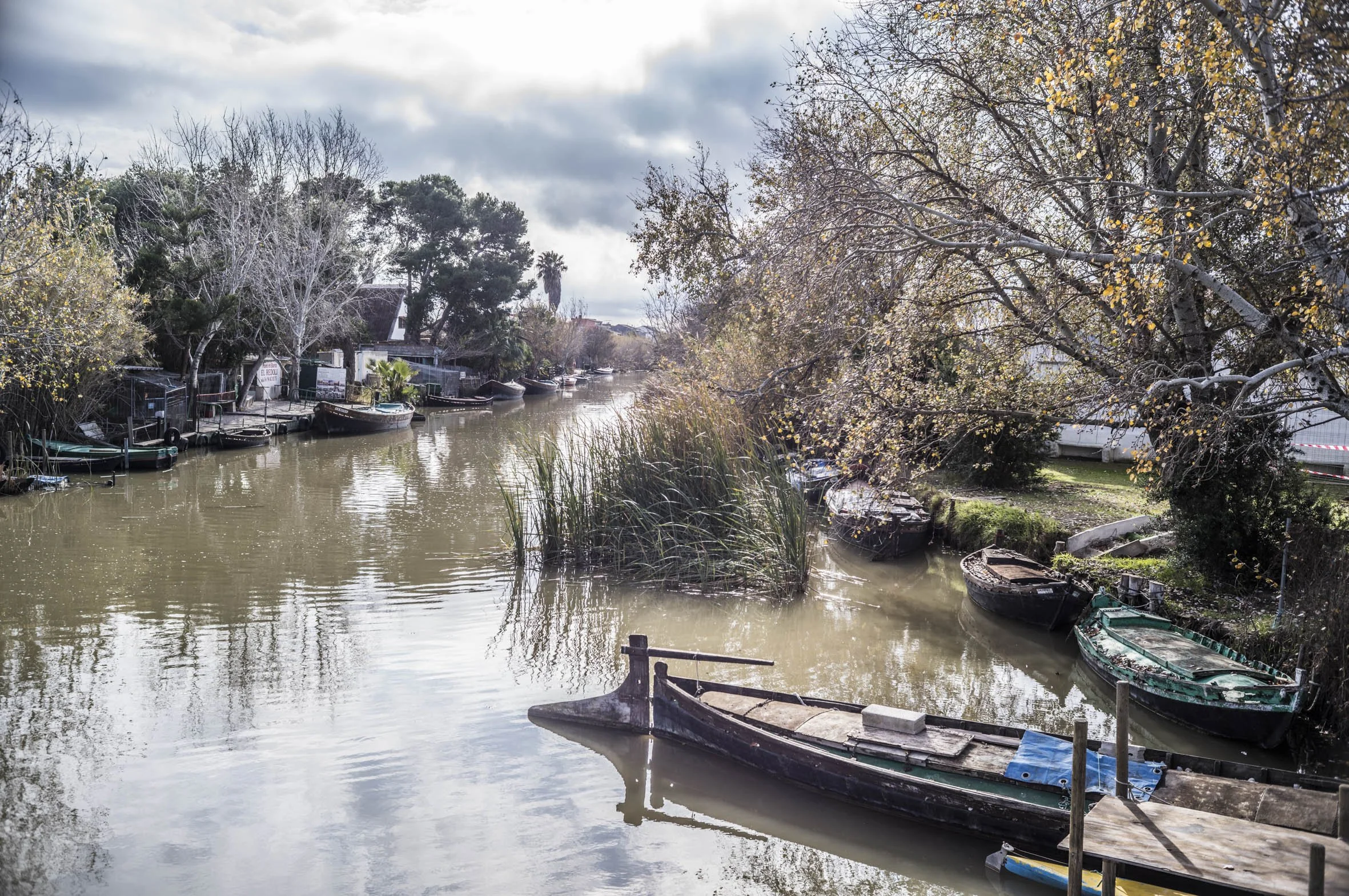
The boats were built from an established template following an oral agreement with the commissioning future owner. Using only hand-tools, much of the work was done outdoors however some parts were pre-shaped in a local joinery. The construction began with laying down the keel, into which the stem and stern-post were inserted with dovetails. The garboard plank and the first floor planks were attached, then the floor timbers and the frames were added. The planking then proceeded in the usual way. When the hull planking and the decking were finished, the seams were caulked and the boat was submerged for several days using stones, so that the wood swelled and it became tight.
After drying, the boats were traditionally painted with tar. However, the climate of the Albufera, with its hot and dry summers, is a major problem for wooden boats as they must be kept constantly moist to stay tight. Because they are only used occasionally these days the majority of the boats are now covered with fibreglass and epoxy, so one can only guess at the condition of the wooden structure underneath.
The boats traditionally featured lateen sails but could also be propelled using long punting poles called "perxa" which the boatmen stick into the shallow lake bottom, similar to Venetian gondoliers.
Their triangular lateen sail is set on a long yard mounted at an angle on the mast. This rig has been used throughout the Mediterranean for centuries and was particularly well-suited to the Albufera's conditions because lateen sails allow boats to sail closer to the wind than square-rigged sails, essential in the confined waters of a lagoon and narrow canals. They can be also be managed by one or two people, and they trim easily with the shifting winds typical of the coastal lagoons.
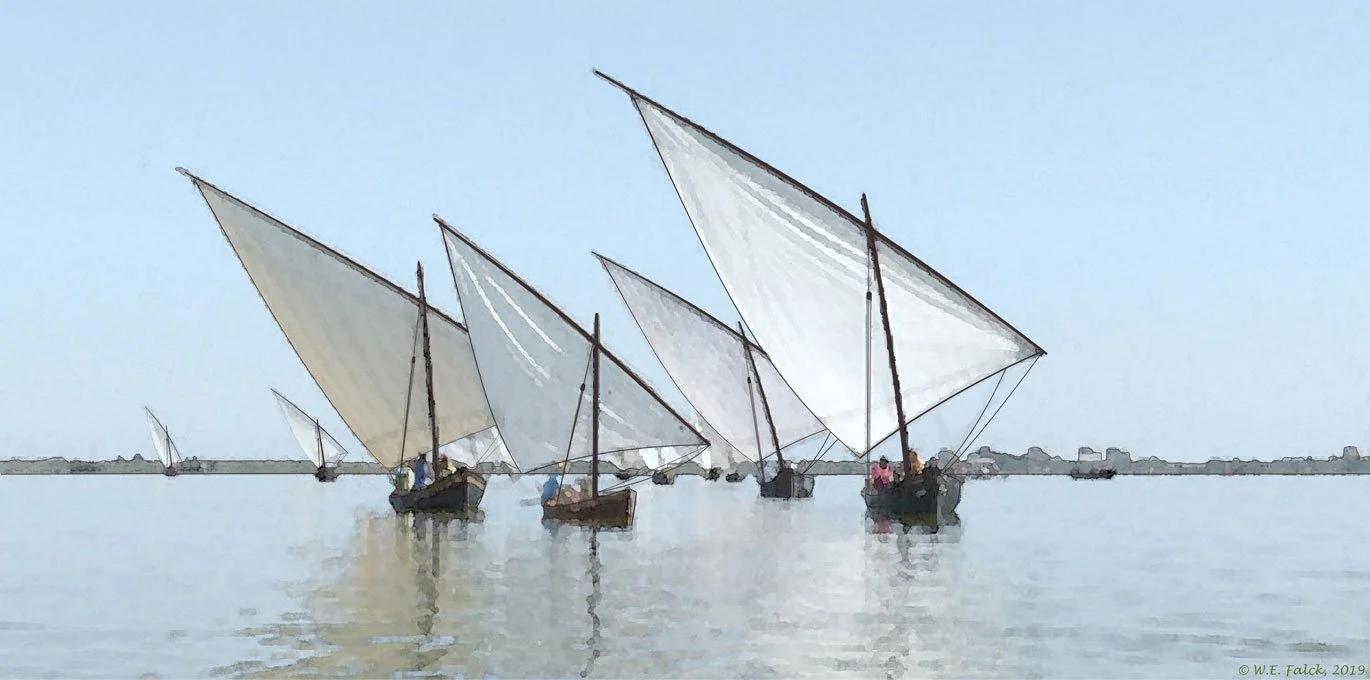
A Painting by W.E. Falck of Barca running downwind across l’Albufeira
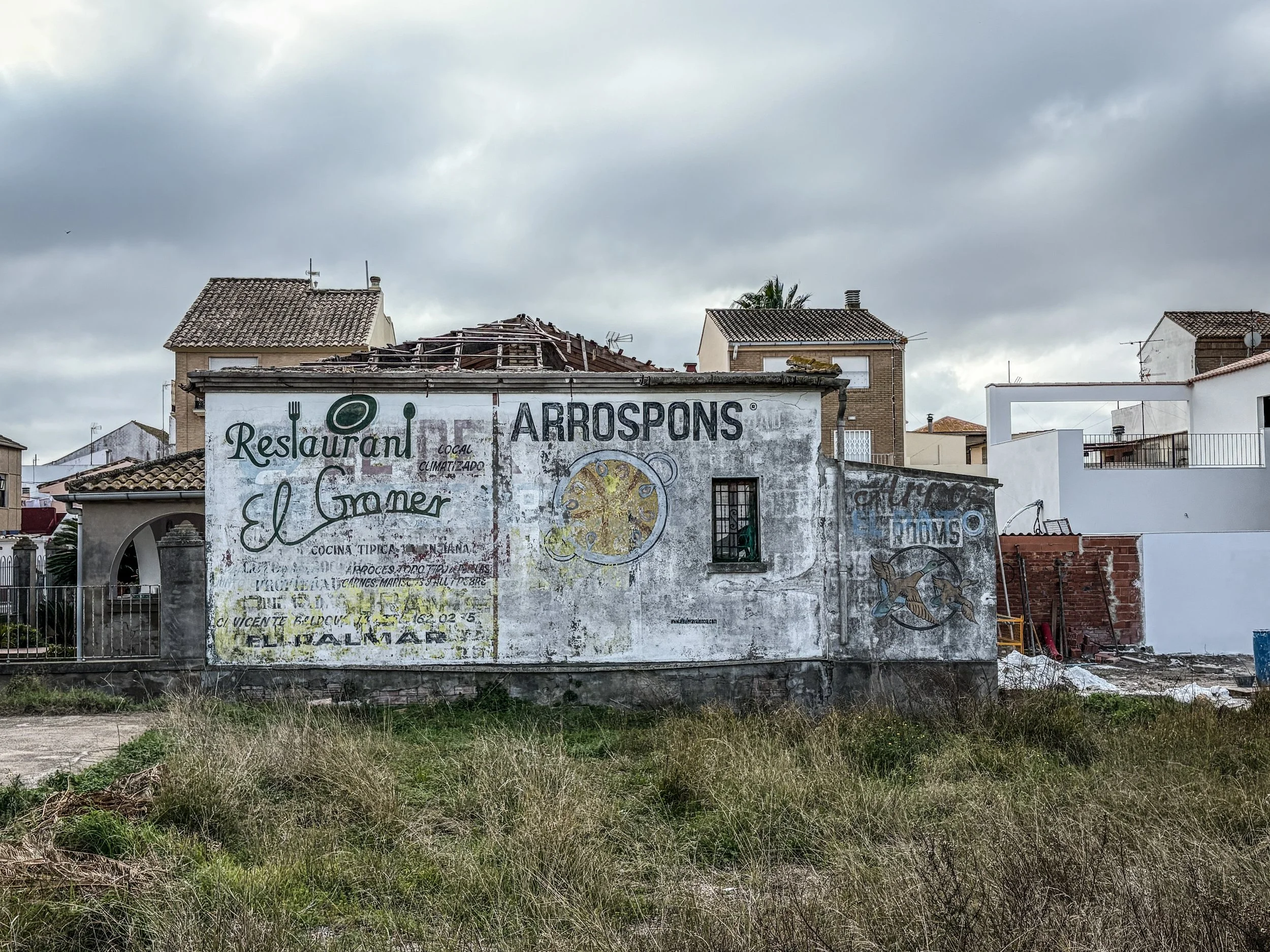
There is a wide choice of establishments selling their locally grown Paella on a sunny Sunday afternoon. Being Spain the first diners sit down at around 1.30pm for lunch, but the main crowds arrive around 3pm. It’s a leisurely affair, with Valencian families chatting quietly, during the forty minutes it takes for the rice absorbs its flavours. A glass of vino tinto helps pass the time, but when the pan is lowered into the centre of the table we realise that we are engaging in “peak paella”, the culmination of a milenia of horticulture, culinary development and, in a small way, wooden boat design.