
“Boats Should Look Like Boats”
I like the faint irony of a yacht designer called “Garden”. Gardening to me seems to be the antipode of sailing.
I also like the increased frequency with which boats are being auctioned, keeping the market moving, offering a realistic valuation of the craft and working on the massive problem of unused vessels clogging up marina and waterways throughout the rich world.
So when these two ideas came together this week I thought it was worth an article.

William Garden is not one of those yacht designers who kept his personallity hidden behind a pile of drawings. He was opinionated, prolific, and influential, especially on the American West Coast.
Born in 1903 in Seattle, at a time when Puget Sound was a working waterfront he grew up surrounded by honest working craft, an influence that influenced much of his later design work. Garden did enrole at the Edison Boatbuilding School, but unlike many yacht designers who came up through formal naval-architecture schools, he was largely self-taught, learning by drawing, observing, and most importantly by going to sea. He worked in boatyards, spent time on commercial vessels, and absorbed the practical knowledge of people who depended on boats not for recreation, but for survival.

Seattle waterfront around 1910
By the 1930s and 40s, Garden was designing steadily, and after World War II his career exploded. Post-war America wanted boats—lots of them—and Garden became one of the most prolific yacht designers in history, producing well over 1,000 designs. His output ranged from tiny dinghies to substantial offshore cruisers, powerboats, motorsailers, fishing vessels, and even tugs. He had little patience for academic theory divorced from reality, and he famously said that “boats should look like boats”—a phrase that neatly sums up his philosophy.
Stylistically, Garden’s boats were powerful, purposeful, masculine and conservative. He tended toward producing boats with long keels, full bows, moderate rigs, and hulls that inspired confidence rather than rating-rule cleverness. His cruising yachts were meant to carry stores, stand up to bad weather, and look after tired crews. Many of his designs were “working yachts”—comfortable, seaworthy cruisers with an unmistakable commercial ancestry. To racing sailors chasing the latest performance trends, his boats seem old-fashioned; to offshore cruisers, they are reassuring and timeless.

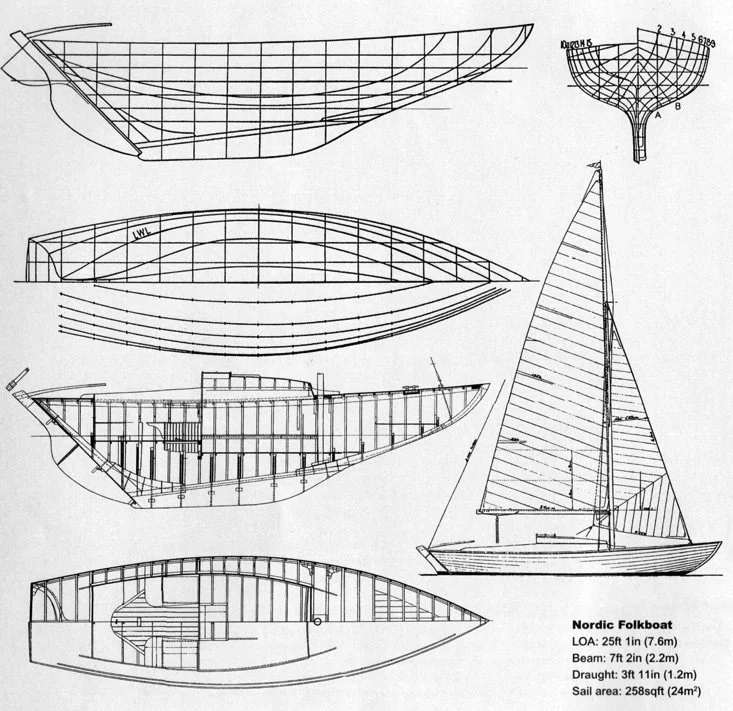
One of Garden’s most important contributions was his role in popularising the Nordic Folkboat type in North America. His interpretation, the Garden Folkboat, helped spark a wave of interest in simple, seaworthy cruising yachts that ordinary sailors could afford and build. That influence flowed directly into later West Coast cruising classics and the broader “cruiser-not-racer” ethos that defined Pacific cruising culture.
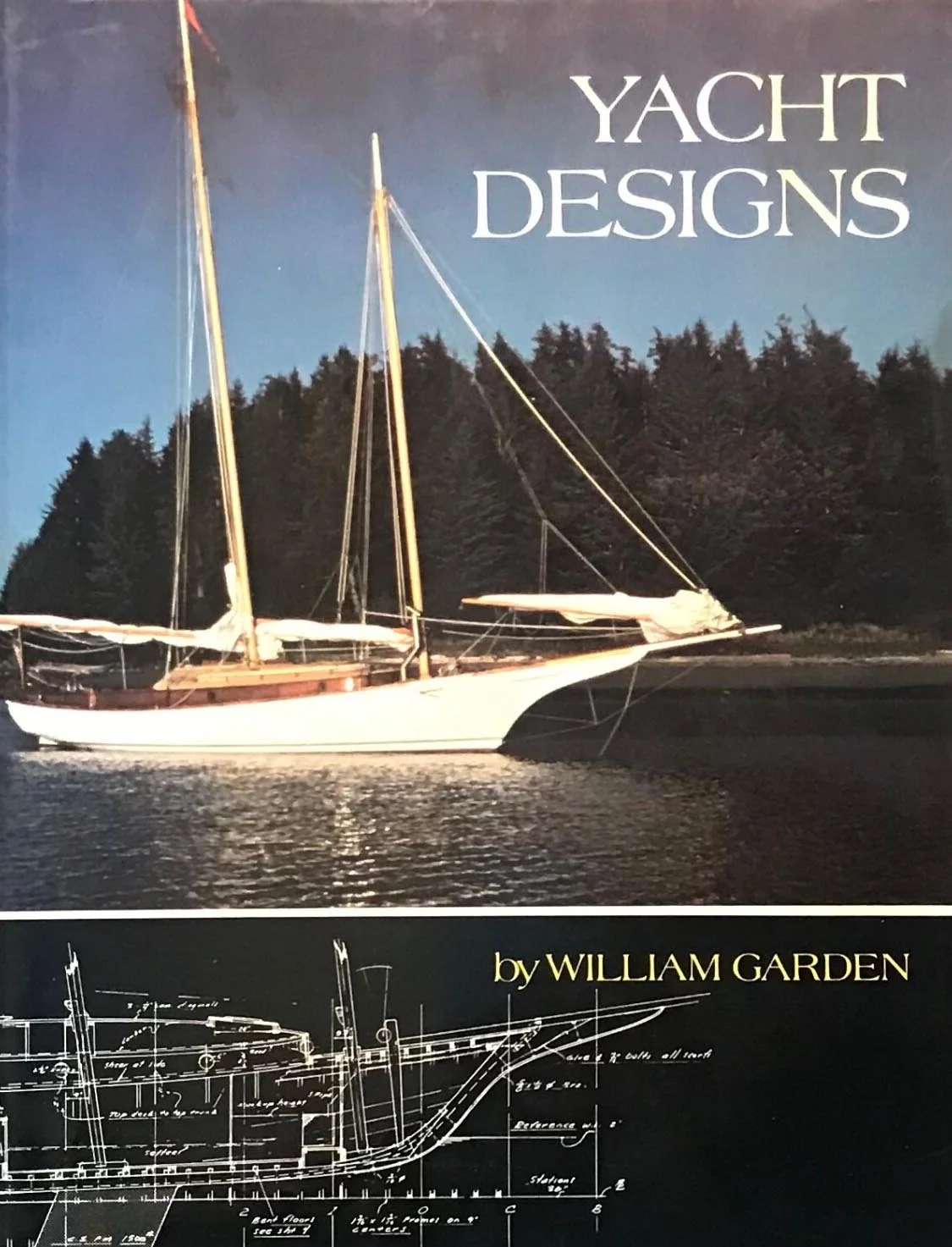
Garden was also a writer and polemicist. His books—especially Yacht Designing and Boatbuilding and Repair—are full of sharp opinions, salty humour, and thinly veiled contempt for fads he disliked. He was skeptical of extreme light displacement, spade rudders, and what he saw as fragile fashion in yacht design. Even designers who disagreed with him read Garden closely, because his arguments were grounded in decades of experience and thousands of drawings.
Personally, he considered to be blunt, stubborn, and immensely productive. He worked fast, trusted his eye, and was not prone to second-guessing himself. Clients who wanted radical innovation often went elsewhere; clients who wanted a boat that would bring them home in ugly weather sought out Garden. Although William Garden died in 1995, many of his yachts have since crossed oceans, been rebuilt multiple times, and are still sailing today—perhaps the most convincing endorsement of his approach.
This brings us to the boat for Auction. It’s in Ballina in NSW and bidding begins on Friday, 23 January 2026 and ends on Thursday, 29 January 2026 at 2pm AEST.
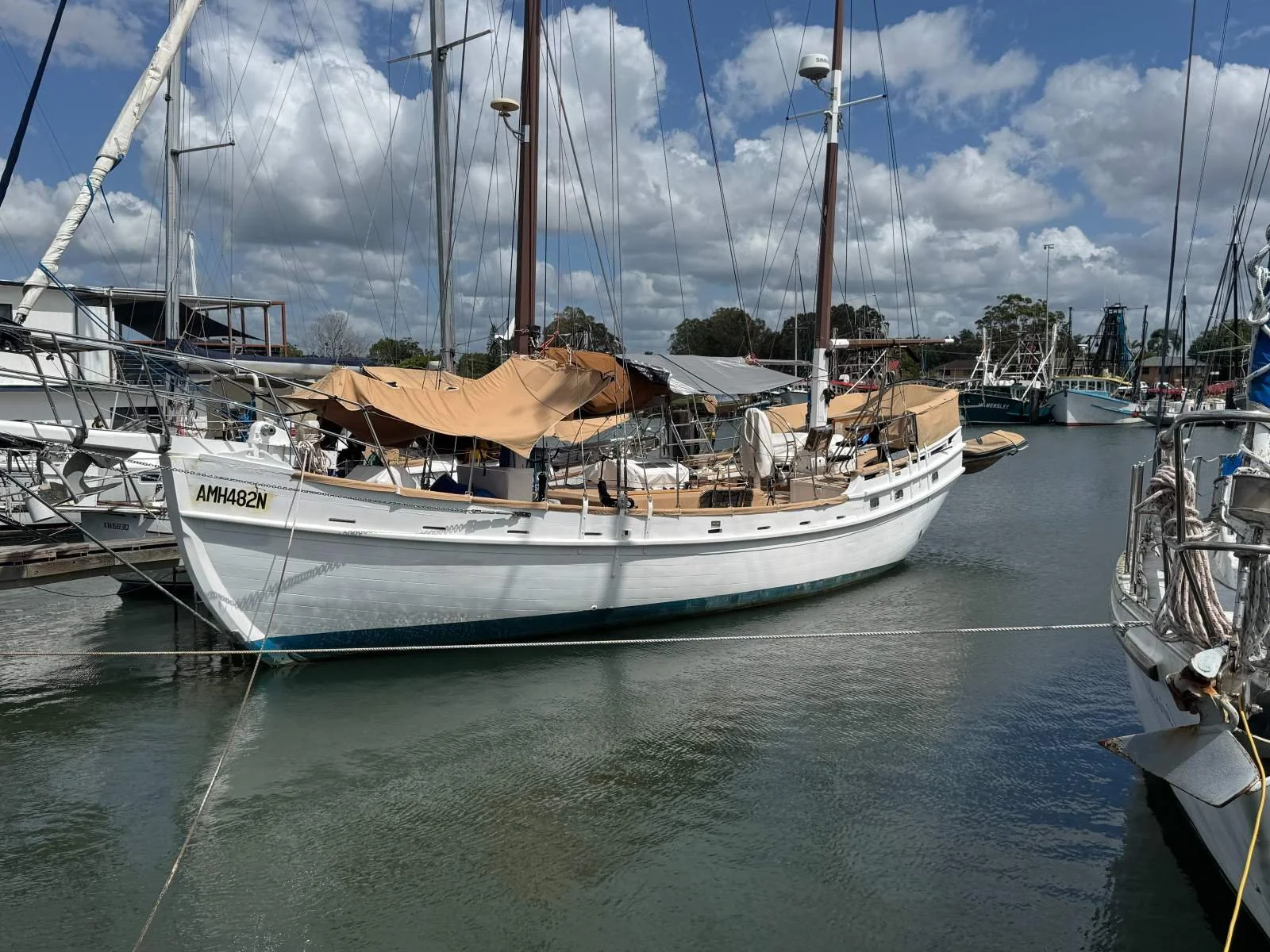
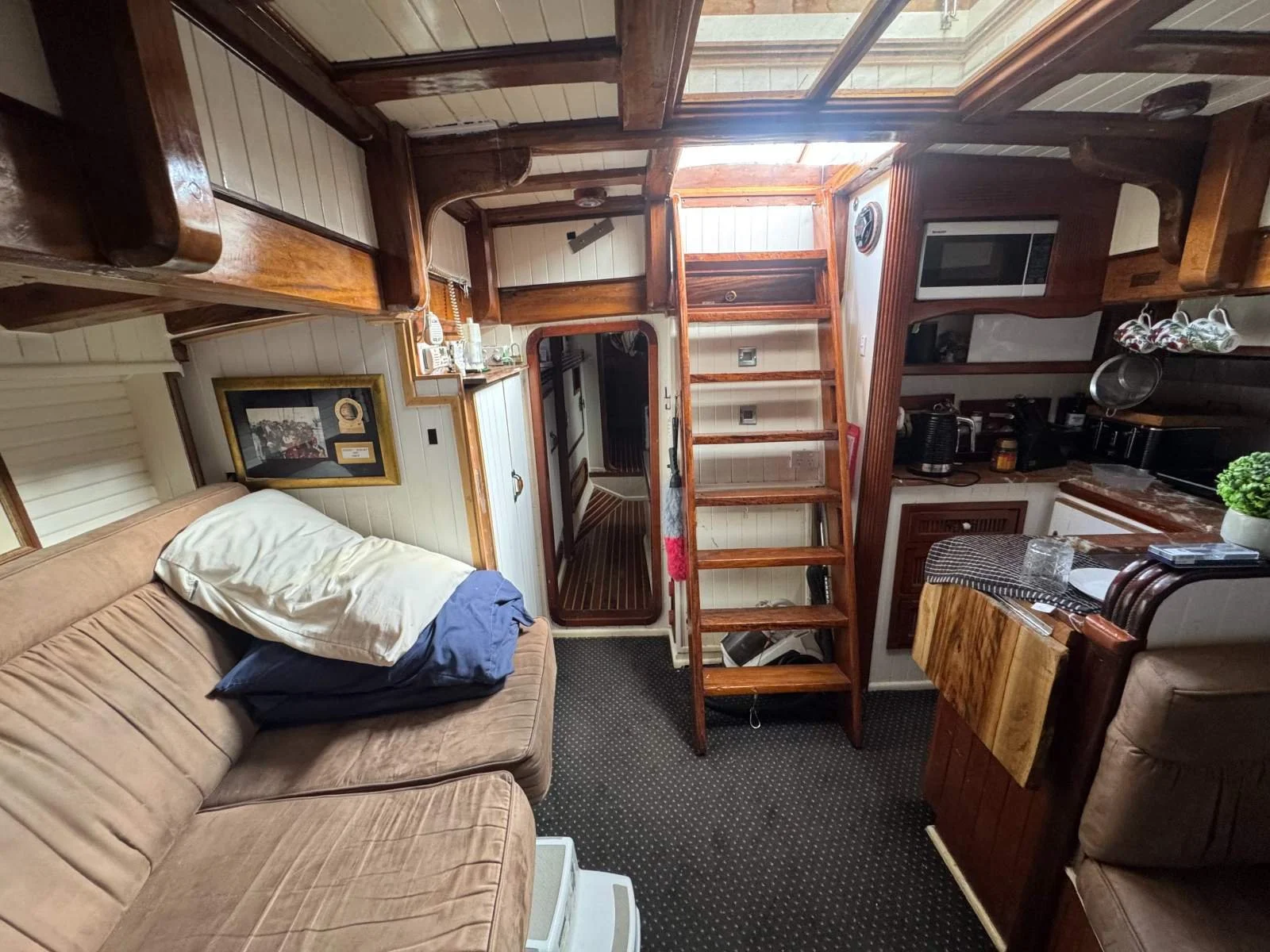
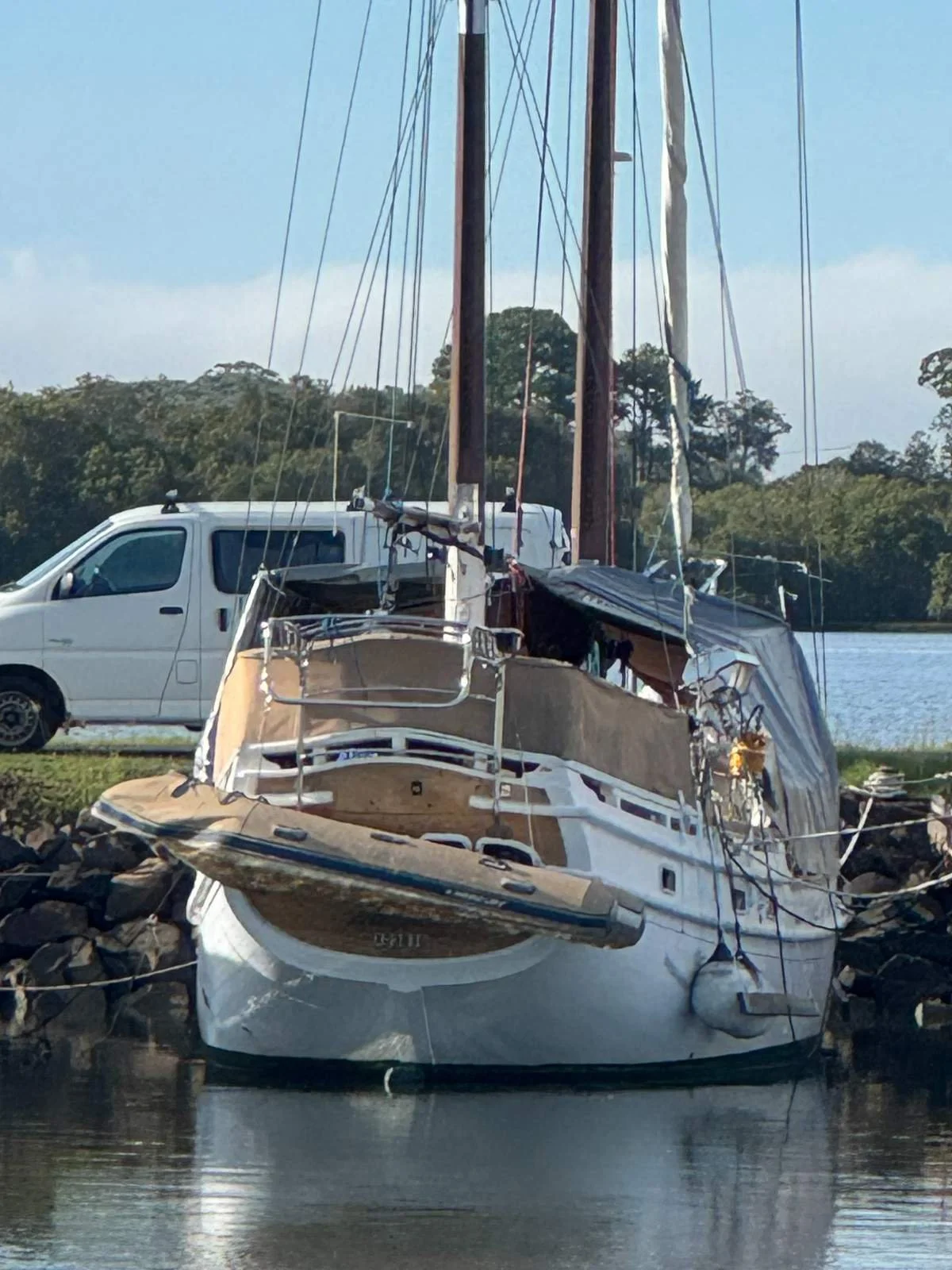
It appears she was finished about ten years ago, but its hard to tell where she was built given the timbers used in her construction.
She’s 52’ long and 12’6” beam, and weighs 22 tonnes. It looks like she’s in need of a good tidy up but the bones have a certain romantic charm. And whatever else you think about her she certainly looks like a boat!
More information on the auction HERE