
A Sweet Pea-A Sweet Decision
It’s interesting to consider the boat ownership choices of someone whose working life is immersed in the world of wooden craft and the people who sail them, from tall ships to racing yachts, from fishing boats to tiny dinghies. Thanks to Paul Stephanus, AWBF Festival Director, for sharing this piece about his personal timber vessel. And what a fascinating selection! There’s a saying that goes something like…. “avoid restaurants with a skinny chefs”. So there’s a certain reassurance in the fact that the man running the show, has some skin in the wooden boat game!
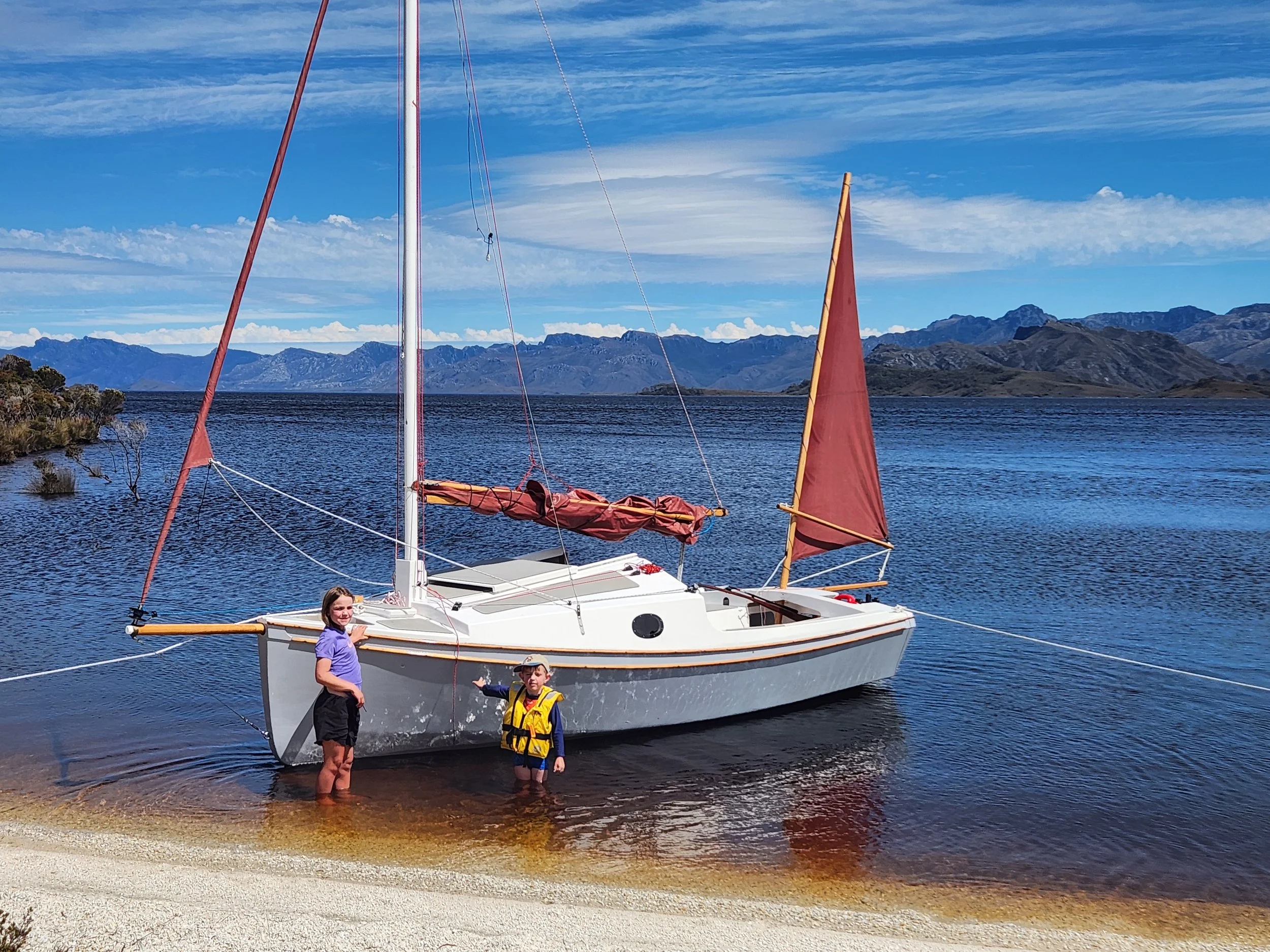
By Paul Stephanus, AWBF Festival Director
After our second child well on the way, we finally decided it was time to move off the 40-foot Port Kembla pine double-ender Sea Dreamer that had been our home and nexus of adventure for the previous 5 years. She’d taken the two of us, then the three of us, then the four of us to Port Davey, Maria Island, up and down the Channel more times than I can count. But we soon realised that if you are not living on them, boats are expensive. She had to go.
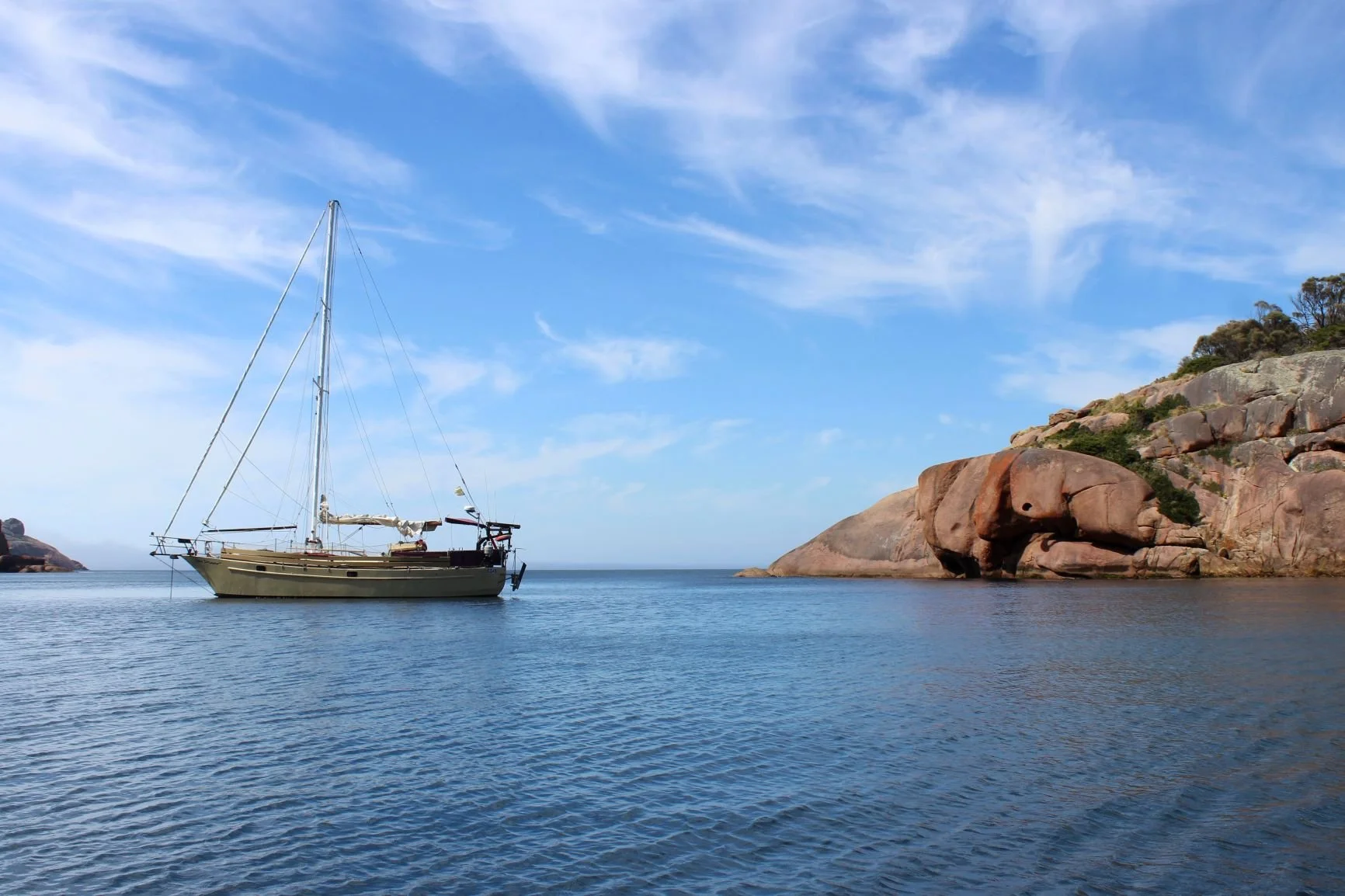
Sea Dreamer in Schouten Passage
That was in 2022, and we had been fairly dedicated land-lubbers until the 2025 Australian Wooden Boat Festival worked me up into a frenzy. I suddenly needed another boat, and was on the prowl.
Among the armada of raid vessels that make their way up from Franklin to Sullivan’s Cove each Festival, there is a sizeable and ever-growing contingent of cruising dinghies. And participating in the raiding party at this particular Festival was the great and characteristically understated New Zealand cruising dinghy designer John Welsford. His boats are stable, spacious, seaworthy, manageable, trailerable, and not bad to look at. That’s what I wanted.
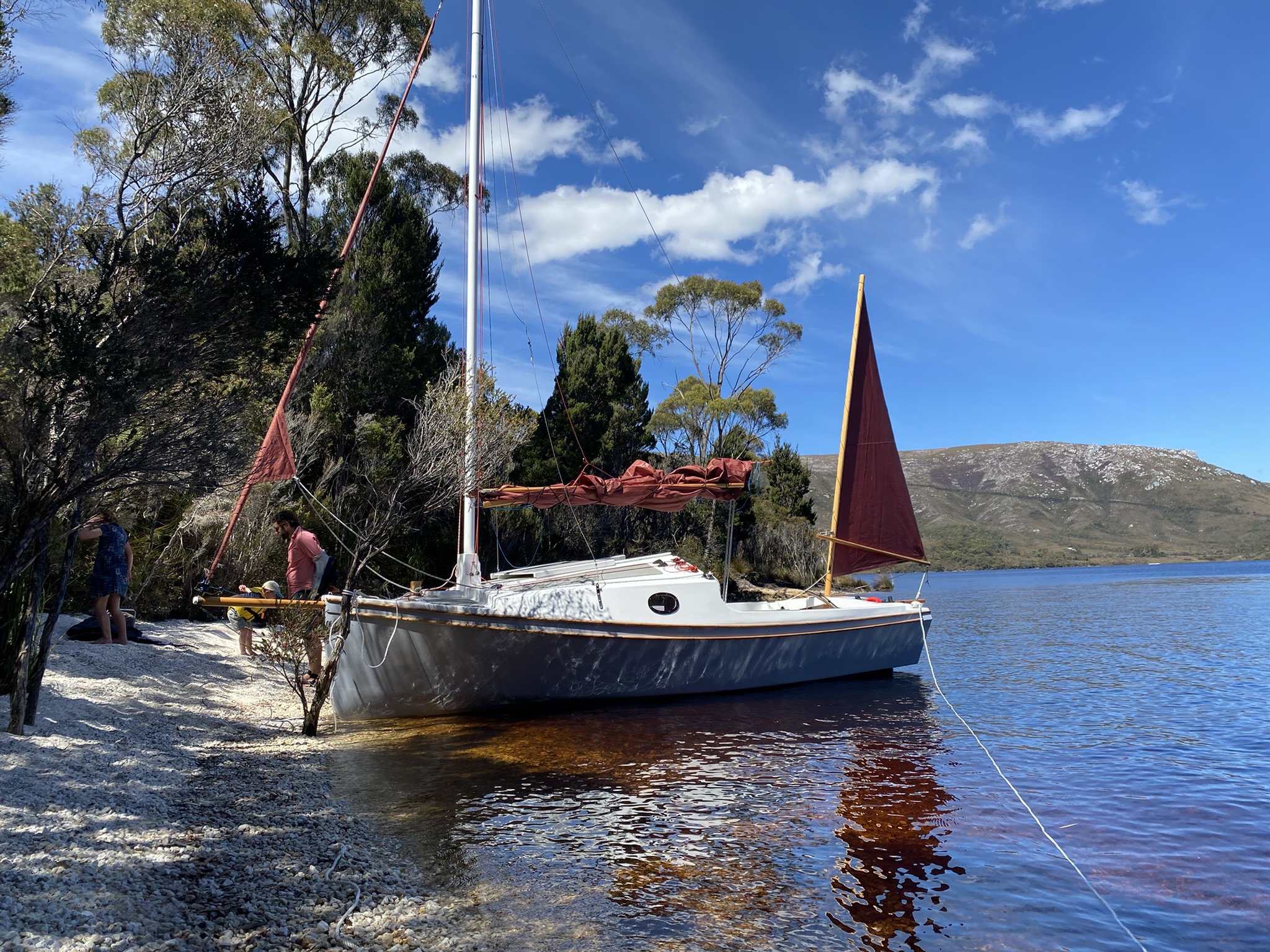
I put the word out that I was in the market, and before I knew it, I was the owner of Sea Bird, a 16’ Sweet Pea (one of Welsford’s rarer designs), commissioned for the Tamar Yacht Club of all places.
Built by a bloke in a shed in Devonport using the finest of hardware store plywoods and finished with the paintiest of paints, Sea Bird was the first gaff I’d ever attempted to sail, the first mizzen I’d ever wrestled with, and by far the largest trailer load I’d ever attempted with my old and ever-aging 2011 Peugeot station wagon.
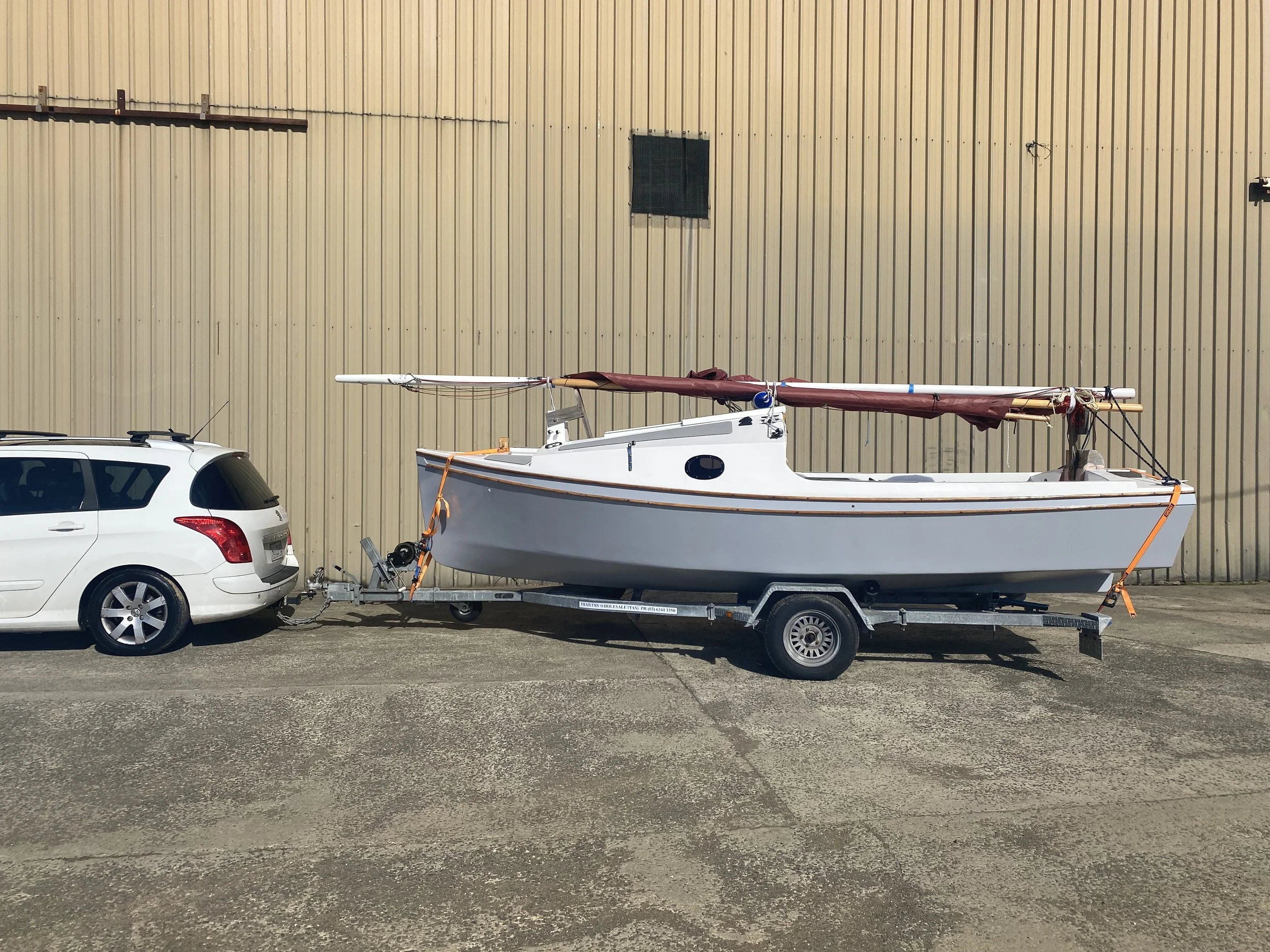
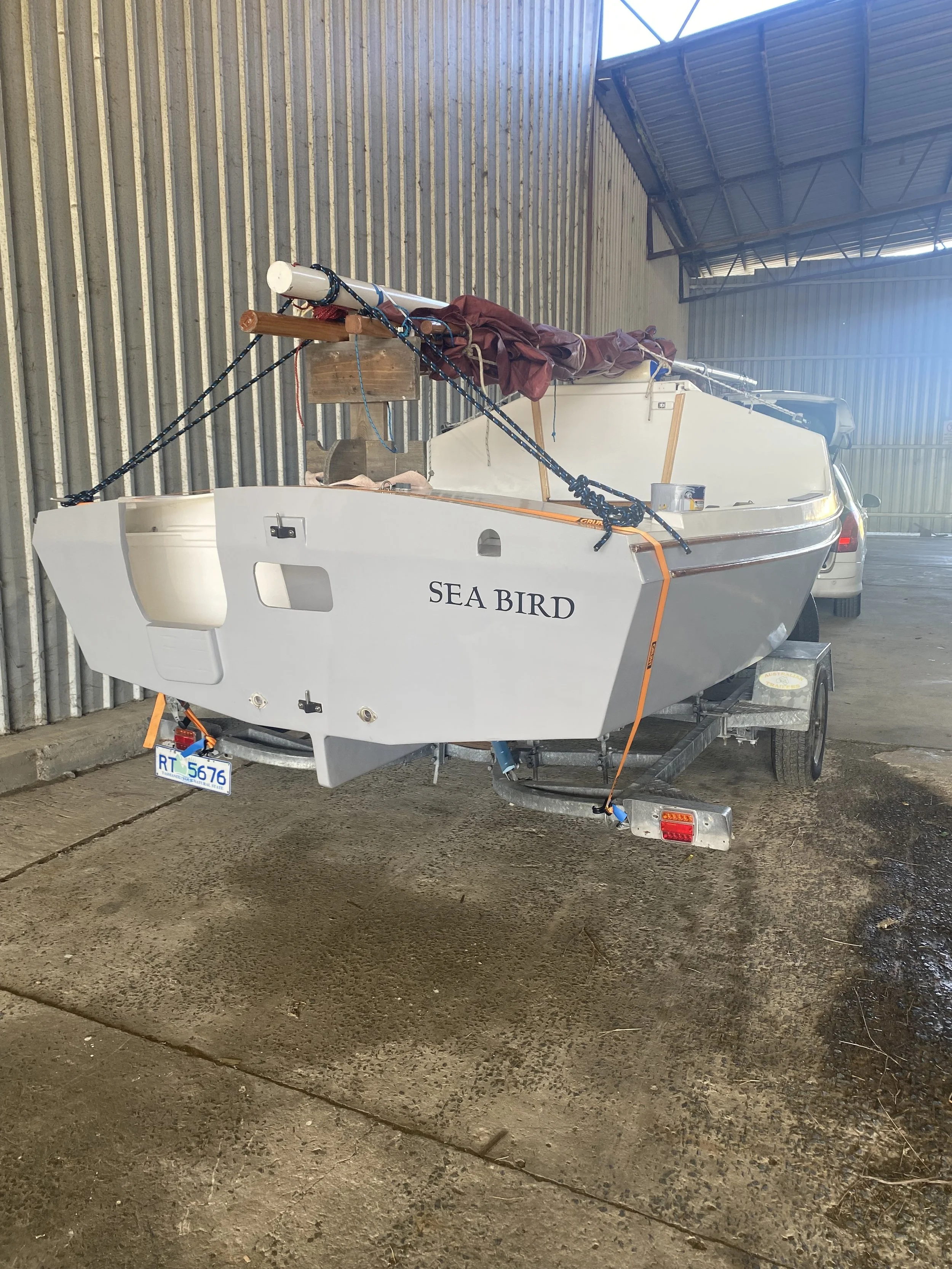
She’s treated us well so far.
Our first trip was out to Lake Pedder in the Heritage Wilderness Area on Tassie’s west coast. Thirty times the size of Sydney Harbour, ringed by temperate rainforest, its blue waters are held up among the midriffs of the mountain valleys by a series of dams, locks, and canals.
Access to the lake is through the old Hydro township Strathgordon, 50 minutes from next closest settlement. The town has long been emptied out and converted into a series of small houses and rooms for visitors, with a boat ramp at the doorstep. By day we sailed the broad expanses, narrow inlets, and recessed coves of the lake, by night we wandered the pseudo-ghost town of Strathgordon, still boasting the amenities of a Hydro-town in its heyday (notably a large and almost always empty heated swimming pool).
All the days, as they do, have blurred into one. The quartz stone beaches that we pulled up to for lunch each day; the wondrous dams like the edge of an infinity pool looking out over the wilderness; the enigmatic mizzen sail whose mysteries I’m slowly unfurling.
As with our days cruising a bigger boat on more turbulent waters, the moments that have been preserved in me are not the moments of sailing or adventure, but those moments when we had tied to the shore and spread out on the beach – my small family at the centre of our own universe, invisible to everyone but each other, carried away by a wooden boat.
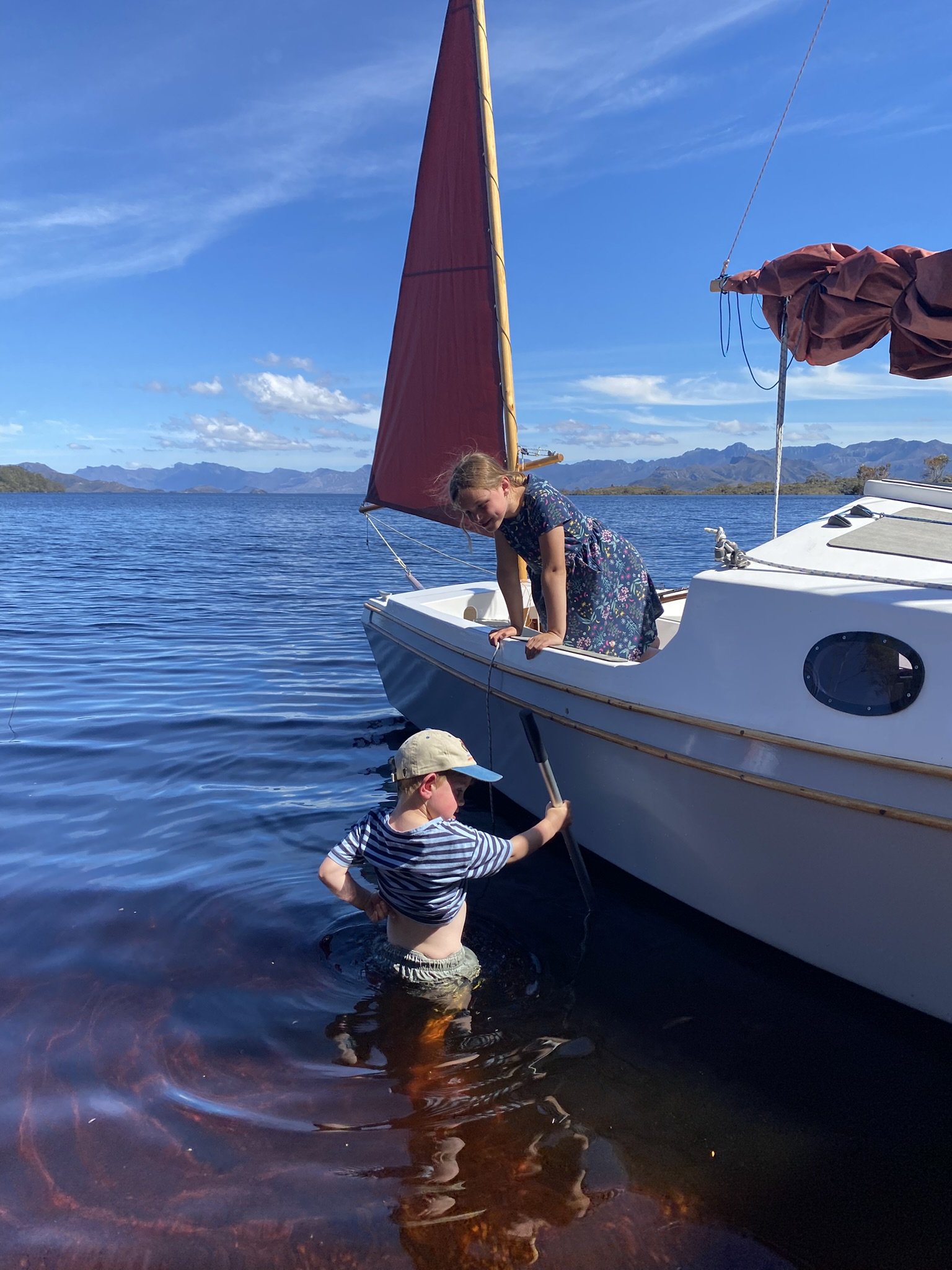
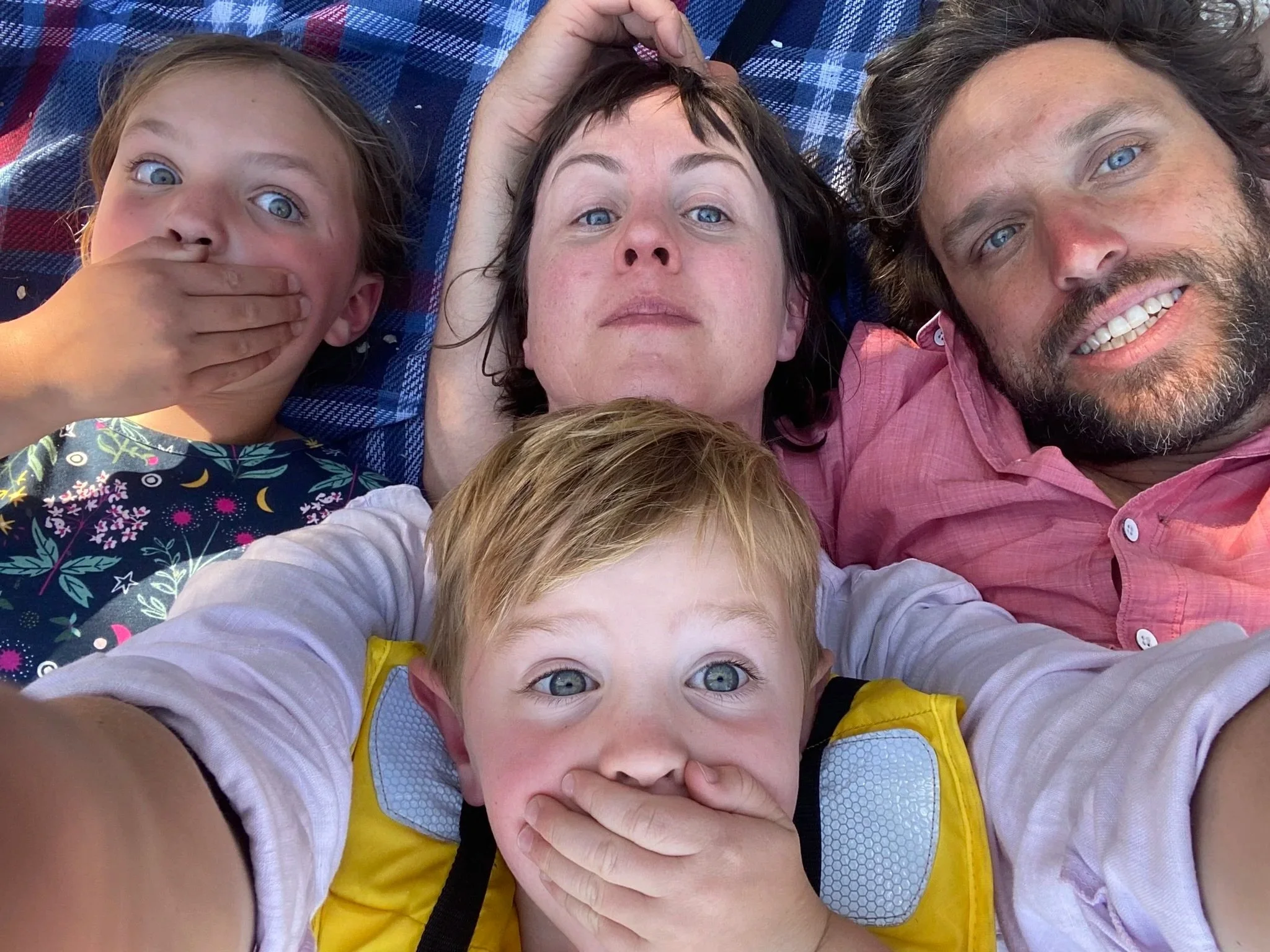
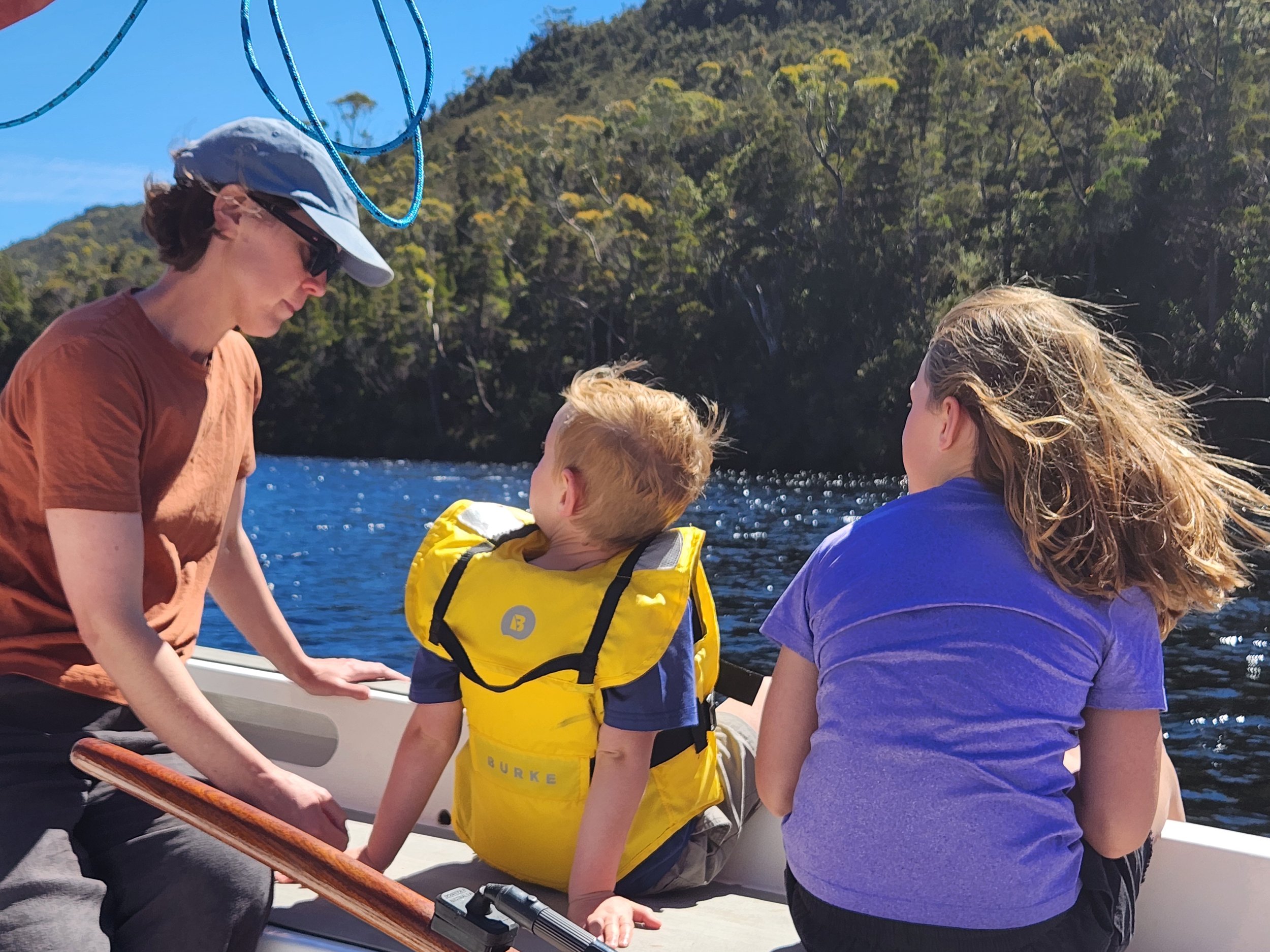
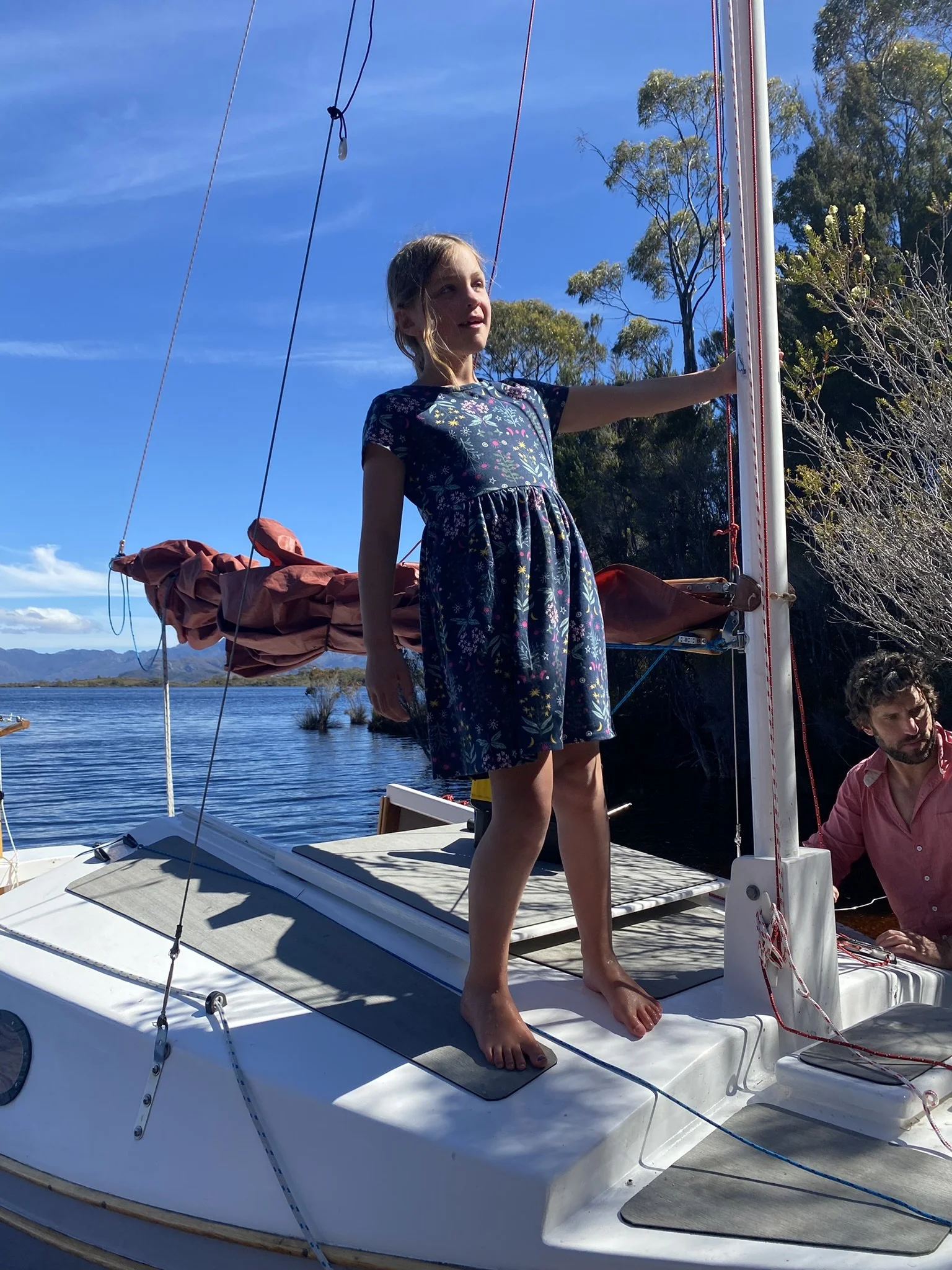
Big boat and small, these vessels collected my family into a bundle and provided experiences that are impossible to have in any other way. I’ve said it before, and I’ll say it again – these boats are mischievous creatures. If you know how to treat them right, they’ll provide you with exactly what you need. In my case it is a bit of adventure, a bit of seclusion, a sprinkle of risk, and time with my family.
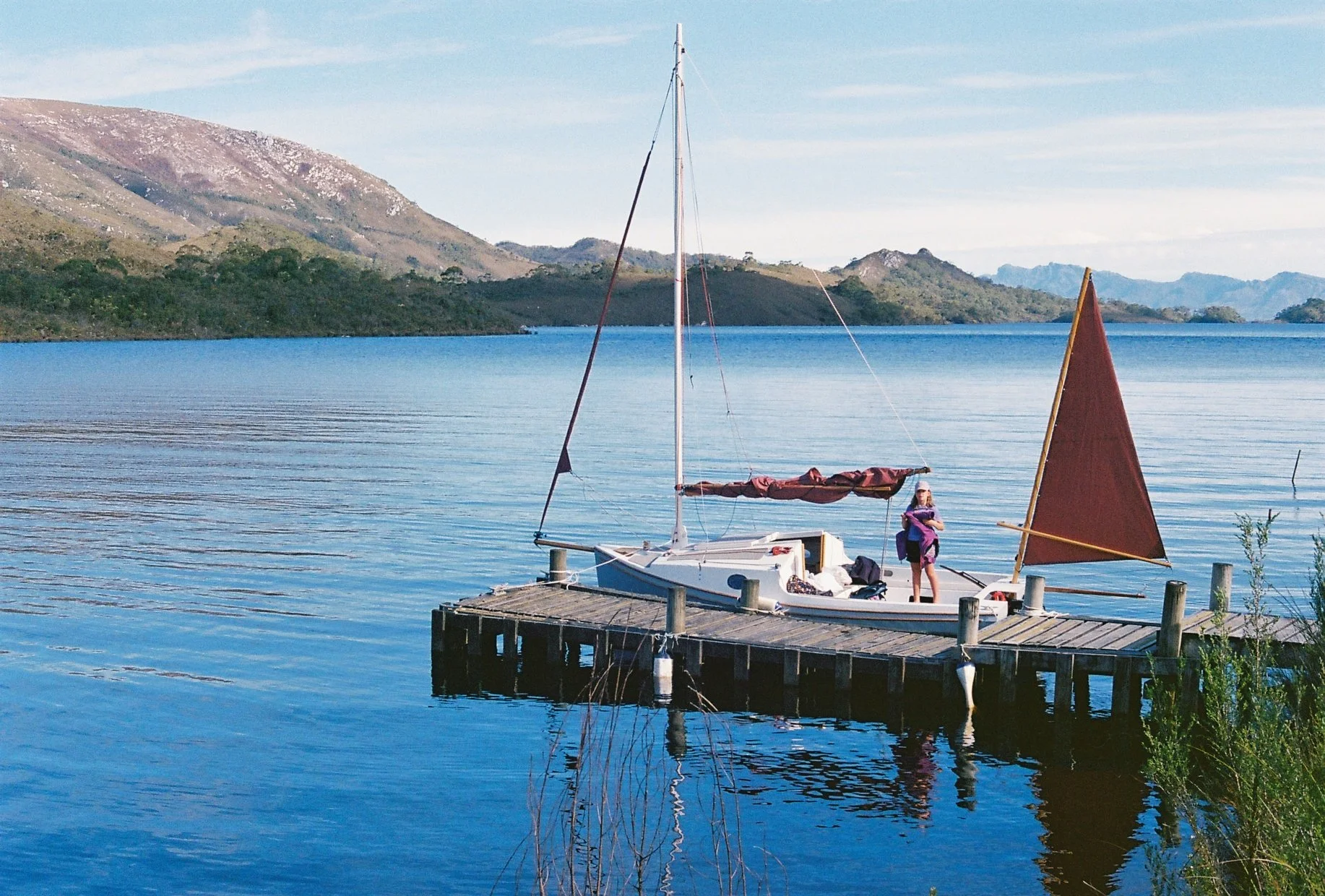
The boat on its own is rarely interesting. It is always the relationships between the boat and the human that makes a story. The minds that design a vessel, the hands that built her, the seafarers and day-trippers who bring her to life.
That’s why I’m bringing Sea Bird to the 2027 Festival, to share the stories stored between her sheets of ply, and to make a few more.