
Flotsam & Jetsam 04.09.26
1963 Sydney-Hobart Update
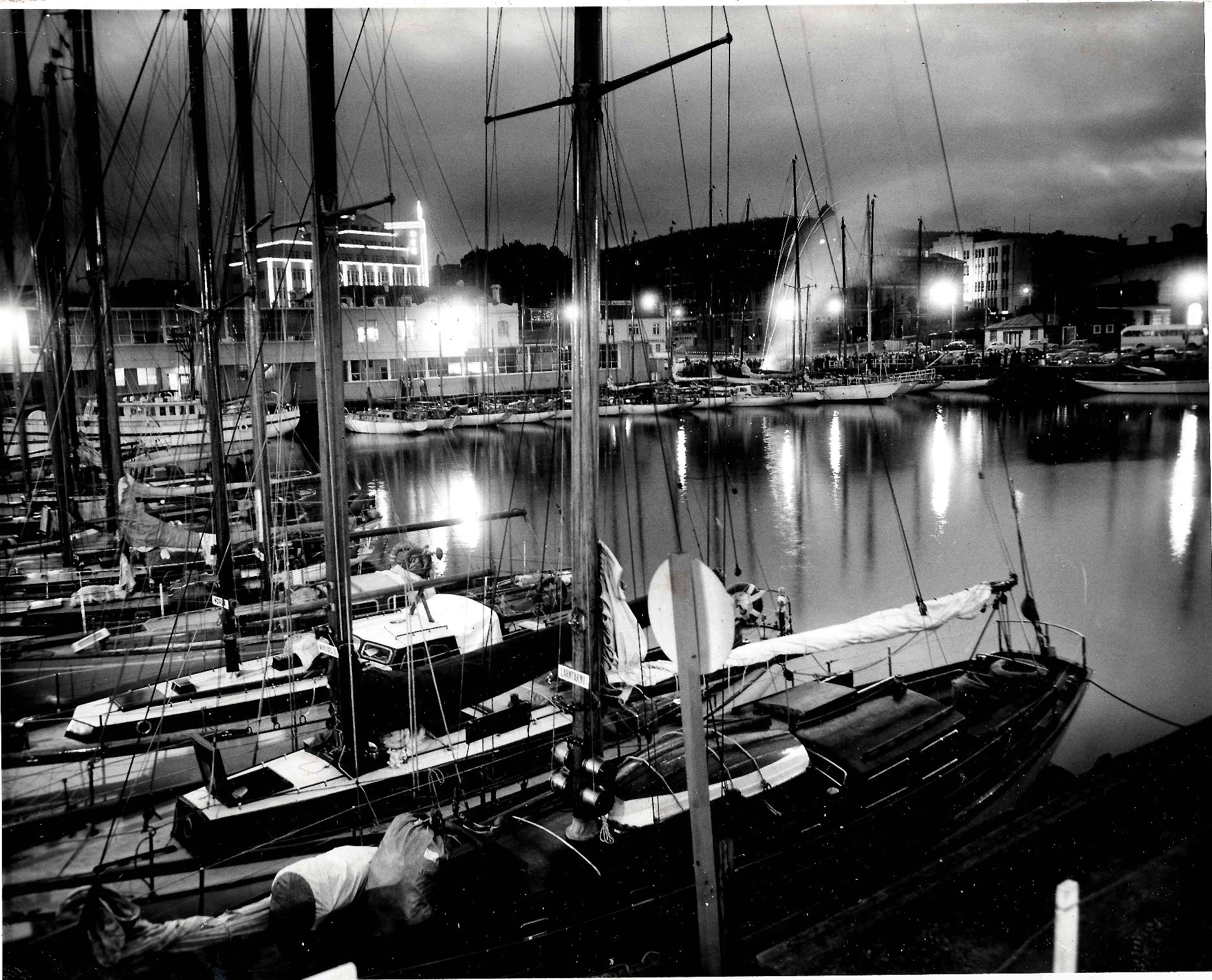
Following our plug for the venerable LORITA MARIA in last week’s news, we were delighted to receive this email and two wonderful photos from the legendary Scott Kaufman
Hi Mark.
I hope is all going well in the Med.
Saw the piece on LORITA MARIA and her 3rd in the 1963 Hobart.
That was my first Hobart and I have attached some photos that I think you will enjoy….. I was 15!
I think we finished 5th that year…. No divisions in the old days.
Crew of seven but Gordon Dunn went to buy some beer and missed out on the photo op!
MERCEDES II second from the bottom next to FREYA I think.
Best,
Scott
Bali’s traditional boats embody centuries of maritime tradition – but they’re quickly disappearing
By Sarah Ward in The Conversation
Five decades ago, Bali’s coastline was adorned with traditional fishing canoes with colourful carvings of mythical elephant-fish. Where did they go?
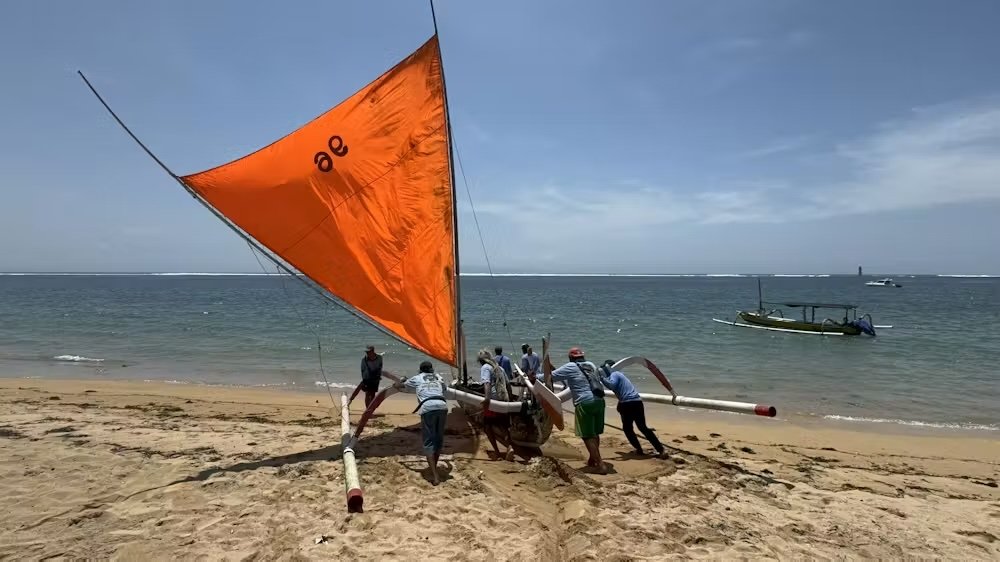
Balinese men launch a timber juking into the sea at Sanur beach, Bali. Sarah Ward
The disappearance of these canoes tells a much bigger story about how tourism, collecting and coastal change are reshaping Indonesia’s living maritime heritage – and why preserving these traditions matters.
Before Bali became one of the worlds’ most popular tourist destinations, fishing villages lined the beaches of Benoa, Nusa Dua and Sanur, along the island’s southern coast.
Generations of fishers built and sailed jukung pelasan – traditional timber double-outrigger sailing canoes with colourful carved gajah mina (elephant-fish) prows.
The gajah mina is a creature in Balinese Hindu tradition with the head of an elephant and the body of a fish. Symbolising unity and harmony between land and sea, it is said to protect crews during voyages and provide safe passage.
These were not just fishing boats; they were central to daily life in southern Bali.
Read on HERE
Cocos (Keeling) Islands - Indian Ocean Maritime Heritage
From the Melbourne Maritime Heritage Network
The Cocos (Keeling) Islands are a remote Australian territory in the Indian Ocean, approximately 2,750 kilometres northwest of Perth. This small tropical archipelago comprises 27 coral islands and has a population of around 600 people, predominantly of Malay heritage. It is certainly one of Australia’s most remote maritime communities.
Justin Malk, who recently joined the MMHN Board, visited the Cocos (Keeling) Islands and found a community where maritime heritage is not simply preserved - it remains part of everyday life.
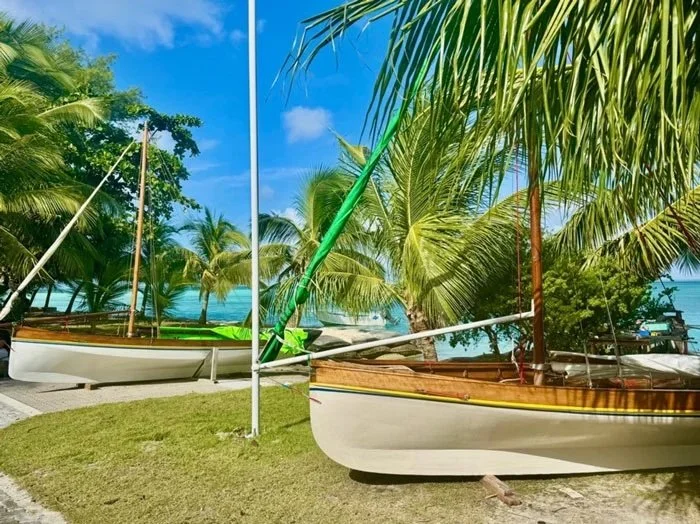
Sailing boats on Cocos. Credit: Justin Malk
Walking through Bantam Village on Home Island, perhaps the most striking sight is the number of traditional vessels, known as jukongs, sitting in residents’ front yards. The small Pulu Cocos Museum tells the story of the islands through artefacts, photographs and maritime history, including the beautifully shaped traditional wooden sailing vessels.
Step outside the museum, however, and this maritime heritage is everywhere - still actively used, maintained and passed from one generation to the next. The islands retain a boatbuilding and seafaring tradition that stretches back through generations of the Cocos Malay community. Jukongs are still being built, maintained and raced on the island lagoon today.
Read on HERE
Victorian CYAA Update
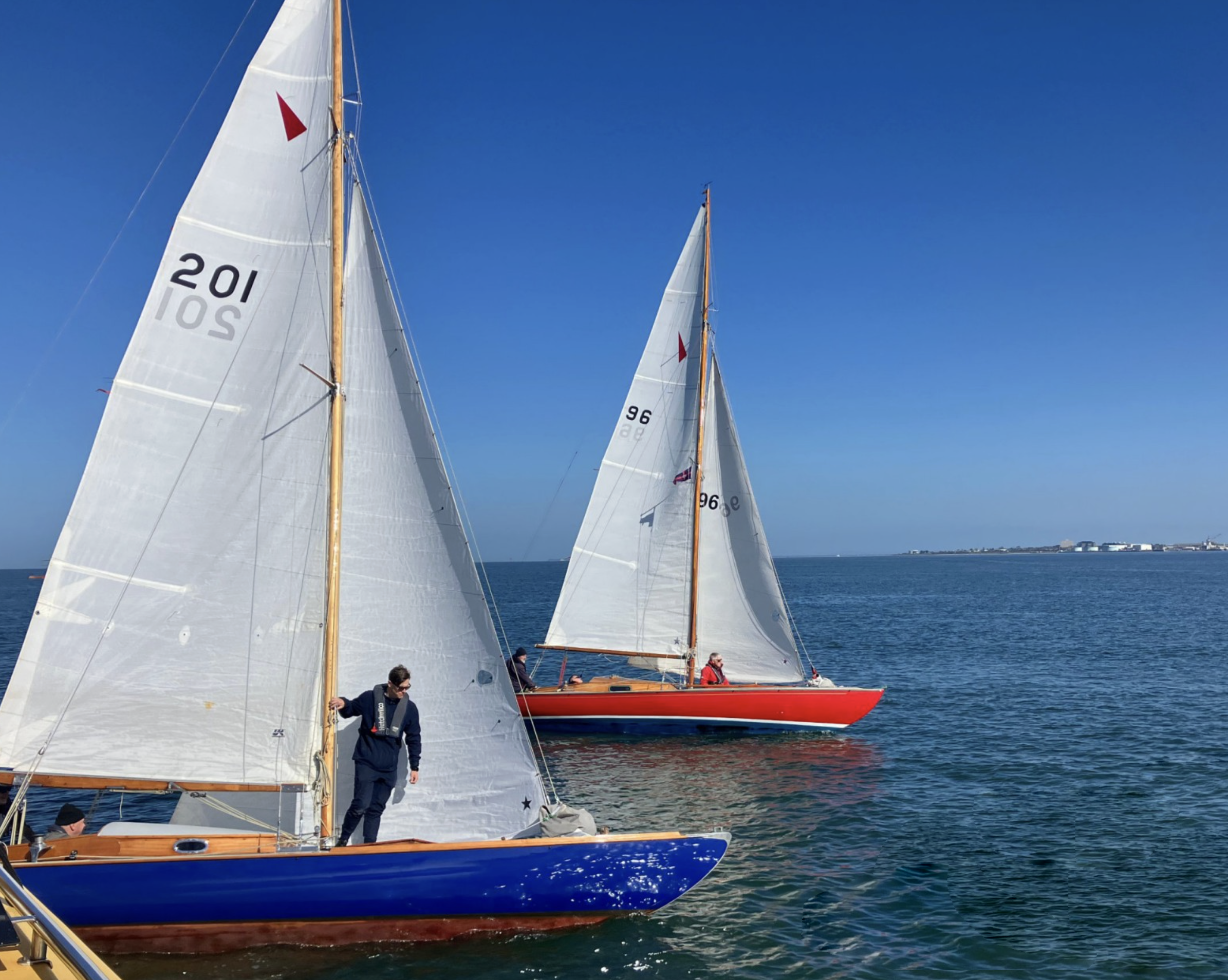
VAHINE & AVIAN starting Race 11
The latest information from Peter Costolloe covers….
1. Race 12 start list, SI's and Boat racing sign on links
2. Photos and results from Race 11
3.. 2026/2027 Summer Series entries now open
4. 2026 Cup Regatta notes and entry
5. CYAA Boat Register listing promotion
6. Pastime II skipper and crew at Hamilton Island7. Martini and her travels through some European boat harbours.
Click HERE for the ull experience
Reef relief: how a late summer monsoon helped cool the Great Barrier Reef at just the right time
Again from The Conversation
Australia’s Great Barrier Reef is a true natural wonder: a unique and diverse underwater seascape the size of a small country.
However, cycles of disturbance and recovery threaten to turn its colourful coral gardens into algal-dominated seascapes – then back again. And these cycles are becoming more volatile as our world warms.
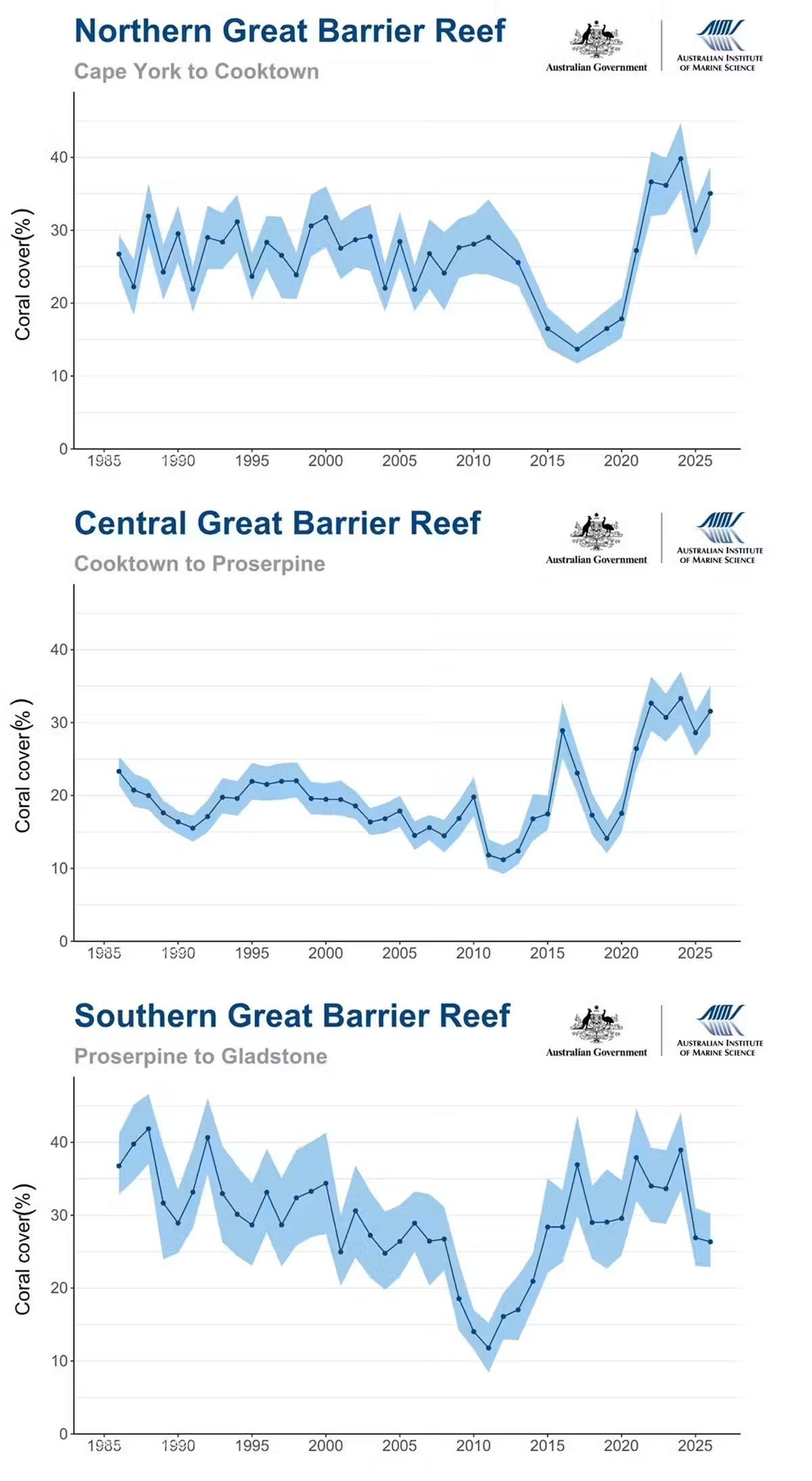
At the Australian Institute of Marine Science, we’ve been documenting these changes for the past four decades through our Long-Term Monitoring Program. This is one of the longest records of continuous coral reef data in the world.
Concerningly, we’ve watched the health of the Great Barrier Reef begin to fluctuate dramatically over the past 15 years. The 2024 mass coral bleaching – where a record-breaking marine heatwave bleached coral reefs from the Caribbean to the Indian and Pacific Oceans – was particularly destructive. It caused the largest single-year decline in coral ever measured in two regions.
However, our latest report reveals some promising signs of recovery.
South Australian News
If you are interested in what’s going on in the wooden boat world in South Australia, especially arounf Goolwa then Crow’s Nest, published six times per year by the Wooden Boat Association of South Australian is a must.
The August edition is HERE.
We particularly enjoy browsing all the small craft for sale…just wailing to get you out on the water!