Flotsam & Jetsam 14.08.26
An Orca Follow up Story
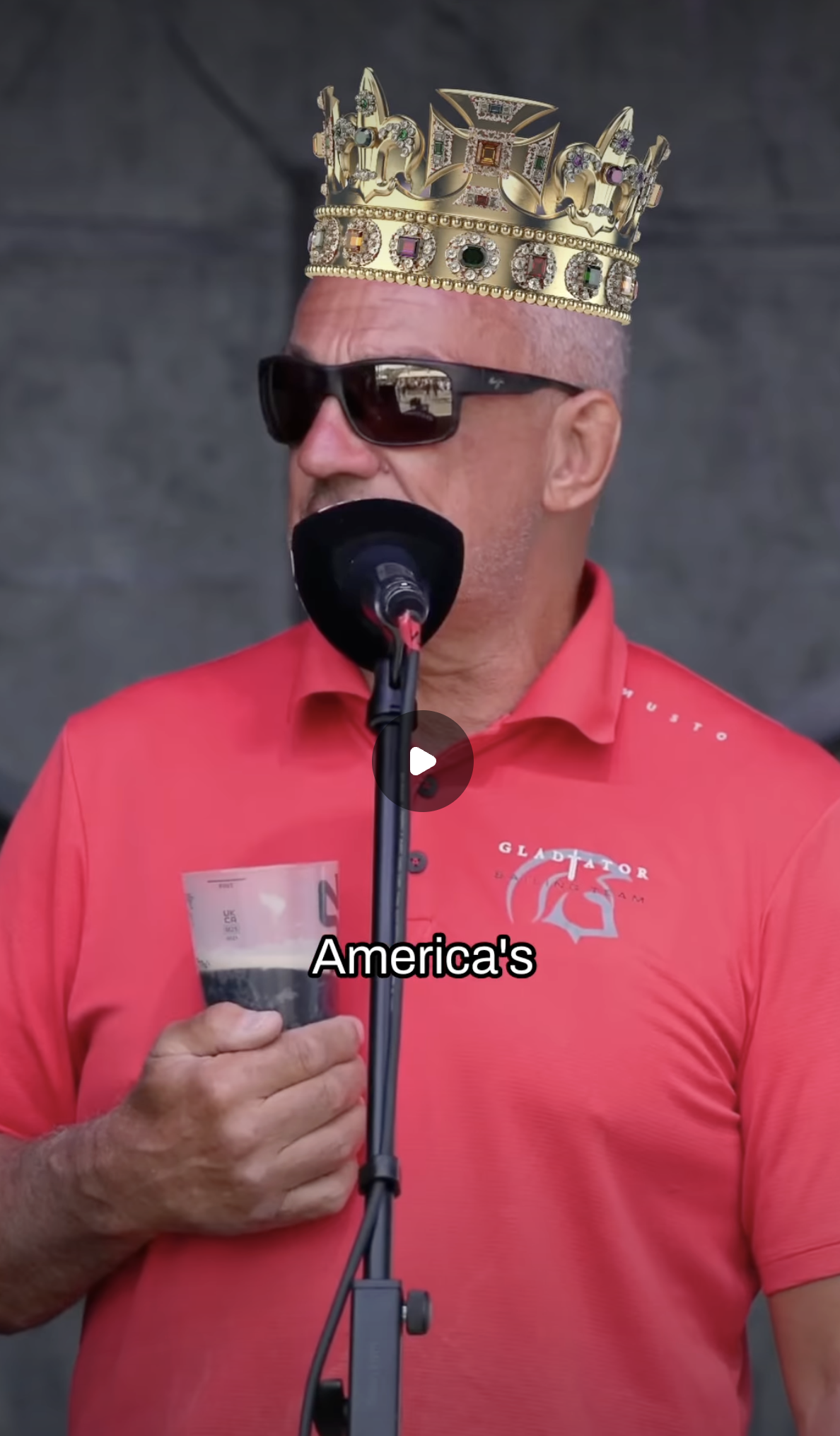
Last week’s most popular story was our analysys of the orca situation off the coast of Spain and Portugal. But I’d forgotten about the story of the LUCETTE which we had published a couple of years ago. I was reminded of it this week when a couple of readers sent me this wonderful Instagram Post. Click to watch

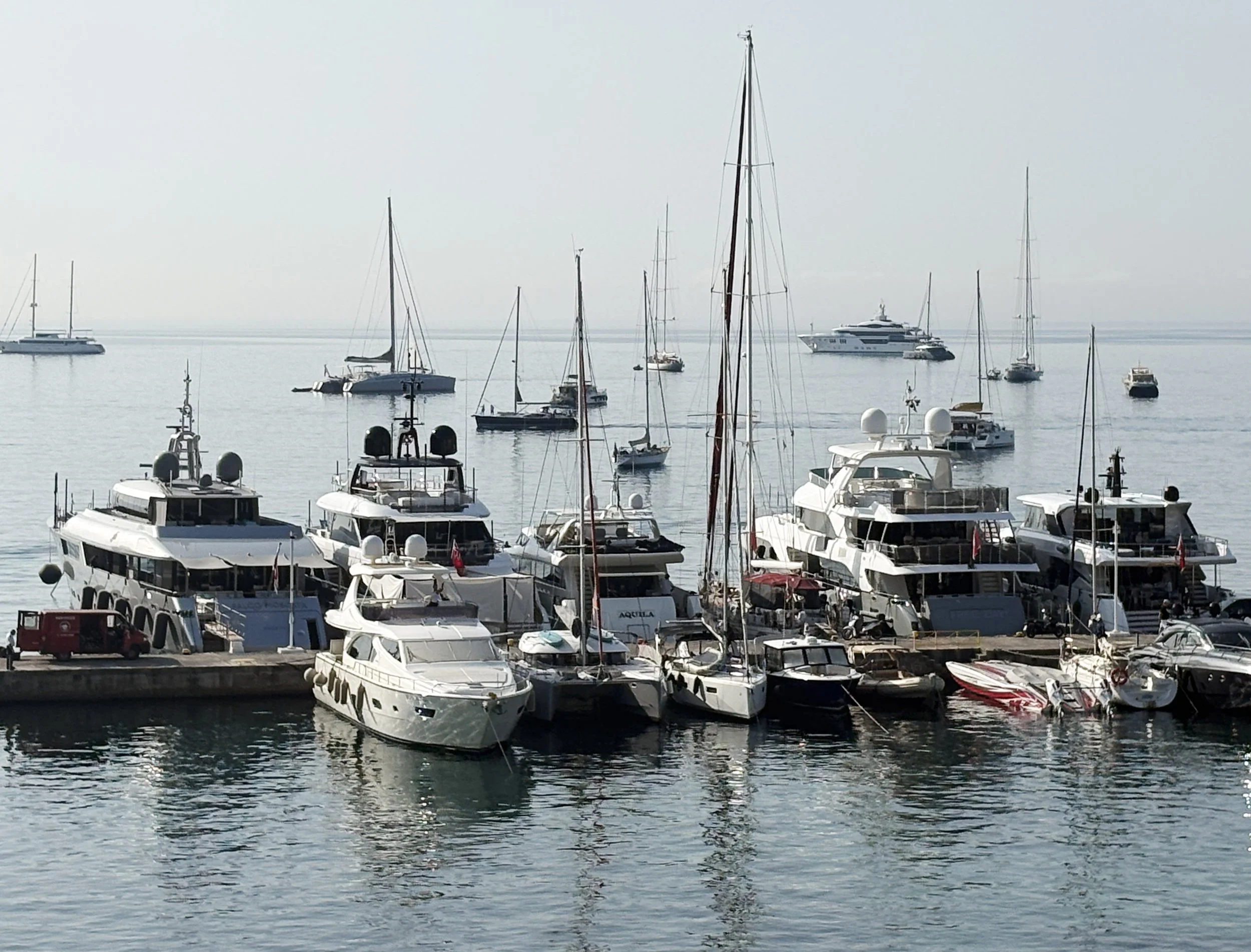
Is boating becoming too luxurious for boaters?
We think this story by Neil Chapman is GOLD!, He is the founder and CEO of Boatshed.com, an international yacht and boat brokerage group operating more than 70 offices across 18 countries. Chapman is also author of a Substack called Boatshed Neil,
It’s been one of those months where seemingly unrelated pieces of news begin to form a pattern.
Kadey-Krogen, the respected American trawler yacht builder whose boats have long been admired by serious cruising enthusiasts, has filed for bankruptcy after almost 50 years. In Plymouth, Yacht Solutions Europe, a highly regarded refit business founded by former Princess Yachts employees, has also entered liquidation. At the same time, conversations continue around the value of production catamarans, with charter operators increasingly surprised by just how far prices have fallen.
Individually, none of these stories tells us very much.
Together, they ask an interesting question: Has the boating industry gradually drifted away from the very people who built it?
For years we’ve presented boating as the ultimate luxury lifestyle. The glossy brochures are full of teak decks, champagne, designer interiors and waterfront apartments. There’s nothing inherently wrong with that. Boats can certainly be luxurious.
But that isn’t why most of us fell in love with them.
For many sailors and motor boat owners, boating has always been something much simpler. It’s camping on water. Sometimes it’s cold. Sometimes things break. Sometimes the kettle goes flying across the cabin. Yet somehow those inconveniences become part of the story rather than reasons not to go.
Advantages of Owning Smaller Yachts: Adrian Morgan’s Boat Scale
This free article from Classic Boat Magazine makes a lot of sense to us here at SWS. But then Adrian Morgan usually does!
Credit: Charlotte Watters
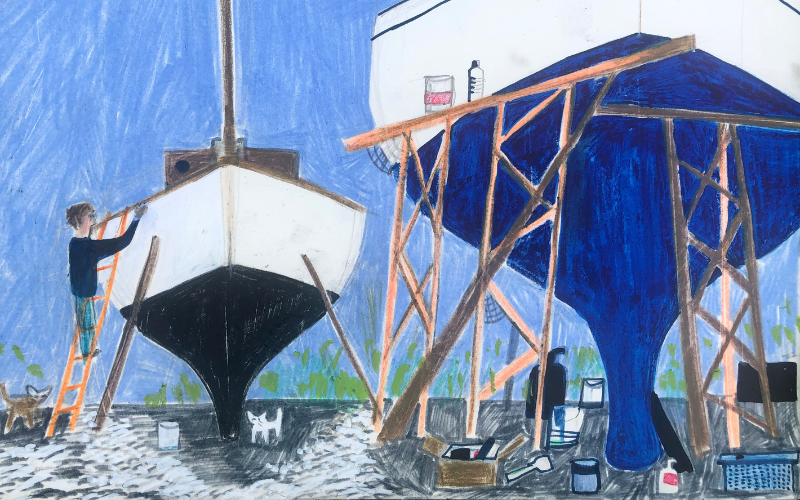
It is a truth universally acknowledged that… the smaller the [wooden] boat the greater the pleasure, and I would add, just as important, far less of a chore to fit out. It takes time enough to sand, fill, prime and paint Sally’s topsides, then I look to my right where stands, propped up in the yard, a yacht not many feet longer than my modest 25 footer, and I thank goodness for small boats. Z4s, Hillyards, Debens of various kinds, et al, the list is long.
Those hardy souls who camp in dinghies under ingenious tents, heating their rations on portable gas stoves, get even more of my admiration. It’s great to be invited aboard a big wooden classic, and I treasure my time racing the McGruer Kelana, or squatting on the aft deck of Moonbeam, but would not envy her owners the task of maintaining them every year to the highest standards. That’s like grooming an elephant, when all you really have the energy for is to stroke a kitten. One is exhausting, the other is relaxing. Up to a point.
I reckon 25ft is about as much as one person can maintain, allowing a day for each of the annual chores. A day to sand the topsides, another to strip the varnish, one to antifoul, and so on. Sally comes into that category, but even so, after a week which begins with despair at the task facing me, then satisfaction in seeing the work list slowly shrink, towards the final push to complete all by the time the yard want to launch her, I have lost much of the enthusiasm and just want to see her floating to her waterline again at her mooring in Loggie Bay, a spit opposite the yard where she has been for a couple of weeks.
‘I haven’t felt this present for months’: sail back in time on a Thames barge in Essex
Another article in the national press advocating the benefits of sailing! This time its the Guardian by Imogen Lepere. What’s going on? Are we becoming mainstream!
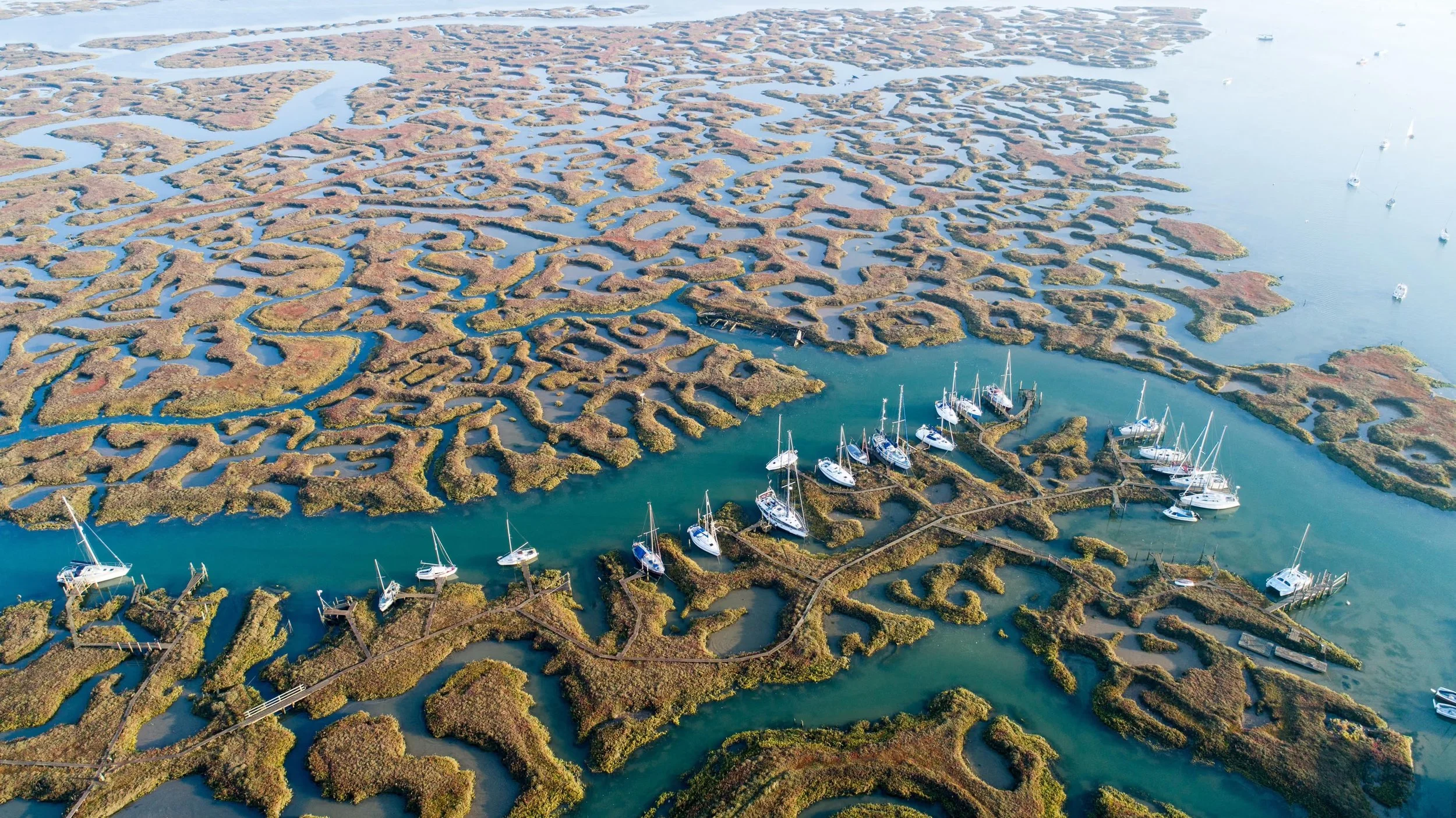
Tollesbury Saltings, a natural tidal marina and saltmarsh ecosystem at the mouth of the River Blackwater. Photograph: Geoffrey Robinson
In a darkened room in Maldon, Essex, a ship’s lantern illuminates the laundry drying on a web of ropes suspended from the ceiling. Between piles of sailing memorabilia, 86-year-old Barry Pearce is flipping through a yellowing logbook, watched by his mongrel, Winkle. It feels more like a ship’s cabin than a terrace house. Pearce is one of a handful of surviving skippers who delivered freight on the Thames by sailing barge, the flat-bottomed trading boats famous for their striking red sails that were endemic to the river’s estuary until the 1960s. He remembers the names of every vessel he worked on – Remercie, Edith May, Colonia.
In the 19th century, the ochre sails of thousands of Thames sailing barges pierced the skyline as the craft carried cargo from the Thames estuary and beyond in and out of London. Their shallow draft allowed them to snake far upriver in as little as a metre of water (bargemen would boast that they could sail anywhere there had been a heavy dew). Their ingenious rig, with sails that could be set and stowed with the help of winches, meant around 150tonnes of cargo could be shifted by just a skipper and mate – often accompanied by a guard dog. This efficiency allowed them to outlive all other commercial sailing vessels, surviving until the 1960s, when Pearce himself took the helm.
CYCS 2026 Bids Adieu to Maine After Stunning Stretch of Regattas
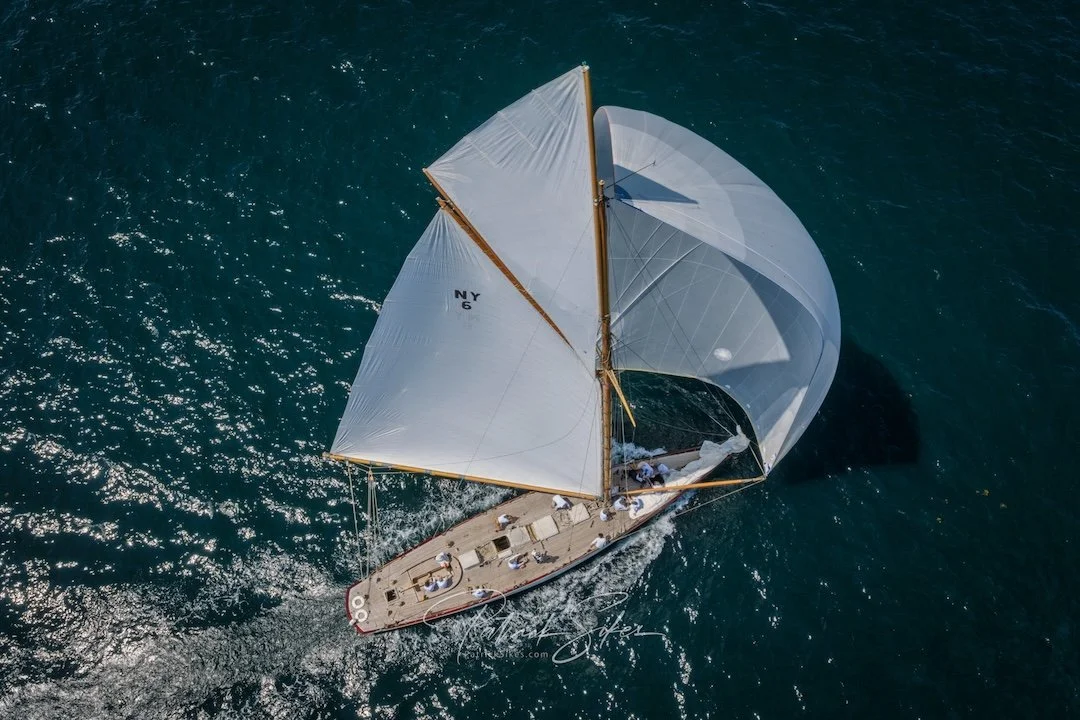
Photo: Patrick Sikes
After three exciting distance regattas, the 2026 CYCS season in Maine has come to a close. The Castine Classic Yacht Race, Camden to Brooklin Race, and the Eggemoggin Reach Regatta had some of the season’s biggest classics fleets and featured yet another weekend of champagne sailing conditions.The 2026 CYCS Maine stretch lasted for three weekends of spectacular weather, spirited competition, and trademark classic sailing camaraderie amongst CYOA members and friends. Across the five regattas that took place since late July, only a single day of racing was cut short due to winds too strong to sail safely.In addition to a gorgeous three days of classics sailing, the Maine distance regattas saw the return of theHerreshoff NY-50 Spartan to American waters. The stunning vintage raced in all three events winning its classes in the Camden to Brooklin Race and Eggemoggin Reach Regatta.
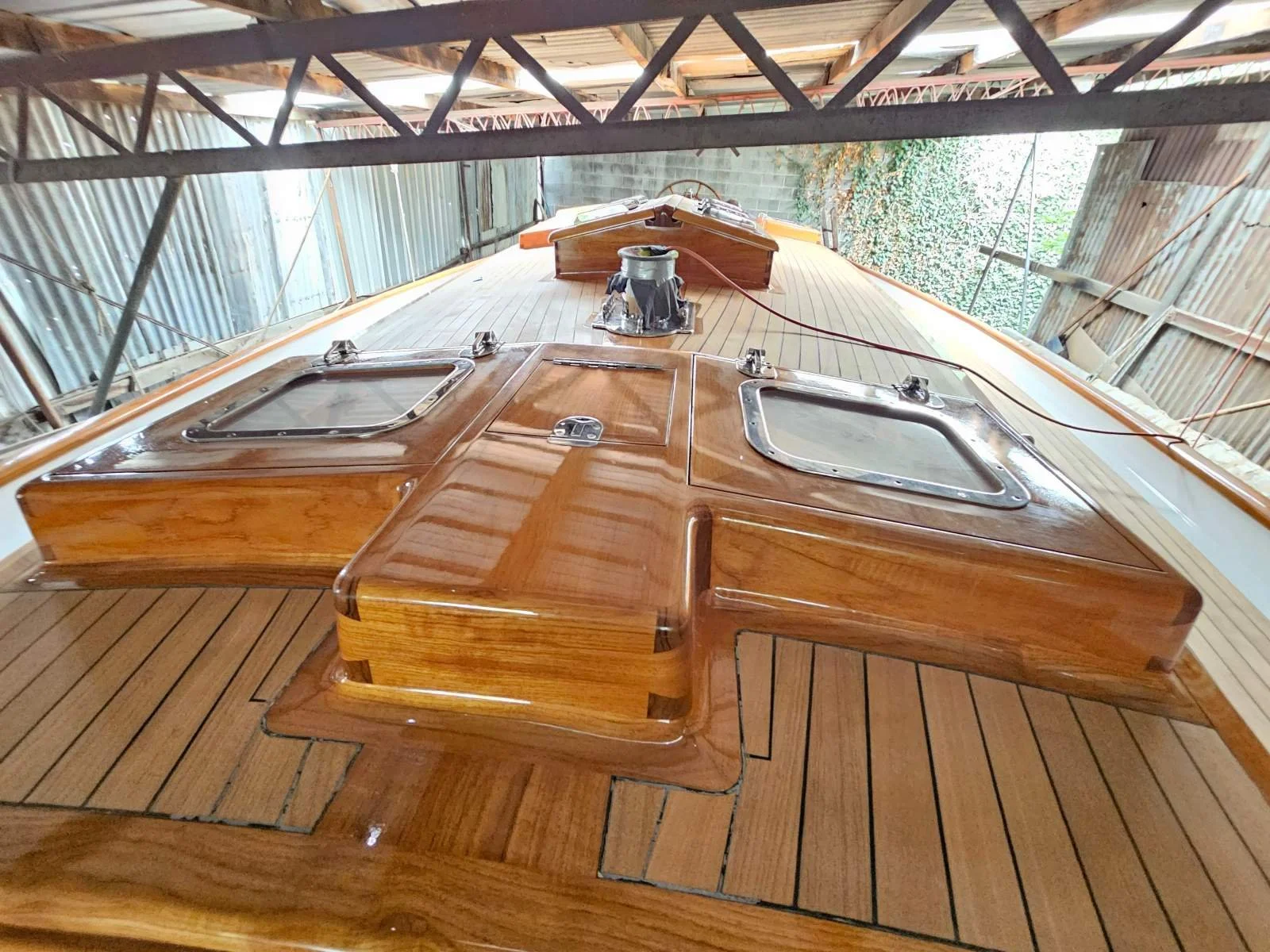
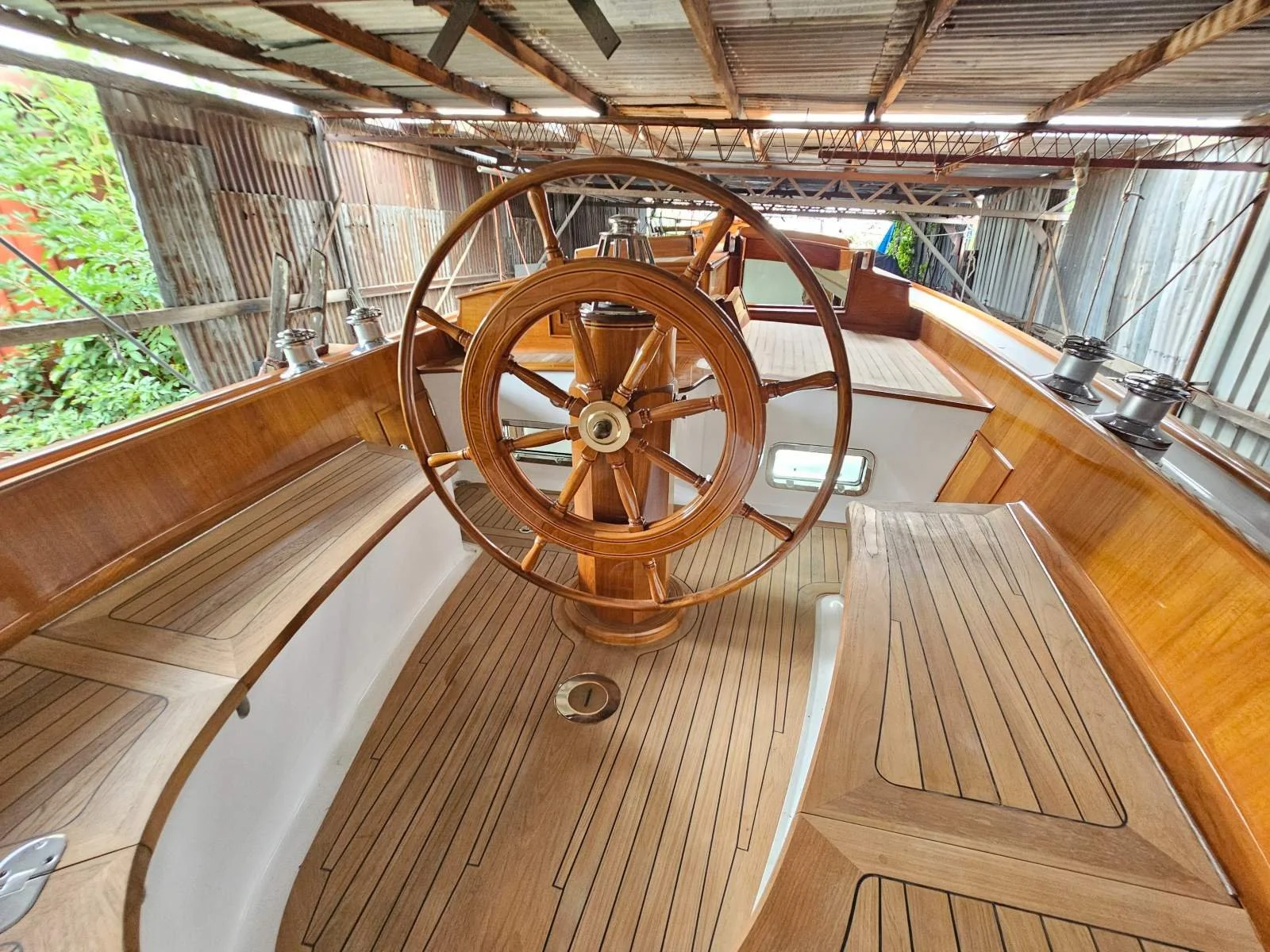
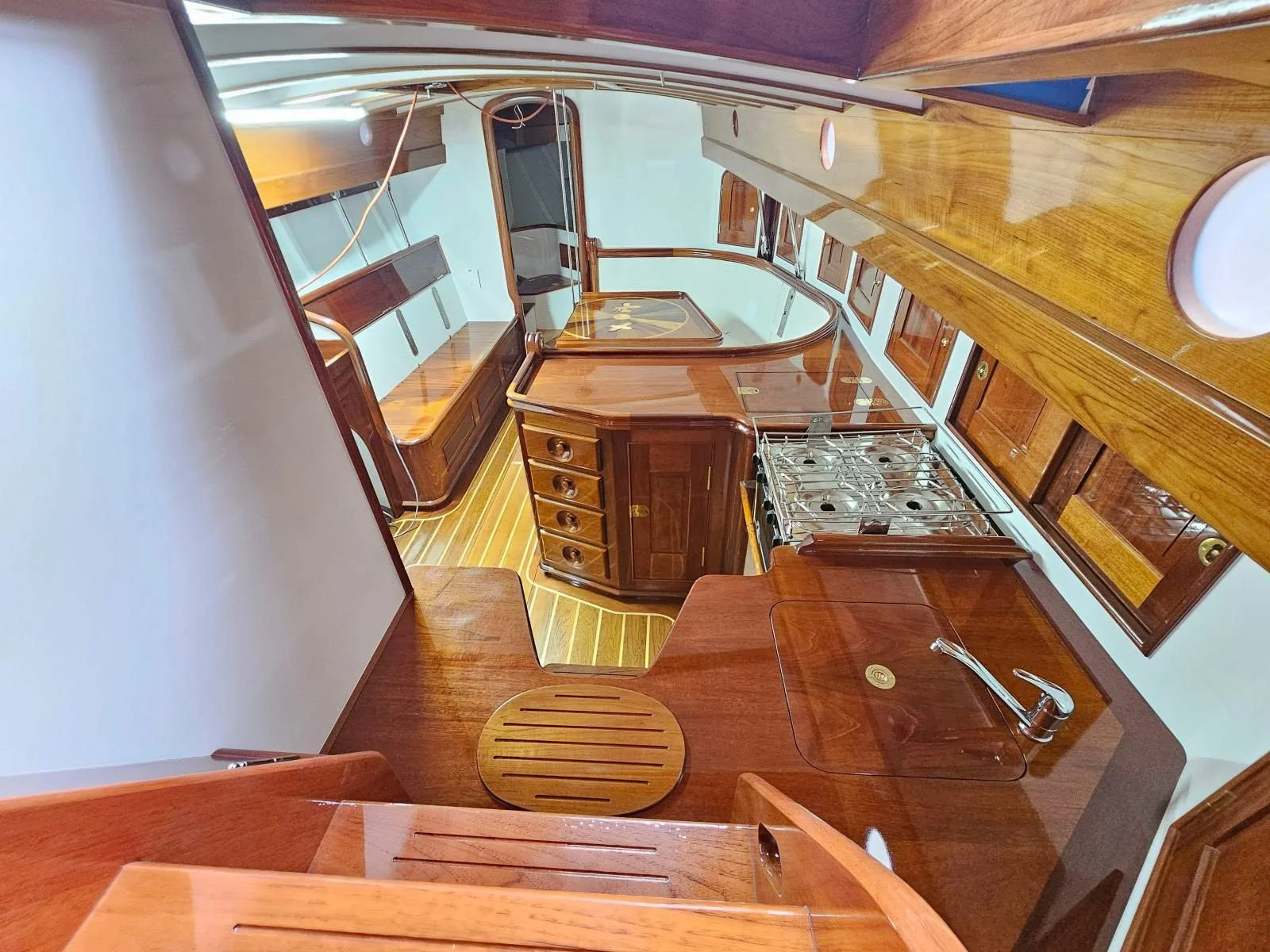
A Bruce King 46 Hand-Built Yacht
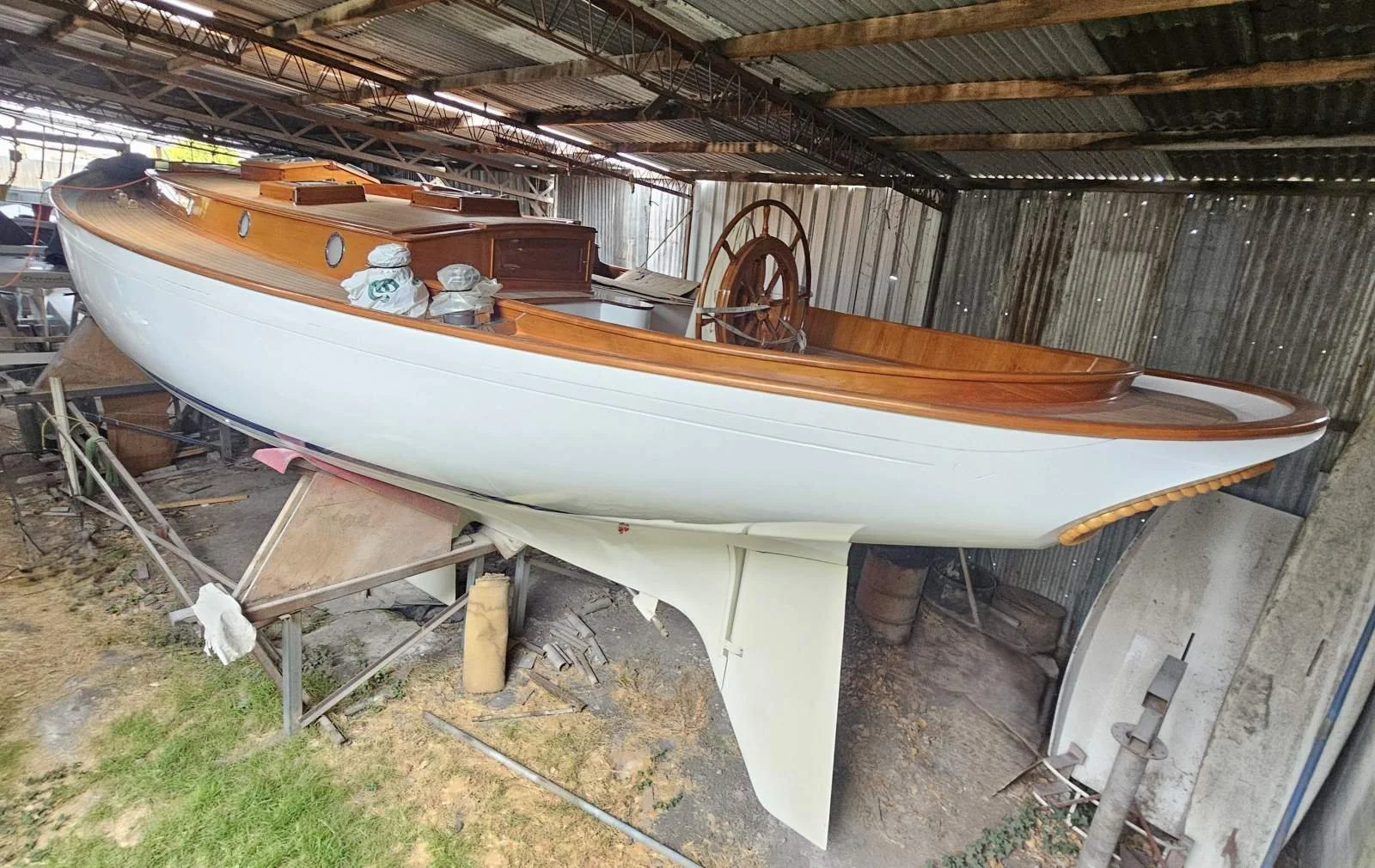
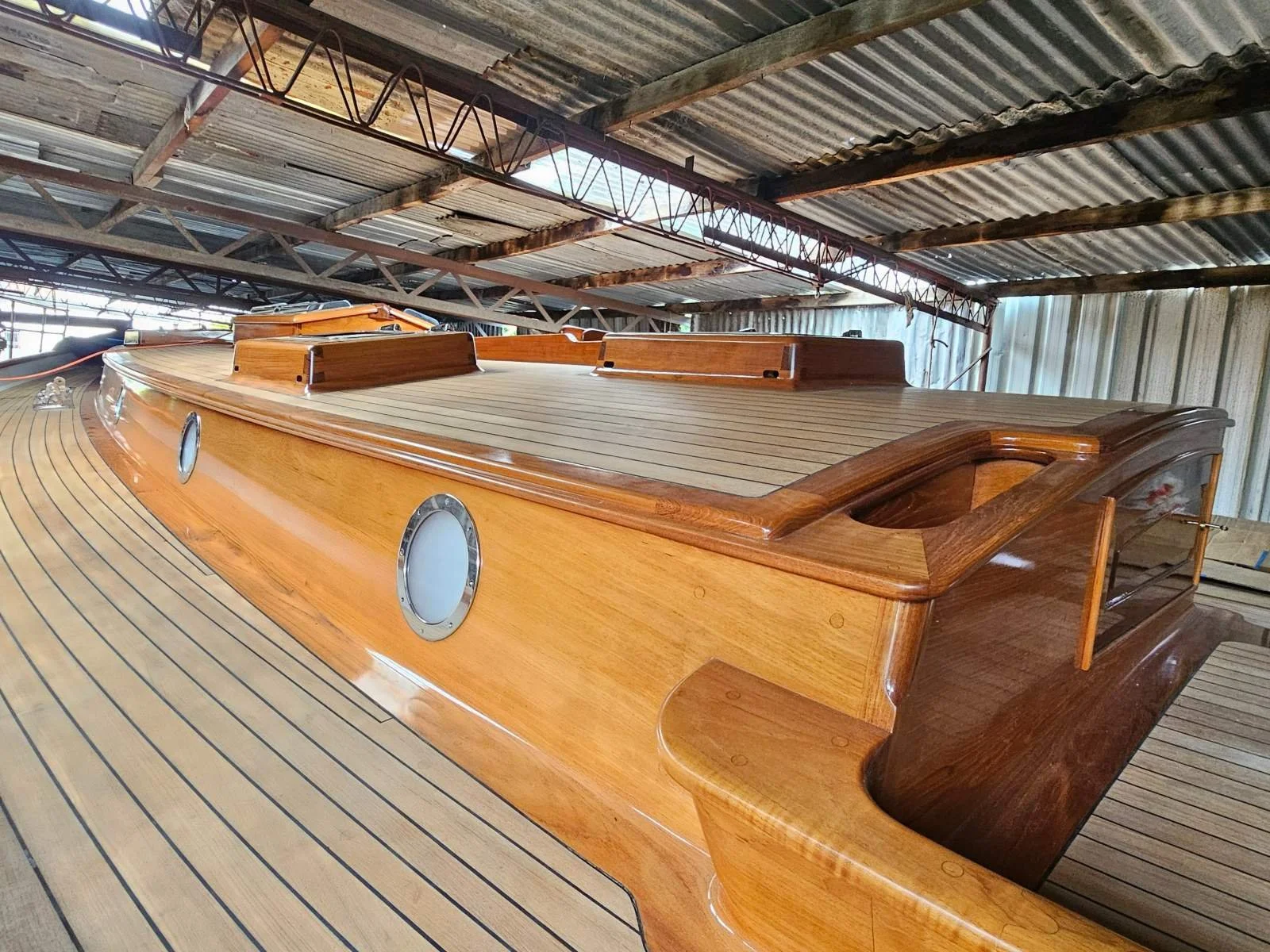
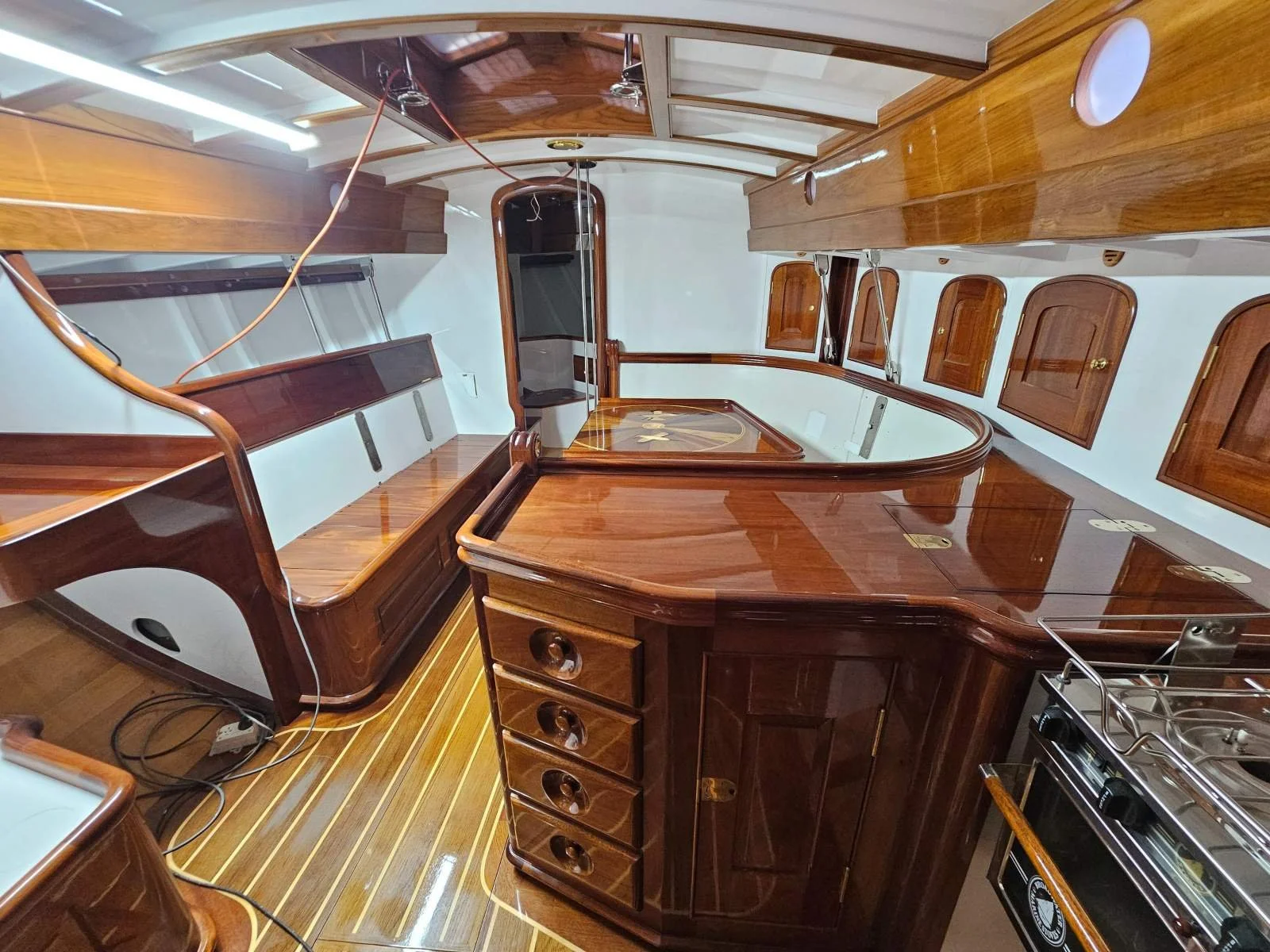
This is an interesting one. Although hull shape is pretty, the details are not to my taste. But having said that, the craftsmanship seems extraordinary! And after 25 years of creation, I’d be worried about finding a buyer with one and a half mil. in his back pocket AND a serious love of vanishing!
The slightly breathless sales copy goes like this
This Bruce King 46 is the result of one man's vision, another man's craftsmanship, and twenty five years of patient, meticulous dedication. She is more than a vessel -- she is the final chapter of a Tasmanian boatbuilding legacy, shaped by hand, plank by plank, with the kind of devotion that simply doesn't exist in modern production yards.
Two Countries, One Fight to Keep Wooden Boats Alive
These powerful words from the Director of the Port Townsend Wodden Boat Festival, coming up next month.
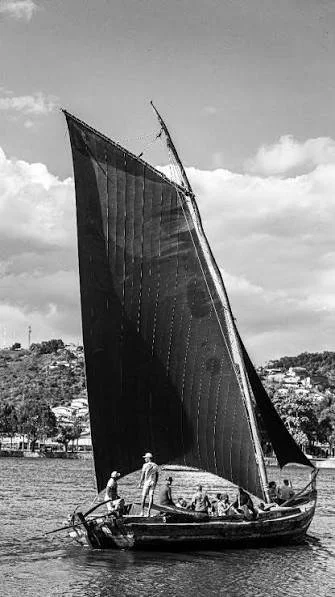
A saveiros de vela
Every year, people travel from all over the world to share their wooden boat stories at our Festival. This year, two of those stories happen to come from opposite corners of the globe.
From Brazil: In the Bay of All Saints, colorful cargo sailboats called saveiros de vela once connected entire coastal communities, carrying goods, people, and news from town to town. Today, only about 20 are still working the water.
A new collaboration between Projeto Içar, BRANA, and Brazil’s master shipwrights is fighting to change that, creating real economic opportunity so the tradition, and the families who’ve carried it for generations, can keep going.
The story is fascinating in part because so much of this knowledge has never been written down. The plans are memorized and passed down through generations. Many of the shipbuilders learned their craft outside of formal education, through years of working alongside other builders. Today, that living knowledge can be difficult to fit into modern systems of certification, which often rely on written plans and formal credentials.
Come hear Alison Glassie share the passion of the people working to meet those challenges while keeping this remarkable tradition alive.
From The Bahamas: Handbuilt wooden sloops are still racing across island waters today, not as museum pieces, but as living competition. Bahamian sloop sailing blends craftsmanship, fierce local pride, and generational knowledge. Regattas bring rivalries and communities together on the water, with traditions that have been passed down through generations.
Michael Pateman’s talk draws on archival research, oral histories, and firsthand documentation of regattas throughout the islands to show how these boats carry culture forward, race by race.
These stories are a reminder that preserving wooden boats is about much more than keeping the boats themselves afloat. It is about preserving the knowledge of the people who build and sail them, creating opportunities for that knowledge to be passed on, and making sure traditional skills have a place in the future.
That is one of the things I love about the Wooden Boat Festival. We get to bring these stories into the same place and give all of us a chance to listen, learn, and connect with people who are working every day to keep maritime traditions alive. A continued reminder to build it, sail it, and don’t let it disappear.
Wondering What to do about the AC Farce?
This sums up my view pretty accurately! Click to watch