
Staying Upright- Part One
Last week’s article about Uffa Fox got me thinking about the evolution of the way in which we keep inherently unstable boats upright when the breeze is on. This is less of a problem on keelboats which, if designed properly, should tip over to 90 degrees and come upright of their own accord. This is not so of open, unballasted craft, and so sailors put their minds to other techniques.
The obvious solution to excess healing, is to move weight, either human or material, to windward and if moving to the edge of a boat isn’t enough then you need to get it further outboard, beyond the gunnel. Over the centuries there have been two methodologies for this.
Part One of this series gives a short history of the…
The Hiking Board.
Dhow sailing in Lamu using rough planks as hiking boards
The philosophical ancestor of the hiking board is arguably the outrigger itself. Outrigger boats were essential in the transportation of Austronesians both eastward to Polynesia and New Zealand and westward across the Indian Ocean as far as Madagascar during the Austronesian migration period. On a single-outrigger canoe, the crew instinctively positioned themselves to windward to counterbalance the sail's heeling force — the outrigger providing a structural extension of exactly the same principle as a hiking board. The crew member sitting on or beyond the outrigger beam is, in essence, doing what a hiking board formalises. This practice is certainly thousands of years old but dating it precisely is impossible.
In East Africa, the Ngalawa is a traditional, double-outrigger canoe of the Swahili speaking people of Zanzibar and the Tanzanian coast, usually 5–6 metres long with two outriggers and a single almost triangular sail. The name and the outrigger technology was adapted from the lakana people of Madagascar. This is a crucial link. The hiking/outrigger principle arrived on the East African coast via Austronesian seafarers, probably in the first millennium, and was absorbed into local Swahili boatbuilding. Ngalawas are capable of speeds up to 10 knots and are the traditional craft of the local fishermen, who build them on the beaches by their villages, and the boats have been sailed the same way for centuries. On these craft, balancing one's weight over the outrigger beam when sailing to windward is simply standard seamanship — an ancient form of hiking that was never formalised as a separate "board" because the structure was built in. (Click image below to watch video)
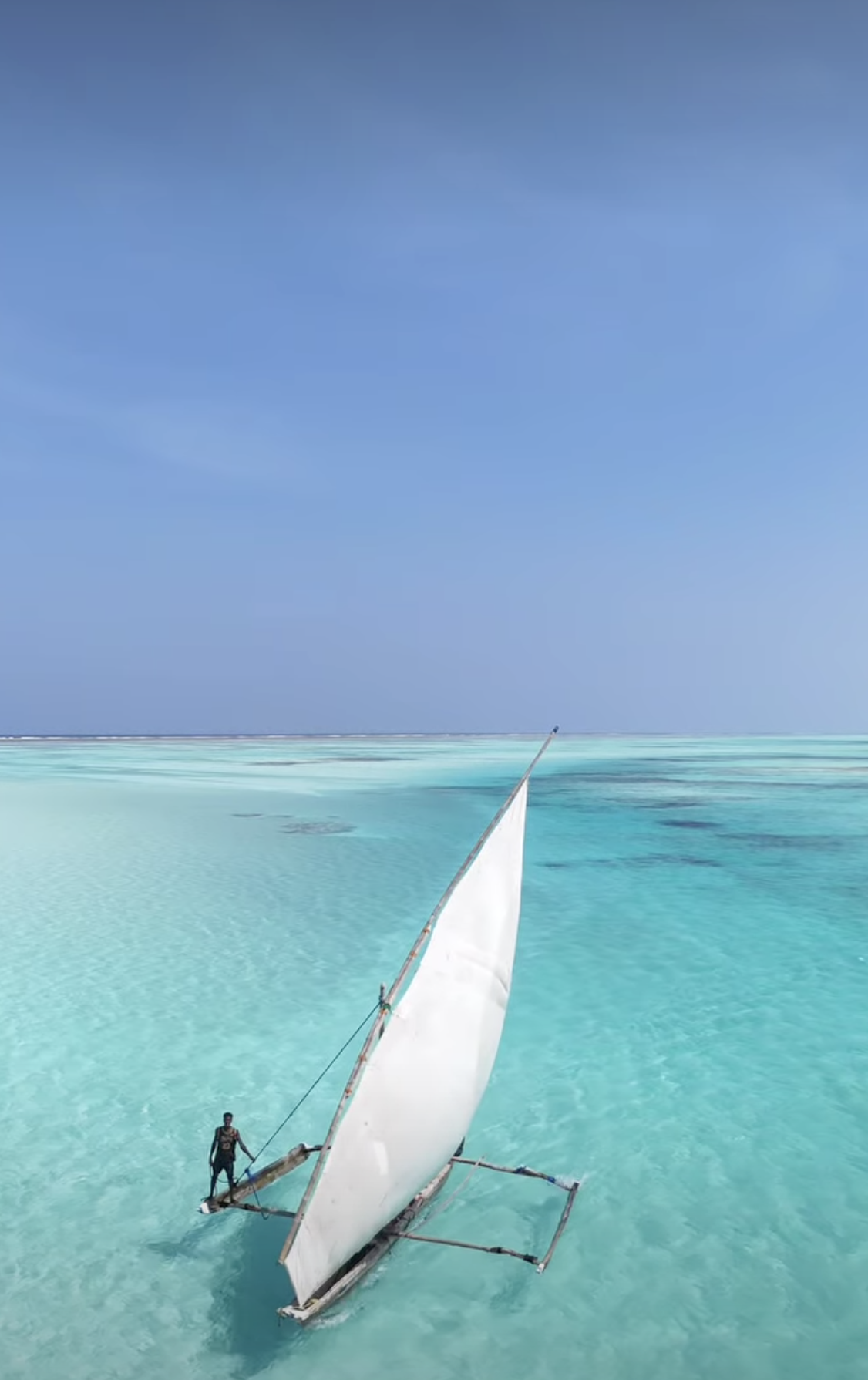
This technology has been recently been adapted by the traditional dhow sailors of Lamu, (in order to go racing), by adding hiking boards to their essentially Arabian Dhows, whose lineage is from the Gulf to the north, not the islands of Indonesia to the east. It’s an extraordinary meeting of maritime cultures that in historical terms is fairly modern
Mozambique style double ended dhows, racing with hiking boards in Lamu
The Chesapeake Bay log canoe — which eventually developed the famous "springboard" hiking plank — traces directly back to Native American dugouts. Native Americans along the bay used dugouts to spear fish, gather oysters, and travel. Europeans adopted the log-canoe technology shortly after arriving in the region in the early 1600s, and by the start of the 18th century had modified the standard single-log dugout by hewing and shaping several logs to enlarge the craft, adding masts and sails. The first recorded log canoe regatta took place in 1859 near St. Michaels. As racing intensified, crews instinctively placed themselves outboard for leverage, and the springboard was formalised as a detachable plank. In order to keep them upright when switching direction, crews perch on the movable wooden planks to provide human ballast.
The Chesapeake Bay log canoe racing
Amongst the Islands of Caribbean things get more complex.
The Martinique Yole, was born in the 17th century and was originally, a vessel for the island's fishermen who used its or its predecessor the Gommier, (a one-piece dugout vessel) for fishing, moving around the island, and transporting goods like fruits and rum. It’s a light, fast, shallow-draught boat with a tapered shape. The hiking poles are called bwa dressés (upright wooden beams)
Yole Racing in Martinique
So the Martinique hiking board tradition is ultimately rooted in Indigenous Caribbean and African-Creole fishermen's culture, evolving through centuries of local adaptation.
The Bahamian equivalent called the Pry Board also uses massive crew ballast as righting moment but unlike the Martinique Yole, the Bahamian sloop is a keeled wooden vessel where the pry board is used to handle an enormous sail plan on a heavy displacement hull, not to replace a keel.
So these two Caribbean Islands independently solved the same fundamental problem — but in Martinique it evolved from indigenous gommier dugout tradition, modified by French colonial-era Creole fishermen, producing a boat with no keel, no rudder, entirely dependent on crew balance, while the the Bahamian pry board developed within the British colonial tradition, on full-keel wooden sloops that simply needed extra righting moment to handle their huge rigs.
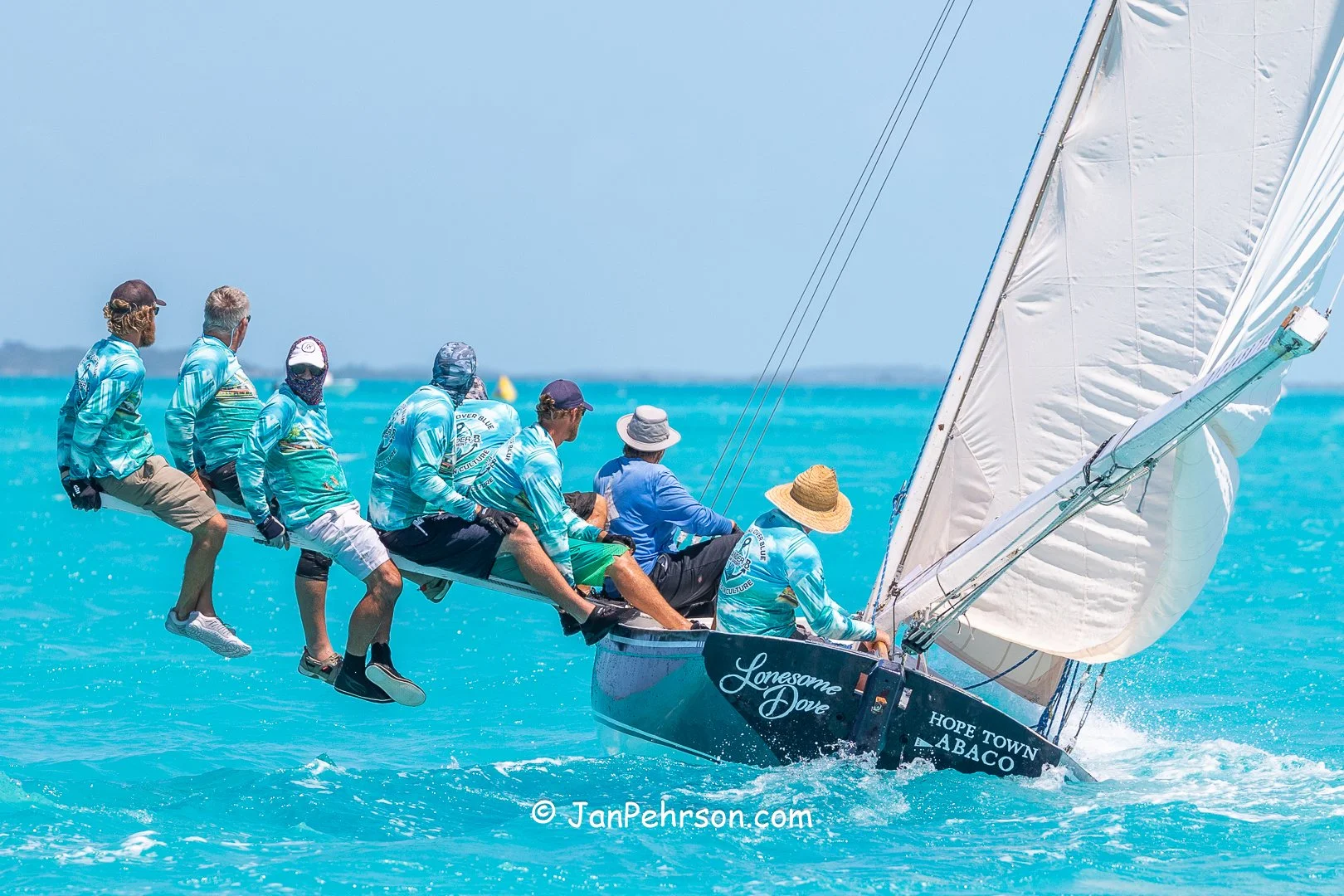
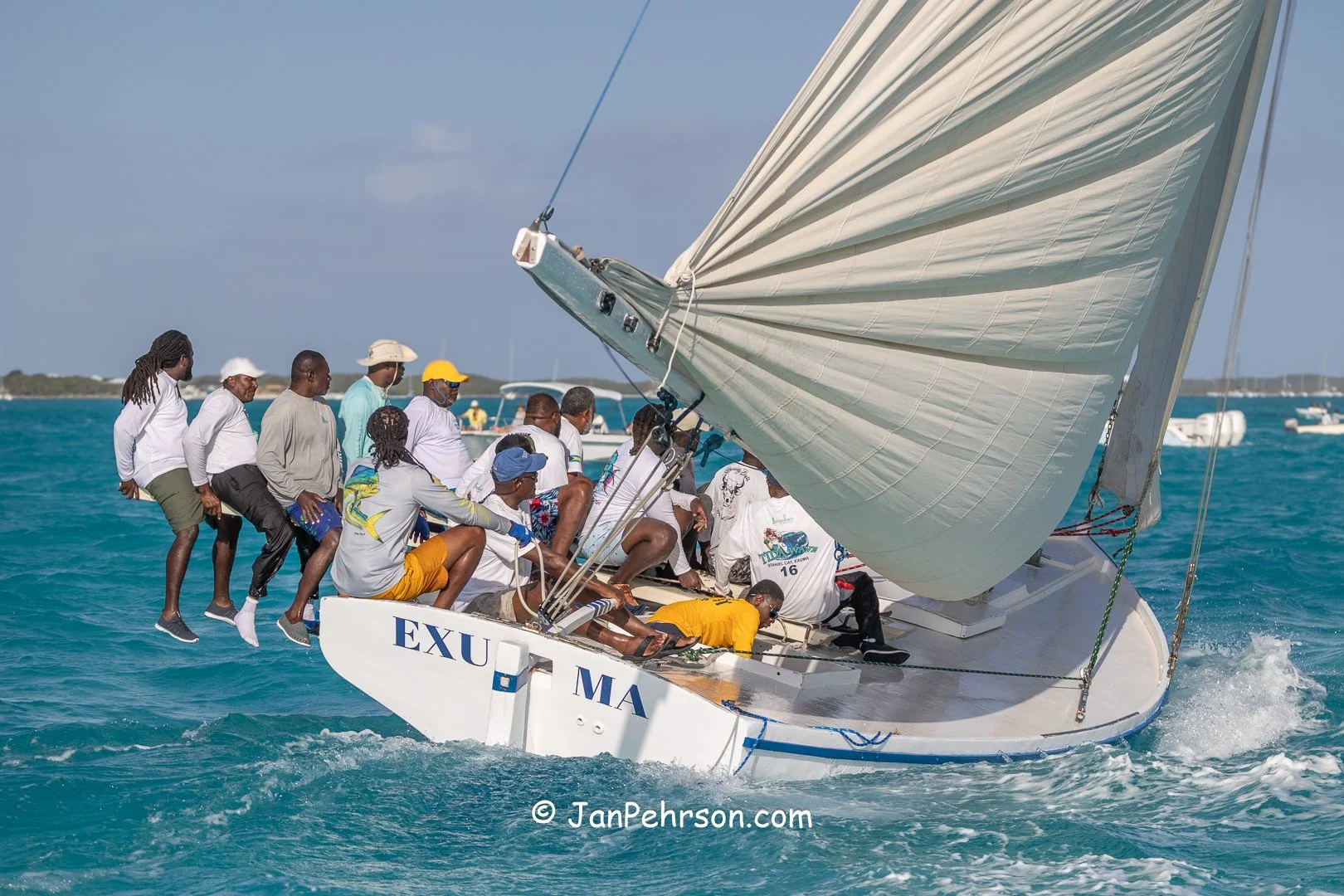
Above- Modern Day Bahamian Sloop Racing
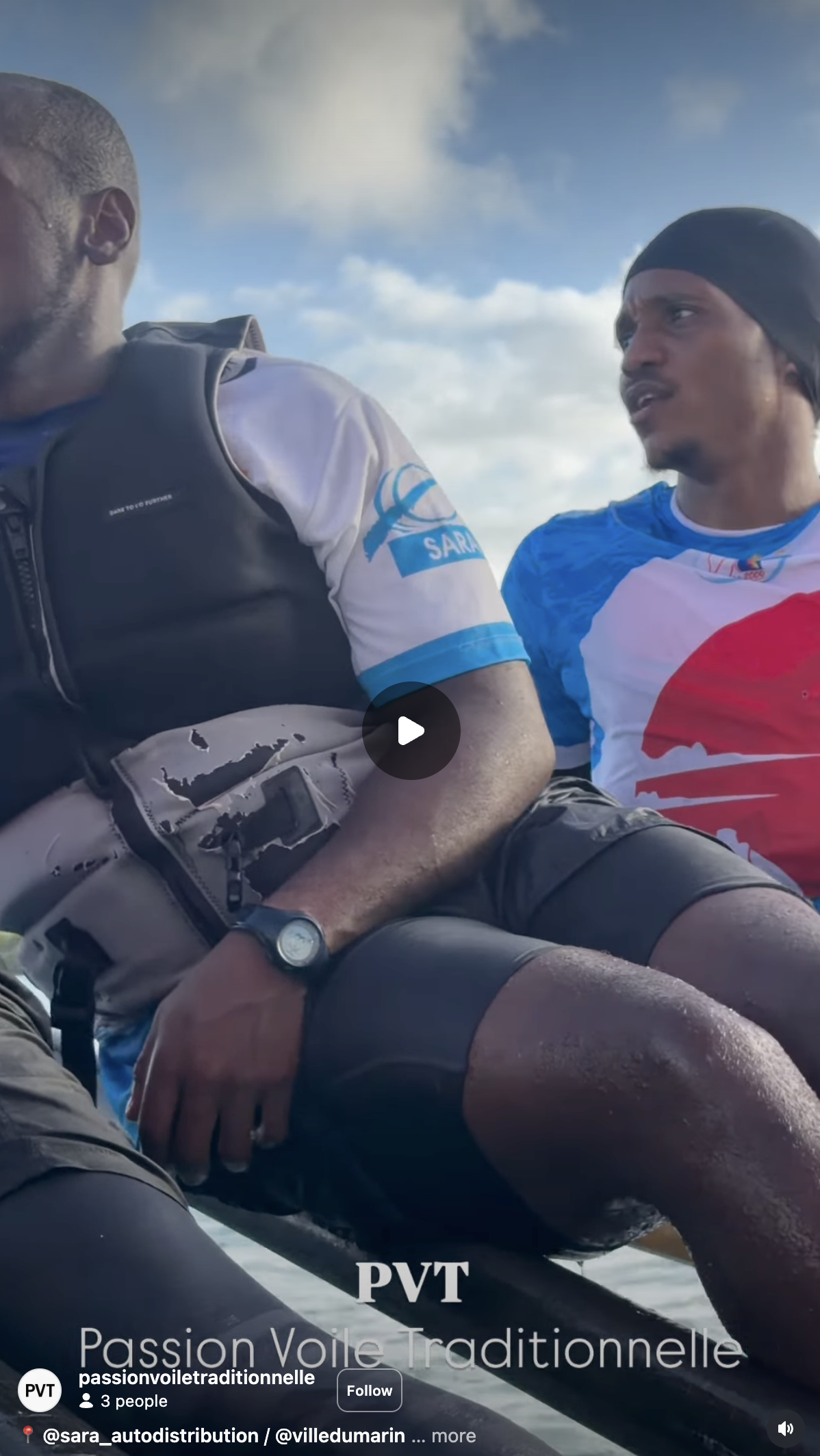
Yole Racing in Martinique (click to watch)
There appears to be only three small boat classes that currently race with hiking boards.
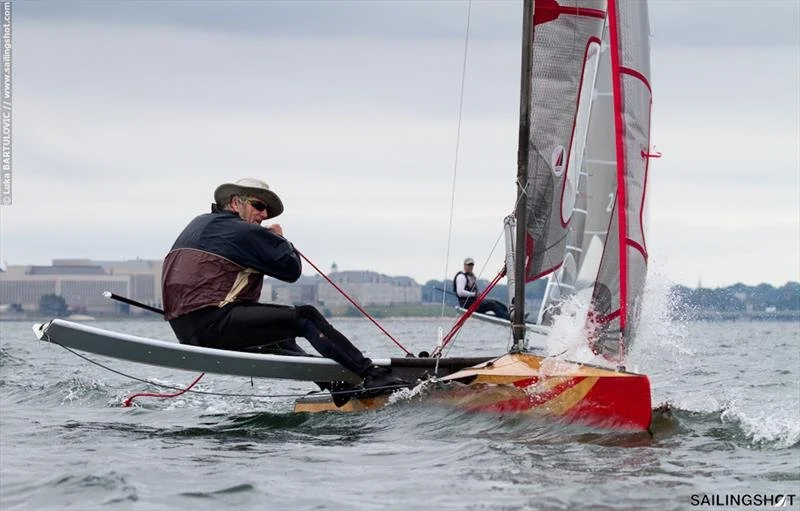
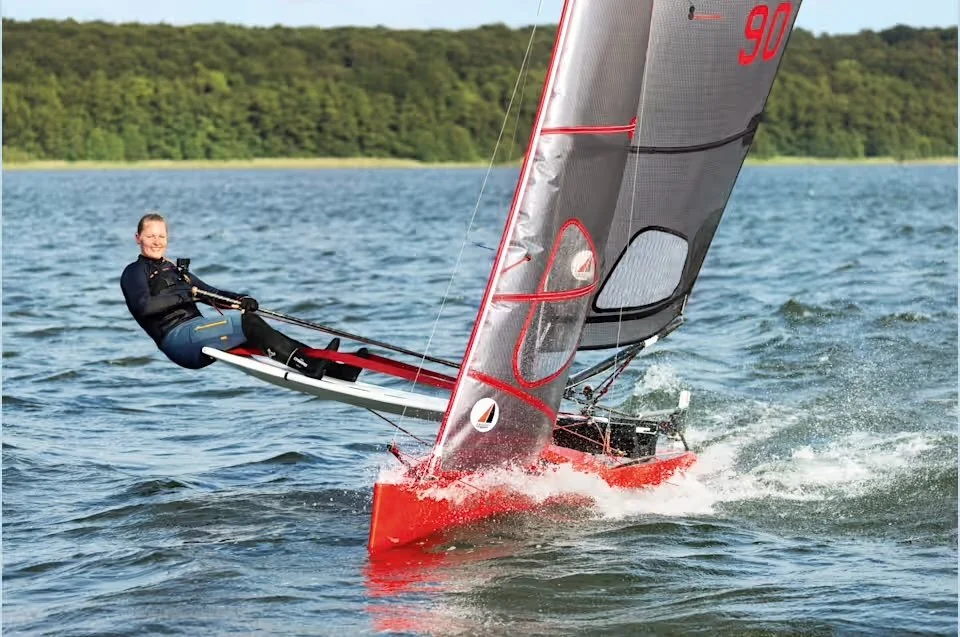
The International Canoe or International Ten Square Meter Sailing Canoe is an aesthetically pleasing craft. The combination of long narrow hull, high aspect sail plan and sliding seat gives the boat an strange appeal. It’s a no bullshit boat, with anything superfluous removed, all in search of speed. Its a development class, with it’s aesthetic is always refreshing. And while the class is historic, it is also current or even avant-garde. Perhaps as a result of this, International Canoes are built by the best craftsmen of their generation and many are show cases of fine state art of small boat building.
They are designed within a box rule with a maximum length of 5.2m, 10 sq m maximum sail area, and the distinctive sliding seat that allows the sailor to use their weight over 2m from the centreline to counteract the force of the wind. These modern versions are built of carbon fibre and can reach planing speeds of 18 knots
The origins of the class can be traced back to the 1860s, and International competition with craft that are recognisably ancestors of the current boats started in 1884.
The class is most popular in Australia, the US and Northern Europe, especially Germany, Sweden and the UK.
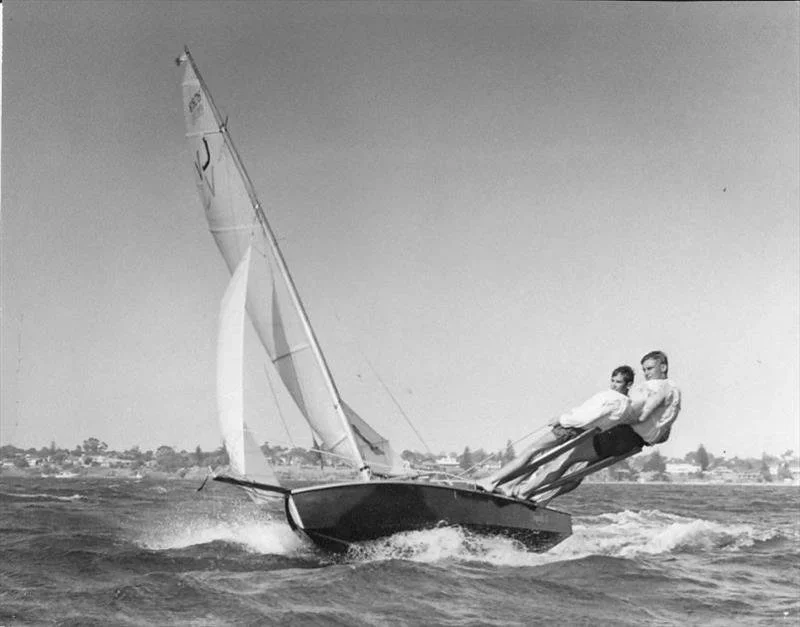
The VJ or Vaucluse Junior was designed in 1945 by Alf Grover in the Vaucluse area of Sydney, and was conceived as an affordable and simple to build junior racing dinghy. Originally they were built from timber using a hard-chine hull design, as this made it easier and cheaper for the home-builder. The class grew rapidly through sailing clubs around Sydney and then across Australia becoming one of Australia's most popular junior classes. Like many classes, the VJ eventually transitioned from timber to fibreglass construction, improving durability and reducing maintenance.It served as a stepping stone for countless Australian sailors who have gone on to Olympic and world-class competition including America’s Cup winner John Bertrand, and remains an active class today, with a national championship held annually.
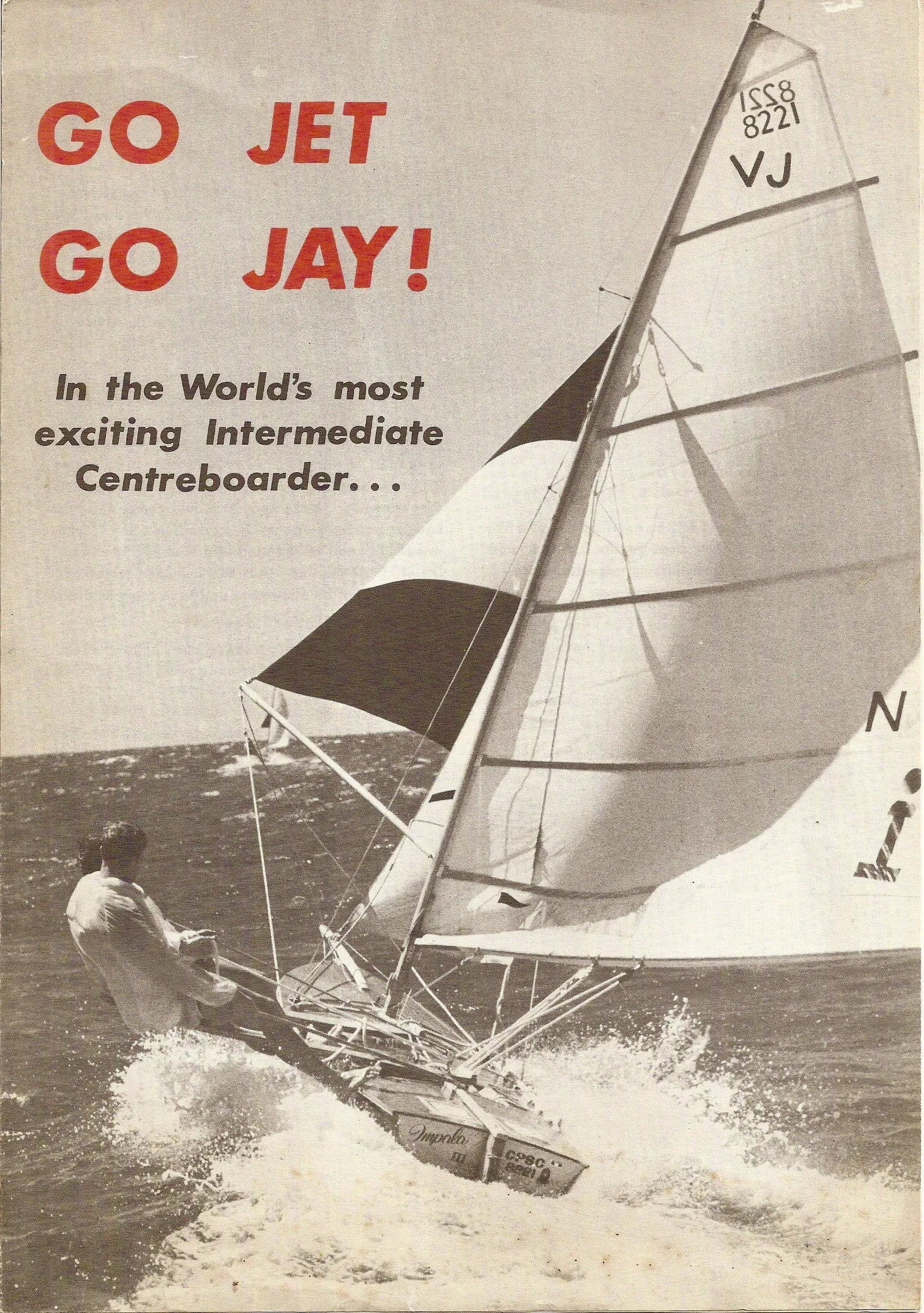
The other Australian dinghy that still sails with a hiking board is the 14ft Skate, a high performance two-person racing boat. It’s unique to Australia, originally developed over 50 years ago to offer high performance at an affordable price and regularly updated since then to take advantage of technological advances and maintain the "excitement" factor.
Skates with a 7.2m mast, 1.8m bow pole and masthead asymmetric spinnaker. Most Skates have a 10-foot long hiking plank for the crew and an 8-foot plank for the skipper. Planks are slid across the hull from one side to the other when tacking and gybing. Many Skates now feature winged rudders to provide increased speed and stability in choppy conditions.
If you have got this far in the article you might now be wondering why the hiking board is a dwindling phenomena.This is undoubtably, because the boards are heavy to carry and clumsy to adjust from tack to tack. So they have been gradually replaced by a lighter and more flexible technology, but still one with centuries old roots,
Next week we will delve into this “progressive” contraption, “The Trapeze” and try to resolve the claims to its disputed origins.
But in the meantime enjoy some footage from the now defunct Ngalawa Cup. What an adventure! Bring it back I say!