
The Lifespan of Language
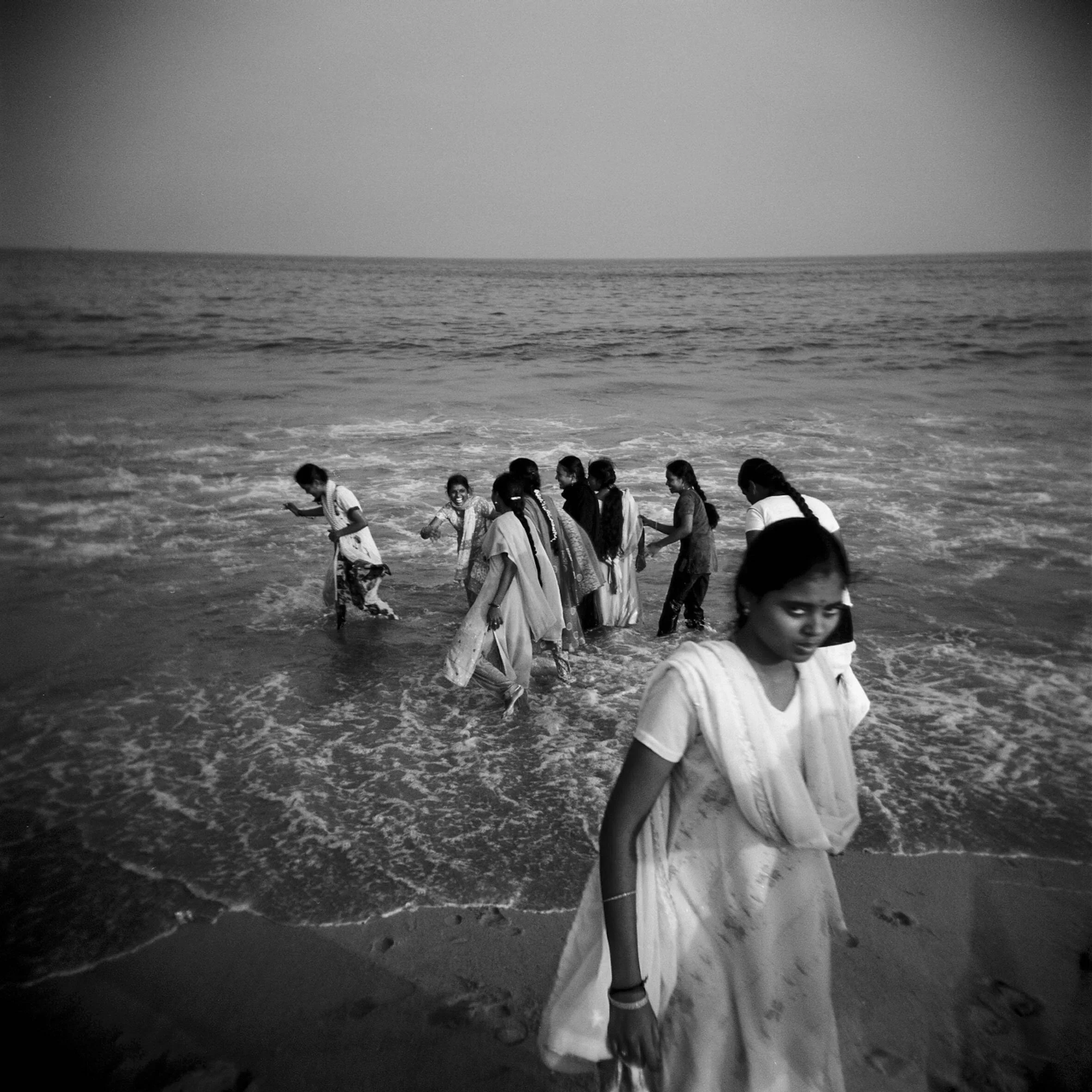
A “Solivagant” is someone who wanders alone.- Image Mark Chew
This week I came across a list of beautiful english words that have fallen out of common usage.
Words come and go all the time, with a lifespan dependent on the vagaries of fashion and fortune, but I feel it would be sad to let these ones go without a fight!
Psithurism is the soft, calming sound of wind rustling through trees or leaves.
Apricity is the warmth of the winter sun.
A Solivagant is someone who wanders alone.
Scripturient means posessing an overwhelming urge to write.
Fugacious means fleeting or quick to disappear.
Sillage is the lingering trail of scent left behind after someone passes.
Sempiternal means everlasting.
And Quiddity is the essential nature of a thing!
We readily accept that most living things have a lifespan. Human beings may have progressed well beyond “three score years and ten”, but immortality is still science fiction. Even the famous bristlecone pines of California's White Mountains, once they get to around 5000 years old, die a natural death.
Greenland sharks are the longest-living vertebrates in the world. The oldest known individuals recorded by scientists have been about 400 years old. Researchers think that living in such cold waters of the North Atlantic and Arctic Oceans probably helps slow down their metabolic processes and biochemical activity, extending their lifespans. It’s thought that female Greenland sharks aren’t ready to breed until they are 156.
But then there’s a strange phenomena called Biological Immortality. This happens when a species is able to defy natural aging, as dying cells rejuvenate back to early life stages, allowing the species to remain youthful. This means specimens can theoretically live forever. Biological immortality is a rare phenomenon in a very select few species. Rather than dying of old age, these species are more likely to die from disease, predatory attacks or a catastrophic change in their environment. Better known as the immortal jellyfish, Turritopsis dohrnii grows to an adult stage then once it has reproduced it reverts back to its juvenile stage and starts its life over again. Technically speaking, they can do this an infinite amount of times so there lies the possibility that they could live forever.
This is how I like to think of wooden boats. Infinitely repairable, like grandpa’s axe. And even though philosophers have long debated whether an object consisting of multiple parts is still fundamentally the same object if all of its parts have been incrementally replaced over time, very few of us are curmudgeonly enough to question the authenticity of boats like TALLY HO, PEGGY BAWN or VARG
Which in a very roundabout way, brings me back to language and the nautical words that we rarely use in their original meaning anymore. Interestingly ancient maritime vocabulary seems not to have died but just moved ashore, changing its meaning as it does so.
Filibuster — Before it became a political term, a filibuster was a pirate or freebooter, particularly one who raided Spanish colonies in the Caribbean during the 17th and 18th centuries. The word drifted ashore into politics and left its seafaring origins behind.
Offing — The part of the sea just visible from shore, beyond the anchoring ground. A ship "in the offing" was visible on the horizon but not yet arrived — hence the expression "in the offing" meaning something is imminent. The noun itself is rarely used in its original sense now.
Waister — a sailor assigned to the waist of the ship, typically considered unskilled.
Gripe — the tendency of a vessel to want to turn into the wind. Now used to mean a irritating complaint.
Slush fund — the cook on a sailing vessel collected the fat and grease (slush) rendered from boiling meat and sold it ashore. The money went into an unofficial fund for the crew's small luxuries. Now it means a secret reserve of money, often for corrupt purposes.
Footloose — the foot of a sail not properly secured to a boom would flog and swing freely and unpredictably in the wind. Now means carefree and uncommitted.
Tide over — to use the tide to make progress when there was no wind, kedging or drifting with the current just enough to get over a difficult stretch. Now means to manage through a difficult period with limited resources.