
The News, Culture and Practice of Sailing woodenboats
in Australia, New Zealand & The South Pacific.
SWS is a not-for-profit enterprise, created for and by the traditional maritime community. If you read and enjoy it, consider supporting us financially.
Click Here to Donate
The Modern Classic Division: Racing’s Most Accessible On-Ramp
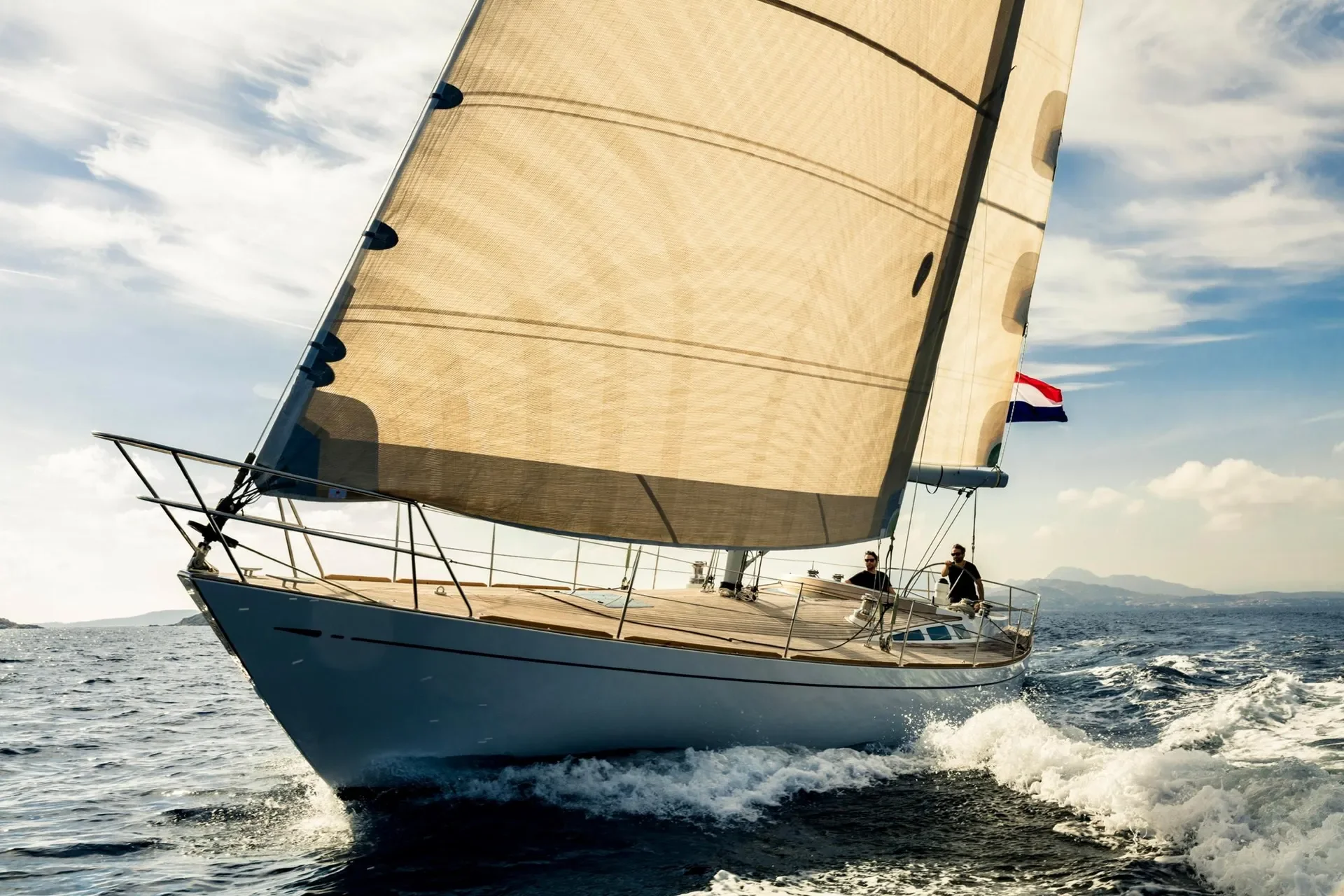
But it’s the last division that we’d like to tell you about today, one that can offer exciting racing, respect for retro style, higher performance than a full-keel classic, and –perhaps most exciting– an accessible way to sail in a fleet that includes Herreshoffs, Fifes, and hundred-year-old icons of yachting history. All without committing to the stewardship of an heirloom or the yard bill that comes with it.
Understanding the Evolution of Headsails
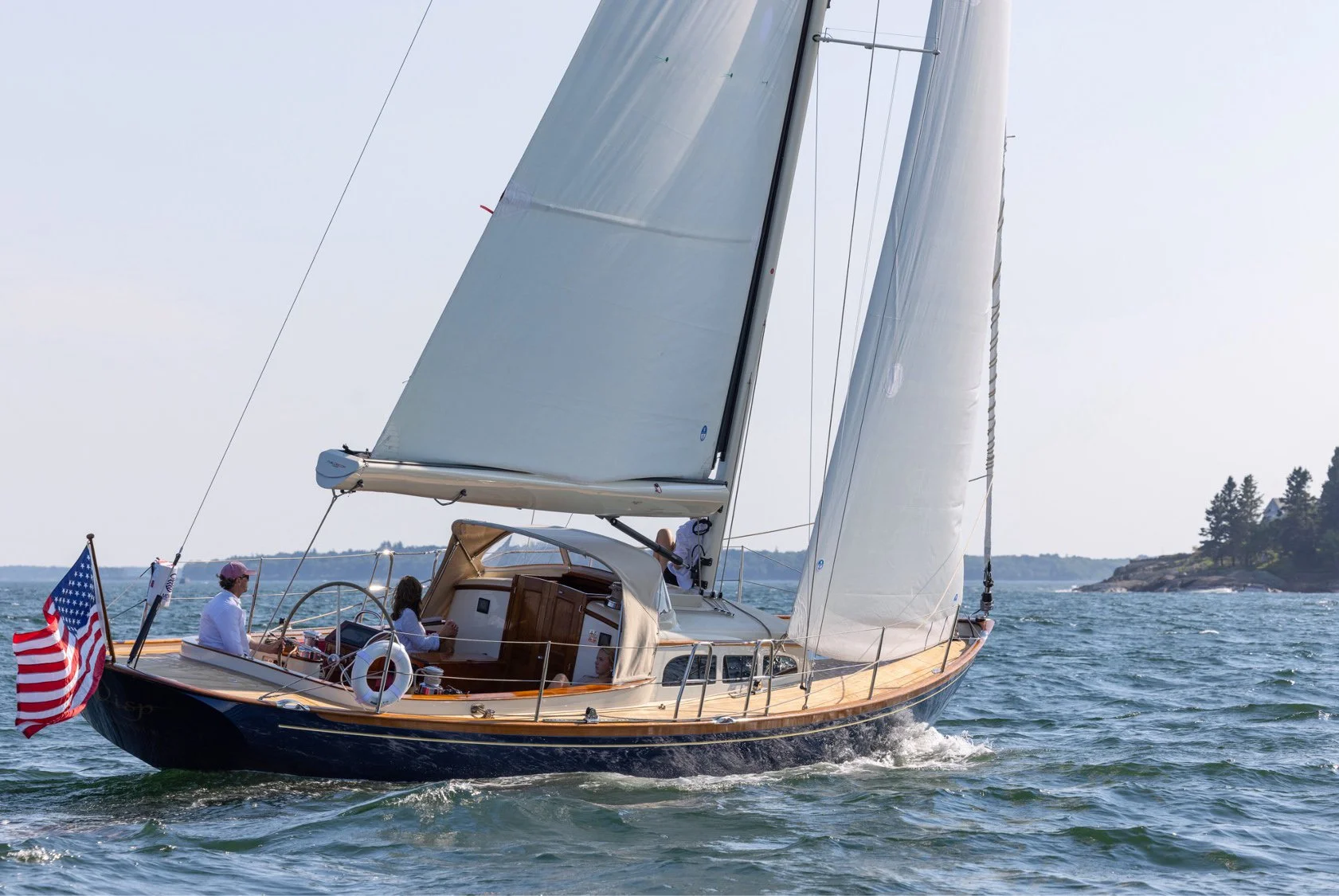
Sailors being a conservative lot, evolution happened about as fast as continents drift. Even as rigging changed from hemp to stainless steel, and sail cloth changed from flax to cotton to Dacron, sail plans remained largely the same. By the 1960s most racing boats had discovered that a single mainsail worked better than two: yawls and ketches were abandoned in favor of higher-pointing sloops and cutters. But foretriangles remained split, especially aboard non-racing yachts without the luxury of plentiful and athletic crews
Impracticality In Its Most Beautiful Form
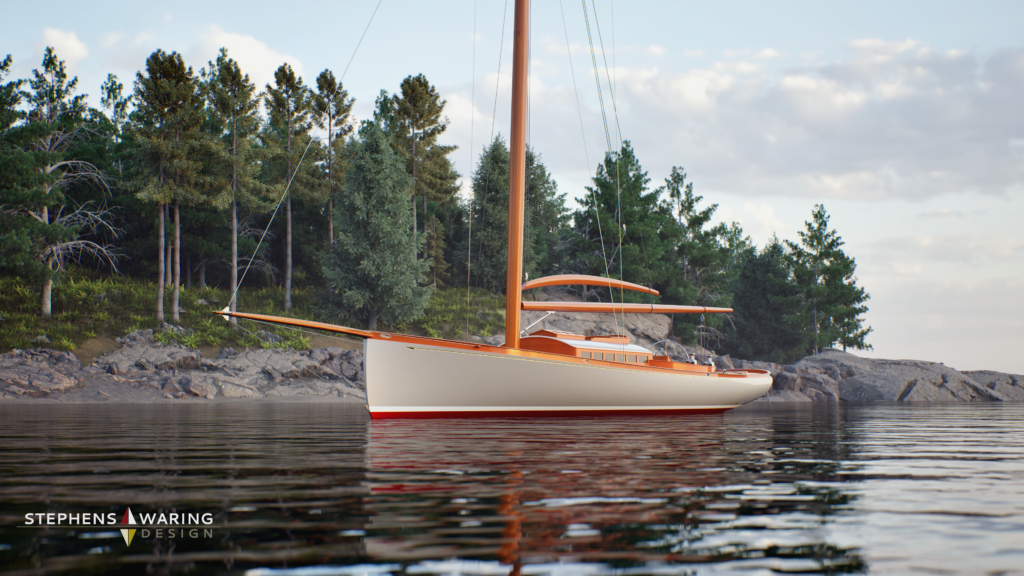
Where many Spirit of Tradition designs would rest with the traditionally-shaped hull and classic styling on deck and mate them with a “standard” high-performance Marconi sail plan, we’ve opted to fully embrace the period piece and supply Beaujolais with an in-character gaff rig and lengthy bowsprit. Not only does this fully commit to the genre used as inspiration, it also offers some powerful advantages.