

The News, Culture and Practice of Sailing woodenboats
in Australia, New Zealand & The South Pacific.
SWS is a not-for-profit enterprise, created for and by the traditional maritime community. If you read and enjoy it, consider supporting us financially.
Click Here to Donate
All on Your Own
Rule 5 presents another problem for the single-handed boater: “Every vessel must at all times keep a proper lookout by sight, hearing and all available means in order to judge if risk of collision exists.” The single-handed skippers I know seem to get away with their best attempts to manage these issues. But if there is an accident, the solo boater is exposed to significant liability. If the master of a vessel is found to have violated one or more of the COLREGS, he or she may be found liable for costs of rescue efforts, property damages, loss of income, salvage costs and environmental cleanup. In the event of a death, even criminal gross negligence charges are not out of the realm.
Revisionism, Reassessment, Reinvention?
I find, in rereading some of the classic sailing books published back then, and which I still love, that I squirm a little. It is indisputable that the Slocum era, was also the colonial era; in fact, in its heyday, ocean cruising throve on the socio-political infrastructure of colonial outposts, as uncomfortable as that is for me to admit.

Slocum’s Luck
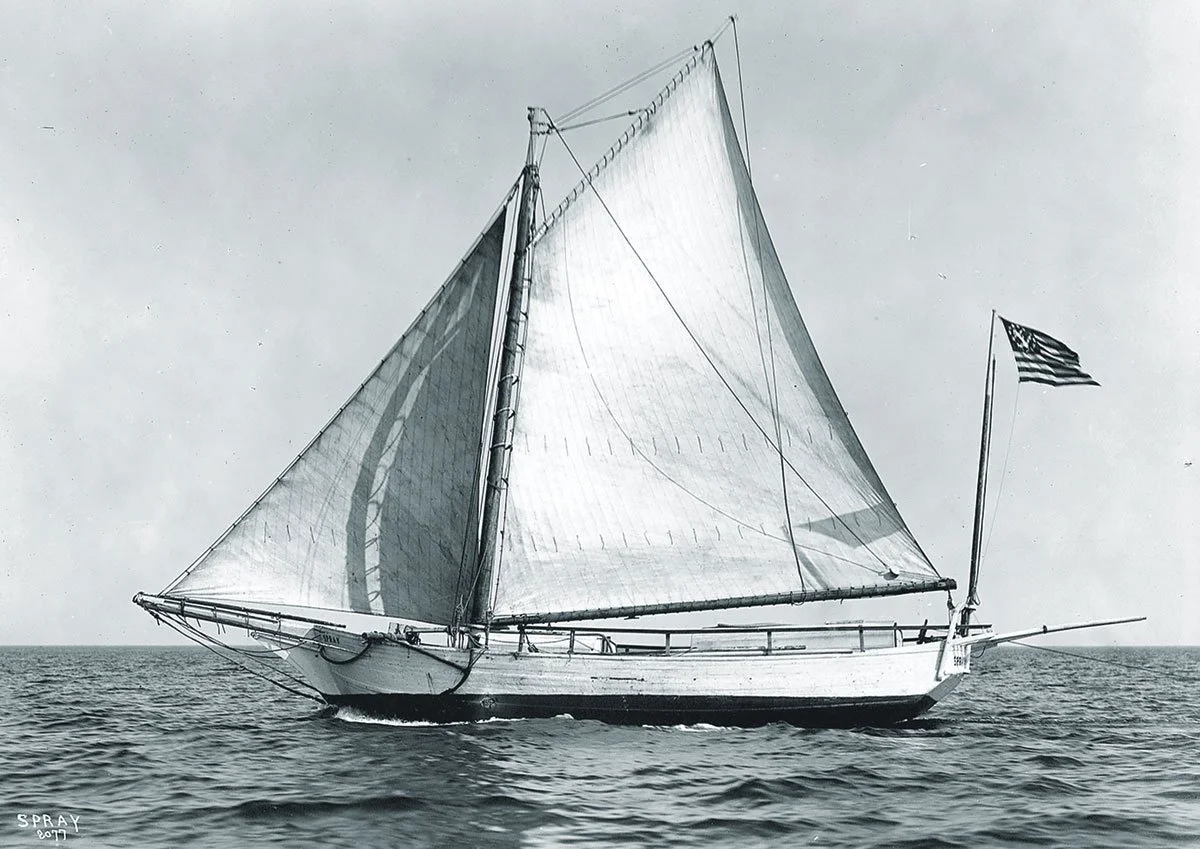
Thanks to his 1895–98 solo circumnavigation in his 36′9″ sloop SPRAY and his 1900 book about the experience, Sailing Alone Around the World, Slocum would become a famous man, and he was called upon at times to sit for a portrait. When he did so, Slocum usually, though not always, presented his scar-free right side to the camera. One can only guess what Slocum thought about as he awaited the shutter’s click.
Harry Pidgeon's “Around the World Single-Handed”
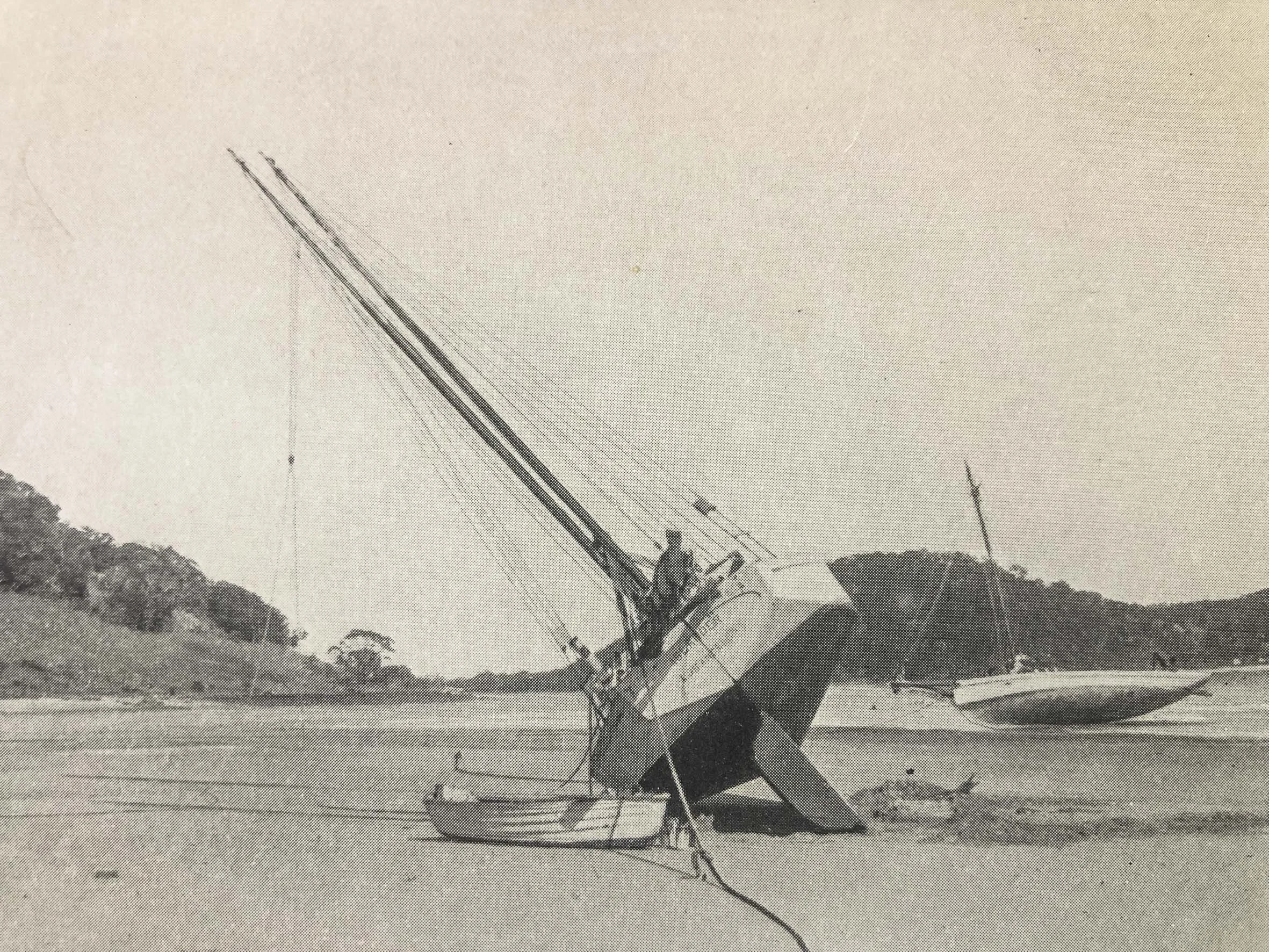
It is interesting to compare Slocum to Pidgeon, and their boats. Slocum was the hard-bitten sea captain who'd come up through the hawsepipe, and who had fallen on hard times. His voyage was a way of fighting back, and he did a magnificent job of it. Harry Pidgeon seemed to breeze through life, guided by his sunny disposition.