
Banking the Future of Boatbuilding Timber Supply
When someone with Ian Johnston’s life experience decides to speak, it’s usually worth paying attention. Ian is a fifth-generation Tasmanian sailor, boatbuilder, author, and one of the three founders — alongside Cathy Hawkins and Andy Gamlin — of the Australian Wooden Boat Festival, first held in November 1994 in Hobart.
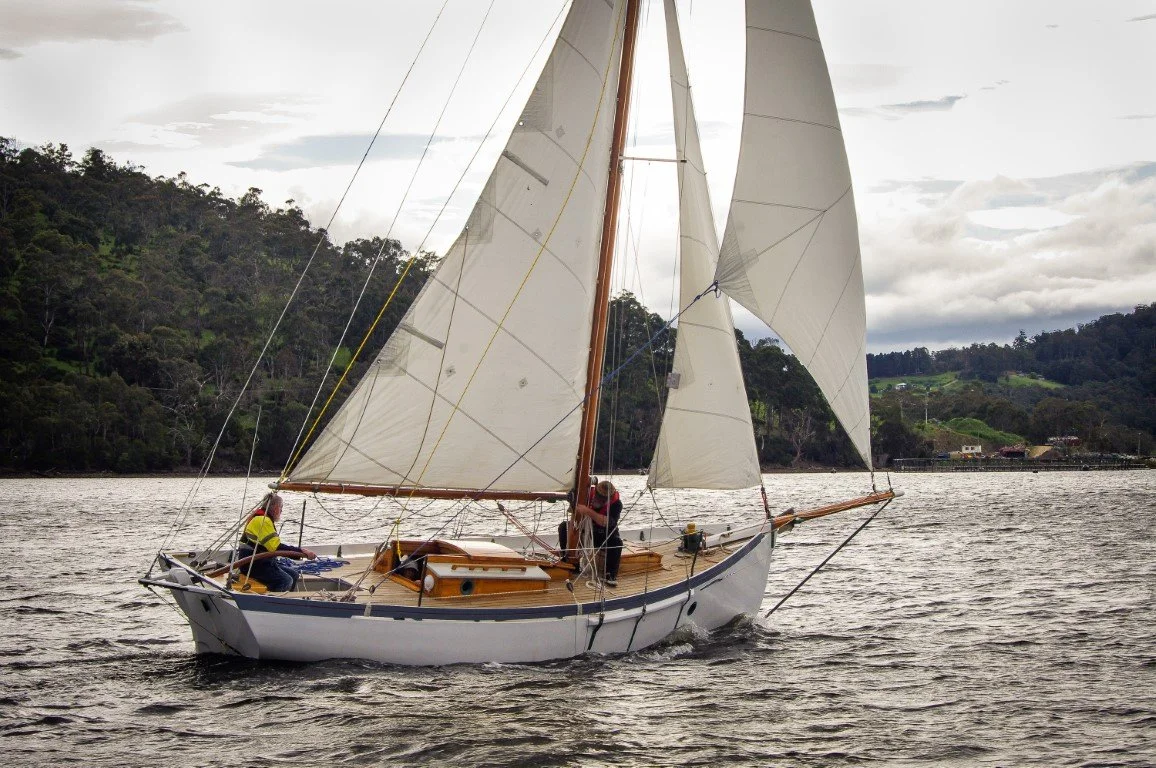
SALLY, a Lyle Hess designed Cutter built from the three great Tasmanian Timbers, Huon Pine, Celery Top Pine, and King Billy Pine
Beyond the festival, he spent eleven years as a professional sailor racing for prize money across oceans around the world, He built his racing career largely in partnership with Cathy Hawkins and was named the Australian Institute of Navigation's Navigator of the Year in 1988, was a finalist for Australian Yachtsman of the Year, and was inducted into the Tasmanian Yachting Hall of Fame, logging some 150,000 sea miles, mostly in shorthanded multihull ocean racers.
He has also worked as a boatbuilder, teacher, ship's master, author and sculptor.
This week he forwarded to SWS an extract from a letter he recently send to Forestry Tasmania.
He started by saying “I very much doubt if I will get a positive reply, however I hope it will add a small amount of pressure to initiate much needed changes for the long-term future of wooden boat building and the AWBF.”
I would like to donate some boat grade King Billy Pine to the Boat Building Wood Bank (BBWB)
However, I am reluctant to do so until Forestry Tasmania (trading as STT) improves the Wood Bank by:
· moving the timber into a safe, accessible, fire-resistant facility
· adapting the current management structure to better serve the boat building communityAs heritage stockpiles are depleted a properly managed and sized BBWB is vital for the continuation of the boat building, maintenance and repair industry that currently adds $20 million annually to our State’s economy. A similar amount is added to our economy at every Australian Wooden Boat Festival. The Festival will lose its legitimacy without the intangible cultural heritage of our boat building industry.
Most of the professional boat builders in the State refuse to deal with the BBWB as it is now. However, they support many of the draft management changes that have already been submitted to FT. (a summary of suggested changes is listed below)
A representive group of boat builders should have a voice with the management of the wood bank because it is their industry that is under threat by your current management arrangements.
Ian Johnston
Special Species Working Group
Co- founder Australian Wooden Boat Festival
Boat builder
Author
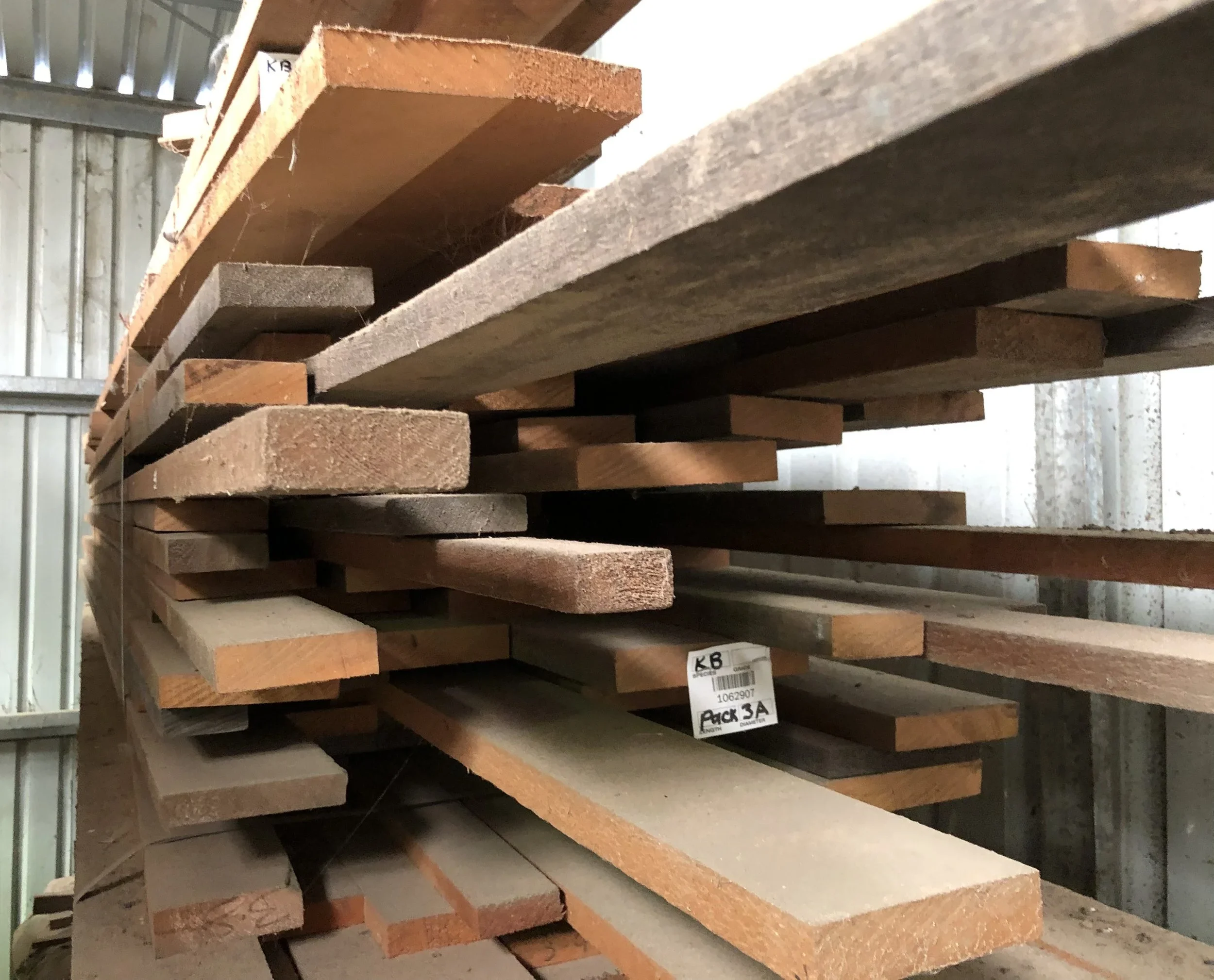
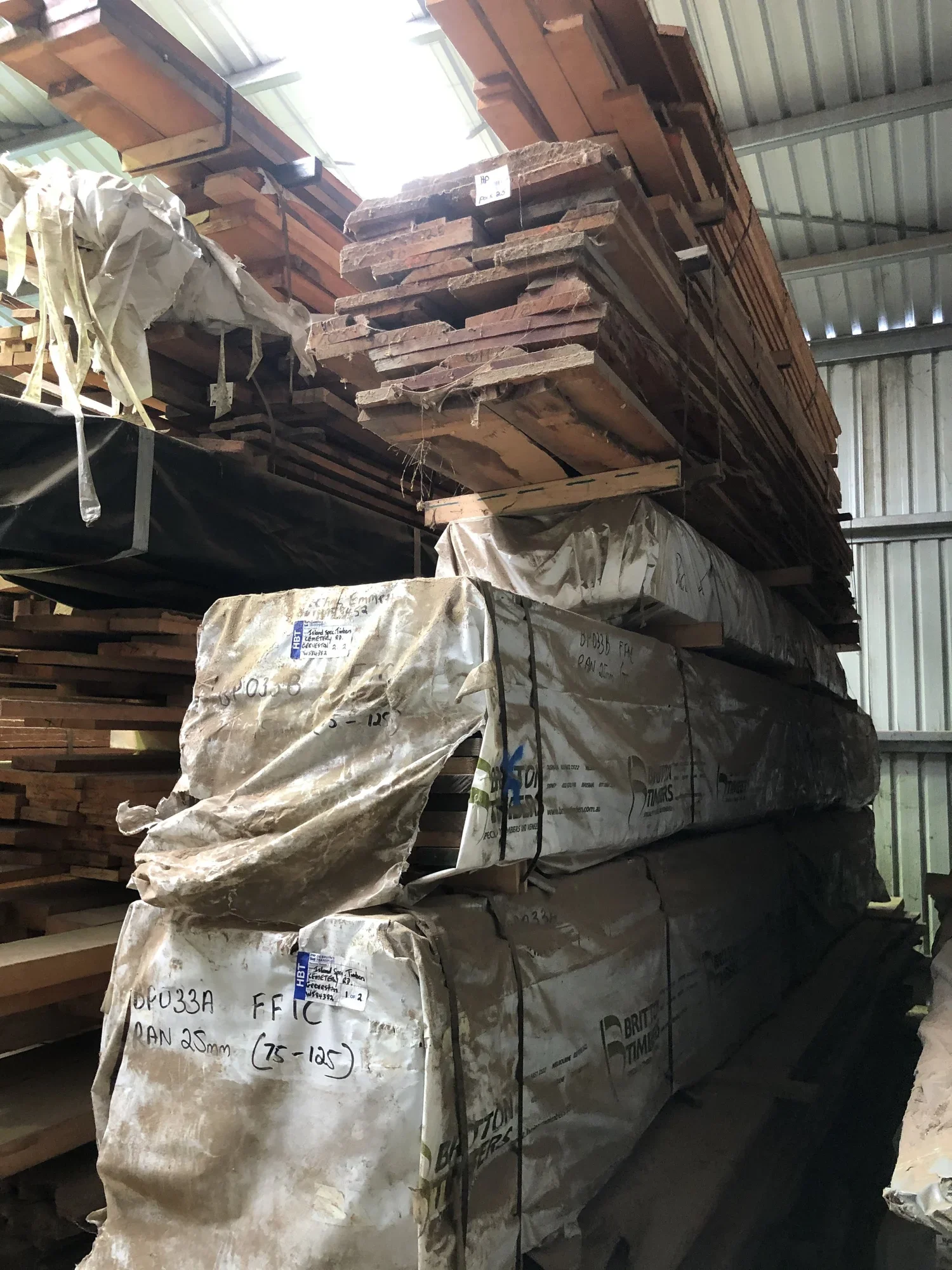
He then followed the letter with some suggested changes to the Wood Bank.
Suggested changes to the Boat Building Wood Bank:
A management group needs to be formed and meet on an annual (or as needs) to determine management strategies for the wood bank. The group should comprise several wooden boat builders, a sawmiller and a representive from STT.
Pressure STT to store the timber in a safe, secure, accessible area, presently the stockpile could be lost in the next ember attack.
There was an understanding that as sales were made from the wood bank, the money would be used to replace the timber. Unfortunately, this has not happened, More than $26,000 is currently held in a purchase kitty. Additional money from STT’s ‘slush fund’ needs to be invested in growing the wood bank.
Publish the recently completed audit and accompanying photographs of the current stockpile, (as well as the previous audit). There is no need for this secrecy.
Although the wood bank is primarily intended for professional boat building, there needs to be some flexibility to allow for skilful volunteer projects that are culturally significant to have access to the wood bank.
If a project fails or is stalled for a long period of time the unused timber needs to be offered back to the wood bank at the same cost as purchase before it is sold or passed on to others.
Purchase from estate and heritage without chain of custody. The chain of custody only came into existence recently and there should be a ‘grandfather clause’ to allow purchases that are accompanied with a statuary declaration as to its source. (Already exceptions have been made to this rule).
Limited sales of any one project to no more than 10% of stockpile.
Because boat boards only constitute a very small percentage of even suitable logs and our desperate shortage of stock, ask all sawmills to cut boat boards as a priority from every suitable log. If offered at a reasonable price, buy from local sawmills as they accumulate boat boards that are not going directly to Tasmanian boat builders to circumvent interstate sales.
The Wood Bank should be able to purchase whole suitable logs when they become available, saw the logs and sell off unsuitable timber as a cost saving exercise.
Ask STT to immediately stop felling endemic immature trees that have the potential to grow on to yield boat building timber when mature.
Be able to buy part of pack, or individual boards but no top selecting except for agreed special occasions. It is ridiculous to demand that boat builders purchase large quantities of timber when they only want one or two boards to finish a project or undertake a small job.
Repack some timber to provide ‘kits’ for making a 10-foot dinghy for instance.
Add timber with sweep plus knees and brest hooks, also store blue gum timber suitable for keels etc in the water at Franklin.
Declare Cat 1 eucalypt a Special Species Timber and manage it within PTPZ on a sustainable basis. Add suitable air-dried boat grade Cat 1 eucalypt to the wood bank.
Purchase suitable timber from estate and heritage sales on an ongoing basis
Ask STT to make a statement in support of the wooden boat building industry and undertake to sustainably manage our resource.
If you think you might have a constuctive way to help move this issue forward then get in touch and we will connect you with Ian