
Racing From Home
MATILDA Reaching in 25 Knots
Back in 1992 we sailed our little 30ft tub into Porto Cervo in Sardinia. We couldn’t afford a berth, but we were keen to see the much-hyped resort-cum-marina, so we anchored a few yards from the pontoons and rowed ashore in our dinghy.
We wandered the quays and spotted an Australian flag on the back of a fifty-something foot Swan and chatted with the slightly scruffy owner wearing a terry towelling bucket hat. He told us he was putting his boat away in a shed for winter after racing in an event called the Rolex Swan Cup. He said it had been fun. It was only later that we realised we had been talking to Bob Oatley beside his Swan, WILD OATS.
34 years later anchoring is forbidden in Port Cervo harbour, but as we had belatedly acted on Bob’s recommendation and were here to race, a stern too berth awaited us in the new marina. It’s a biennial event and this year was special as it marked the 60th anniversary of the Swan Brand. In fact, the first ever production Swan TARANTELLA, the gorgeous little 36ft S&S design was racing, fresh from a full restoration. It was inspiring to realise that DNA from that modest little boat could be found in every one of the other 169 entries to the regatta.
The event which started in 1980, runs over a week, with four days of intensive racing. There is a vast array of boats ranging from 28ft One Designs, unapologetic cruisers, sports boats and 128ft super yachts, the only unifying factor being the instantly recognisable thin, crisp, painted cove line running perfectly parallel to the sheer, with an arrow head at one end hyphen at the other.
And then there was the division in which we were sailing - the Swans designed by Sparkman and Stephens for Nautor between 1966 and 1980. In addition to our Swan 47CB there was one other 47, three 65 ft ketches (winners of the first Whitbread), two Swan 57s (our bigger sister), many Swan 44s (the most popular of the Swan S&S designs), a Swan 40 and a couple of the originals - the diminutive Swan 36.
MATILDA is the windward boat on port, about to tack over to round Secca dei Monaci
Image - Studio Borlenghi
We had decided to enter the regatta while living ashore in Valencia last winter. It had always been a dream to take part in this event and now with MATILDA as part of the family, the opportunity presented itself. All we had to do was send in the entry form, prepare the boat, sail 500 miles across the Mediterranean, invite a crew of nine to fly in from all over the world, organise accommodation, catering and uniforms, practise for a few days and then we would be ready to race!
And that’s pretty much what happened! We clearly established three specific goals: 1. Be Safe 2. Have Fun & 3. Do Well - and it was important that they were prioritised in that order. Careful crew selection was also important, cultural fit right up there with sailing skills. Doing well at the expense of having fun is something that’s happened to me too often in my amateur sailing career, and I wasn’t going to let it happen this time.
The crew arrived four days before the racing started and moved into a rambling villa up in the hills, ten minutes’ drive from Porto Cervo. With a spectacular view out over the Straits of Bonifacio to Corsica, and a stunning swimming pool, it proved the perfect place to decompress and relax after long hot days on the water. Two of our female crew were joined by their partners and it was wonderful to see men actively supporting and encouraging the activities of their companions, a refreshing and stark contrast to the traditions of the past.
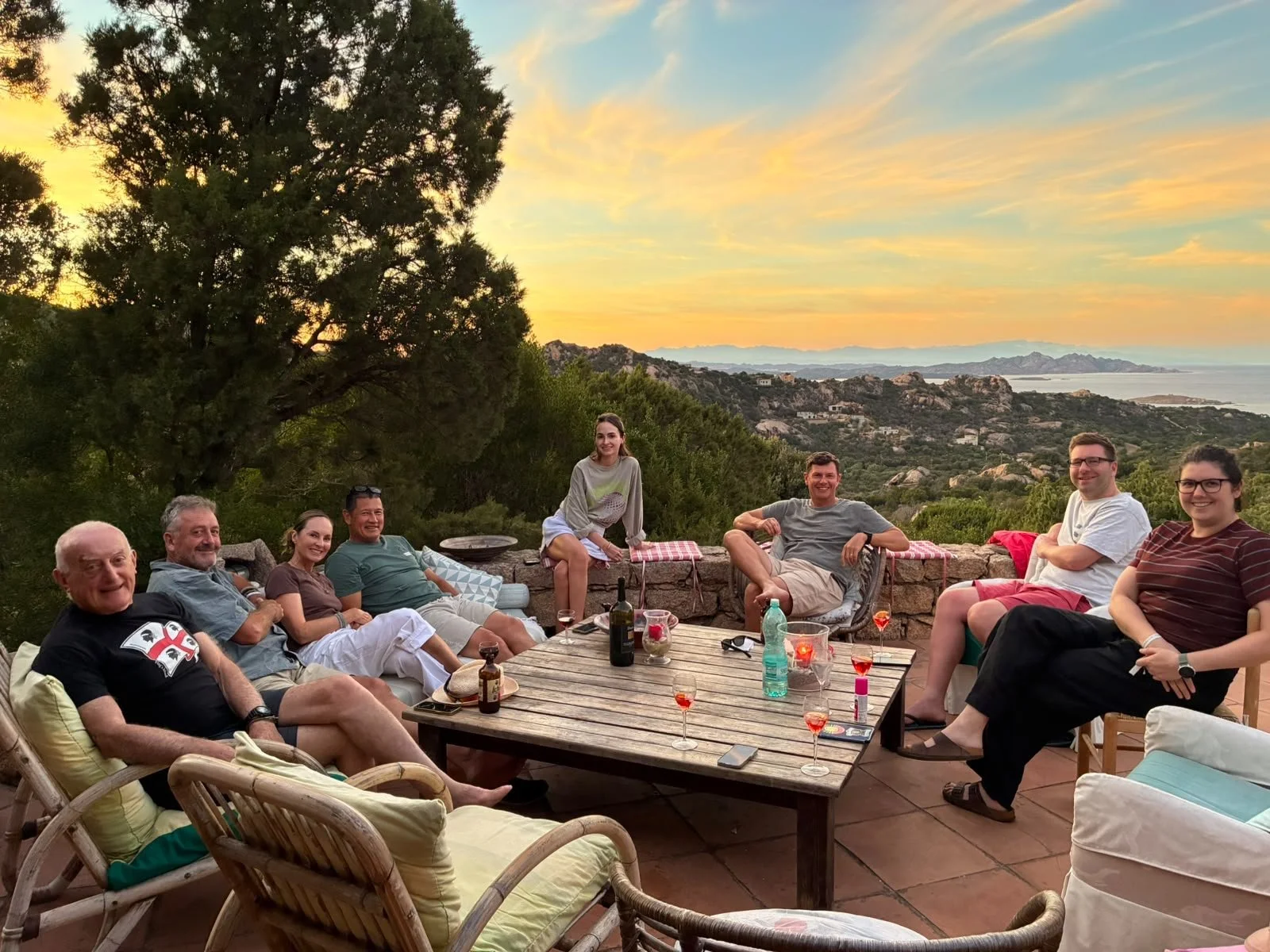
Image Jolene George
We eased gently into three days or practise as none of us, including the owners had ever raced the boat before. We took off piles of gear - dodgers, anchors, the raft, spare parts, cruising sails etc, and rigged all the extra lines for flying the boat’s massive symmetrical spinnaker with a very long pole! The boat’s layout is unaltered from its original format with a winch farm around the base of the mast handling halyards, toppers, reefs and downhauls. We split the deck into three working “pods”. At the front we had the bow, mast, and halyard team. On the central platform (which we refer to as the yoga deck) we had three trimmers operating headsail sheets, braces, spinnaker sheets and centreboard. And in the aft cockpit we had the main trimmer, the navigator (also filling in in odd jobs like kite retrieval from below and packing) and a helmsman.
Things progressed well and on the eve of the first race we may not have been the slickest crew out there, but we understood our rolls and knew what we had to do, to make the boat go well.
Day one was forecast to be light and so it proved to be. The wind hovered between 6 and 8 knots with a maximum gust of 9. We coaxed the 17 tonnes of Classic IOR design around the course gaining places dramatically and then losing them equally easily in a snakes and ladders lottery. The race committee did well just to get a race in, and we were relieved and slightly surprised to come away with a second place.
Incidentally the Yacht Club Costa Smeralda, runs the racing under a simple ORC certificate based purely on measurement. I was glad to be a hemisphere away from the anomalies and inconsistencies of Australian performance handicap racing
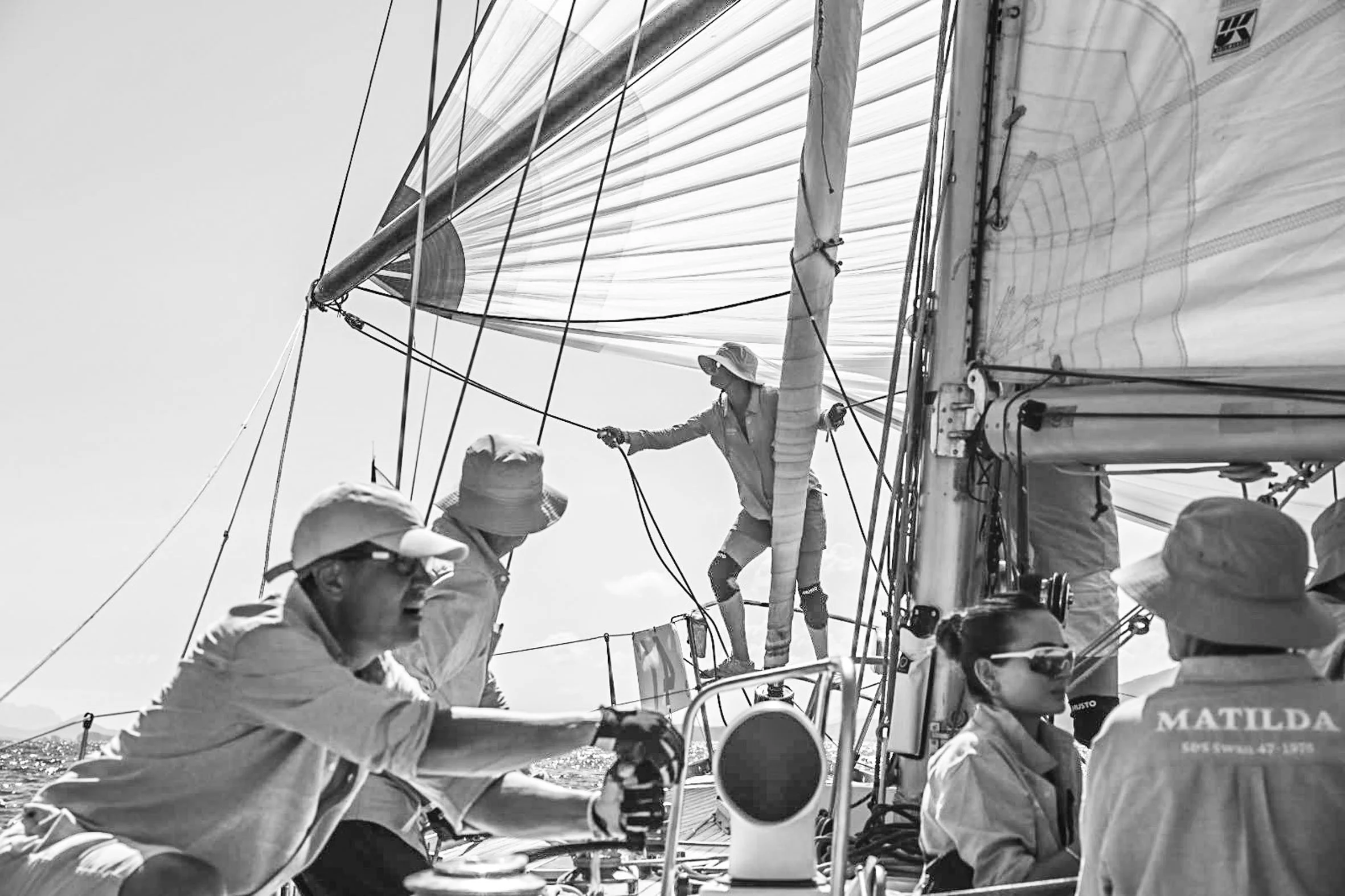
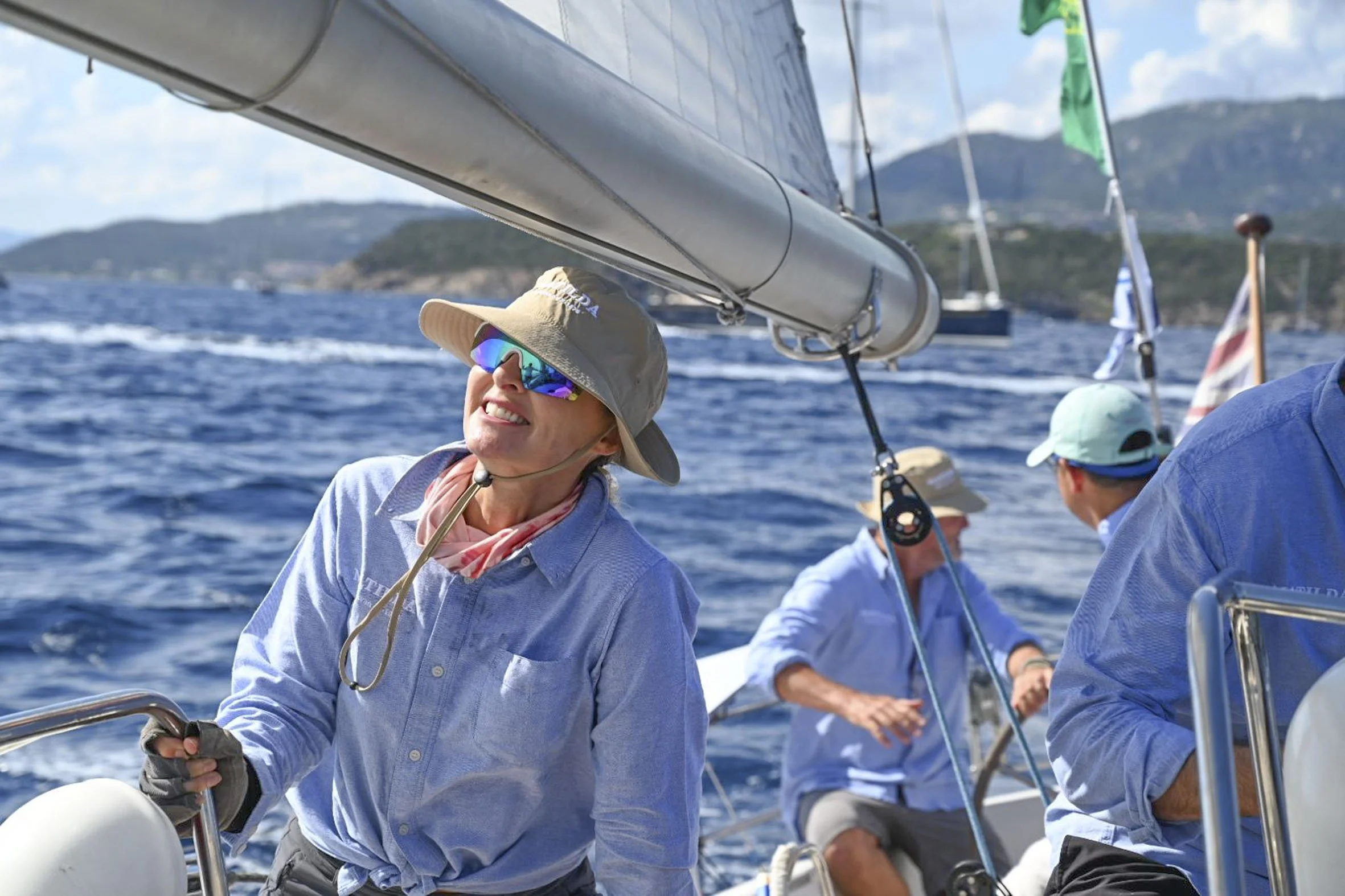
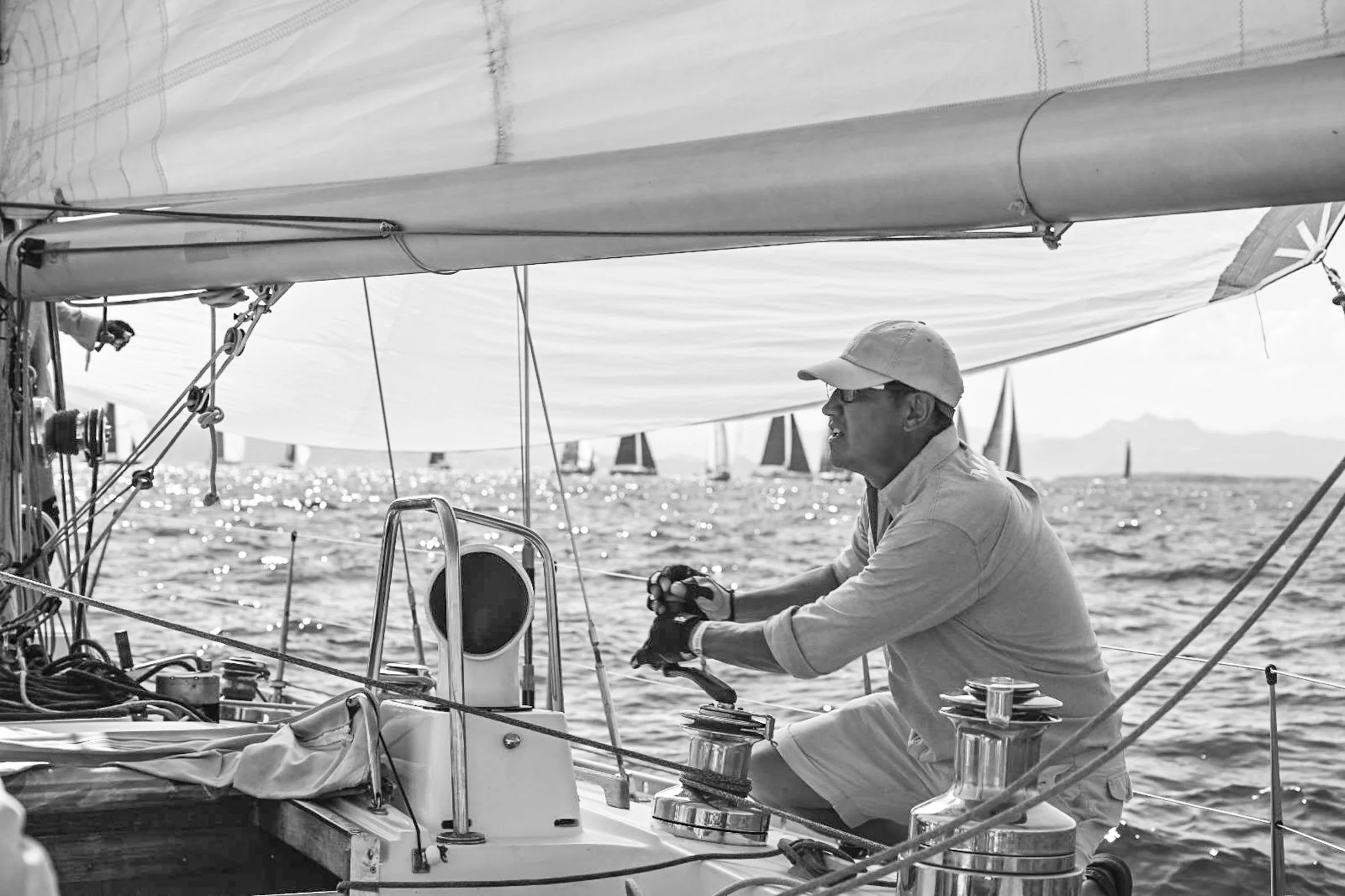
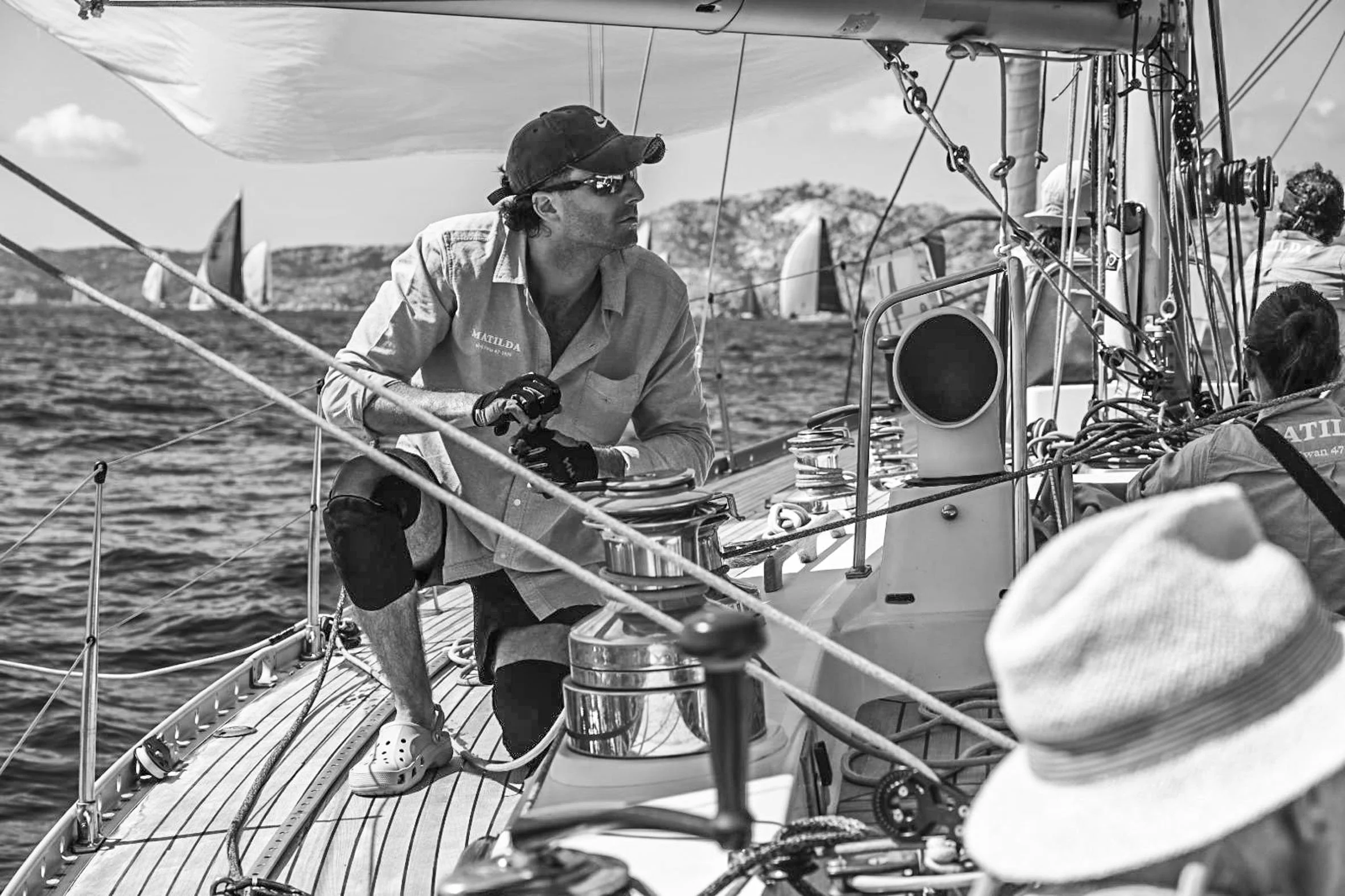
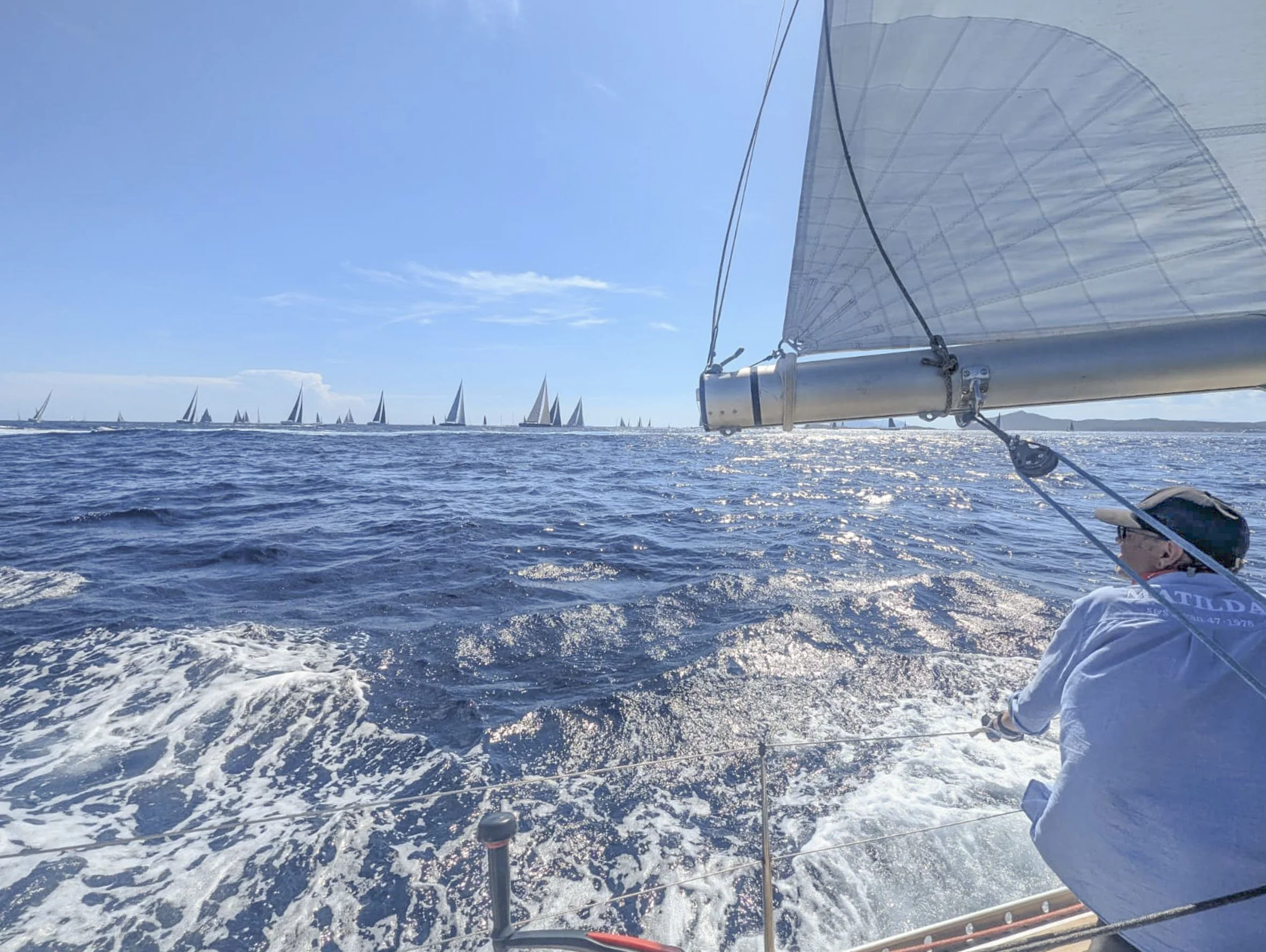
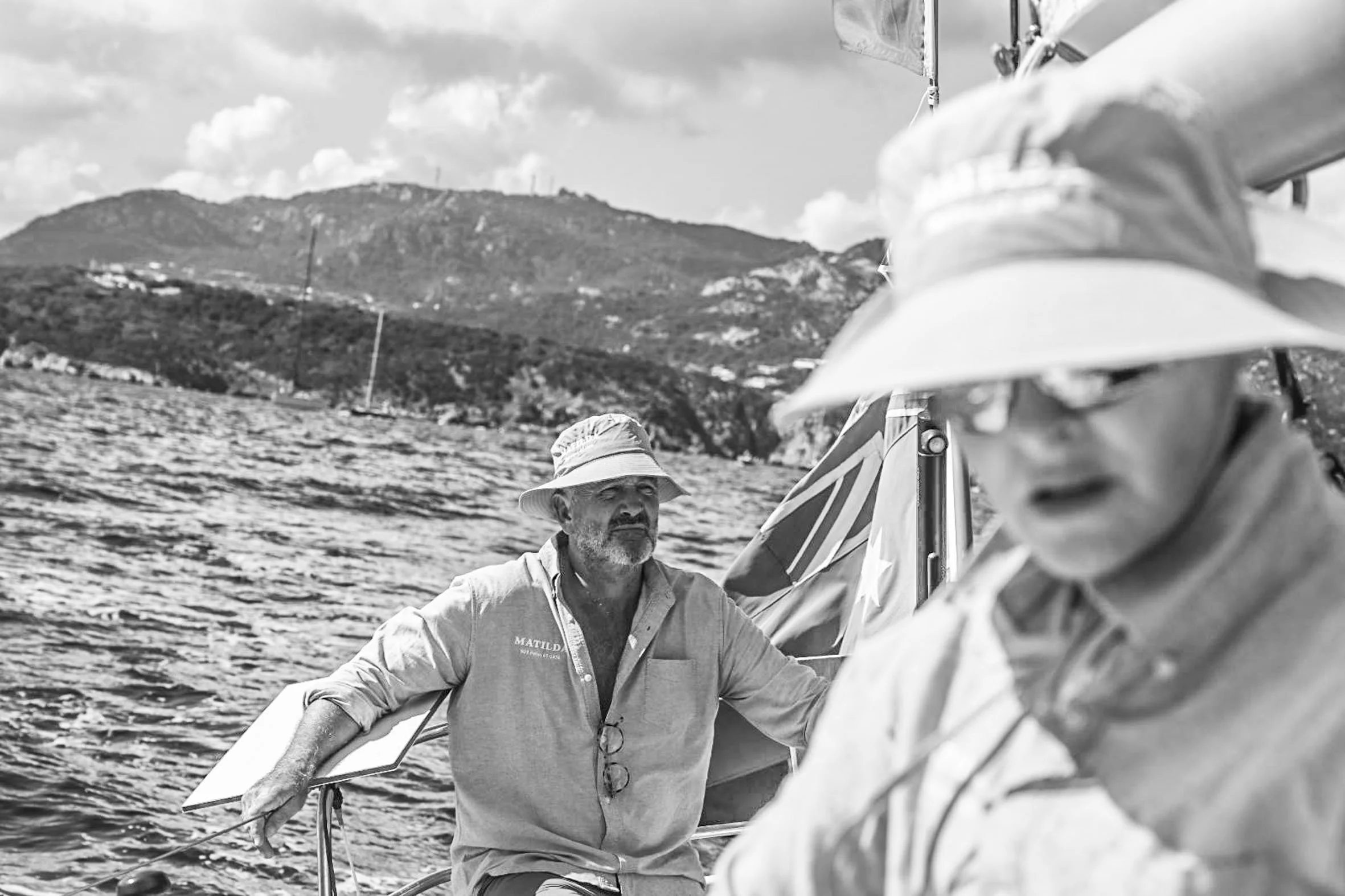
Images Greg George
Day two forecast was for more wind - and they got that right as well. We hovered near the start line watching the awesome sight of the Maxis jostling for position in a building 16 knot breeze and by the time our warning signal sounded there were gusts of 20 plus. Having never raced MATILDA before we were unsure as to where are limits were for reefing both main and furling genoa. We soon discovered there was no need to worry. Olin Stephens had done his homework, and as the anemometer read a steady 25, MATILDA, beating to the first rounding mark, gently pushed her shoulder into the chop sailing higher and faster than her more modern sisters, with the toe rail only occasionally getting wet.
We all knew that the design would excel to windward, but the downwind in gusts of 30 was going to test our experience. Should we leave the kite in the bag? When the foredeck crew decided to bring the sail on deck “just in case”, we knew we were going to fly it.
Running square through the Maddalena Archipelago in sparkling sunshine surrounded by some of the best yacht designs of the last 60 years, with the quarter wave on either side of the transom rising high above deck level is a feeling I will never forget. But there wasn’t a lot of time to enjoy it as land was approaching fast. Hoisting and flying the kite was one thing, but gybing and dropping was where things might go pear shaped. As usual my concerns proved unfounded, as the crew calmly swung the pole across under the forestay and floated it up to the new clew. The most experienced sailor on the boat then gently feathered the main across and we continued our charge to the east.
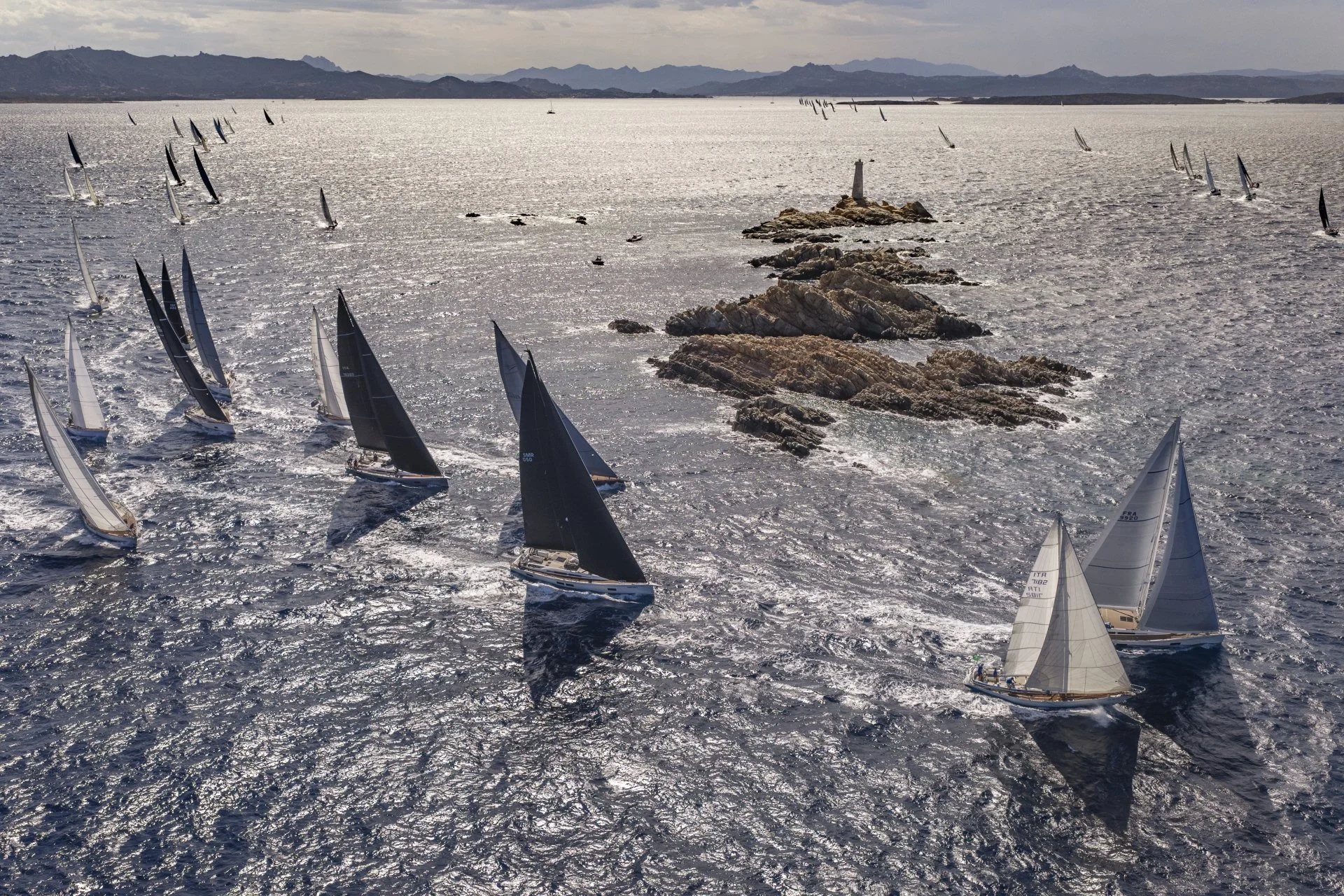
The beauty of a centreboard. MATILDA takes the inside line while Rounding Secca dei Monaci during Race 2 of the Rolex Swan Cup. Aussie Flag just visible in amongst the black sails! Image- Studio Borlenghi
That night up at the house with a couple of Campari Spritz under the belt, the results came in and we had chalked up another second.
Day three was also windy but for some reason we didn’t hit the same groove as the day before. It’s the fine adjustments, the subtle tweaks, that take time to work out. Our lack of experience racing this particular boat perhaps began to show. Nothing catastrophic but a few missed calls, an override or an unseen gust, meant that we were never quite humming. And the steady high 20 knots of wind never gave us a chance to reset and recover.
This was reflected in the day’s result but given our first two days we were still in second position.
The final day was going to be pivotal. First place (and a Rolex Watch) was now out of our grasp, but second would be a commendable result, given the circumstances. We started in around 8 knots of breeze that built to 14 and then gradually faded through the second half of the race to such an extent that the overriding emotion as we limped over the finish under a flapping shy kite was pure relief. After a few false starts and recalculations, the final results came in, and we had clung onto second place by the smallest of margins. I’ll take that… but I also have that nagging feeling that if we could come back in a couple of years with the experience we have now gained, we could perhaps go one place better. And it’s good to be left wanting a little more.
Looking back, it’s a week of sailing I will never forget. Yes, for some people the Rolex Swan Cup is an excuse to flaunt extreme wealth, hob knob with the rich and famous and measure your worth by the length of your boat. But it doesn’t have to be like that. We showed up in a 49 year old sloop, worth a lot less than a ten year old 46ft Beneteau Oceanis
We practised and prepared but at the end of the day we were just a crew of enthusiastic amateurs, friends who choose to spend their money and leisure time racing together.
And however big your boat is, I don’t think you could have had more fun than us!
Sal and I would like to acknowledge the wonderful group of people who trusted us to make it happen. Old friends, new friends, ranging in age from thirty to eighty, men and women, both experienced and fresh to the sport. Thank you with all our hearts.
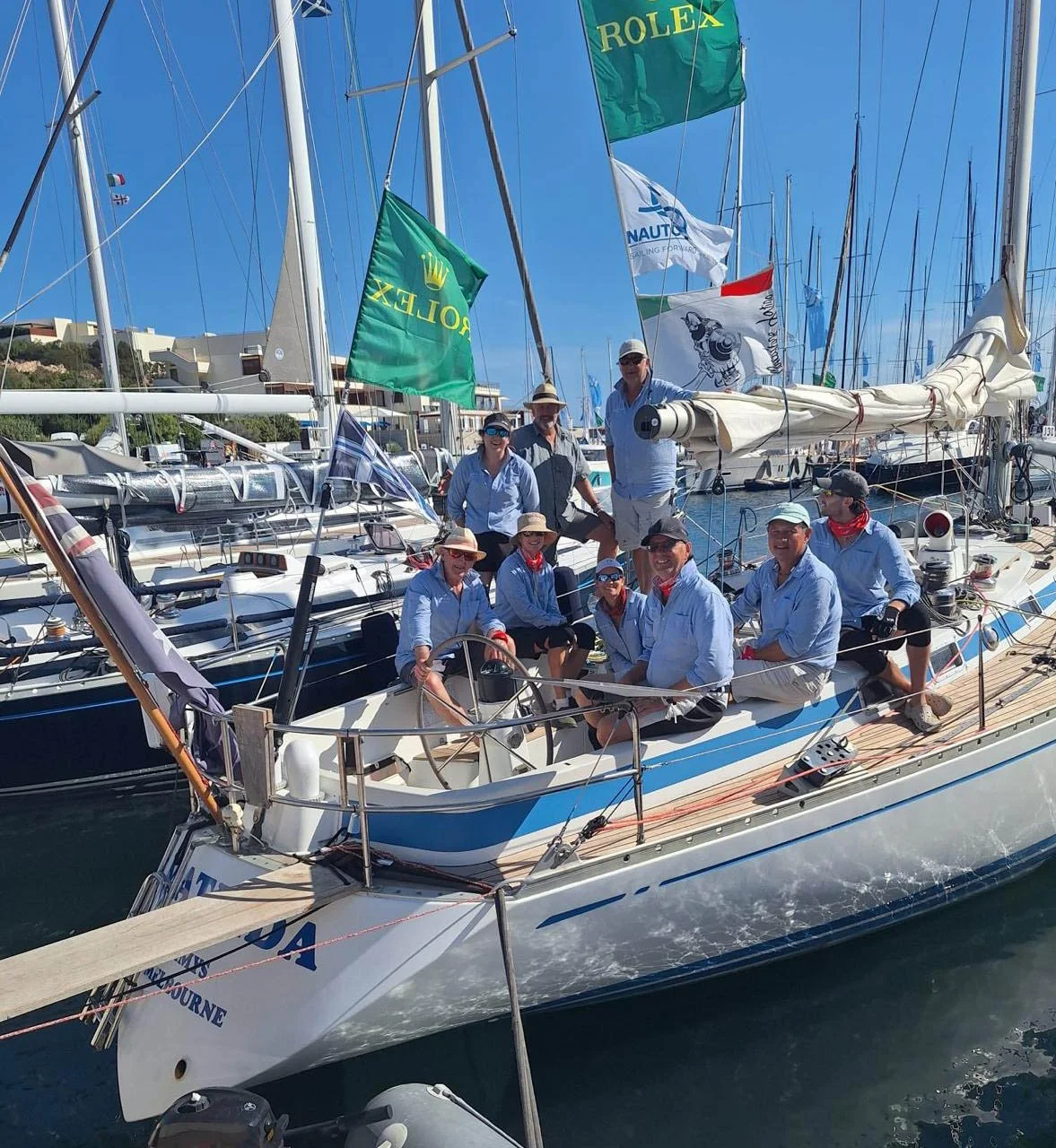
Sailing Crew
Tod Benson
John Donati
Sarah Edwards
Sam Negus
Jolene George
Ant Perri
Sal Balharrie
Mark Chew
Shore Crew
Mike Banks
Hattie Chew
Greg George
Listen to us recap the achievement over on MATILDA RADIO.
Watch Day Two highlights featuring MATILDA HERE
See more images from the Regatta HERE