
The Grain Races - The Baltic Connection
A Model Maker’s Pilgrimage
Part One
By Jeremy Brown
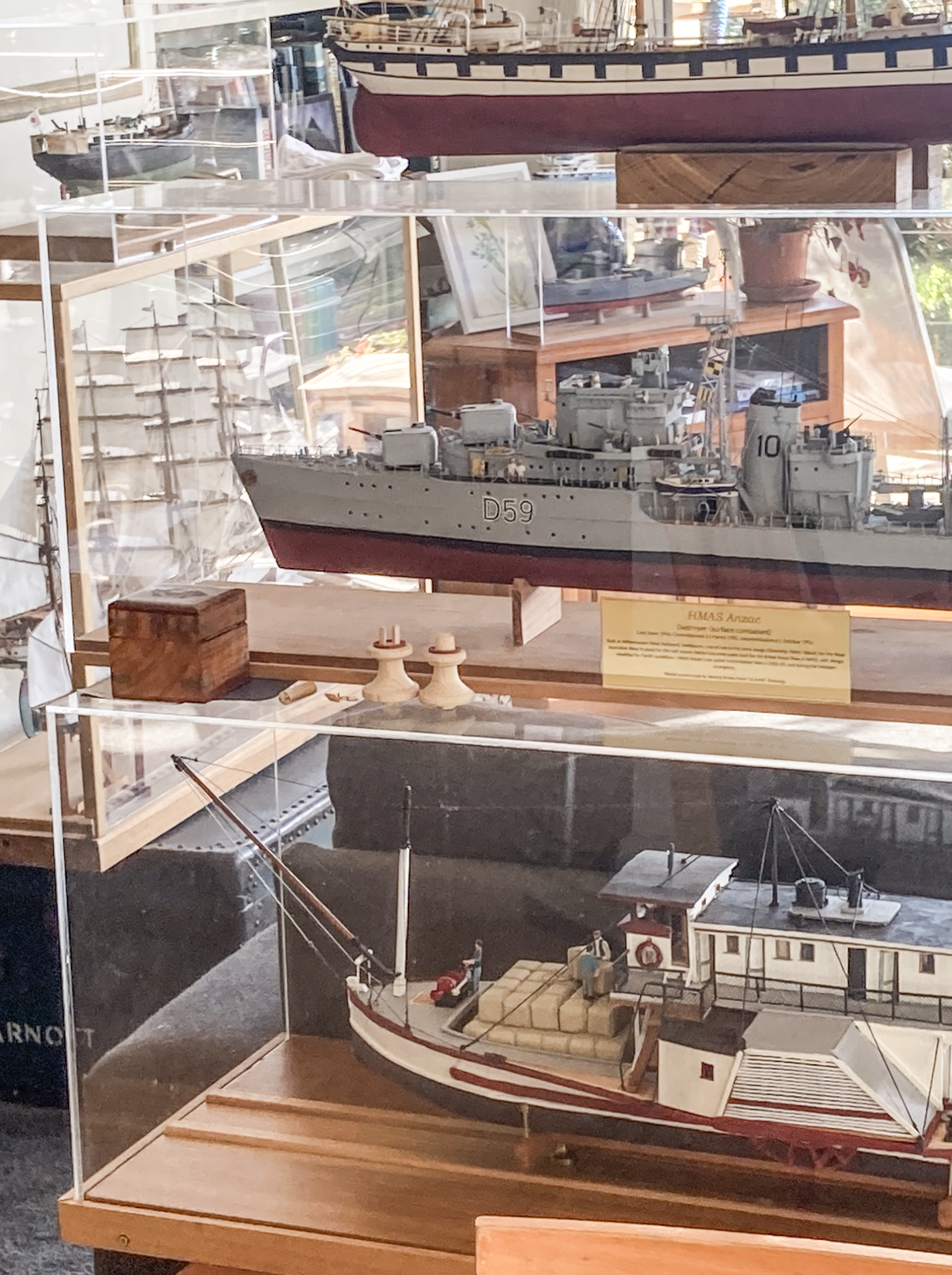
The author’s background is in ships and ports, initially as a cadet and ship’s deck officer, later as a shipping trade manager and ship’s agent, then later again as a port manager and finally as a consultant in ship and port management to various Australian and Pacific governments and global NGOs, with extensive travel in the Asian Pacific region.
He is a resident of Victoria, Australia, a sailing boat owner, and erstwhile amateur boat builder, and – increasingly as age modifies physical capabilites – an amateur maritme historian and modeller of ships.
The facts, words and opinions quoted in this artcle are therefore those of someone who has dabbled in many aspects of maritme culture and industry. No overriding accuracy is claimed, but he does know the sharp from the blunt end.
This artcle and its second volume “The Journey” are not intended as technical advice and facts stated may be inaccurate. As better writers and historians than the author and their publicatons have reportedly said
“…facts and words quoted are those of the sources I have relied upon. Any credit goes to them, but any errors and mistakes are all mine”!
Photographs not atributed in the captons and text are in the public domain or are by, and in the possession of, the author. Note that some early photographs have been reproduced so widely they cannot reasonably be atributed and are considered now in the public domain, or out of copyright. Where photographs are sourced from books etc., the details of the publicatons and atributons are provided.
SOUTH AUSTRALIA'S BALTIC CONNECTION
In the footsteps of Gustaf Erikson in Åland and south eastern Finland, May 2026
As a modeller specialising in ships of historic interest, to ensure realism, I like to research quite thoroughly the vessels that I scratch build (i.e., not kit sets) in miniature and, being something of a maritime history buff as well, it leads me to some interesting history. For instance, a recent model of mine has been of the Krait, the humble Australian navy vessel that provided support for the daring attack by a British/Australian canoe team on enemy ships in Singapore harbour in World War II. It was a story I knew of but not in detail, and researching for a model gave me far more insight into this masterpiece in guerilla warfare.
However, aside from some naval vessels such as the Krait and the modified Battle Class destroyer, HMAS Anzac, my collection of models is somewhat dominated by sailing ships. Naval ships of the WW2 era are interesting and 'busy' looking, with all their various guns, masts and aerials, depth charge mortars etc. and therefore make fine, detailed models, but sailing craft of all sizes are, after all, so much more picturesque. And probably, the star of my collection the historic four-masted barque, Herzogin Cecilie. Otherwise known as the Duchess, 'herzogin' being German for the young duchess Herzogin Cecelie von Mecklenburg after who she was named, and who launched her as Herzogin Cecelie, an appropriately regal name for a graceful, regal ship, on 22 April 1902. Fully rigged in the amazingly short time of just 66 days, she departed Bremerhaven on 27 June 1902. In 1921, after long internment in WW1 she would become the latest ship in Gustaf Eriksen's fleet and his flag ship.
After winning several of the annual Grain Races from Southern Australia to Europe in the 1920s and 30s, the Duchess was almost a household name in Britain, but became worldwide news in 1936 when she piled up in fog on the Ham Stone Rock, just a few hours after departing Falmouth, Cornwall, with nearly 5,000 tons of Australian wheat still undischarged in her holds. The so-called grain race, which brought these massive sailing vessels usually to either Falmouth in Cornwall or Queenstown (Cobh, southern Ireland) for orders, fascinated the British public and when the ship ran aground and drifted into Star Hole Bay in Devon, it became a major attraction. The British public seemed ready to adopt the stricken vessel, and the publicity brought my Sussex-based parents, while they were honeymooning nearby, to the windswept Devon clifftop to look upon the tragic sight on the rocks below.
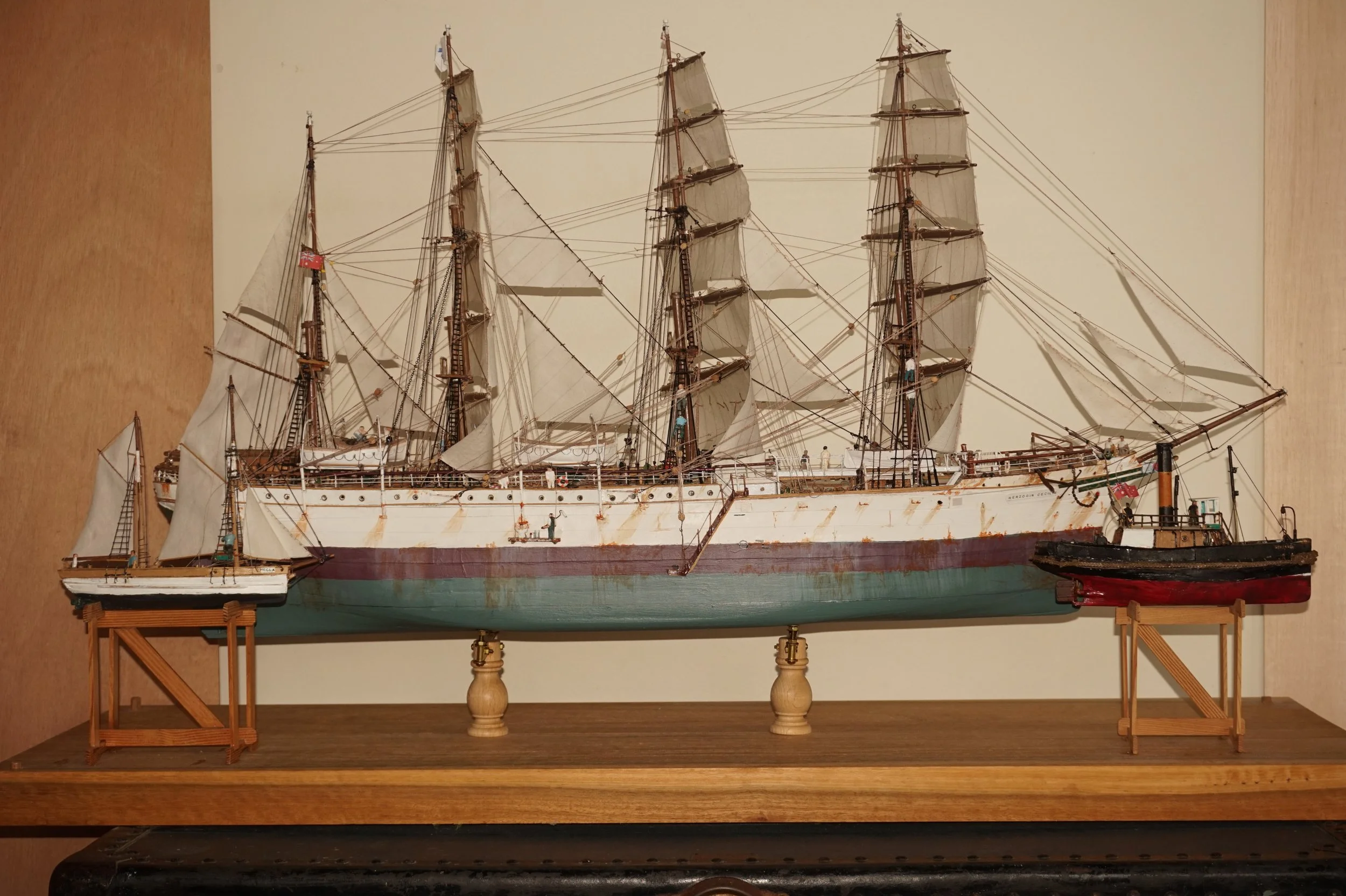
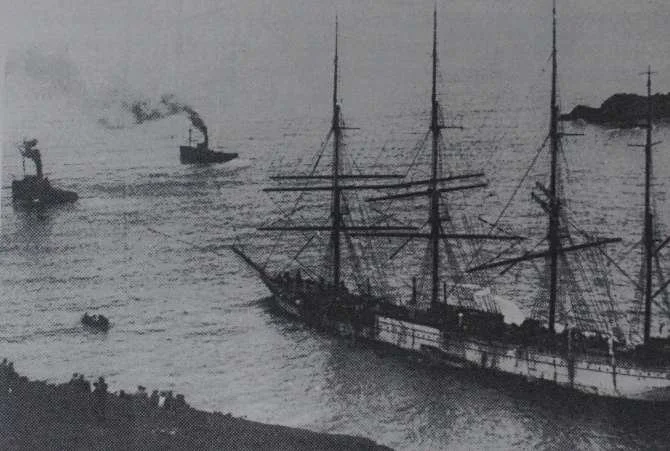
Figure 1: Herzogin Cecelie: Left 1:50 model in author’s collection. Right: the tragic end to a Duchess; being moved by steam tugs to Star Hole Cove where she remains today a popular dive site (Source Neil Cormack’s book “Herzogin Cecilie”, original attributed to the Alfred Nagel Collection.
So that sowed the seeds that eventually resulted, many years later and half a world away, in my modelling of the Herzogin Cecelie, and research into her and her owner that uncovered, for me, an amazing story. The story of a shipowner born and bred on a scatter of small granite-based islands in the Baltic, the Åland Islands, who grew up to run a maritime empire, a company the remnants of which still exist in a different form today. That ship owner was Gustaf Adoph Mauritz Erikson, and he would, in due course, become the owner of the largest fleet of large sailing vessels, not only in Åland and the young Finland, but in the world. And all managed day-to-day by Gustaf from his desk in the capital of Åland, Mariehamn.
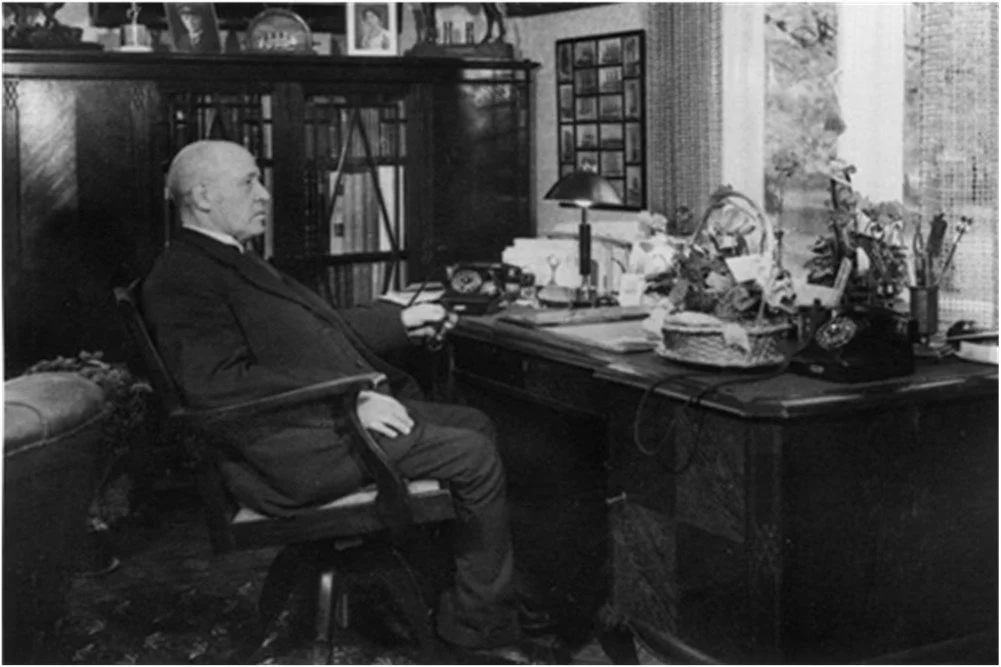
Figure 2: The legendary Gustaf Erickson at the desk, now preserved in Mariehamn, from which he managed an empire
And this, indirectly, led me eventually to a pilgrimage to Åland Islands in 2026 to get a feet-on-the-ground feel for the story and its genesis in the Baltic, a journey to extend to southern Finland to see another iconic square rigger, the 3-masted barque Sigyn, now a museum ship in Turku. But first, some background.
Sail v. steam; the unequal battle
It is strange to think that in the mid-1800s, when steam was making such an impact on the transport industry in general and ships in particular, commercial sailing ship design was just reaching its zenith. The ubiquitous three-masted barque was being replaced on the slipways of north European shipyards by big, burdensome ships with steel, iron and composite construction hulls providing clear spaces and (relatively) leak proof holds, with steel and iron masts and spars and simplified sail plans. These big, capable ships, some able to carry over 5,000 tons of homogenous cargoes such as Australian wheat, were ideal for carrying bulk cargoes which could eventually be loaded right to the ships outer hull plates without the need for bags, timber spar ceilings and other protection from water ingress, condensation, spontaneous combustion, mould etc, that had long bugged the wooden ships. Based on the ubiquitous 3-masters that had become the mainstay of world trade, the 4-master developed, mainly barque or fully ship-rigged vessels the norm, although five-and six-masts were explored, and even freakish occasional seven-masts, mostly with fore-and-aft schooner rig.
Square sail rigs were simplified to provide handling by smaller crews, the most common measure being the removal of the upper sails – royals etc.- thus reducing the number of sails and yards to be handled, and more attention paid to fore-and-aft rigs, once again reducing dramatically the number of mariners needed to handle big, heavy canvas on these relatively massive vessels. The towering, beautiful square-rigged ships became truncated to the 'jubilee rig' and known somewhat contemptuously as "bald headed". Meanwhile, Scottish square-rigger Captain John Charles Barron Jarvis had patented his brace winch, which simplified the main task of bracing spars round while wearing (tacking) the ship, which could require even the officers pulling on ropes. The new design allowed a single winch to control all three sets of braces on a mast simultaneously. Crew numbers fell to around than twenty from the thirty to forty previously needed.
Herzogin Cecelie, however, bucked the trend and continued on with the lofty rig. She was built as a training vessel and, despite a lack of steam powered or Jarvis brace winches on deck, the complement of up to 65 cadets made up in manpower and human sweat what she lacked in mechanical or steam power. Typical of the beauty of square-rigged vessels, the unusually clear photograph below shows barque Herzogin Cecilie in Gustaf Eriksen colours, wearing a full set of light, fair-weather sails, in ballast and becalmed, looking quite immaculate so probably outward bound from Europe to Australia. The symmetry of the traditional rig is evident.
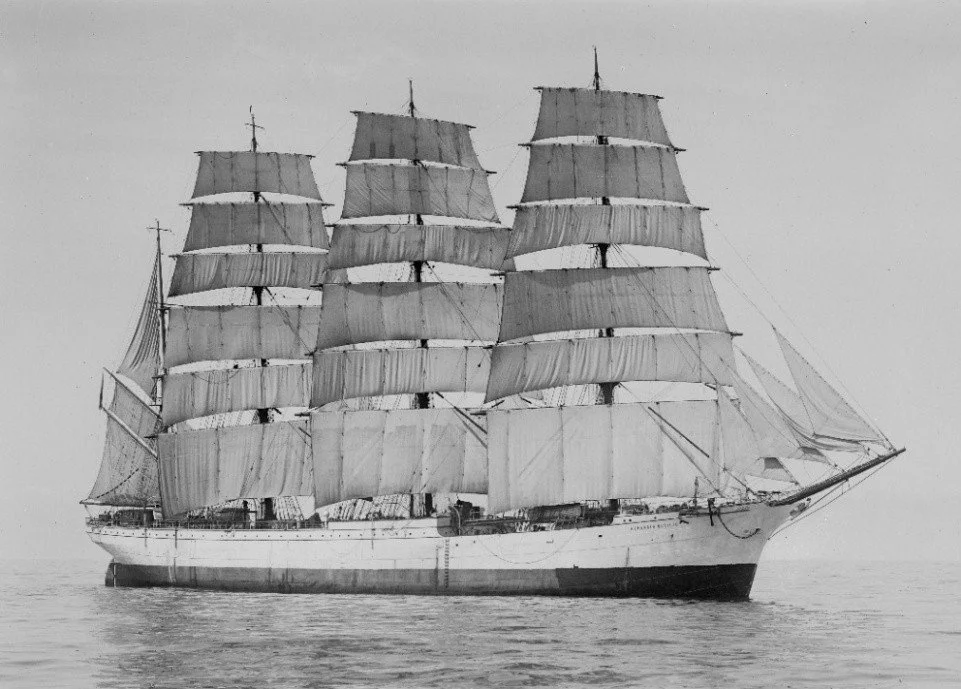
Figure 3: four-masted barque Herzogin Cecilie from a photograph held by the State Library of Victoria, Australia
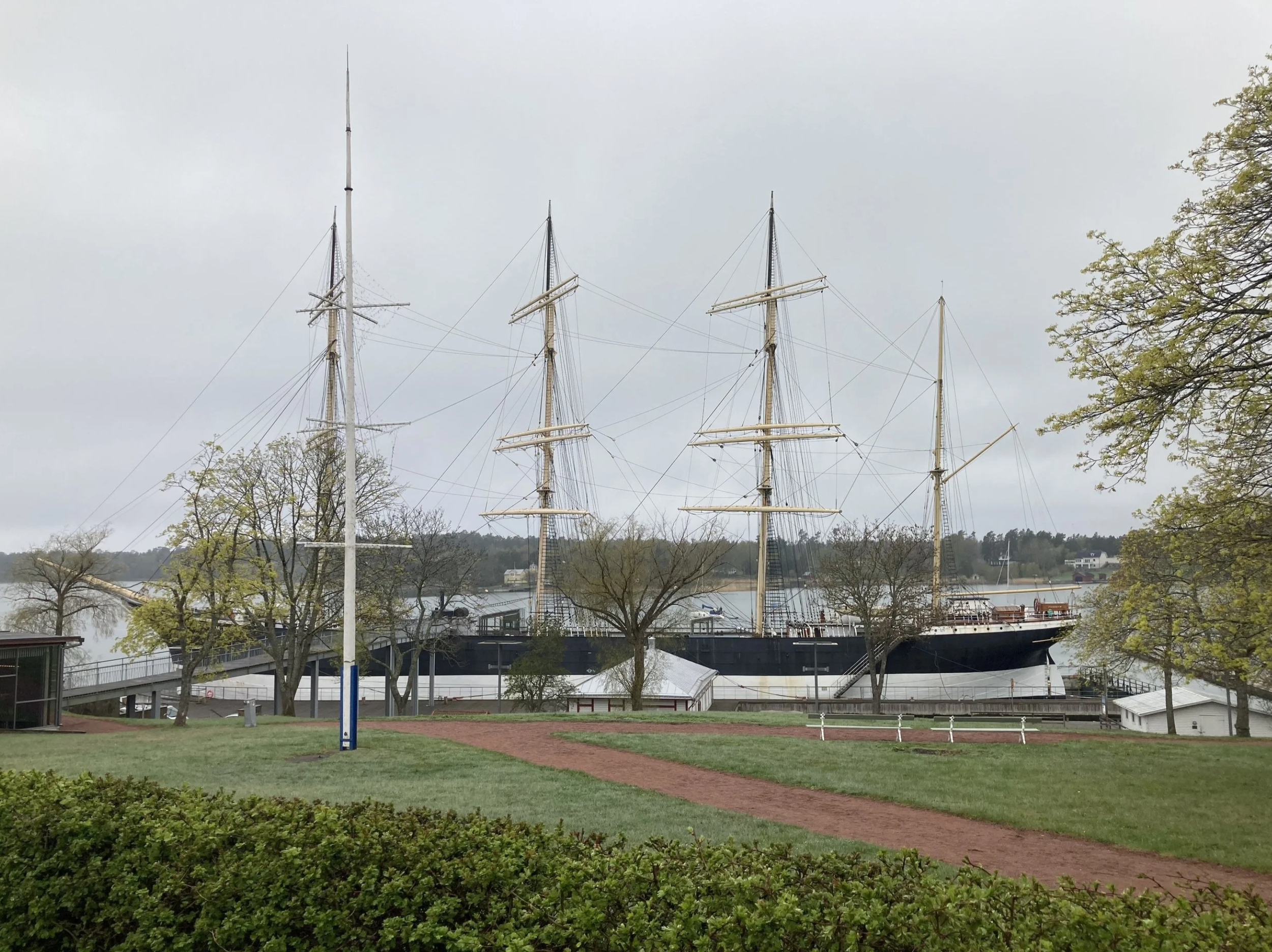
However, this did not apparently hinder the sailing capability of the lower rigged ships. Even if later buildings omitted the top rows of sails and took on the 'bald-headed' or 'jubilee' look, many good passages were recorded, particularly, for instance by the well-known German Laeisz company owned "Flying Ps", one of which, Pommern, another Erikson vessel, pictured below at her permanent berth in Mariehamn, Åland Islands, will also be a feature of this story.
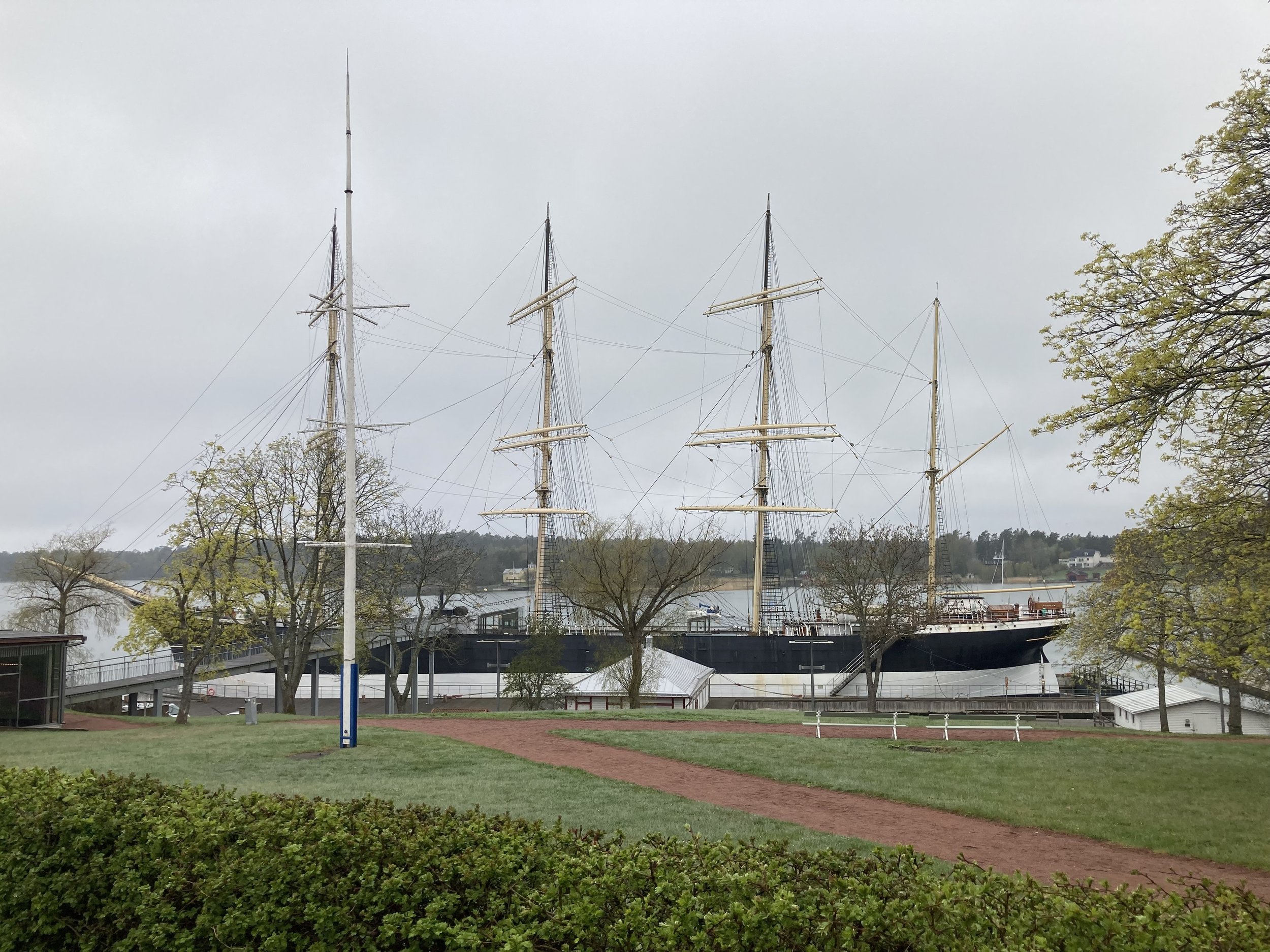
Figure 4: Pommern, formerly Mneme (1903–1908), is a steel-hulled four-masted barque. Built in 1902 at the J. Reid & Co shipyard in Glasgow, Scotland. Seen here in 2026 at the Åland Maritime Museum.
Unlike Herzogin Cecilie's towering sail plan, the rig for later ships was lowered, constraining operating costs by simplifying the sail plan and thus reducing crew sizes. In addition, also in the interests of cost control, masts and spars (yards etc) could be made common in size between the three principal masts, providing interchangeability and easy cannibalising of similar sized ships wrecked or going out of commission. To illustrate this, Gustaf Eriksen was always quick to cannibalise his own ships when they got into trouble. Bjorn Svensson's 1988 book of the same name describes how Pommern's early voyages under Eriksen's flag suffered difficulties from trying to utilise sails made for other vessels. My latest model under construction (Archibald Russell, shown below in Figure 10), is similarly rigged, the three sets of steel masts all of similar height from deck to masthead, spars and principal running gear identical and interchangeable.
Although in European shipyards, four masts mainly replaced three on barques, ships etc., some ship building communities, notably in North America, went to the extremes with five, six and even seven masts, mostly schooner rigged. The famous Preussen, square rigged with massive spread of canvas, was extremely strong and said to be capable of sustained speeds around 21 knots in favourable conditions (i.e. in gale force winds that would normally see other ships 'shortening down'!), compared to fastest speed of 4-masted ships not exceeding the 17.5 knots recorded by Herzogin Cecelie, was the extreme, but generally the world's blue water traders stuck to what they knew best, three- and four-masted, square-rigged vessels. Steel and iron hulls became common, particularly in European yards, although composite vessels with heavy timber planking on steel or iron frames stayed popular for ships likely to frequent tropical waters. The heavy timber hull planking readily supporting copper sheathing which eliminated marine growth, in those days endemic before long lasting chemical anti-fouling paints became available.
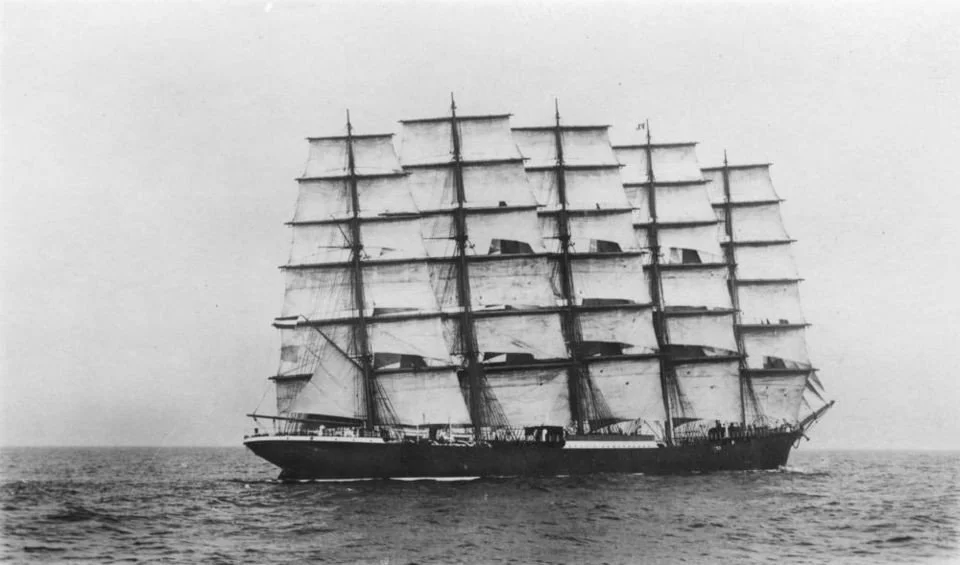
Figure 5: The extreme; the five-masted ship-rigged Preussen, the only ship square rigged on all of five masts
In the years around the turn of the 19th century, and particularly between the wars (1918-1939), sailing ships remained viable for bulk cargoes but, despite the more efficient rigs reducing and mechanisation on deck replacing manpower, coal-fired steam began to compete for speed and reliability of passage time and quickly made inroads, although its progress was slowed initially by the need either to carry large amounts of coal, or for owners to establish and supply strategic coal refuelling facilities around the globe. As oil fired boilers began to enter the game, labour-intensive coaling, diversions and the frequent lengthy port calls required were largely removed from the cost equation, and shipowners generally moved more rapidly away from sail. As a result, once the WW1 and an immediate post war extreme peak in freight rates faded away, large numbers of these powerful, relatively handy, later generation sailing ships, many of which had been mothballed during hostilities or held captive by hostile states, their hulls and gear allowed to deteriorate or, cannibalised (as mentioned above, Pommern was a victim of this and it took some time for her gear to be progressively replaced or custom made on board for her to reach full potential) came prematurely on to the market. Although shipowners are not by nature sentimental, it was not the look of these ships that kept them alive: they represented cheap tonnage at below replacement cost with low operating costs. However, falling freight levels and increasing regulation of staffing and crewing ensured this was short lived.
A few operators, led by Åland Islanders with insight, best known being Gustaf Erikson, August Troberg, Nikoli Sitkoff and Hugo Lunqvist, saw the industry's global move away from sail and the 3- and 4-masted ships as an opportunity, despite realisation that these trends were merely short term in the face of rising costs, and the reliability of steam. Sailing ships still with much remaining life were selling at a fraction of the costs of building. Operators whose names later became icons in the shipping world, started to accumulate ships, purchased often at way below replacement cost, and with freight rates still elevated, fortunes were amassed by shrewd operators, many of whom - or their families - would hedge their bets by investing profits into steamships but, for the moment anyway, would use the big, cost efficient sailing vessels to target the less time-bound bulk trades, notably grain, along with other bulk commodities such as nitrates out of South America. This brought the broad-acre grain country of south east Australia into their sights, and the scene was set for the seemingly strange connection between the farms and ports of South Australia and the far distant Åland islands of the Baltic. The massive ships would winter in the sheltered waters of the Åland islands, prior to provisioning and sailing south for the start of the South Australian grain harvest, there loaded either alongside in bigger ports such as Adelaide, Geelong, Wallaroo, Port Augusta and Port Lincoln, or more often at anchor in the sheltered water of the 'roads' off isolated grain ports such as Ports Victoria, Port Broughton and Port Germain, with grain increasingly supplied by rail in bags and ferried out to the big ships by a fleet of small steamers, trading ketches and schooners. Often the ships would back load timber for the southern hemisphere, or they would sail in ballast.
Grain would be destined for a wide range of ports in the English Channel and North Sea, but most ships departed with orders to make landfall in ports such as Falmouth, Cornwall or Queenstown, southern Ireland. Their cargo may have changed hands several times enroute, and this resulted in "Falmouth (or Queenstown) for orders" being cited as the initial destination, with final destination any port with suitable storage in northern Europe or the British isles. Therefore, Herzogin Cecilie's last voyage was from Port Lincoln to 'Falmouth for orders', with final destination - had she made it - Ipswich on England's east coast.
Many years after this, as a young first trip apprentice on a British ship leaving the Persian Gulf, I plucked up courage and asked a rather self-important radio officer where we were going – as the lowest form of life, we apprentices were told little. He grunted and turned on his heel, but as he walked away, he must have taken sympathy on me because he said over his shoulder "Lea foh" or something similar. I shared it with other cadets who were unimpressed – "no such f-ing place" was the general view, and it was some days before, having used my knowledge on the second officer, I learnt that it was LEFO, which stood for "Lands End for orders", so the terminology was still being used in the 1960s at least. The reasons are still valid; I guess. Ownership of bulk cargoes such as grain and oil could change hands and final destination many times before the long voyage concluded, and still do, no doubt…
Many of the ships in this period, leading up to the famous Grain Races, were owned and operated by Åland islanders. Most had shipping in their blood but were also family farm owners, for whom shifting cargoes, notably timber, around the Baltic and across the North Sea and Atlantic were essential downstream annexes to their more localised agricultural and forestry activities. They mostly owned and operated small wood built sailing vessels, either locally built in local yards, and yards such as Nystad (a Gustaf Erikson acquisition), in Finland, or in fact, on any convenient island foreshore offering deep water nearby. Of these seafaring Åland islanders perhaps best known is Gustaf Erikson, and his and the other iconic family names such as Lundqvist, Matson, Troberg and Sittkoff carried on the sailing ship theme into the post WW2 era. Erikson, however, along with Lundqvist and unlike the other shipowners, remained based in Mariehamn when others shifted their head offices to the bright lights, and access to insurers, of financially developing Helsinki. Something of a 'Godfather' figure, Eriksen had control of over forty ships at any one time, and over 60 ships in his lifetime, plus shares in over twenty more, mostly sailing vessels, including many well-known names, and his fleet including the one that sparked my initial interest in this story – his flagship, the barque Herzogin Cecilie. Lundqvist had a significant number of sailing ships but was moving, with some support or allegiance of the Eriksen family, more determinedly into steam.
The Herzogin Cecilie and her fate
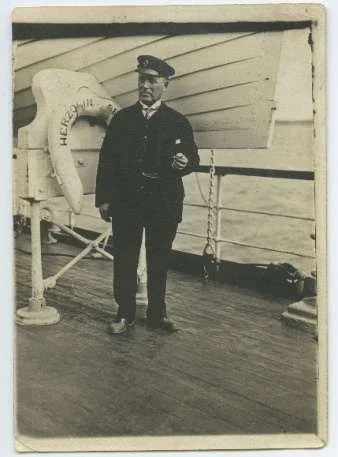
Figure 6 Captain Gustaf Erikson on board his ‘flagship’ Herzogin Cecilie: Source: History Trust of South Australia
Erikson had a policy early in his ship-owning years of renaming ships he purchased, but, after some bad experiences such as the loss early in his career as a ship owner of the barque Renee Rickmers, that he had renamed after purchase as Åland and lost on an early voyage; and later of the German barque Gustaf that he had purchased and renamed Melbourne, he followed the old adage and took to keeping or reverting to original names when ownership changed. Thus famous ships in his fleet, such as his flagship the Herzogin Cecilie, and others such as Hougomont, Lawhill, Viking, Archibald Russell, Professor Koch, Grace Harwar, retained or resumed their original names. It was Herzogin Cecilie, named after the German duchess of the same name, originally German built as a trading and sail-training ship for Nord Deutscher Lloyd company, that first came to my boyhood interest through an indirect family connection. However, this avoidance of bad luck did not prevent the Herzogin Cecilie reaching an early grave.
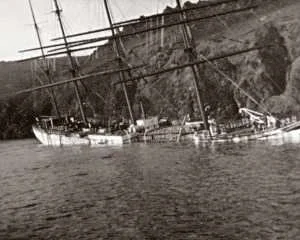
Figure 7: Herzogin Cecilie in her final resting place on the Devon coast
My mother related to me in my boyhood that she and my father had stood in the crowds on the cliff top in Devon, England in the summer of 1936 when on their honeymoon, looking down on the Herzogin Cecilie as the magnificent vessel lay aground in Sewer Mill Cove below. The ship had hit the well-known Ham Stone Rock in fog, only 7 hours after departing Falmouth, where she had called 'for orders'. The orders received in Falmouth should have taken her safely to unload at Ipswich port on England's east coast, to complete her voyage from Port Lincoln, SA. Her voyage to Falmouth was completed in the excellent time of 86 days. Regrettably her final fate lay only a few miles along the Cornwall/Devon coast from Falmouth, where fate (and faulty navigation, perhaps) took a hand.
Experts considered the ship salvageable, initial damage being restricted to the forecastle and forward hold, and there was strong public interest in the ship's fate, spearheaded by celebrities and the captain's wife. There were plans to refloat and repair the "Duchess", as the ship had become affectionately known in the UK, and she was shortly successfully refloated and towed by a bevy of steam tugs to what became her final resting place. She was beached in an ostensibly sheltered sandy bay (Starehole Cove), where it was planned that undamaged cargo would be unloaded and the ship refloated, only to have big swells in a strong blow break her back within weeks, the swell dumping the big ship on a reef hidden in the bay's sandy bottom.
Her cargo of wheat, already sodden and rotting in the forepart of the ship, began to leak out through the fractured hull plates and contaminate the shoreline and her owner, Gustaf Erickson, despite his known affection for the ship but not known for sentimentality, authorised agents to begin stripping her of anything of value. Despite herculean efforts by the British people and celebrities to have her salvaged and returned to service or preserved as a training vessel, efforts came to nought and, immensely sadly, the ship become a total loss. Her remains are still a dive site for scuba enthusiasts today.
Feeling thus a connection through my parents with the "Duchess", I started in the late 1980s, now living in Victoria, Australia, to build from scratch a model of the vessel, but I paused the construction in the face of a lack of available data. Only grainy early photographs were obtainable at the time (builders' plans became understandably victims during the WW2 conflagration in Europe), and - for myself - other career moves became the priority and took me to export related work in South Australia.
Later, while I was working in the maritime industry in South Australia, good information and plans became more readily available through the internet, particularly a set of excellent plans by English naval architect Arthur Underhill who, according to signed notes on his plans, gained permission direct from Gustaf Erikson to access his ships and the owners' plans. Armed with better data, I completed the model, some twenty years after the 'keel had been laid'. During the downtime, my partly built model had been stored for a while on a high shelf in a garden shed, gathering dust and periodically anointed by visiting possums and looked suitably weather beaten! Not wishing to fight nature, I decided to keep the weathered look and completed the model as the ship would have appeared after a long voyage to South Australia, rust streaked and salt stained.
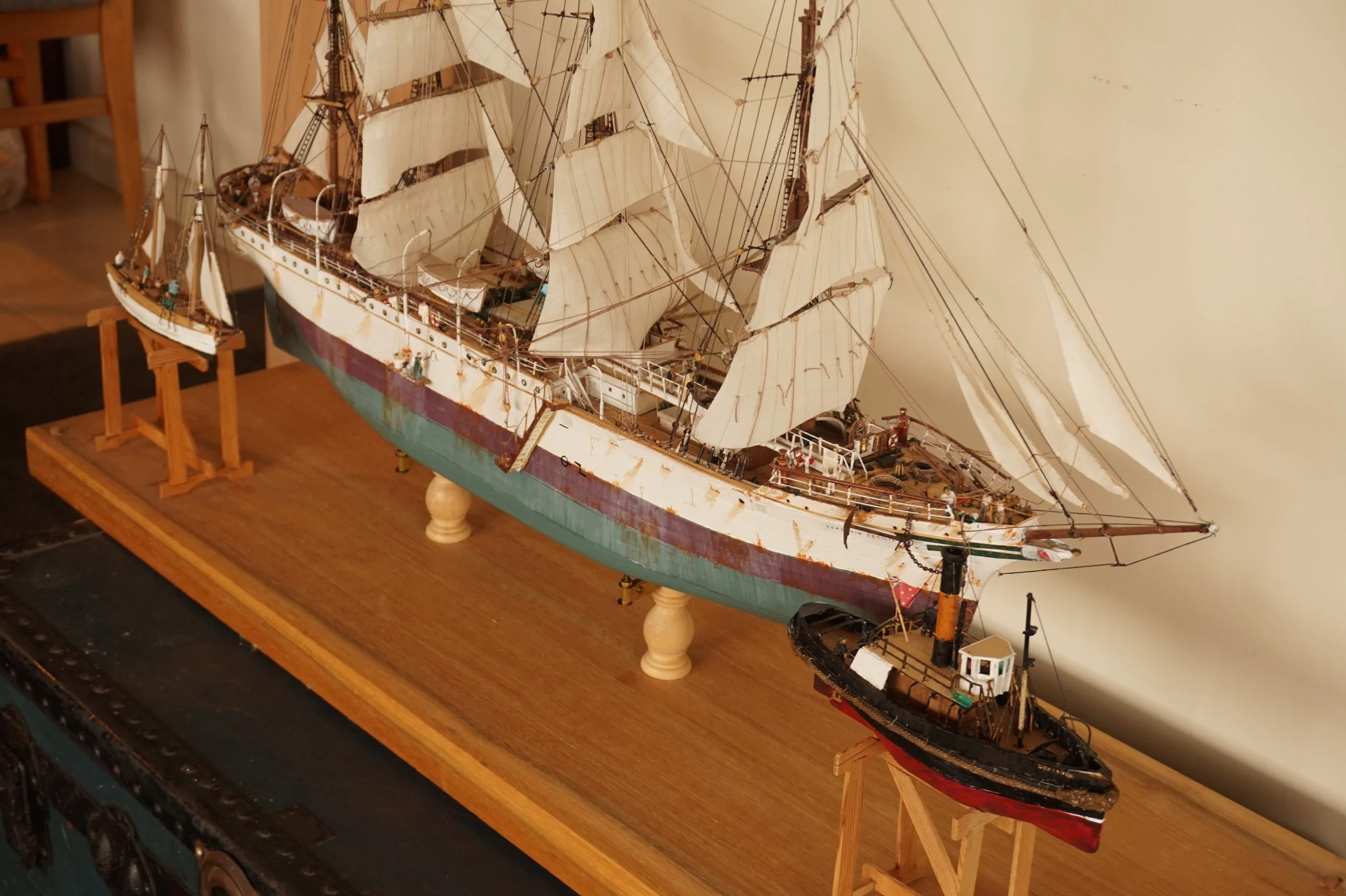
Figure 8; Diorama – Herzogin Cecilie model, depicted as arriving in South Australia,attended by the trading ketch Hecla and Adelaide steam tug Defiance.
The above photograph shows my scale model of Herzogin Cecilie, attended (in my imagination), by Adelaide steam tug Defiance and the famous South Australian trading ketch Hecla, which has been lovingly renovated and survives to this day, at the Axel Stenross Museum in Port Lincoln, according to their website.
The ship is depicted as I envisage she would have appeared in the final stages of a voyage from Europe around Cape Horn, with various activities taking place as the crew of twenty odd seamen and some cadets ready the vessel to go alongside. Small groups patch up rust streaks over the side; or prepare holds for inspection and removal of ballast; cadets get port-side boats ready to place afloat to clear rails for cargo work, while ABs start bringing in sails as the barque ghosts into a port anchorage in the Gulf of St Vincent, for instance, on a gentle southerly breeze. The date would be the early 1900s, the ship still under the German flag, with the Nord Deutscher house flag at the peak, and the early Australian merchant flag as the courtesy ensign.
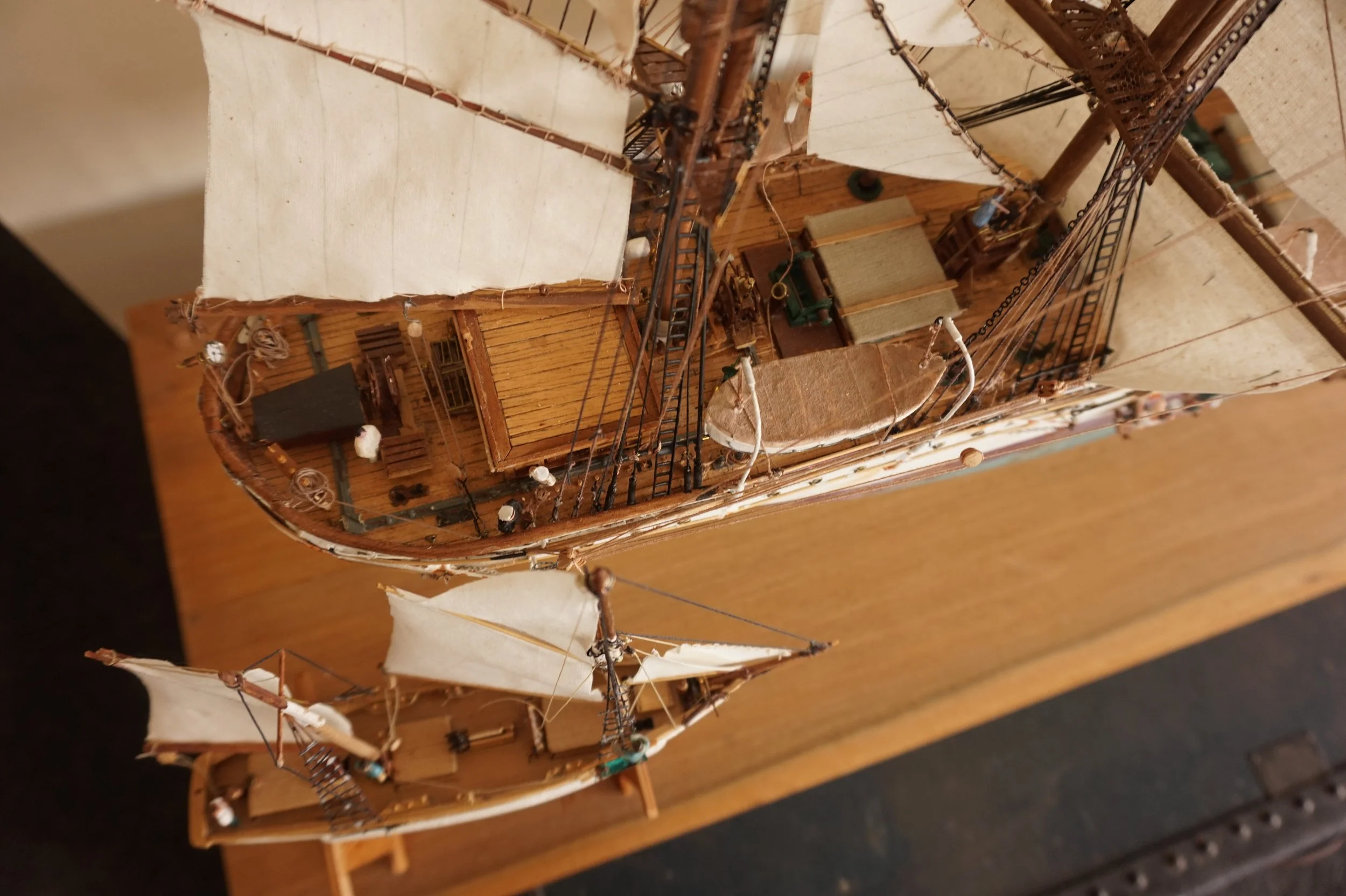
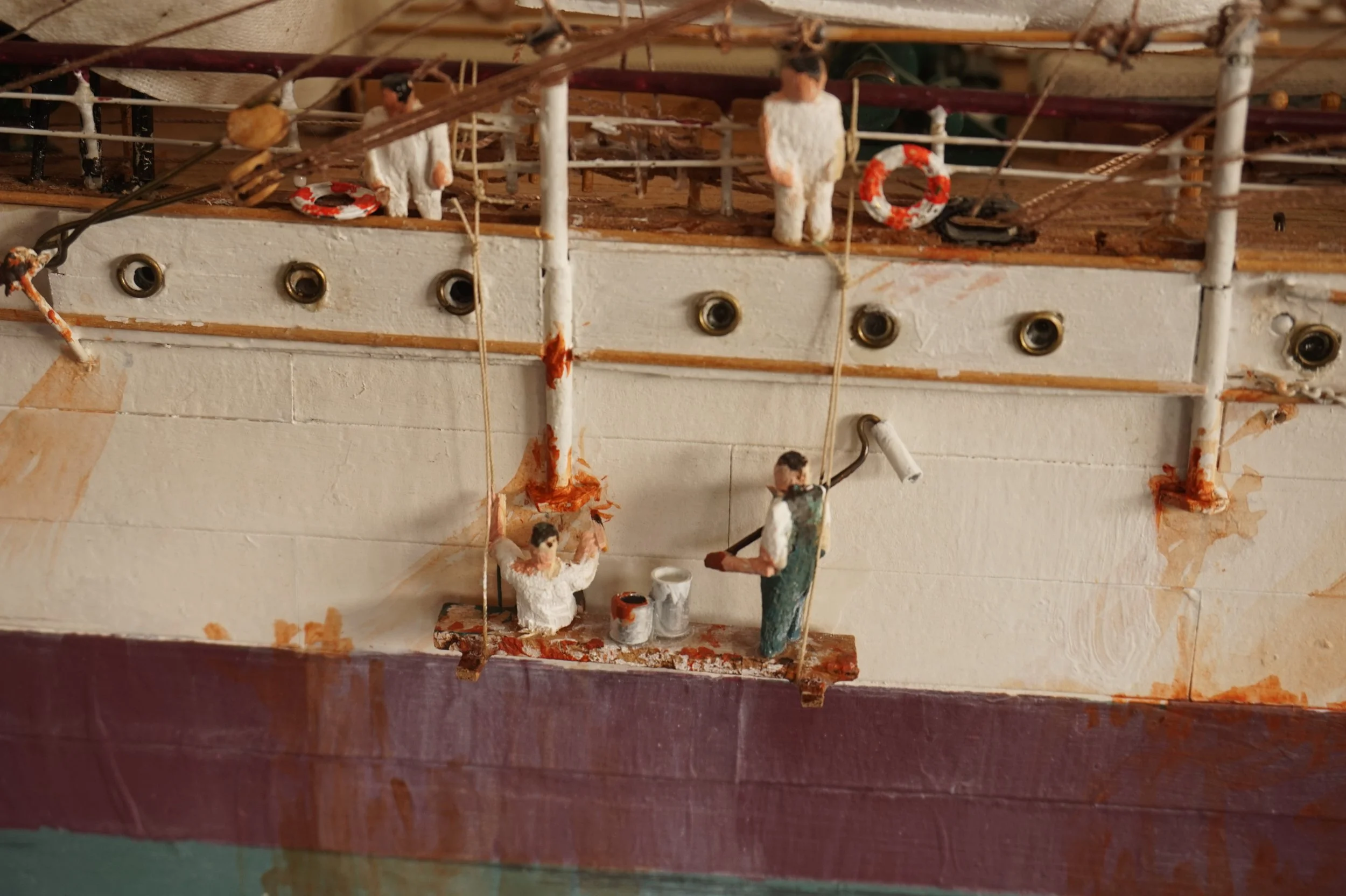
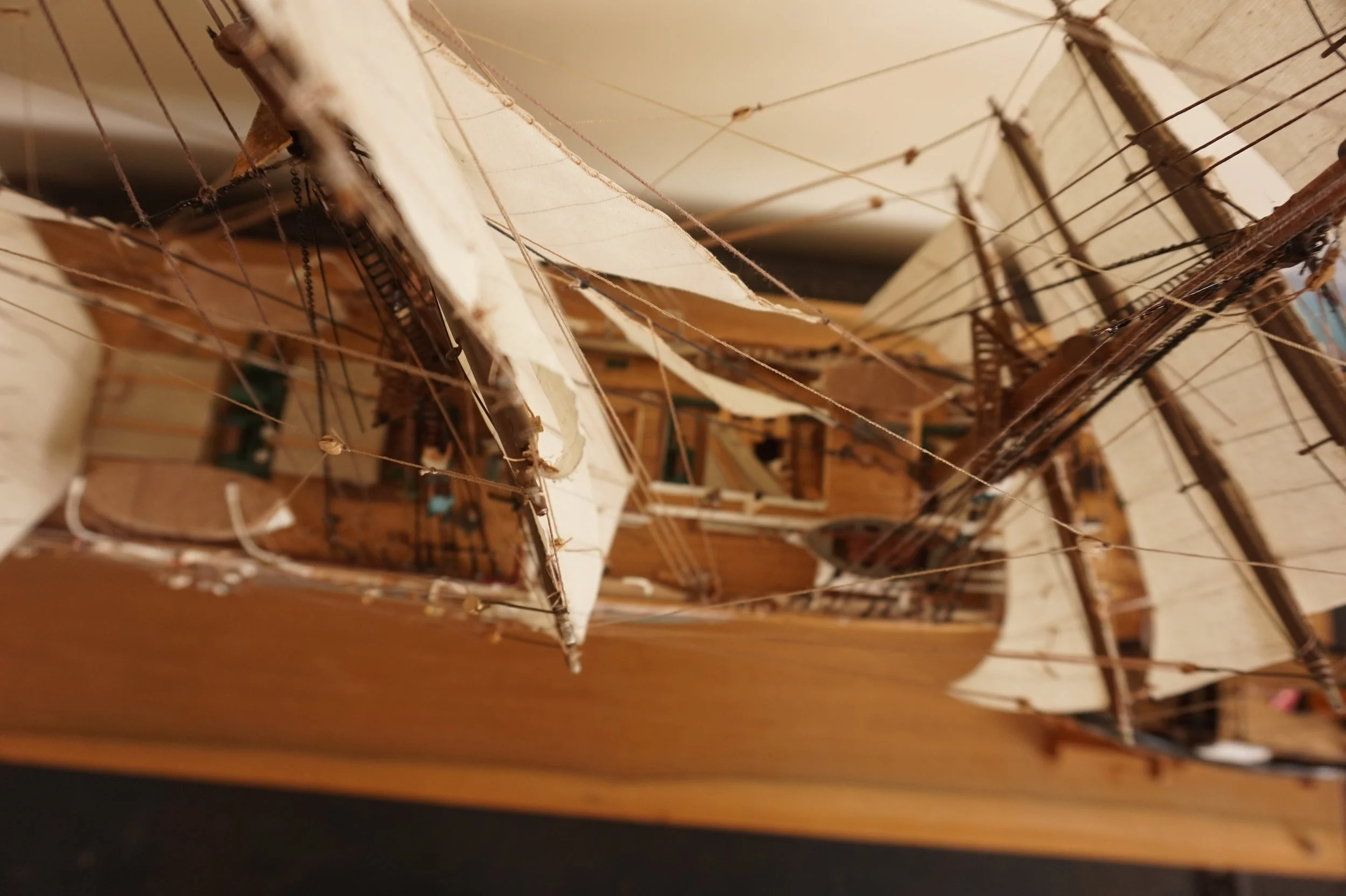
Figure 9: Herzogin Cecilie diorama details– crew actvities as vessel approaches South Australian port, c.1910
In expanding my research, I came across some excellent if little-read books that dealt either in passing or directly with the Herzogin Cecilie and her owner, Gustaf Erikson, and the Baltic story, and the strong connection between South Australia and Mariehamn, in the Baltic's Åland islands. This led me into more research and more ship models, including my current work-in-progress, the Clyde built 4-masted barque Archibald Russell, that also flew Gustaf Erikson's house flag in its latter years. (This is stalled, lacking good information on its figurehead, a secondary objective of the planned visit to Scandinavia.)
Built on the Clyde for owners Hardie and pictured above in their typically British company colours, known also as the "Nelson look", the ship was one of the last major fully square-rigged vessels coming from the River Clyde yards. Gustaf Erikson later took ownership, and she sailed elegantly under the Finnish flag in her latter life with a white hull over black boot-topping and red under the waterline. Described as typical of the British major sailing ships of the era, the ship was no racing yacht but still completed some very good voyages, winning perhaps unexpectedly the so-called grain race in 1929 with a 93-day passage from Melbourne to Queenstown, southern Ireland. On that occasion she beat Herzogin Cecilie, which had taken honours in both 1927 and 1928, but with slightly longer passage times, and also beating several of the famous Flying "P"s built for German company, F Laeisz, which had been bought and deployed in the grain trade by Gustaf Erikson.
Alongside my model of German built Herzogin Cecilie, Archibald Russell represents British peak design and craftmanship, sleeker and lower in freeboard compared to the more burdensome lines of the German vessel. Neither were built as ocean racers (unlike the tea clippers where first home snagged cargo owners the best prices and justified highest freight rates, not to mention higher wager earnings!), but they both showed a remarkable turn of speed, particularly downwind and in heavy weather that would have smaller ships shedding sails, and completed some creditable voyages where the grit and determination of the mostly Scandinavian crews joined with inherent strength of the ships themselves to deliver safe, reliable if austere and often uncomfortable transit of the fabled capes, 'Roaring Forties' and the equatorial doldrums of the 3-month trip back to Europe.
The pilgrimage – plans and objectives
Which brings me to my present quest, with departure from Australia in late April 2026 for Scandinavia, initially to visit my film maker daughter who now works out of a country town near Gothenburg, but subsequently to fulfil a long held desire to visit the Baltic islands and southern Finland to improve my understanding of how a group of farming families in the little known Åland Islands midway between Sweden and Finland came to dominate the wheat trade with South Australia, utilising mainly large, capable sailing vessels at a time when most traders were moving away from sail power. And of course, to find out more about the Archibald Russell's figurehead…
I therefore planned an itinerary starting with a short family reunion in Stockholm with – of course – a visit to the Vasa Museum, travel by ferry to the mid Baltic Åland Islands (pronounced Awland), capital Mariehamn, and then by ferry again to the ancient Finnish capital Turku (known as Abo in Sweden) in southern Finland, which dates from the 13th century, with both Swedish and Russian influences, and which has a proud ship building heritage with many historic connections to the Åland Islands shipping scene. This region is the birth place of many fine ships, (and not far from Rauma where the latest Spirit of Tasmania was built for Australia's Bass Strait service). And then on to Helsinki, where the Russian occupation in the late 1800s shifted the capital status from Turku. The tour will be punctuated by high-profile maritime museums and historic ships at all key points.
Gustaf Erikson died, suddenly it seems, and relatively young, aged 75 in 1947, a long way short of his own quoted expectation of a century. The impact of his death on the strategy of the company beyond that event are subjects to be pursued. Shortly before his death, the number of sailing vessels in his ownership reduced steadily, and history notes that he moved into joint ownership with the Lundqvist family, of a steamship Thornbury, first of many steam and motor ships, owned by the company from 1943 to 1958 and employed predominantly in shipping lumber around the Baltic, Gulf of Bothnia and the North Sea. The first steam vessel built specifically for the GE company was Kungso, launched in 1947 in Abo (Swedish for Turku), the purchase of which is reputed to be as a result of family decisions, and was followed in due course by a series of modern vessels including some very stylish refrigerated cargo vessels, which led in turn to what became an alliance with reefer giant Lauritzen of Denmark, which company eventually took over management of the GE reefer vessels.
While in Mariehamn, it was planned to explore the historic connections, including seeking out various shipping company offices and owners' residencies connected with the sailing ship era.
In order to make the most of short visits and key meetings, I developed the following program plan and purpose, commencing with arrival by ferry in Mariehamn, capital of Åland Islands the independently governed region of Finland, halfway across the Baltic from Stockholm.
Mariehamn, Åland Islands: Discussion topics/questions:
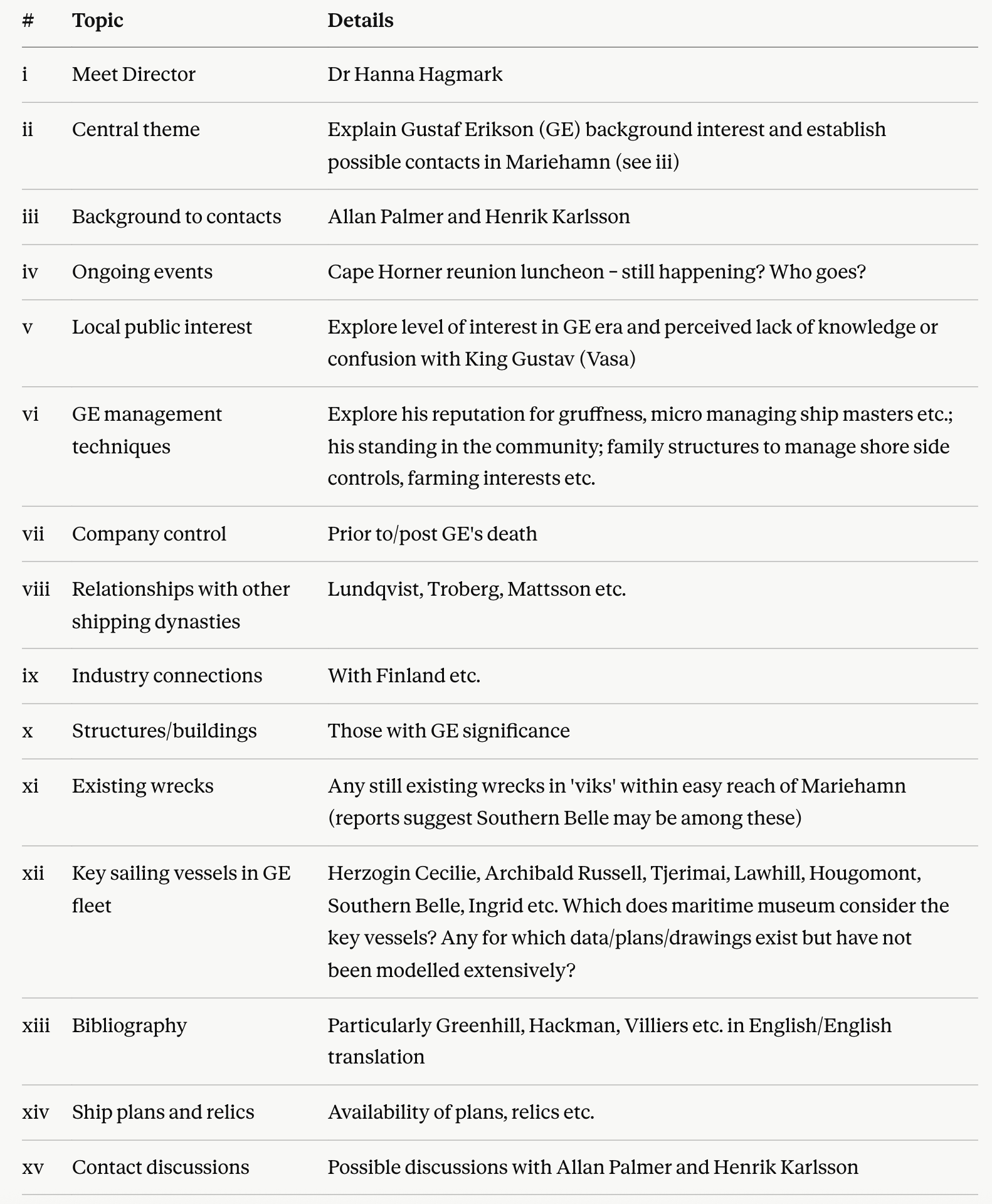
Similar program and question list was developed for the Turku visit.
Museums in Mariehamn and Turku were approached and both volunteered to provide one-on-one meetings with directors or curators, and with other persons (Mariehamn) with direct knowledge of the businesses concerned. Arrangements were also made to access historic vessels in both cities. Visits are arranged on ships in Mariehamn and in Turku, and with museums in all major centres, including one-on-one meetings in Mariehamn, still understood to be the commercial and sentimental centre of the Baltic shipping network, and in Turku, where a very historic wooden barque or sometime barquentine, the Sigyn, is preserved along with the ship-rigged Suomen Joutsen in their well-established maritime history precinct.
A prime visit will be the capital of the Åland Islands, Mariehamn, eight hours by ferry from Stockholm, where Erikson and the other well known maritime figures had their offices in Esplanadgatan, most also involved in agriculture and forestry in the islands and into the Gulf of Bothnia to the north, which initially drove their interest in shipping timber cargoes on locally built wooden vessels, mainly crewed by family members. Farming would consume much of their days as ships wintered in the extensive sheltered harbour waters of Mariehamn, but all farm families and workers would turn their hand to preparing and some crewing the ships as they sailed south, in many cases to South Australia's grain ports, out of reach and quite isolated for months at a time while grain cargoes offered.
It is clear from records that the wives of the ship owners generally took a very active part in running the farms, but also providing the shore side activities to keep the ships operating, including shareholding and actual management of ships in many cases. They also baked the bread which would be put on board for the first voyage of the season, still being consumed (with increasing difficulty, it would seem likely) many months later. Many of the family heads would don their uniforms and seagoing gear and sail as skippers or senior officers on the ships, while womenfolk and youngsters ran the farms, very much family affairs, with wives often involved also in the management of ships while their mature menfolk were away captaining ships. Eventually, however, owning multiple ships to manage precluded skippering the ships, the head of the family became landbound and office structures seem to have emerged. An objective of the visits and discussions will be to seek information as to how these affairs were managed, as fleet sizes grew and families would not have been able to stretch to coping with the multitude of tasks, the business decisions etc.
The likes of the Gustaf Erikson company became substantial and complex businesses, building, owning and managing ships, negotiating with cargo interests and carrying out the multitude of tasks of ships husbandry, provisioning, manning etc. In my maritime career, I have trained in sail, sailed as a watch officer, managed ships from ashore, carried out ship's agency and managed major port facilities. These each had their challenges, but I had only one job at a time. To think of how many tasks and interlocking activities the likes of Gustaf Erikson took on as his fleet grew to over forty is mind boggling. I hope to be able to understand how this was accomplished. Letters in archives in Åland I know show that he involved himself through the masters in every level of managing the ships, from seeking cargoes, scheduling and laying up, to the minutiae of maintenance matters, such as paint and gear purchases, to incentivising officers to seek out the inevitable leaks that timber hulls develop and clearing ice from ships laid up through Åland's fierce winters, to mandating specific wage rates and sorting personal issues for all, captains, mates, cooks or seamen, each of whom he knew by name, all this while negotiating with traders and cargo owners to set freight rates, agreeing lay-days, obtaining insurance cover etc. These are the stories I'll be following, as well as walking the decks of the historic vessels and, I hope, improving my understanding of the working of the ships and their equipment to ensure that future models are realistic.
BIBLIOGRAPHY
There many books published focusing on the era of the great sailing ships. I have listed below a few that I have found to provide a vision of these ships and their owners, all of which have added in their own way to the maritime world as it was then.
Selected Bibliography
Newby, Eric.The Last Grain Race. First published 1956. A highly readable account of a voyage from the British Isles to South Australia and back aboard the Gustaf Erikson-owned four-masted barque Moshulu. The early chapters provide an excellent description of the ship and her gear, while the book as a whole explores the experiences of a lone Englishman serving as a deckhand among a tough, hard-working, largely Scandinavian crew.
Greenhill, Basil, and John Hackman.The Grain Races: The Baltic Background. Conway Maritime Press, 1986. 190 pages. Foreword by Edgar Erikson. An excellent account of the grain-race era, with particular attention to ship maintenance, management practices, and cost control within the sailing fleets.
Kåhre, Georg.The Last Tall Ships: Gustaf Erikson and the Åland Sailing Fleets, 1872–1947. First published 1948; reprinted 1990. Foreword by Edgar Erikson, Chairman of the Åland Maritime Museum, and introduction by HRH The Duke of Edinburgh. A factual account of Erikson's fleet and operations, offering valuable insight into life in the Baltic islands.
Cormack, Neil W.Herzogin Cecilie: The Flagship of the Gustaf Erikson Fleet of Mariehamn, 1921–1936. Published by the author, 1996; printed by Gillingham Printers Pty Ltd, Adelaide, South Australia. An excellent in-depth study of one of the finest sailing ships of the twentieth century, with extensive information on the wider Gustaf Erikson fleet.
Villiers, Alan.Falmouth for Orders: The Story of the Last Clipper Ship Race Around Cape Horn. Charles Scribner, New York, 1972. Foreword by Sir Robin Knox-Johnston. A dramatic account of the celebrated "race" between the Finnish-flagged Herzogin Cecilie and the Swedish barque Beatrice, one of the last occasions on which large sailing ships competed on the long sea route between Europe and South Australia.
Lance, Catherine (Kate).Alan Villiers: Voyager of the Winds. National Maritime Museum, United Kingdom, 2009. A biography of the renowned maritime adventurer, author, and historian. The book provides an excellent perspective on the disappearing world of the great sailing ships, as well as on Villiers' life and work, including the role of women aboard large sailing vessels.
Lance, Catherine (Kate).Tempo Series (three novels), beginning with Testing the Limits. Drawing on the author's extensive research into women aboard large sailing ships, these well-researched historical novels offer a compelling and authentic portrayal of life in the age of sail.
Svensson, Björn O.Pommern, Mariehamn: From Ocean Carrier to Museum Ship. Published by the Åland Nautical Club. A highly detailed monograph on the barque Pommern, including extensive material on the day-to-day management of deep-water sailing ships and numerous rare black-and-white photographs.
Orjans, Jerker.Sigyn: A Lucky Ship. A detailed monograph of the classic wooden barque Sigyn, now permanently berthed in Turku, Finland. The book provides a richly illustrated account of the efforts to preserve the vessel, together with a complete log of her voyages from 1837 to 1937.
Note on the Use of the Term "Clipper"
The term clipper generally refers to a distinctive class of exceptionally fast and seaworthy sailing ships that originated in the United States during the mid-nineteenth century and reached their zenith in famous vessels such as Cutty Sark, Thermopylae, and numerous American-built tea clippers. These ships were designed to carry high-value, time-sensitive cargoes, particularly tea, over long distances at maximum speed.
The vessels involved in the later grain trade were generally not true clippers in this sense. While some former tea clippers found a second life carrying passengers and cargo, most of the ships of the grain races were larger, more economical cargo carriers designed for bulk freight rather than outright speed. One notable exception was the British ship Torrens, a regular visitor to South Australia, which combined fast passages with a successful passenger trade.
Readers interested in the development, design and operation of the clipper ships, and in comparing photographs, plans and hull lines, would do well to consult David R. MacGregor's The China Bird and The Tea Clippers (first published in 1952, latest edition 1983).
It is difficult to understand how Alan Villiers came to subtitle his book Falmouth for Orders as The Story of the Last Clipper Ship Race Around Cape Horn. The two principal vessels featured in the narrative, Beatrice and Herzogin Cecilie, were both four-masted barques rather than true clippers. Whether this reflects a broader interpretation of the term "clipper" or was simply a publishing decision remains open to speculation.
The Way Forward
In the next article, we will follow our journey through the Baltic region, visiting historic maritime sites in Gothenburg, Stockholm, Mariehamn and Turku. Along the way we will tour preserved vessels, museums and maritime collections in an effort to answer some of the questions raised during our research. Chief among these, of course, is the mystery of the Archibald Russell's figurehead—its true form, its colours, and what evidence remains to reveal its original appearance.