
Home Harbour
Regular Contributor to SWS and Custodian of the Centenarian HOANA, Martin Van Der Wal now has his own Substack page. His writing is always thought provoking and his photography enriches your life! You can subscribe HERE. He has kindly allowed us to reproduce his latest piece “Home Harbour”. Visit the site to read more stories.
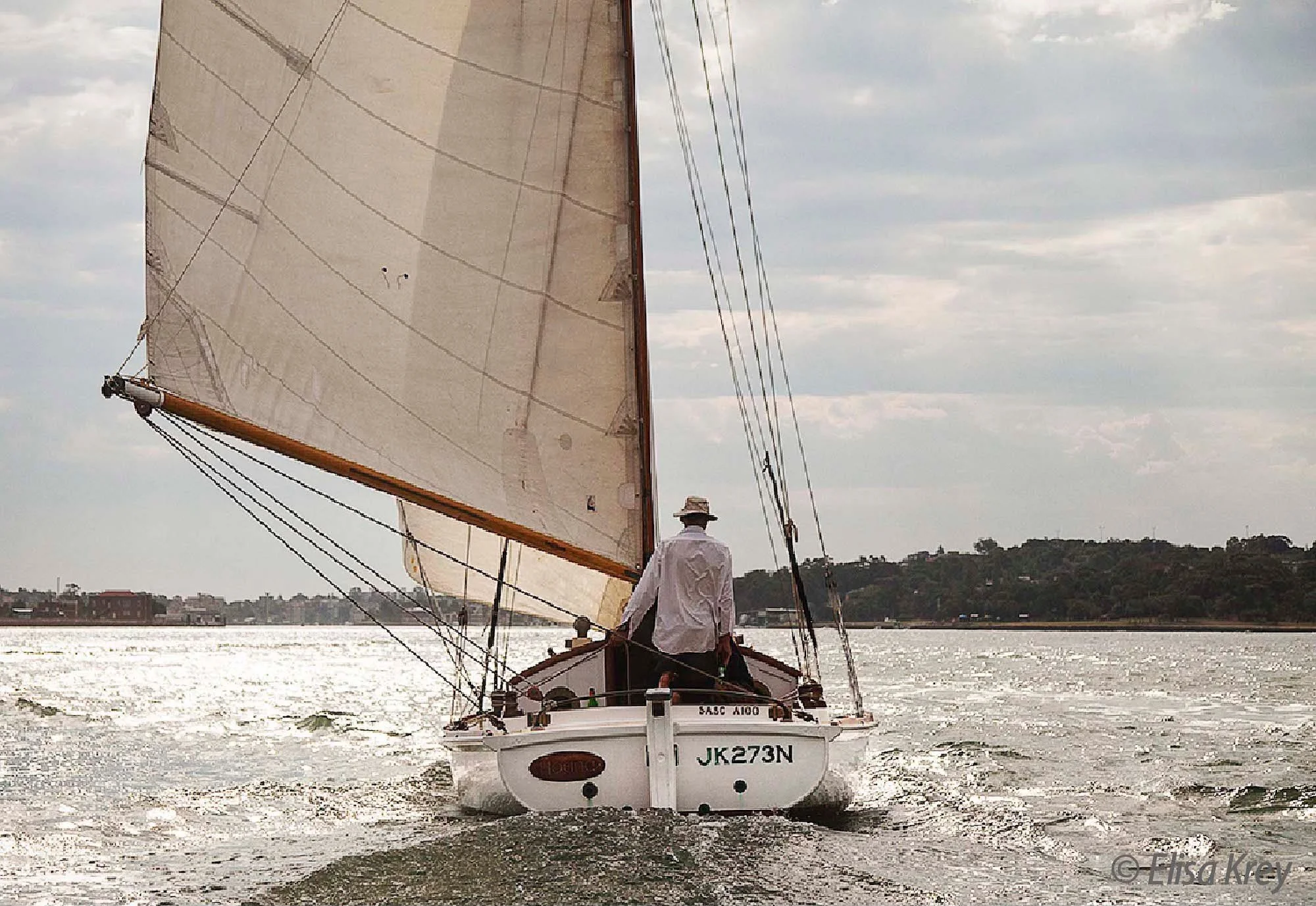
Running home
There’s something about the two words, ‘Home’ and ‘Harbour’. A resonating harmonic as undertones common to both begin to amplify warm feelings of safety, refuge, familiarity. For those of us lucky enough to call Sydney our home harbour these feelings have an objective truth. Few harbours in the world offer these attributes so willingly. You want a long board on a hard breeze? Few weeks go by without the opportunity to trim your sails and go rail down. You want shelter from that breeze? Down anchor in a snug lee, boil the billy, and toss out a line as the Angophora wave their twisted pink limbs in applause. You are afloat, a state with its own rules, a state of nature which allows you room to breath.
In essence you have joined a club, the clubhouse is the Harbour itself. The club was originally founded by the worlds oldest living culture whose conjuring chants sent reverberations flying far across still waters as rattling boomerangs told Ancestral stories on calm nights. Time and tide wait for no man. The Harbour sits and waits implacably, Club members come and go. Stories are the Club constant. The thread began with the First Nations thousands of years ago and continues today. Stories told and retold, memories savoured, accounts with and without absolute meanings, yarns bordering on the absurd; ancestral histories, all perhaps worth saving? This is what constitutes the Club. You can meet a stranger anywhere in the world, mention Sydney Harbour as your home. If they have been on its waters in any capacity at all they will have a story to tell, Welcome to the Club.
So here I want to add a thread to the skein of stories which constitute the fabric of our home harbours lore. It’s a tale diving deep into our collective experience and continuing to this day. In 1924 a well-to-do City Stockbroker with a sailing reputation wanted a new yacht. It was to be named Hoana.The well established class of Cruiser Racers sailing out of the Amateurs had many of the Harbours top boatbuilders fulfilling orders as prospective owners queued up, seeking to prove their sailing smarts on the fiercely contested harbour courses, as well as take the family for a comfortable cruise up or down the coast on school holidays.
Charlie Hayes was the choice for this new build and as it happened he had Charlie Peel the yacht designer of his day working alongside him. In 1924 Peel had just fulfilled his commission to design Joe Whites ‘Acrospire III ‘ — building her with Hayes in Careening Cove. With Acrospire III just launched the slip was vacant and the two Charlies put their collective knowledge into satisfying the new client.
The Cruisers had become a fast developing and common sight on Sydney Harbour. Notable enough for photographs of new additions to the fleet to be published in the major newspapers of the day, along with racing results and commentary . Most were developed by and for sailors who were active or past skiffies. They had cut their teeth on the fast and furious racing provided by quintessential Sydney Harbour racing machines. When it came to ordering a Cruiser they were supremely confident in the design talents and craftsmanship of local builders. Sydney’s best designers, builders and racing helmsmen (often the same person) tweaked the lines from the quickest of the open boats and skiffs. They built them light using the finest local timbers, then they put a lot of canvas on them with overhanging booms and long bowsprits. This was before spinnakers, so a sailor was content to carry a bit too much rag uphill because it would be needed on the way down. The Amateurs tradition of powerful boats that were a ‘handful’ on the racetrack lived on. Conveniently these Jekyll and Hyde boats became immediately docile when rigged for family cruising. The Class rules stipulated a liveable cruising fit out, and many, including Hoana, had lines strongly derived from a Couta boat heritage, giving generous internal volumes and plenty of deck space. The Cruiser class was the boat to own for many Sydneysiders. Safe for the family, hard core around the Harbour cans, ideally suited to our climate, proudly rooted in Sydney’s finest sailing heritage.
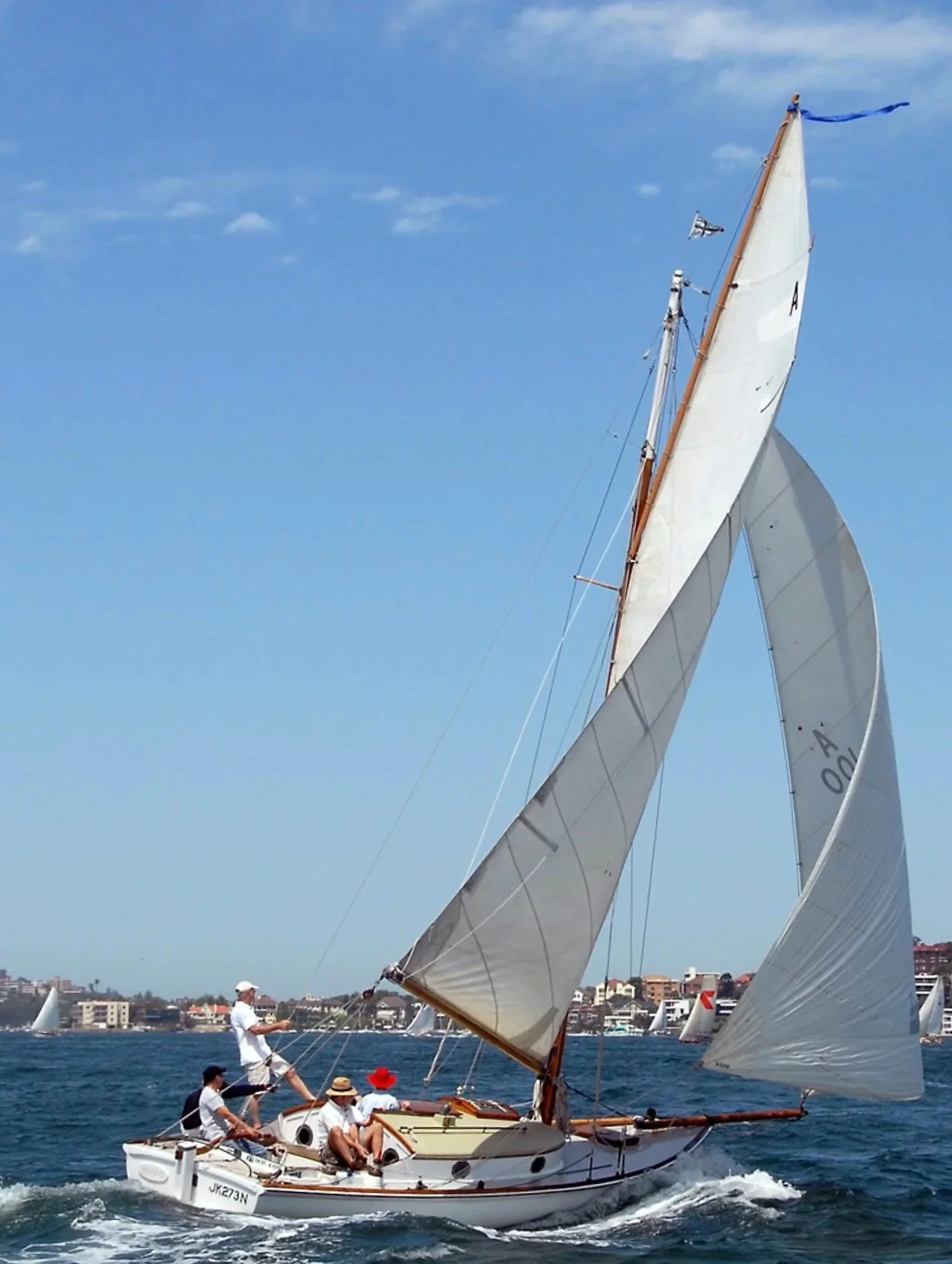
HOANA loving it
The mighty Maluka repeatedly demonstrates her racing credentials with amazing feats, Sydney to Hobart’s and Fastnet’s - Podium finishes ! Cliff Gale put a raised deck on his Cruiser designs making them less expensive to build and structurally stronger than the coach-house style. Cliff was a gun yachtsman of his day and his ‘Ranger’ style of Cruiser such as ‘Maluka’ are proven performers. In the heyday of the Class large numbers of both the raised deck and the coach-house style crossed the start line on any given Saturday. It is hard to know how many might have been launched between 1890 and the beginning of the Second World War but it would be a substantial fleet. There are survivors. A handful including Hoana still race as their makers intended every weekend in the Amateurs Classic fleet, a few are regulars around the Pittwater cans. Others exclusively exploit their cruising heritage, while some have been converted to handsome motor launches.
Thirty-nine years ago as a young man I purchased Hoana, simply liking the look of her, knowing nothing about her story. Her roots in a grand Sydney Harbour tradition have been passed to me by those who told stories. Old stories are easily forgotten, generations pull them under as they go and yachts elegantly built as tightly fastened baskets of timbers become seen as too needy for people whose mantra is convenience.
What does the future hold ? Amongst the people who inhabit our waterfront milieu, the Water Rat’s comment, “There is nothing— absolutely nothing —half so much worth doing as simply messing about with boats,” is an oft repeated phrase. The phrase is muttered by everyone in our Harbour Club, rich and poor. Connectivity; connection to nature, connection to history, connection to the handcrafted, might; just might; become seen as an increasingly worth-while endeavour amongst recent generations whose lives have been defined by the transient, the ephemeral; the flickering sparks of dopamine excitation.
There are two modern upsides waiting in the wings for anyone with the enthusiasm and will to own a boat of the traditional variety and learn valuable traditional skills along the way. The first is YouTube. Master craftspeople with painstaking hands on demonstrations are there to guide you. The second is just how inexpensive good tools have become. You don’t need anything fancy, just don’t buy rubbish. I could add a third. Well-found timber boats with nothing but regular maintenance required are there to be had for very reasonable prices. Wood, wind and water are symbiotic companions. Join the Club, add your story to a vessel whose story began as a seed growing in a forest; no other experience quite matches it.