
Flotsam & Jetsam 15.05.26
Australian Three Peaks Race Legacy Continues at RYCT
This is brilliant news for those who value adventure and bravery over technology and tuning.
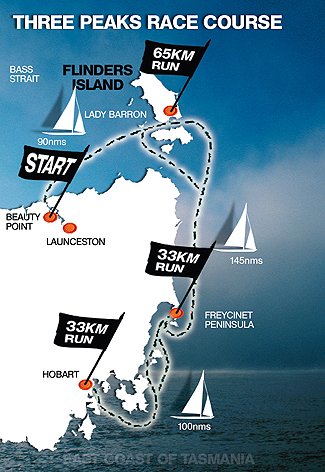
The Royal Yacht Club of Tasmania is proud to announce the next chapter of the legendary Australian Three Peaks Race, with long-time race founder and organiser Alastair Douglas OAM formally signing an agreement with the Club as stewardship of the event moves into a new era.
For decades, the Australian Three Peaks Race has stood as one of Tasmania's great endurance adventures, combining offshore yacht racing with mountain running across some of the state's most spectacular landscapes.
From Beauty Point to Flinders Island, Coles Bay and finally Hobart, competitors have tested themselves against Bass Strait, Tasmania's rugged mountains, weather systems and endurance limits in an event unlike any other in Australia.
Much of the event's success and longevity has come through the dedication of Alastair Douglas and the volunteer committee who built the race over many years, establishing a passionate community around the event and creating a legacy within Tasmanian sailing and adventure sport.
Now, with the support of The Royal Yacht Club of Tasmania, that legacy will continue.
Vice Commodore Rob Greenwell said the Club recognised the historical importance of the race and the opportunity to secure its future.
“The Australian Three Peaks Race is part of Tasmania's sporting and maritime history. We are honoured to work alongside Alastair Douglas and those involved in building the event, and we look forward to helping carry it forward into the future.”
RYCT General Manager Ed Bourchier said the event aligns strongly with the Club's vision for participation, adventure sailing and major event development.
“This race captures everything unique about Tasmania, offshore sailing, endurance, wilderness, regional communities and resilience. We see enormous potential in growing the event while respecting its heritage.”
The revived Australian Three Peaks Race is currently planned for Easter 2027 and has already generated strong interest from sailors, runners, volunteers, tourism operators and media organisations both within Tasmania and interstate.
The course is described HERE
To view and register an expression of interest click HERE
The Sultan's Queen 'Al Malika'- Part 2
This is a follow up from February this year when we alerted you to the first of these videos. If you’re looking for a boat with “provenence” then you can’t go past AL MALIKA. Its a great story with an unhappy ending looming.
H.R.H King George V commissioned 'Al Malika' in 1933 as a gift for H.H. Sayyid Sir Khalifa II Harub, Sultan of Zanzibar. She was built by McGruer & Co Ltd in Scotland, UK as a 32.5' fast day cruiser sloop and was enjoyed by the Sultan for 25 years before being sold to Terry Griffiths in Tanganyika - the start of a long journey to Knysna in South Africa. That's where we join Dudley Isaac - Al Malika's current owner. Dudley's dream has always been to see Al Malika sailed again. He tried to complete the restoration himself but lacked the time and expertise. As such, she has languished in various storage facilities in the Knysna area and is now being moved again. Despite his enthusiasm, Dudley is now resigned to the realisation that this restoration project needs to be undertaken by professionals and, with her current storage lease expiring imminently, he's exploring his options. It's an interesting story - a genuine 'Barn Find' project. Can you help? Please get in touch with Dudley directly and, if you can, please share this video to your social network Call or WhatsApp: +27 (82) 339 4318 or email: dudley@sailafrica.co.za
Boats should STILL look like boats
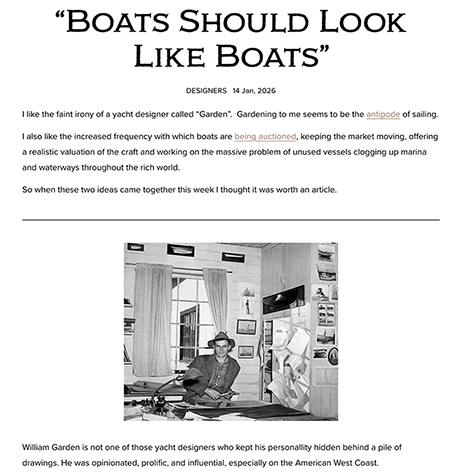
Another follow up….You might remember THIS ARTICLE from January this year.
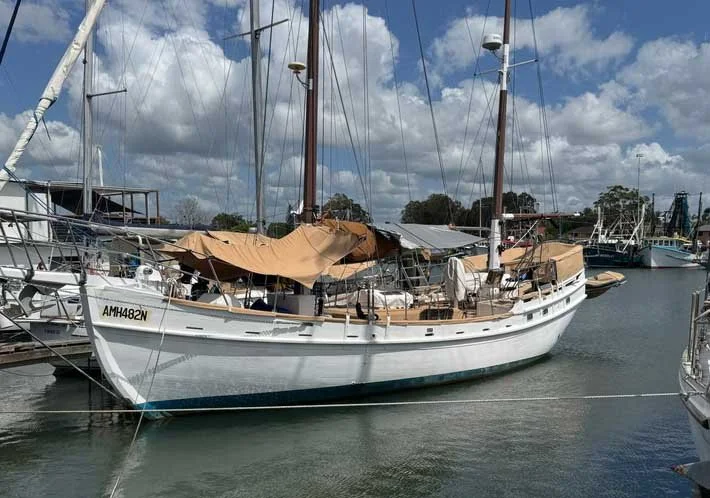
We are not exactly sure what happened but the Garden Design boat mentioned in the story is up for Auction again… looking a little tidier this time?
Online Auction, bidding to commence on, Friday, 22nd May and will end on Thursday, 28th May2026 at 2pm AEST.
For More infomation click HERE
FREE (KIWI) BOAT!
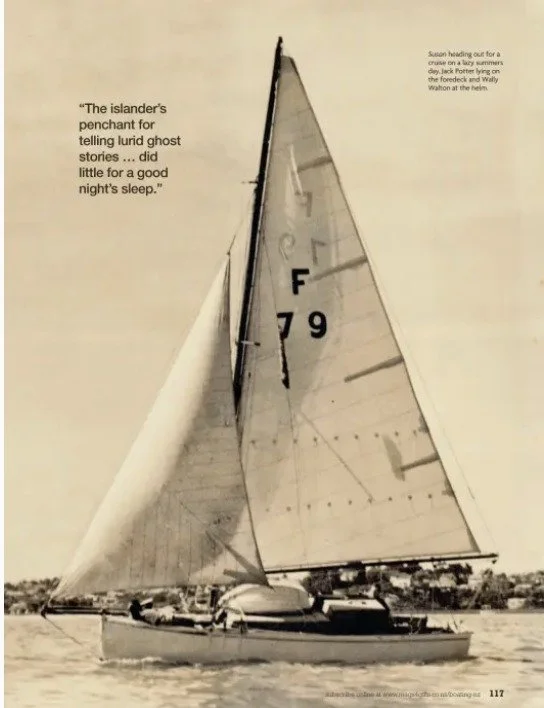
And if you don’t like the idea of bidding at Auction for a wooden boat…here’s one for free… (but remember…nothing is really for free)
From Christopher Maymon
Kia ora koutou,
It is with a heavy heart that I write this post, but I feel it is my duty to do so. Last June, I purchased this amazing piece of NZ maritime history. "Susan" is a 22-foot 1948 Woollacott Sloop, with a double diagonal kauri hull, and a very reliable onboard motor (Yanmar 8hp).
It was my dream to restore her, but I recently lost my job and have had a few unforseen financial setbacks that have meant that the work I had planned has had to be put on pause. But she has a lot of life in her and so I am looking for someone who knows what they are doing, and is prepared to take her on. I'm not looking for money. I'm looking to make sure that I put her in the hands of someone who shares not just the vision for her, but is also prepared to dedicate the funds, grit, and time to see her restored.
"Susan" has a rich history. I'll briefly share just one of her adventures. In 1953, she placed third in a race that ended north of Whangarei, and after the race ended a crew of four set sail for Norfolk Island (without telling anyone). On the way, they were caught in a storm and dismasted and completed the last 65 miles of the journey with a storm jib. They crafted new wooden spars for her while at the island and managed to sail her back to New Zealand (with a cabin filled with fruits from the island). Upon arriving back to NZ, she unknowingly became the smallest vessel to ever leave NZ, reach an overseas port, and return.
Here are a couple some links to some stories about her. I have many more documents about her extensive history. https://www.woollacott.org.nz/History/Susan%20History.pdf
https://www.pressreader.com/.../20151201/283905931839061...
Susan is currently on a rented swing mooring at Evans Bay, in Wellington.
She needs to be pulled out, anti-fouled, and anodes replaced. The biggest hurdle is that her Douglas Fir mast has a significant point of rot in the center, so needs to be either replaced or repaired.
The picture where she has no mast is the most recent image. Other pictures below are of her over the years. I hope this inspires that person out there who has been dreaming of a project like this.
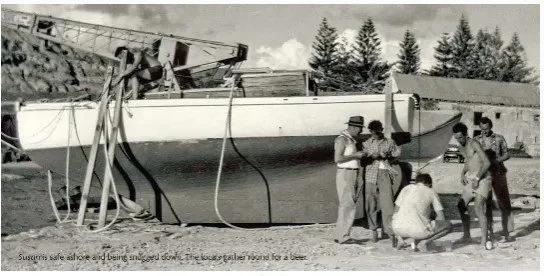
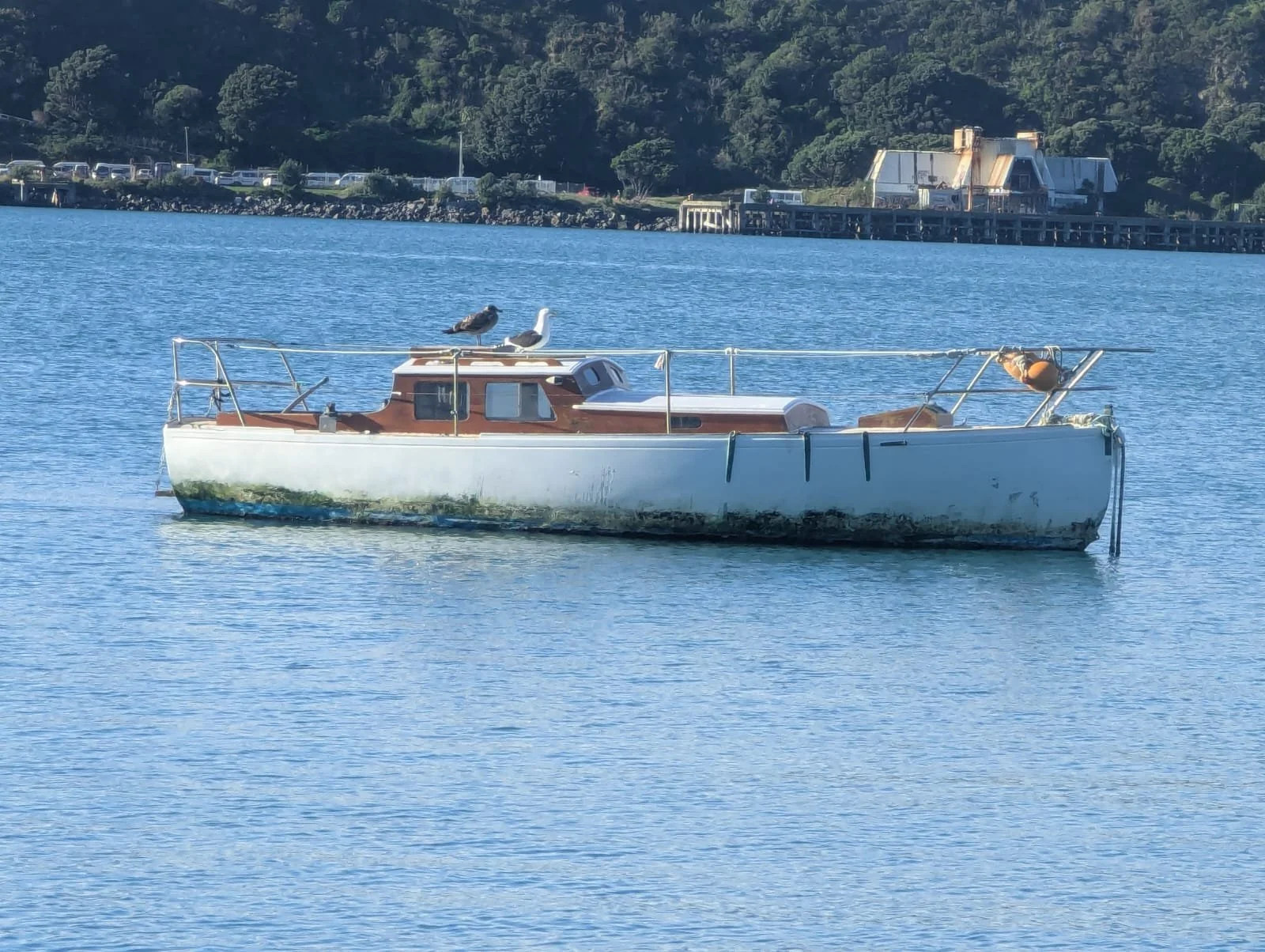
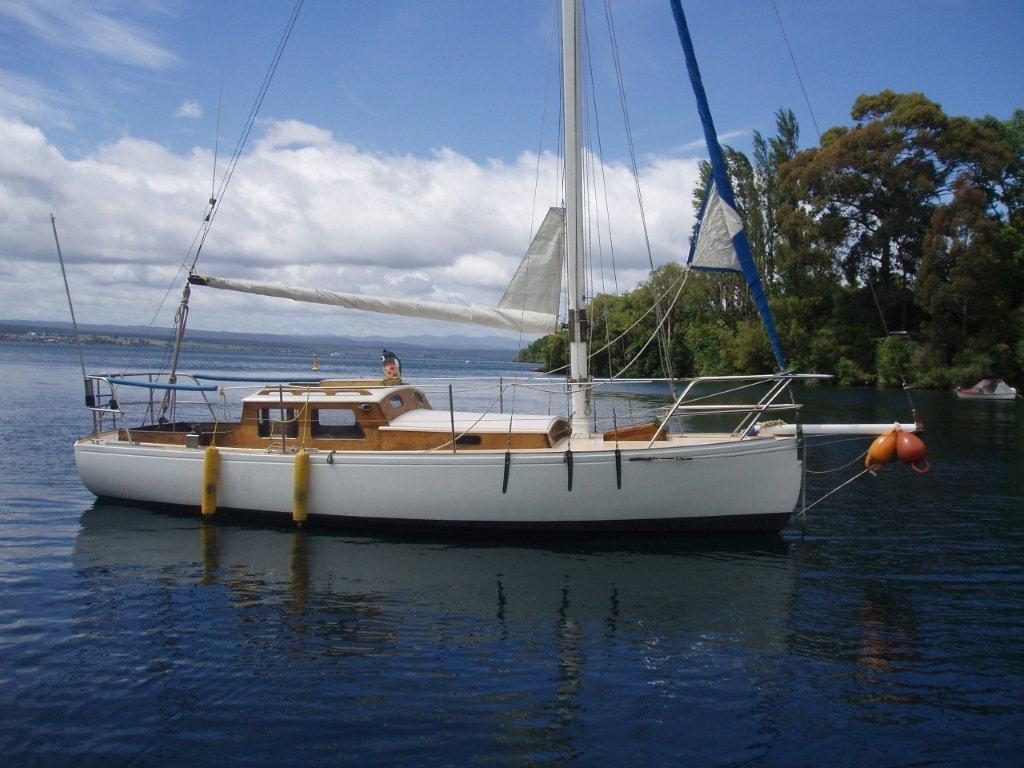
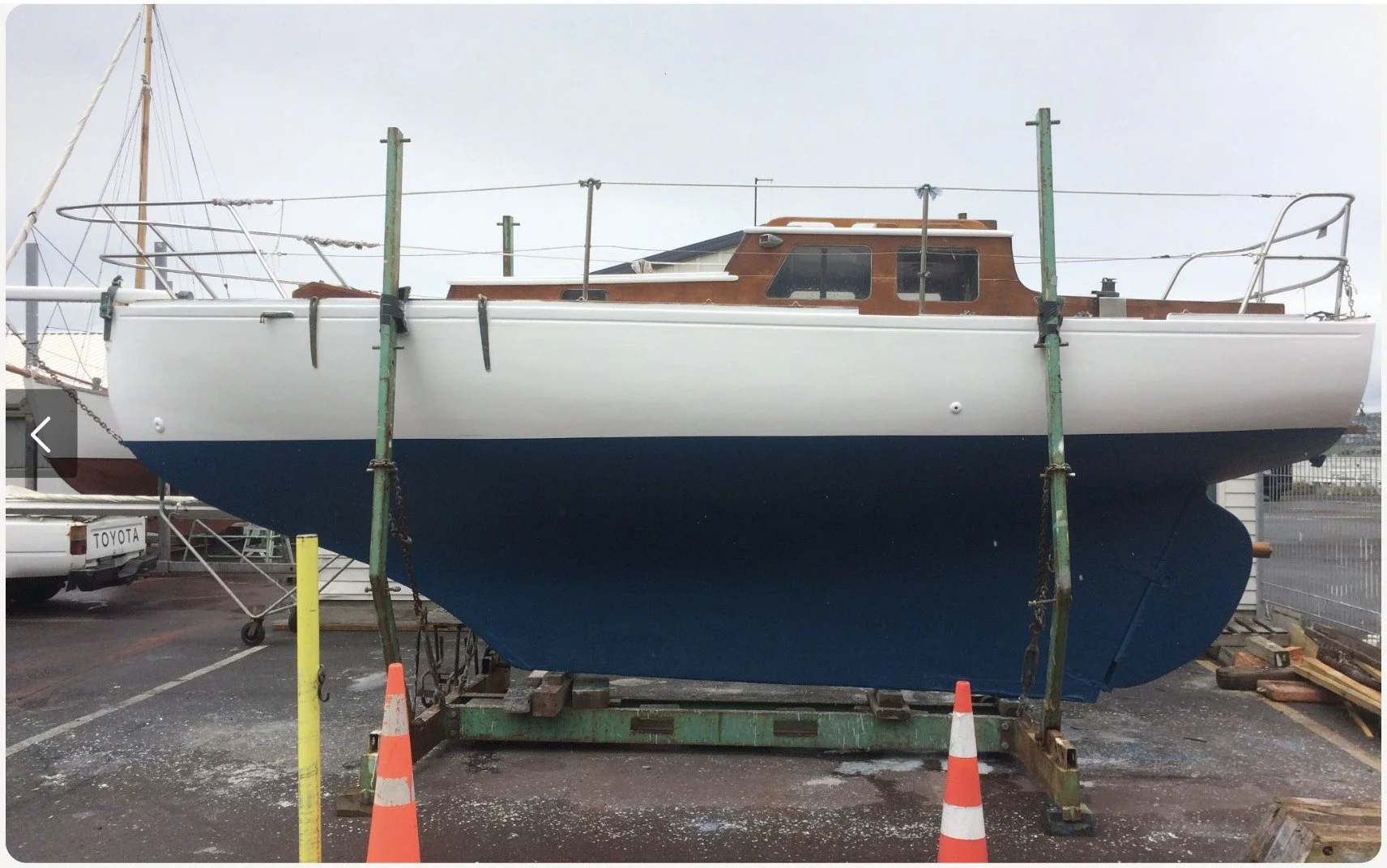
Contact us if there is any interest out thgere and we’ll put you in touch with Christopher
Currents of Memory
At dawn, the East African shoreline is rarely still. In ports like Mombasa, Lamu, and Zanzibar, wooden boats rest half-submerged in wet sand, their paint faded by salt and sun.
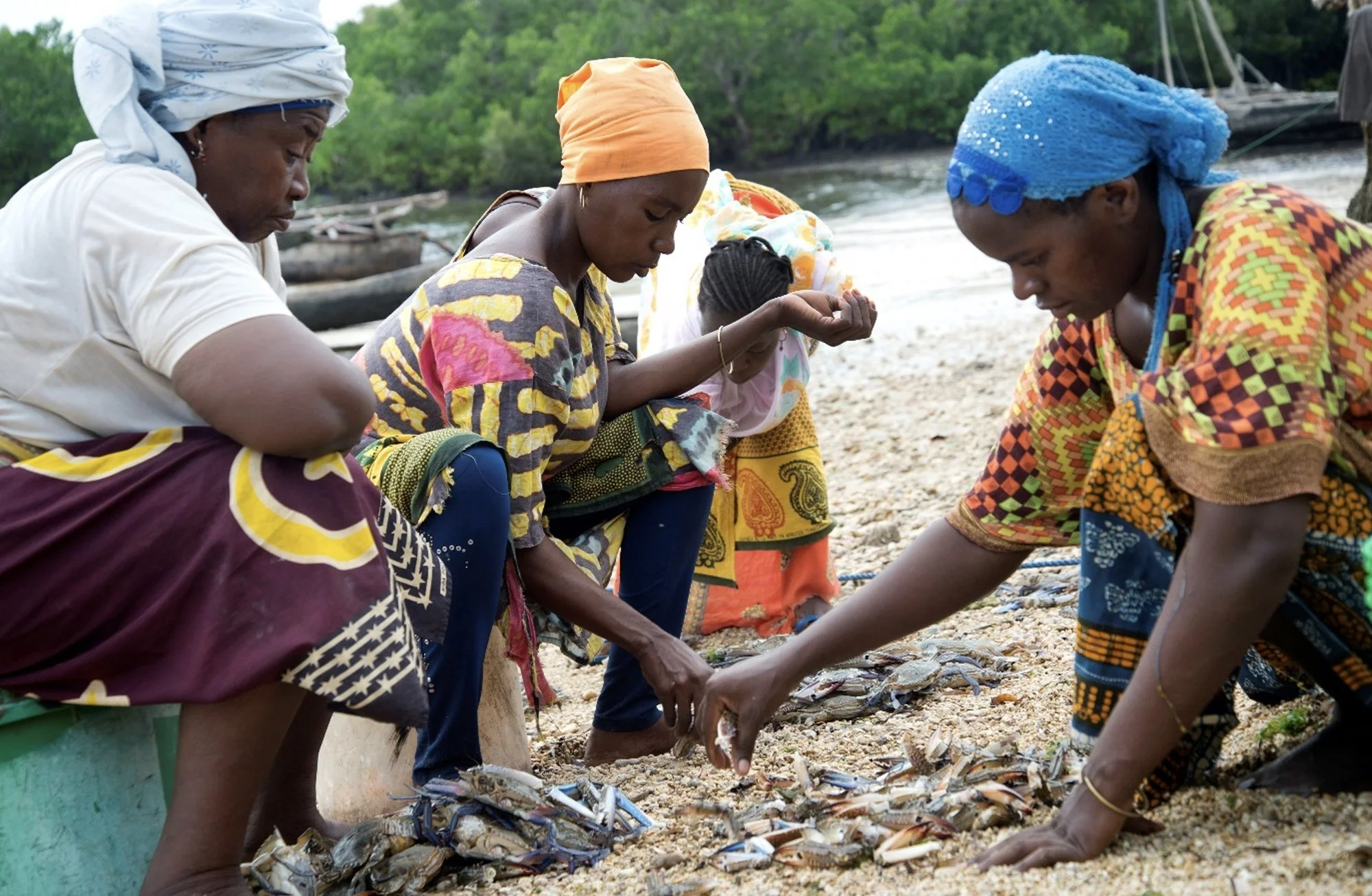
Nets are spread across rocks to dry, weighed down with stones. Voices travel easily across the water, carried by a breeze that smells of fuel, fish, and the open sea. For generations, these rhythms have shaped coastal life; the ocean has been a teacher, provider and an archive. However, these patterns are starting to change.
It's time to… HOIST THE SAILS!
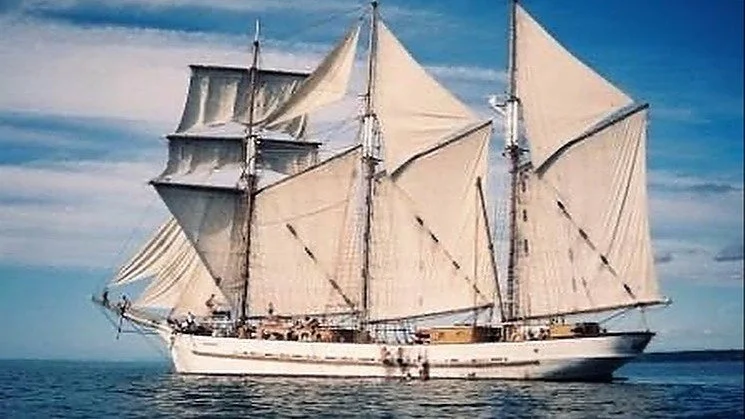
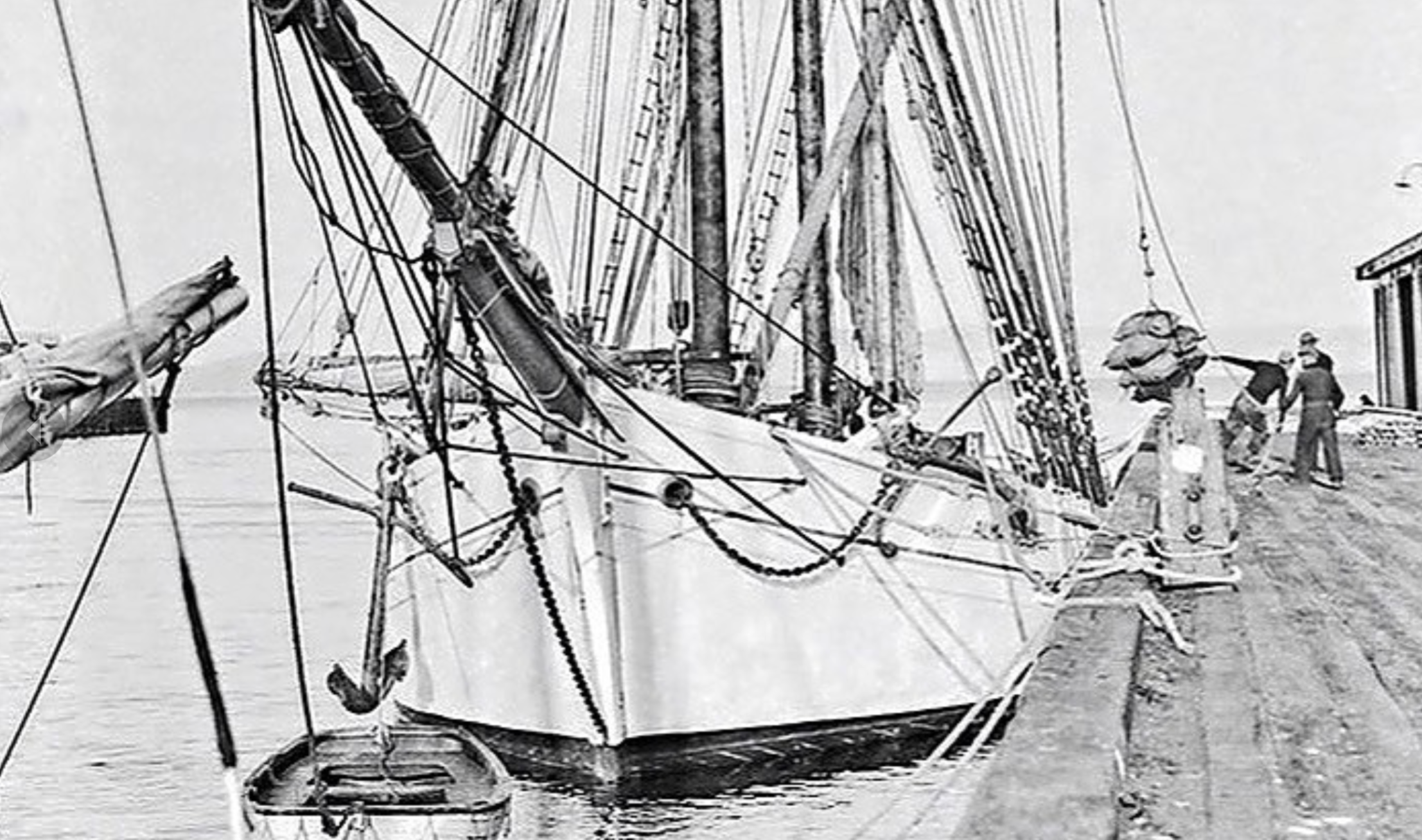
After years of restoration, Alma Doepel is close to sailing. The hull is sound, the systems are coming together, and the ship is nearly ready to return to sea. What stands between restoration and real operations is a number of key elements, including a full new set of sails.
We are launching an end of financial year appeal to raise $80,000 to fund the sails that will bring Alma back under sail.
This is not a symbolic milestone. Without sails, the ship cannot operate as intended or deliver the sail training and youth development programs it was built for.
Our aim is clear. To have Alma Doepel under sail and heading to the Australian Wooden Boat Festival in Hobart in February 2027. That voyage marks her true return to service and a visible signal that this project has moved from restoration to operation
Thanks to a generous supporter, every donation made before 30 June will be matched dollar for dollar. That means your contribution has double the impact in getting this ship back into active service.
All donations over $2 are tax deductible..
This is a defined, practical step. Fund the sails, and the ship sails. When she does, she returns with purpose, delivering programs that build resilience, leadership and a sense of direction for young people who need it.
If you’ve followed the journey, this is the moment to help finish it.
Donate now and be part of getting Alma Doepel back under sail.
ALMA Oil Sold
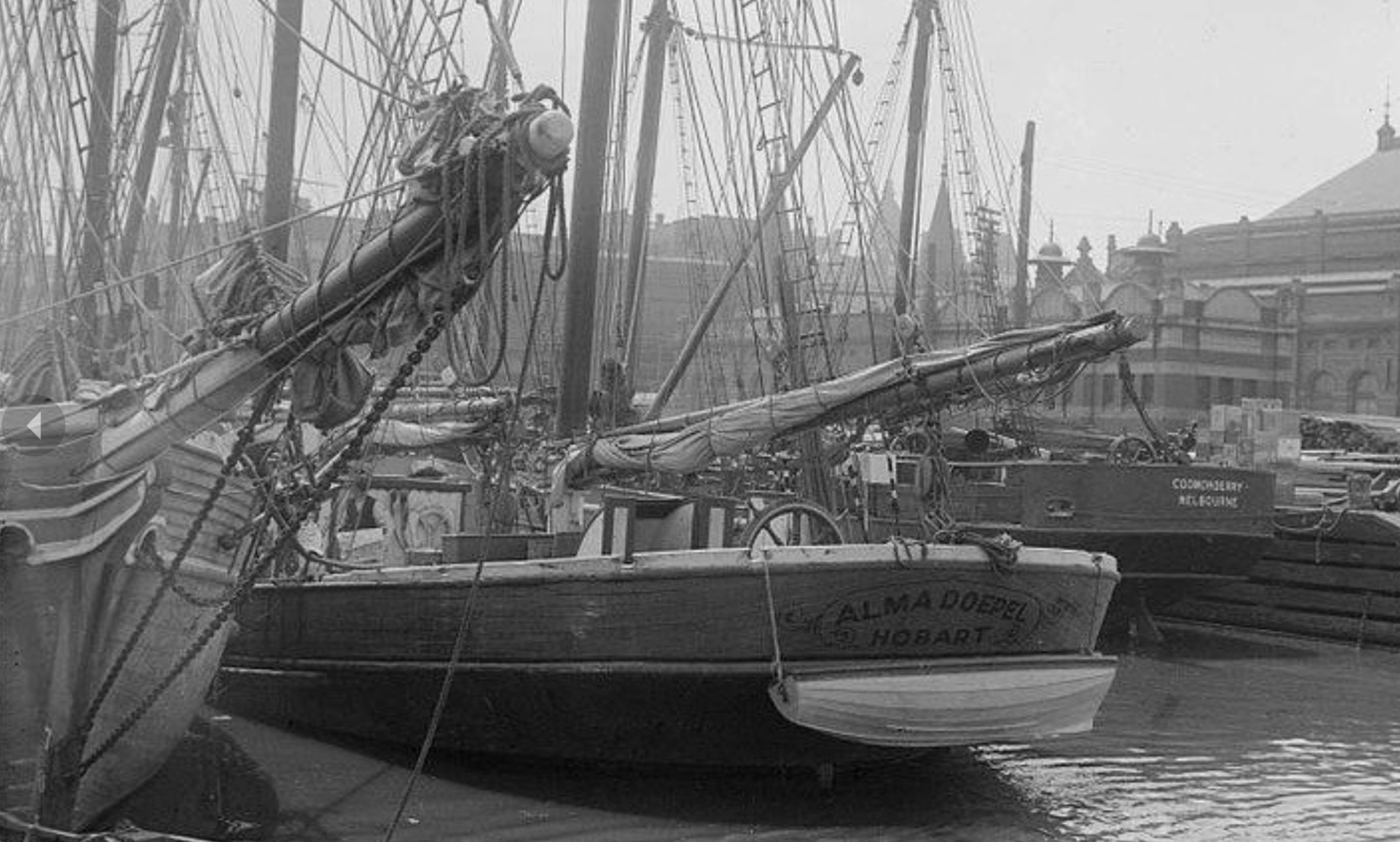
And while we are on the subject of the ALMA DOEPEL, this painting by W. D. KNOX (1880-1945)
entitled “Little Dock, Melbourne, Alma Doepel” (circa 1930) sold at auction in Sydney last month for $16,000AUD. The 1887 Robur Tea House building in the background is still there today.
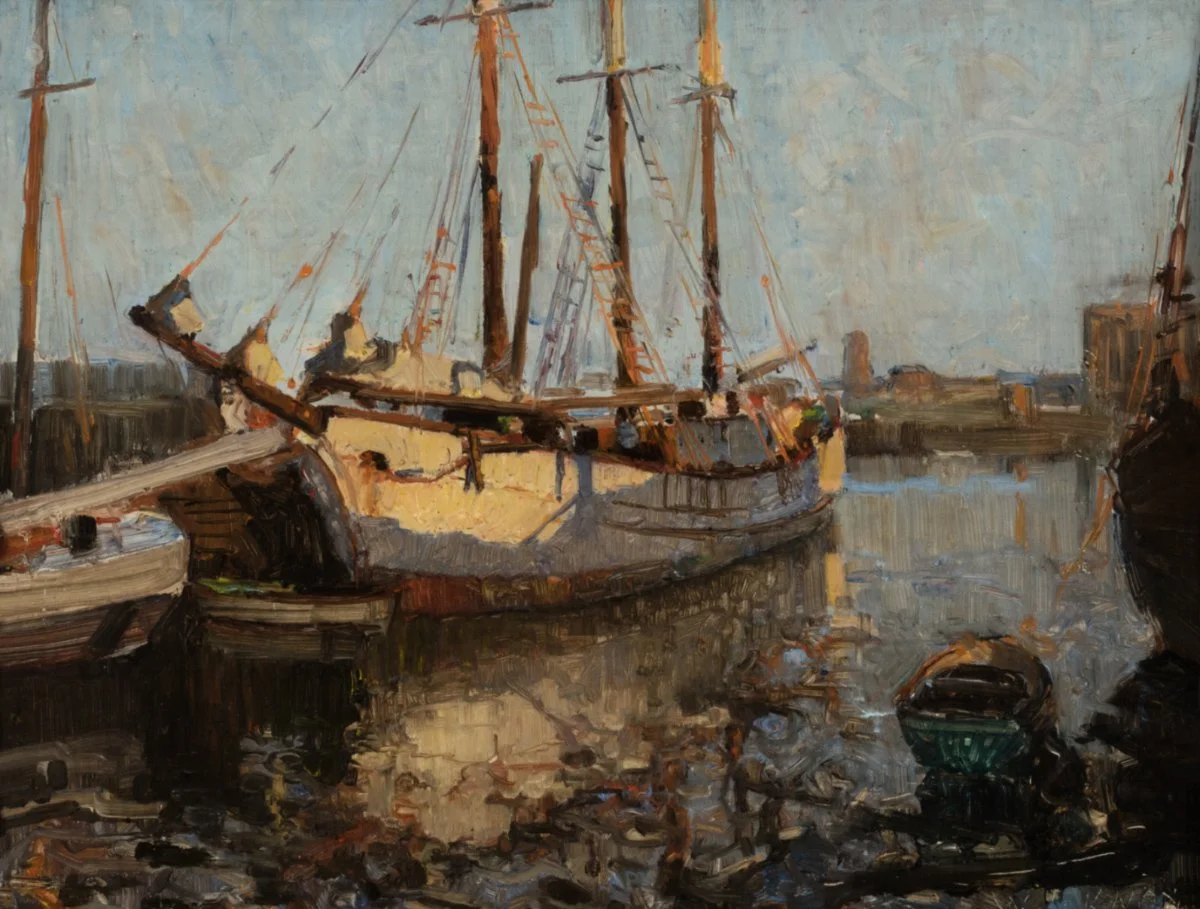
Little Dock was where the casino now stands. It became inaccessible when the bridge over the Yarra at the corner of Flinders and Spencer St was built. If you are wondering about the history of Little Dock here’s a nice explanation from Docklands News - The Voice of Postcode 3008.
Spencer Dock, also known as Little Dock was opened in August 1854 and was described by The Argus (August 18) as the “first public dock in Victoria”. The first ship to enter was the Flying Cloud, which unloaded 300 tonnes of cargo. As The Argus reported, because the government was “too slow for the spirit of the people”, it was up to the merchants to do their own celebrating. Around an hour-and-a-half before opening, the Flying Cloud’s owner Mr Throckmorton ordered the Criterion Hotel’s Mr Moss to organise a makeshift luncheon on the vessel to celebrate the occasion. By some miracle, the order was fulfilled in the most “efficient and satisfactory matter”.
For more than 70 years, the Dock was a mainstay for many smaller boats that were able to navigate the shallow bends of the Yarra. This included a group of trading ships known as the Mosquito Fleet. The fleet consisted of many small ships that would buzz across Bass Strait to Tasmania and back, usually for timber. Even as steamships became the primary mode of sea transport in the early 20th century, sailing ships such as ketches, schooners and brigantines were still seen as economical due to their reliance on free wind power instead of expensive coal. Due to their small size, they were perfect for delivering cargo to seaside or riverside towns that didn’t have access to rail. The Herald in 1916 (May 27), reported on how they were vital to resort areas between Mornington and the Port Phillip Heads, especially as they delivered cargo three times a week in the summertime. Former president of the Royal Historical Society of Victoria, George R. Leggett, wrote in 1945 (The Argus, April 21) that on a busy day, so many would berth at the Dock that “it was possible to cross one side to another on the decks – five abreast and one across the end – two tiers of them”.
We’re one step closer to understanding the sperm whale ‘alphabet’
By Richard Kemeny in National Geographic.
When sperm whales communicate with each other, they produce clicks in patterns that may parallel our own system of language, according to a study published today in the Proceedings of the Royal Society B.
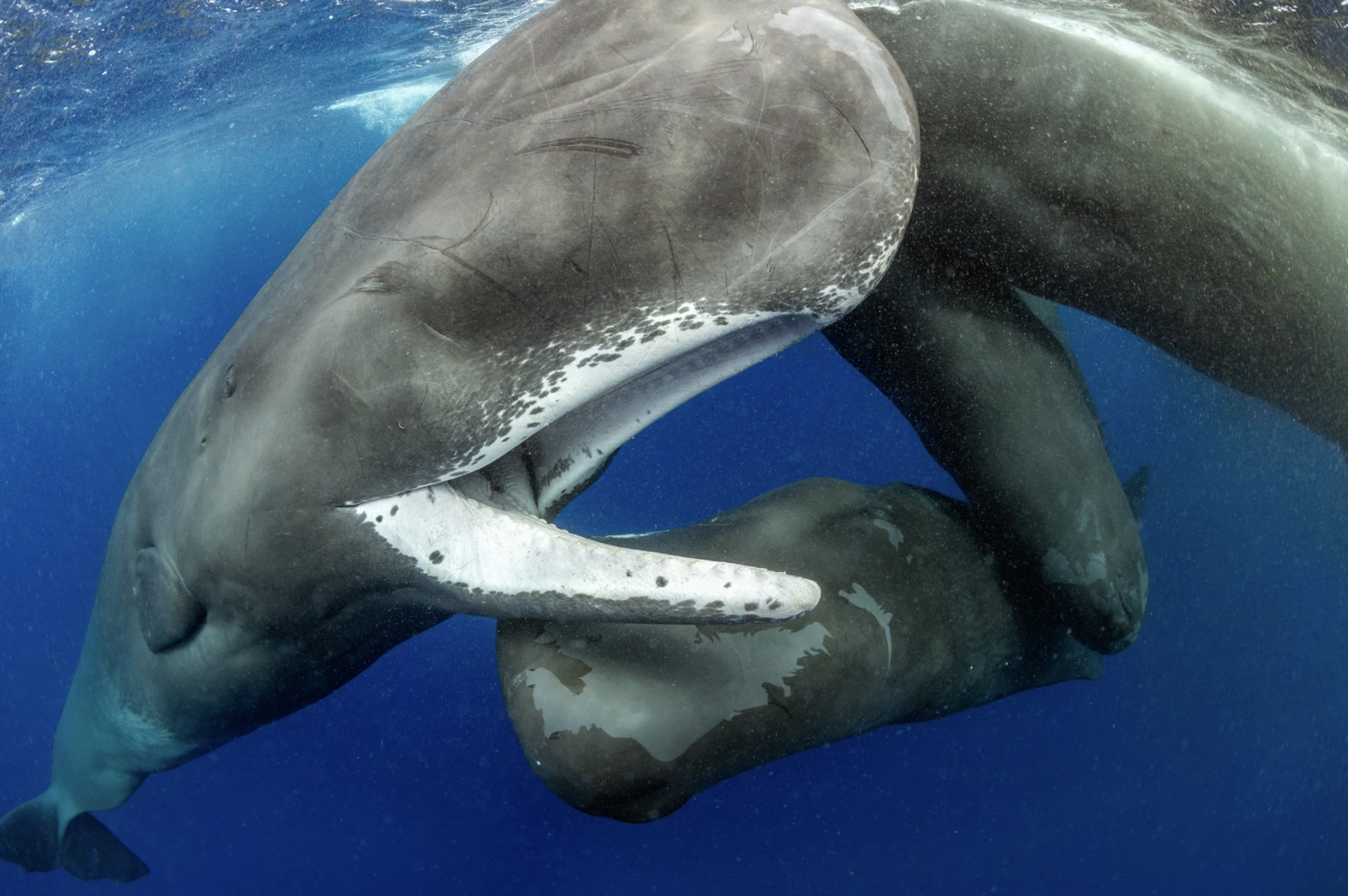
A sperm whale is seen socialising with its pod near Dominica, where scientists have been studying how the species communicates. Franco Banfi, Nature Picture Library
The research is the latest to come out from the multidisciplinary group Project CETI (Cetacean Translation Initiative) and its Founder and President David Gruber, a marine biologist and National Geographic Explorer who co-authored the new study. CETI’s previous scientific findings, aided by artificial intelligence, have already revealed a strikingly intricate system of sperm whale communication—including groups of clicks, called codas, with elements that can function like human vowels.
“In vast communication systems, humans have evolved vowels across almost all human languages,” says Gruber. “Now we're seeing that sperm whales have independently evolved a very vowel-like system and they’re using it in similar ways.”
To decode these vowel-like patterns, Gruber worked closely with Project CETI’s linguistics lead, Gašper Beguš, who has studied ancient languages like Hittite, Tocharian, and Sanskrit. Now, his focus is on sperm whales, part of the group of marine mammals known scientifically as cetaceans.
For Beguš, the process is similar to studying dead languages. “You're just trying to connect with these animals that are not thousands of years apart but are different environments apart—oceans apart.”
Read on HERE