
Dying For a New Life
For the first part of the next northern summer we plan to sail MATILDA, our 1978 S&S Swan from Spain to Tunisia for a while. The route may look something like this.
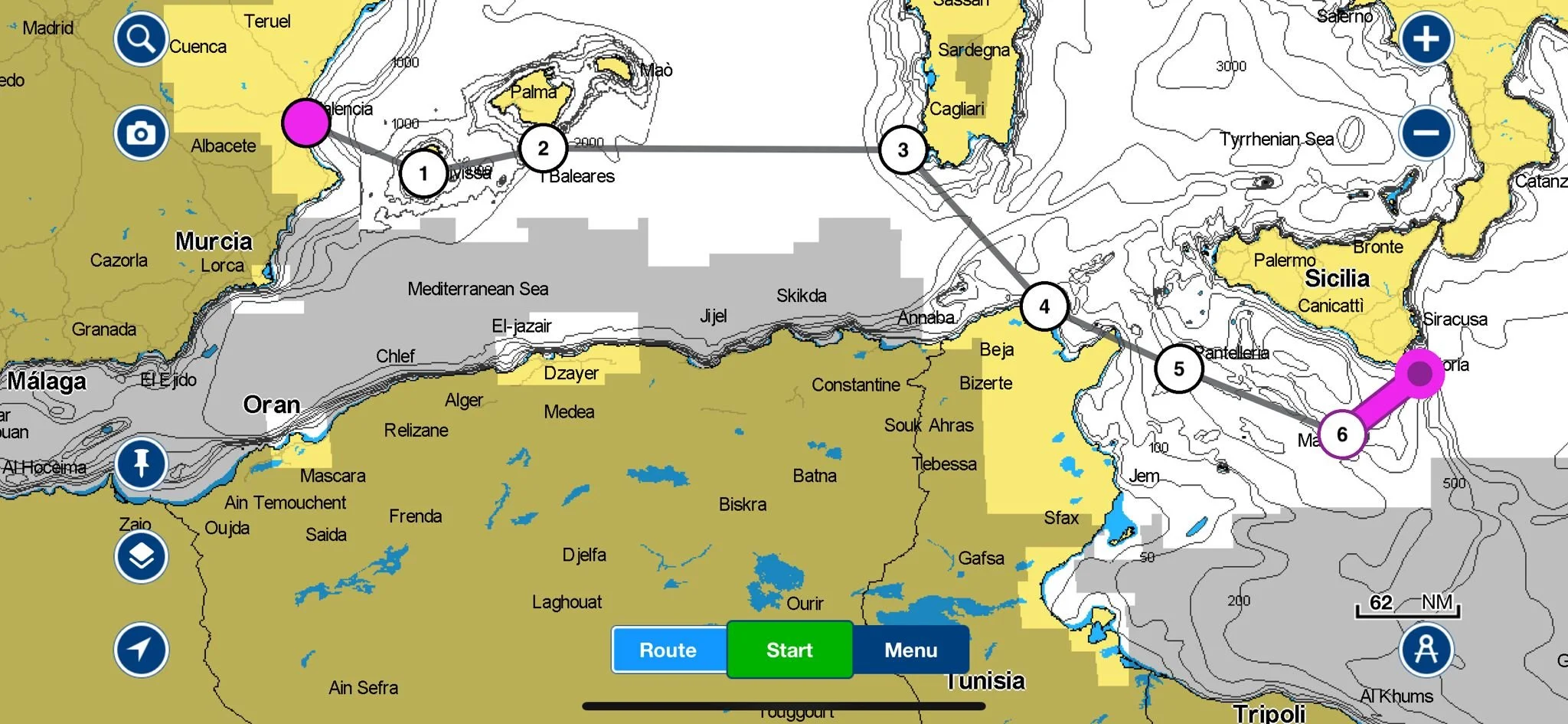
So the chances of the articles below becoming personally relevant, while not being high, are certainly not, non-existent. This is an issue requiring global solutions and those of us who use the sea as our playground should at least be considering how to advocate for change.
Article One - From The UN International Organisation for Migration.
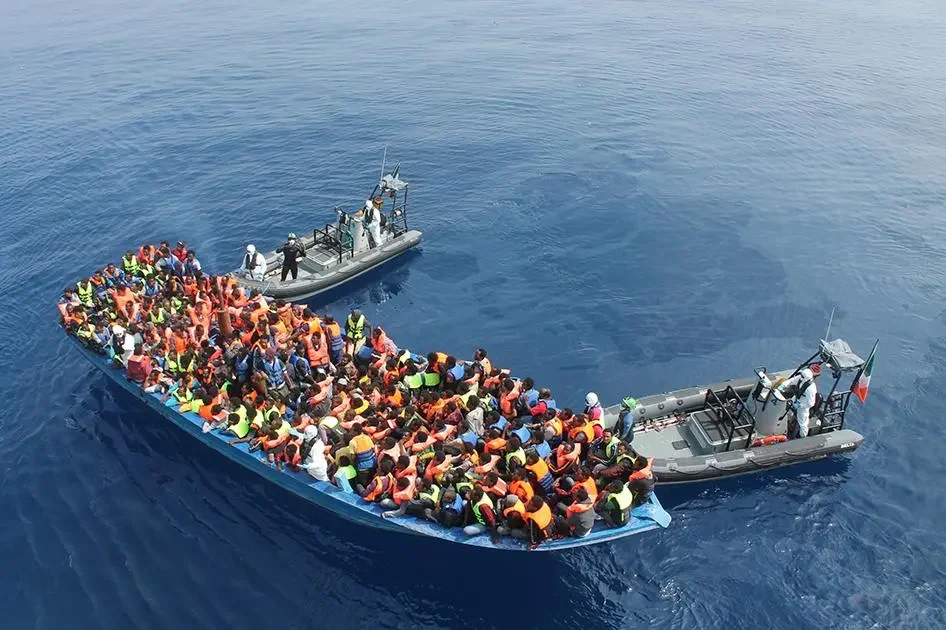
Geneva, 23 February 2026 – At least 30 migrants are feared dead or missing after their boat capsized off the coast of Greece in severe weather on Saturday while attempting to reach the country, an IOM spokesperson said. Twenty people were rescued, including four minors.
The vessel had departed from Tobruk, Libya, on 19 February and overturned about 20 nautical miles south of Kali Limenes, Crete. Survivors include 16 men and four minors. Authorities recovered the bodies of three men and one woman.
Just two months into 2026, at least 606 migrants have already been reported dead or missing along the Mediterranean route, according to IOM’s Missing Migrants Project. This marks the deadliest start to a year in the Mediterranean since IOM began recording such data in 2014.
IOM mourns the loss of life in yet another deadly incident in the Mediterranean. The Organization is calling for increased search and rescue efforts in the Central Mediterranean to save lives and ensure safe disembarkation, as well as for stronger regional cooperation.
IOM warns that trafficking and smuggling networks continue to exploit migrants along the Central Mediterranean route, profiting from dangerous crossings in unseaworthy boats while exposing people to severe abuse and protection risks.
Stronger international cooperation and protection-centred responses are key to tackling these criminal networks and expanding safe and regular pathways to reduce risks and save lives.
Article Two - From The Maritime Executive
January 29th - Italian Officers to Go On Trial for Migrant Shipwreck that Killed 94 -
A case that is bound to have far-reaching ramifications on how European countries respond to search and rescue operations of migrants taking risky voyages in the Central Mediterranean Sea is set to open in Crotone, southern Italy. Human rights groups have been critical of government efforts and policies that they contend impede the rescue operations.
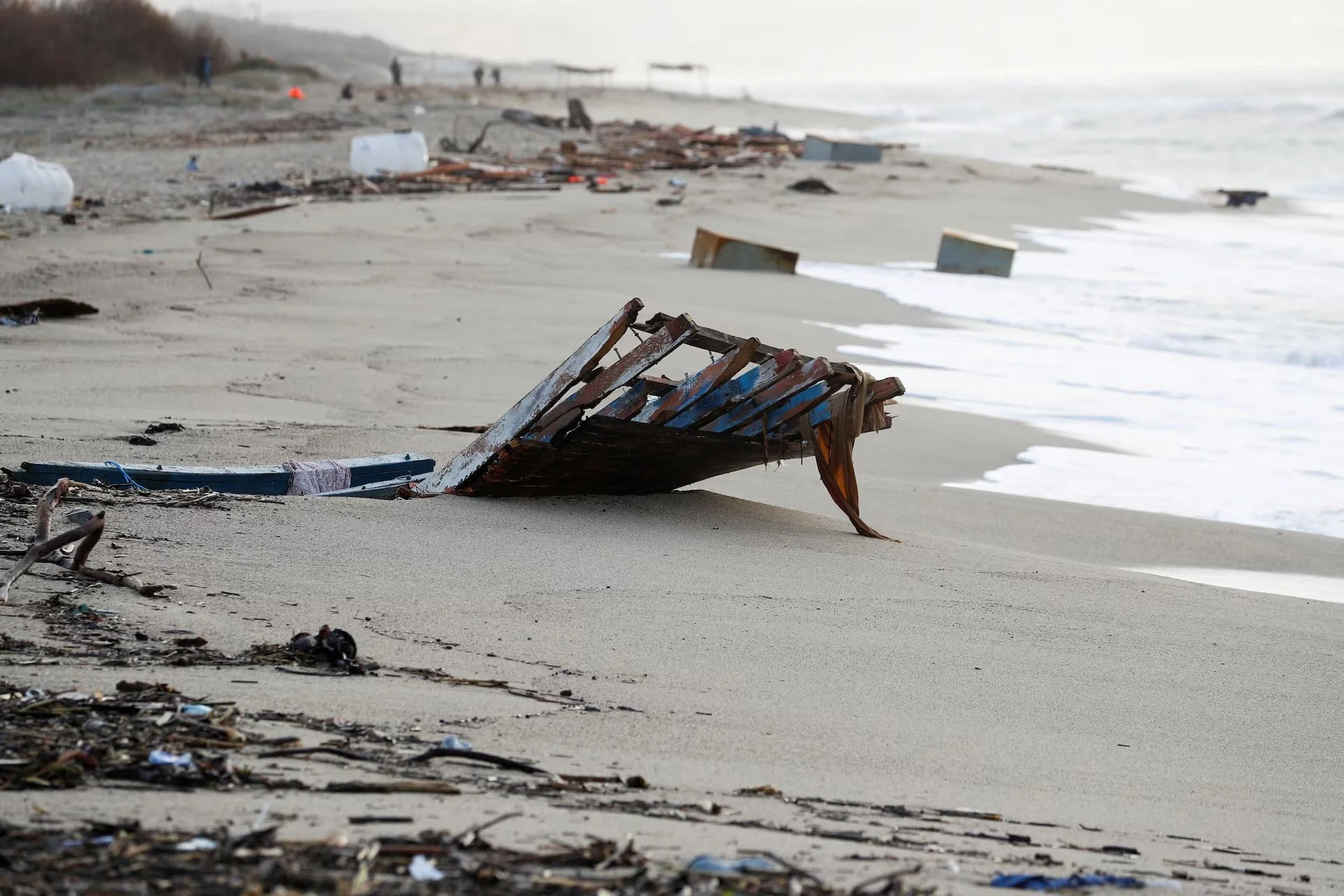
On January 30, an Italian court will commence the trial of six officers who are accused of delayed rescue operations after a migrant boat sank off the coast of Steccato di Cutro in the region of Calabria in February 2023, causing the deaths of 94 people, including 35 minors. Some 80 people survived the shipwreck, while an unconfirmed number of migrants were never found. The trial had been slated to commence on January 14, but was postponed for the replacement of a judge.
In this case, two Italian Coast Guard officers and four Customs Police (Guardia di Finanza) officers will be put on trial for negligence and multiple counts of manslaughter. The prosecution cites a failure to initiate and carry out effective rescue operations despite clear indications that the migrants’ vessel was in distress.
The case emanates from a delayed rescue operation when a wooden vessel christened Summer Love, carrying between 180 and 250 people, most from Afghanistan, Syria, and Pakistan, sank in rough weather in the early morning hours of February 26, 2023. It has become known as the “Cutro shipwreck.”
The EU border agency, Frontex, is said to have alerted Italian authorities about the boat hours before it sank. Despite early warnings and worsening sea conditions, Italian authorities are accused of failing to activate a search-and-rescue operation. The Customs Police, it is alleged, took a law enforcement approach by dispatching two patrol boats to intercept the boat, but returned to port due to rough seas.
Following the wreckage, Italian authorities launched a formal investigation that took two years and culminated in the indictment in July last year of the six officers by the Crotone public prosecutor. The indictment of the officers and the impending trial are being praised by non-governmental organizations and human rights groups that contend it offers an important opportunity for justice for the deaths of migrants and asylum seekers at sea.
At least 65 survivors and six search and rescue organizations, namely EMERGENCY, Louise Michel, Mediterranea Saving Humans, Sea-Watch, SOS Humanity, and SOS MEDITERRANEE, are civil parties to the case. All believe that the case will have significant implications for how Europe responds to the growing problem of migrants in the Central Mediterranean Sea.
“The Cutro shipwreck trial is a crucial opportunity to secure truth and justice for survivors and families of victims, and to help avoid future deaths,” said Judith Sunderland, acting deputy Europe and Central Asia director at Human Rights Watch. “It is not only the individual officers who are on trial, but also Italian state policies that prioritize deterring and criminalizing asylum seekers and migrants over saving lives.”
The trial of the six officers is opening when Europe continues to grapple with the challenge of a growing number of immigrants using makeshift boats perishing in the Mediterranean Sea, with most deaths attributed to a failure by Italy and other EU countries to respond promptly and appropriately to boats in distress. Since 2014, more than 33,200 people have died or been reported missing in the Mediterranean Sea. In 2025 alone, at least 1,340 people are believed to have lost their lives in the Central Mediterranean, which remains the deadliest migration corridor in the world.
Statistics will show that this story will get very few “reads” unless I substitute the heading with the words “FREE BOAT!” And fair enough, because people don’t come to SWS for a dose of political and social reality. But there are plenty of small things we can do in our daily lives to try to reduce the frequency of these ongoing tragedies.
1. Support Sea Rescue Organisations such as SOS Méditerranée, Médecins Sans Frontières, Sea-Watch and Open Arms.
2. Advocate for safe and legal pathways. Deaths at sea largely occur because people lack legal routes to safety. Lobby your local MPs to expand humanitarian visas and family reunification, support community sponsorship programs for refugees and encourage councils to declare themselves “welcome” or “sanctuary” cities.
3. Strengthen Local Resettlement & Integration. The easier it is for governments to resettle refugees successfully, the more political space there is to expand intake. So help with English language tutoring, provide temporary housing support, offer employment mentoring or apprenticeships and support local refugee-run businesses. Good integration outcomes indirectly reduce dangerous journeys by making legal resettlement more viable and publicly acceptable.
4. Counter Misinformation. Migration debates are often driven by exaggerated narratives. Share accurate data from credible sources like UNHCR and International Organisation for Migration. Encourage nuanced discussion in community forums. Avoid framing migrants as either threats or saints — humanise the issue.
5. Support work in countries of origin & transit. Some organisations operate in Libya, Tunisia, and sub-Saharan Africa to provide legal advice, improve detention conditions and offer voluntary repatriation options. Supporting reputable NGOs working upstream can reduce departures in unsafe boats.
6. Encourage Ethical Media & Storytelling. Local communities can host screenings of migration documentaries. You can promote journalism that focuses on causes such as conflict and climate change. And importantly invite refugees to share their lived experiences. Shifting public perception matters because policy often follows culture.
I like to think that much of the SWS readership will be “on board” with this.