Dreaming of A Renaissance?
The 2026 Auckland Wooden Boat Festival
Chatting to a cross section of the local sailing community in Auckland last weekend, during the second ever Auckland Wooden Boat Festival, there was one frequent topic of reminiscence:
“Remember the early 2000’s — there was excitement in the air, the America’s Cup was in full swing, optimism engulfed the City of Sails and New Zealand was the seen as the mouse who roared on a world stage.”
Well a lot of water has passed under the Auckland Harbour Bridge since then, and times have changed.
The post-pandemic years have been particularly damaging. In 2022 New Zealand’s economy stagnated and entered a recession. Inflation grew, interest rates kept rising, and consumers stopped spending, meaning low or negative growth throughout 2023 and 2024. Perhaps what will be most telling in the long term, is that education results fell between 2009 and 2022 by the equivalent of two years of learning. Inequality has also deepened — with more than 70% of New Zealanders believing income disparities have grown unfairly wide.
And what’s all this got to do with boats?
It’s against this background, that two of the traditional sailing world’s most inspirational personalities decided to start a Wooden Boat Festival. Michelle Khan and Tony Stevenson created the first ever Auckland Wooden Boat Festival back in 2024. You can read about it HERE
Under this cloud of economic negativity and despite problems with the organisational structure of the event, they created an impressive celebration of New Zealand’s wooden boat culture. So I was particularly excited to return to Auckland two years later to see Version 2 and enjoy what they could pull off this time.
And I wasn’t disappointed.
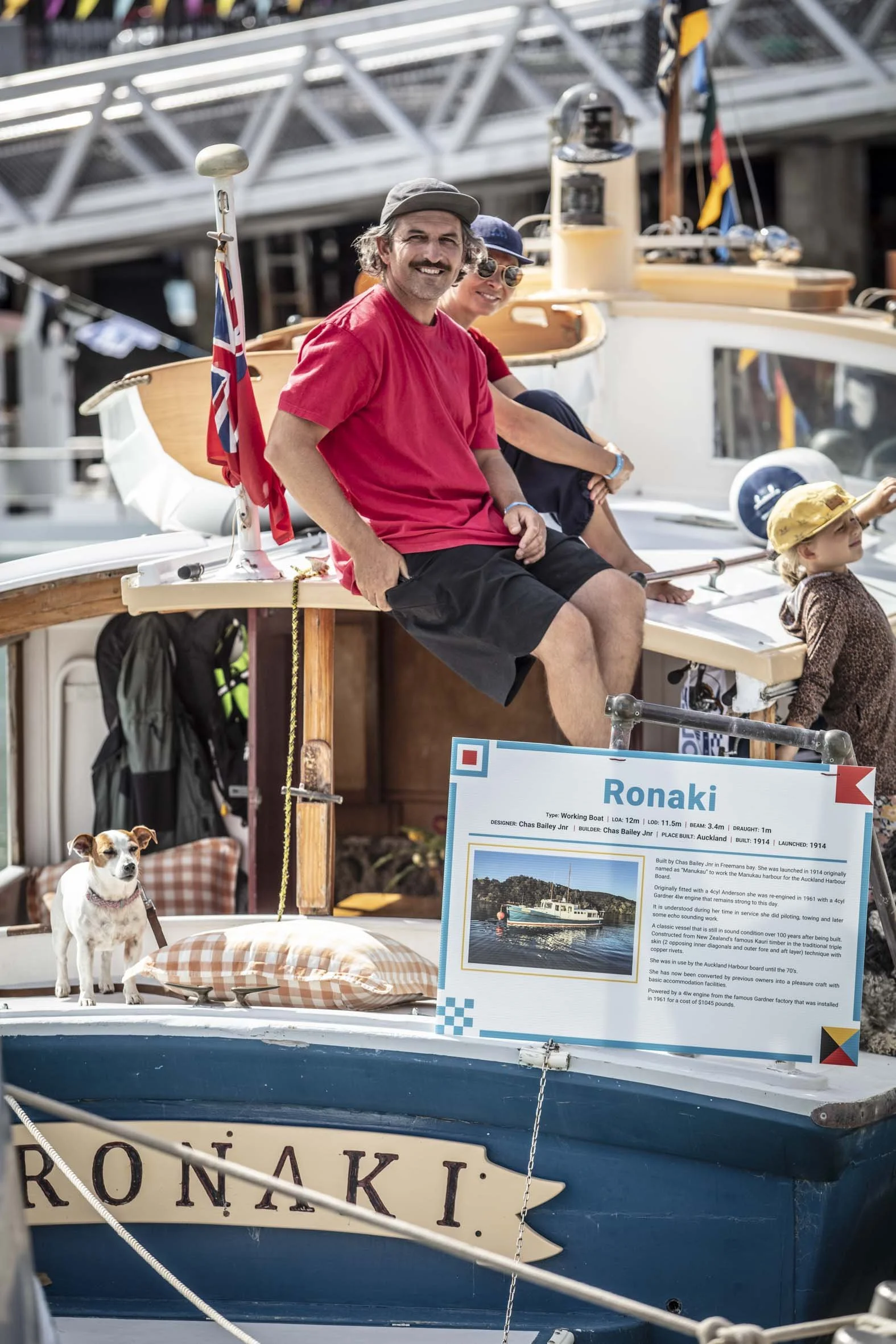
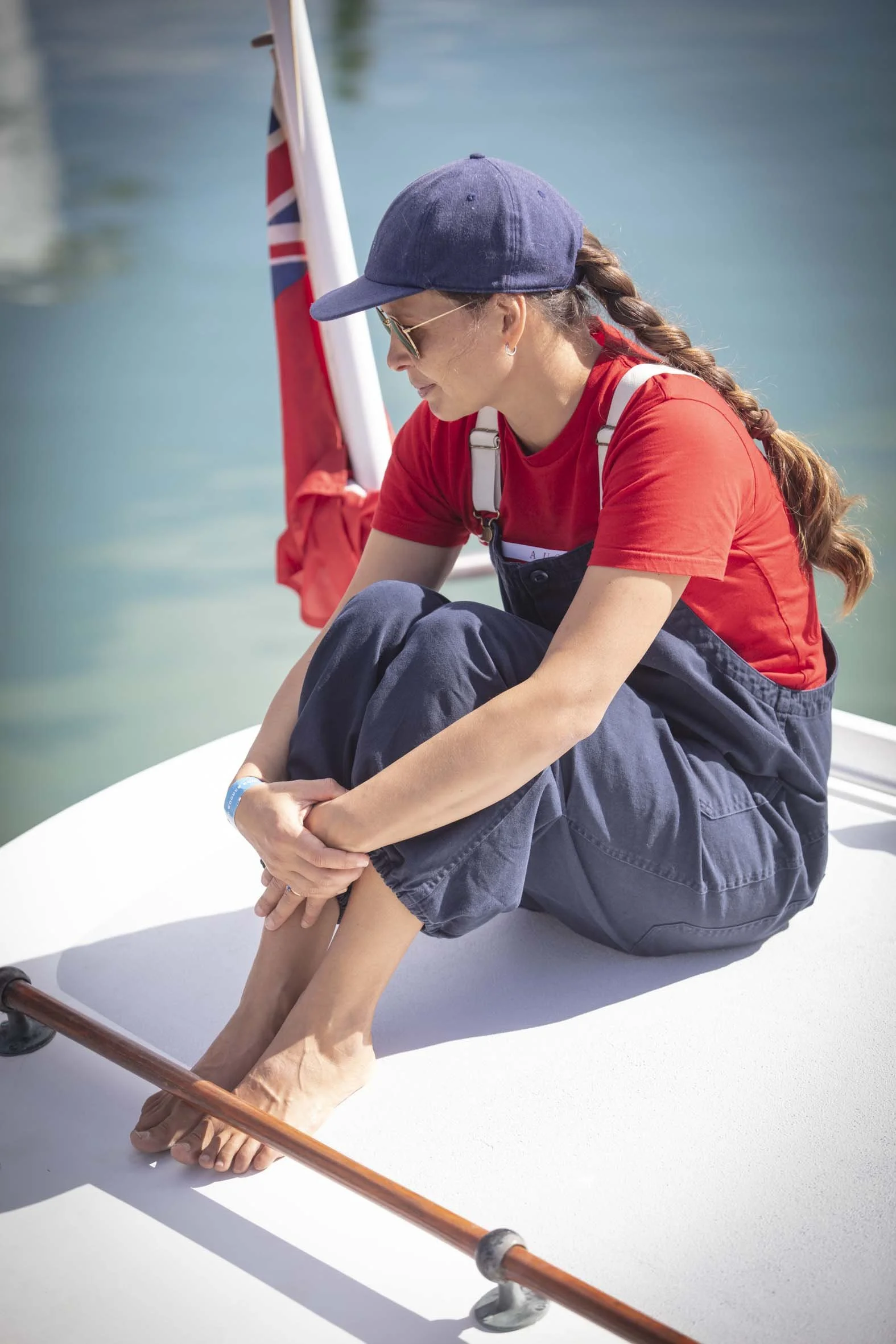
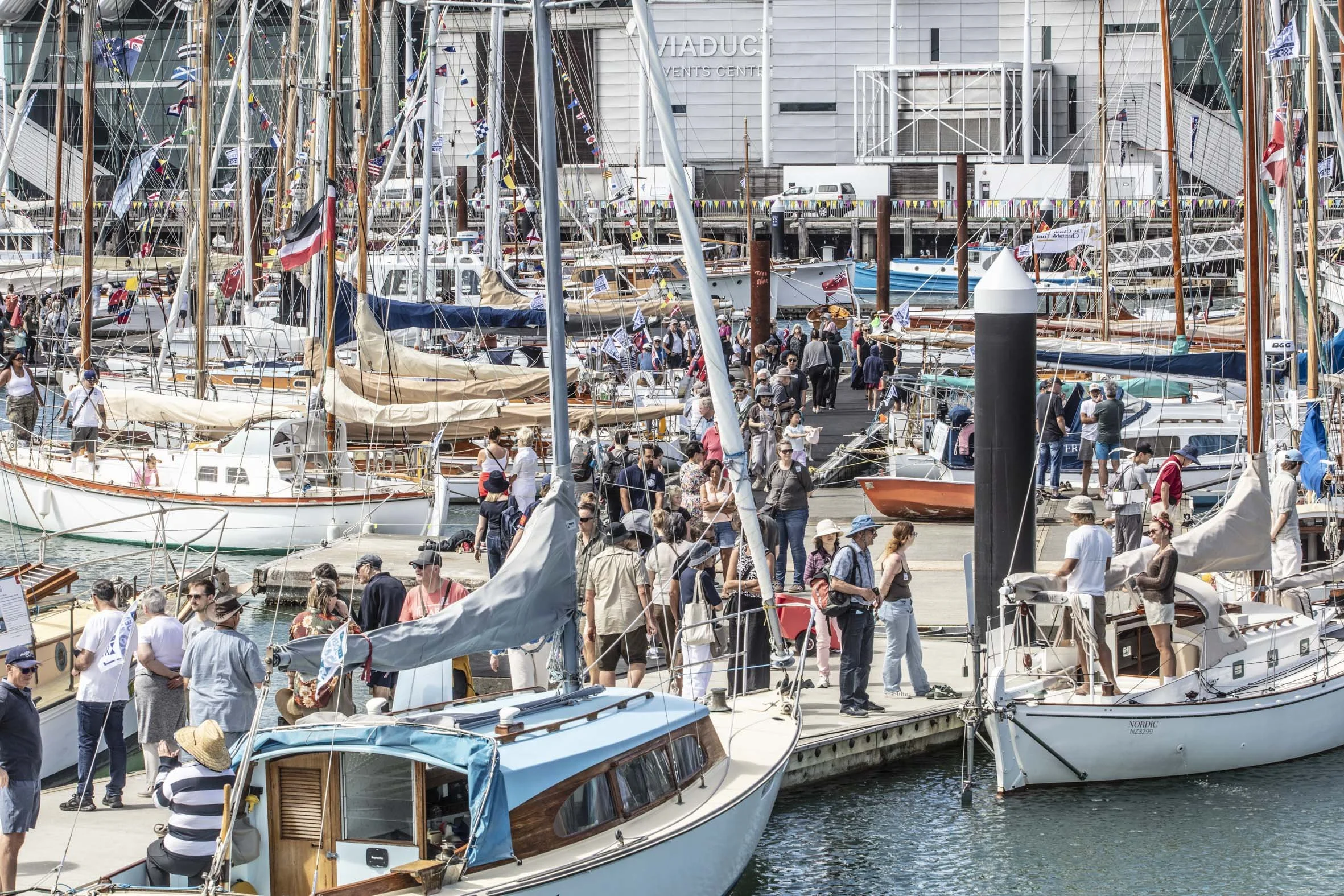
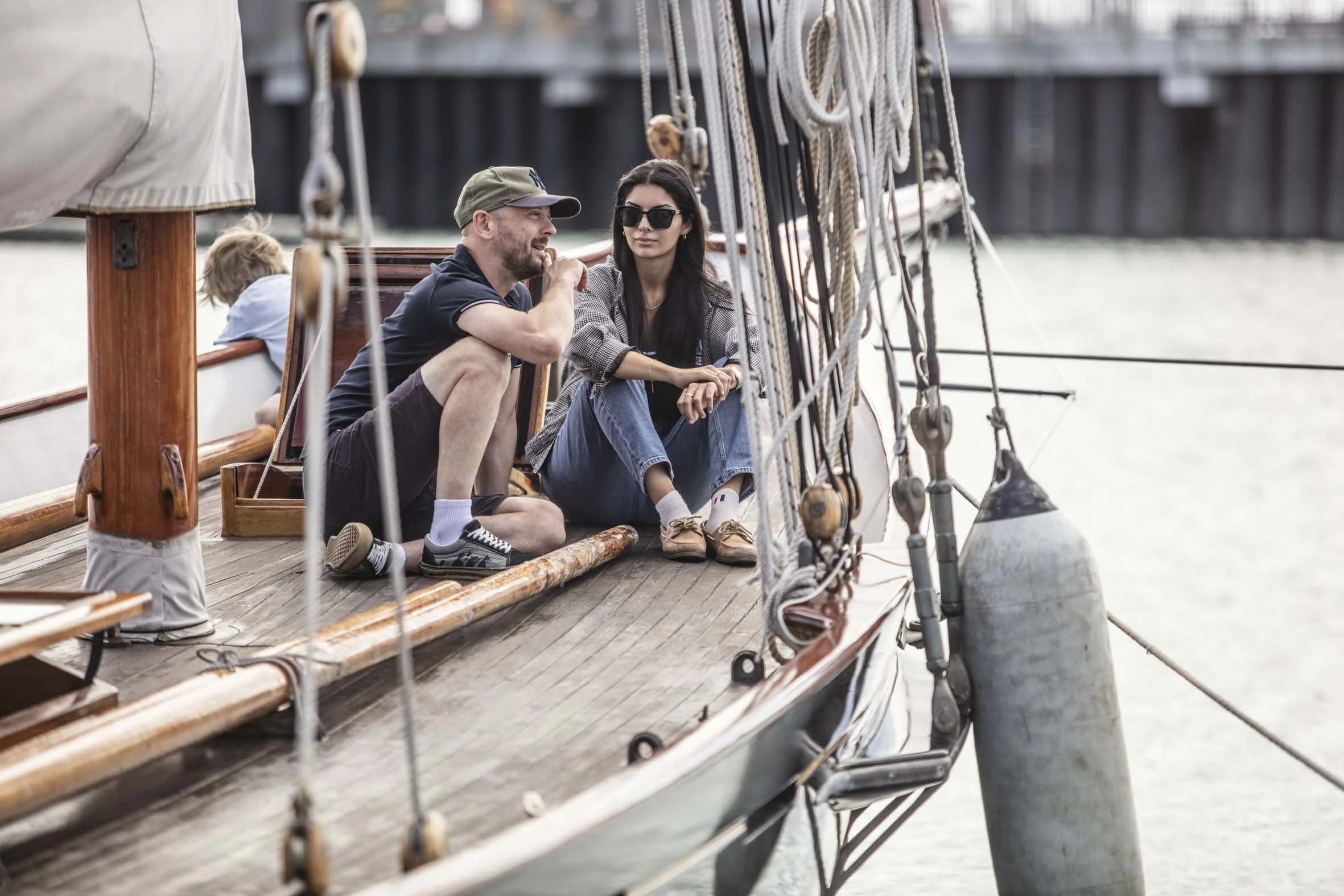
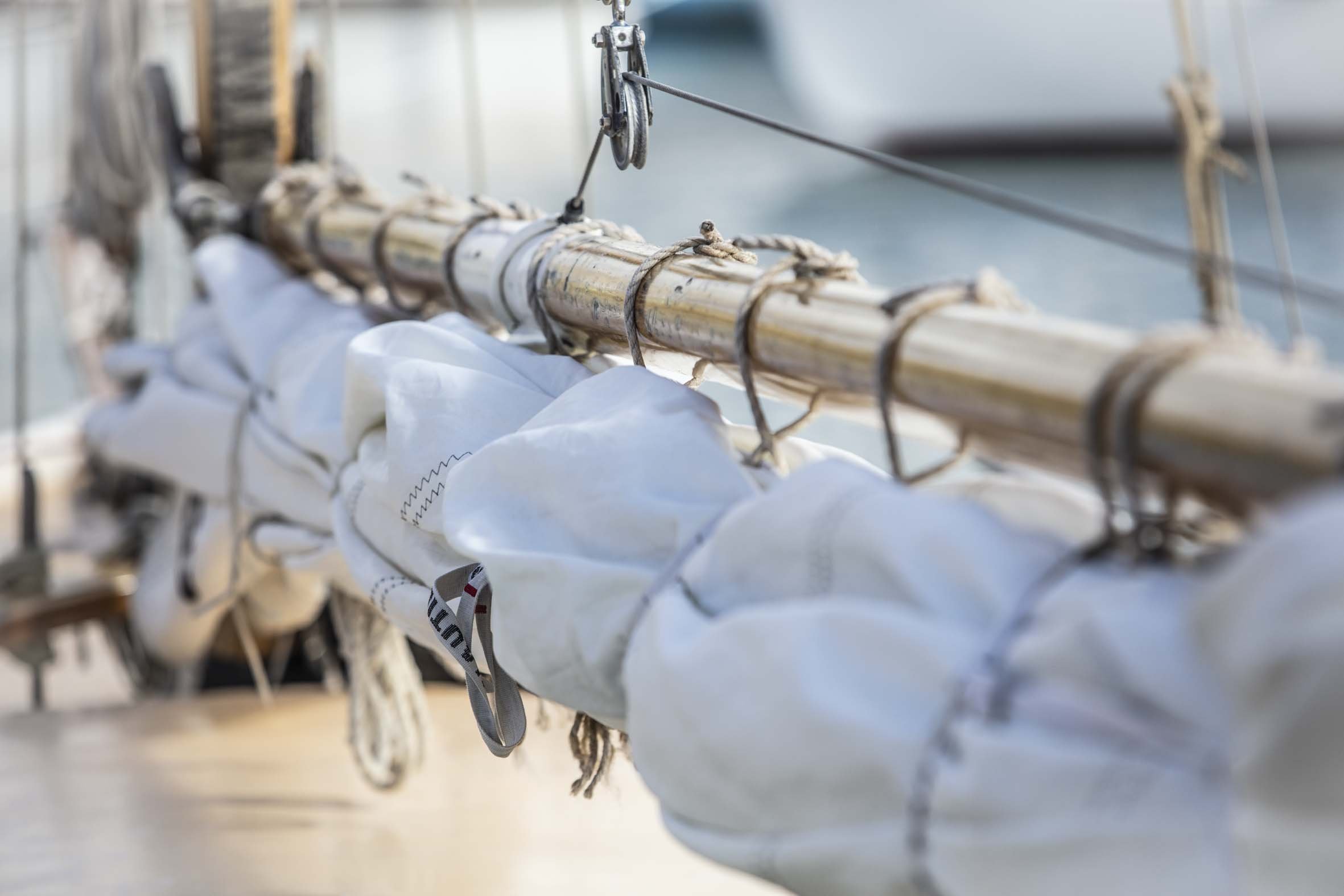
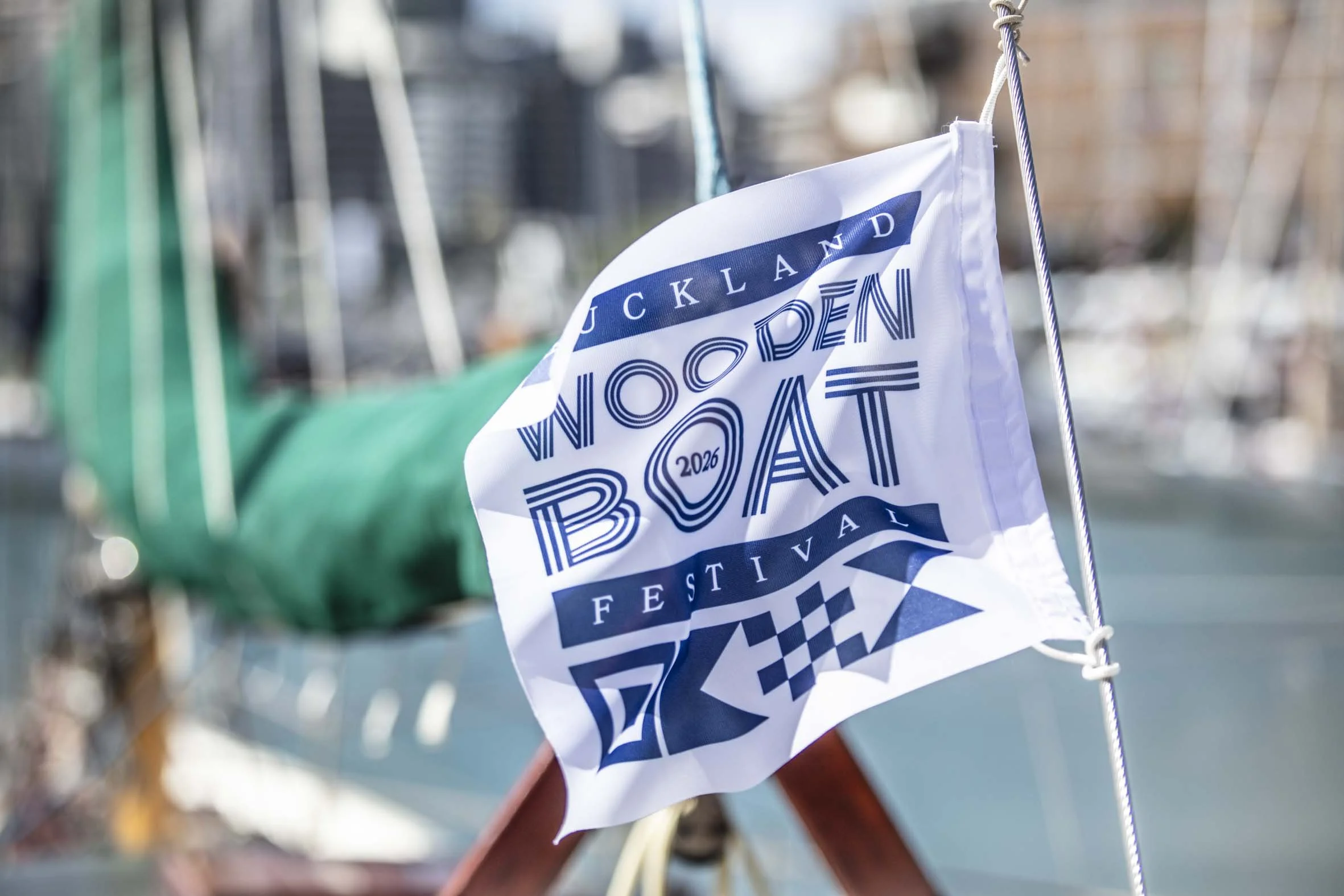
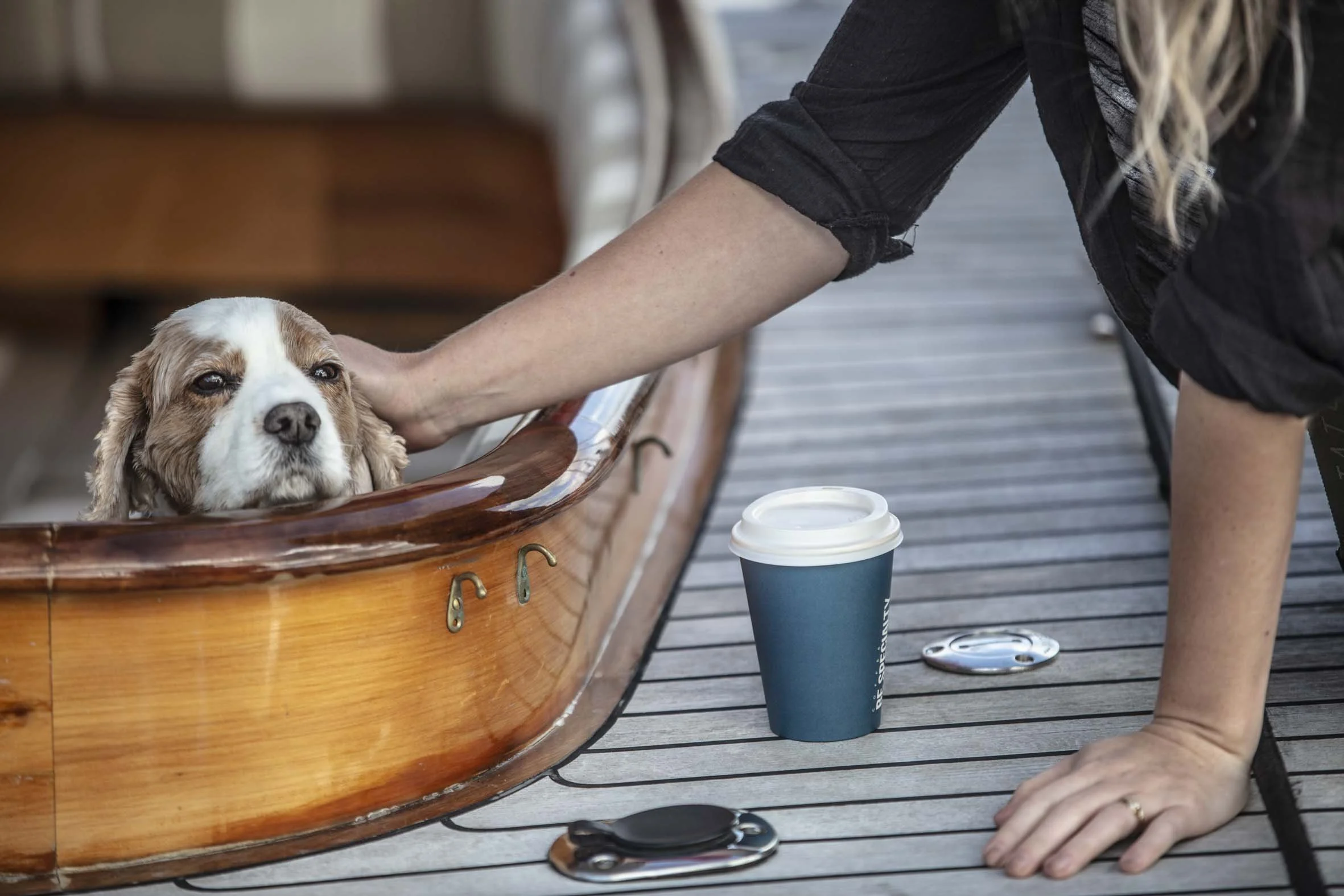
Firstly, the festival has grown. With the help of funding from Tataki Auckland Major Events, it’s now held over four locations based around Auckland’s iconic waterfront.
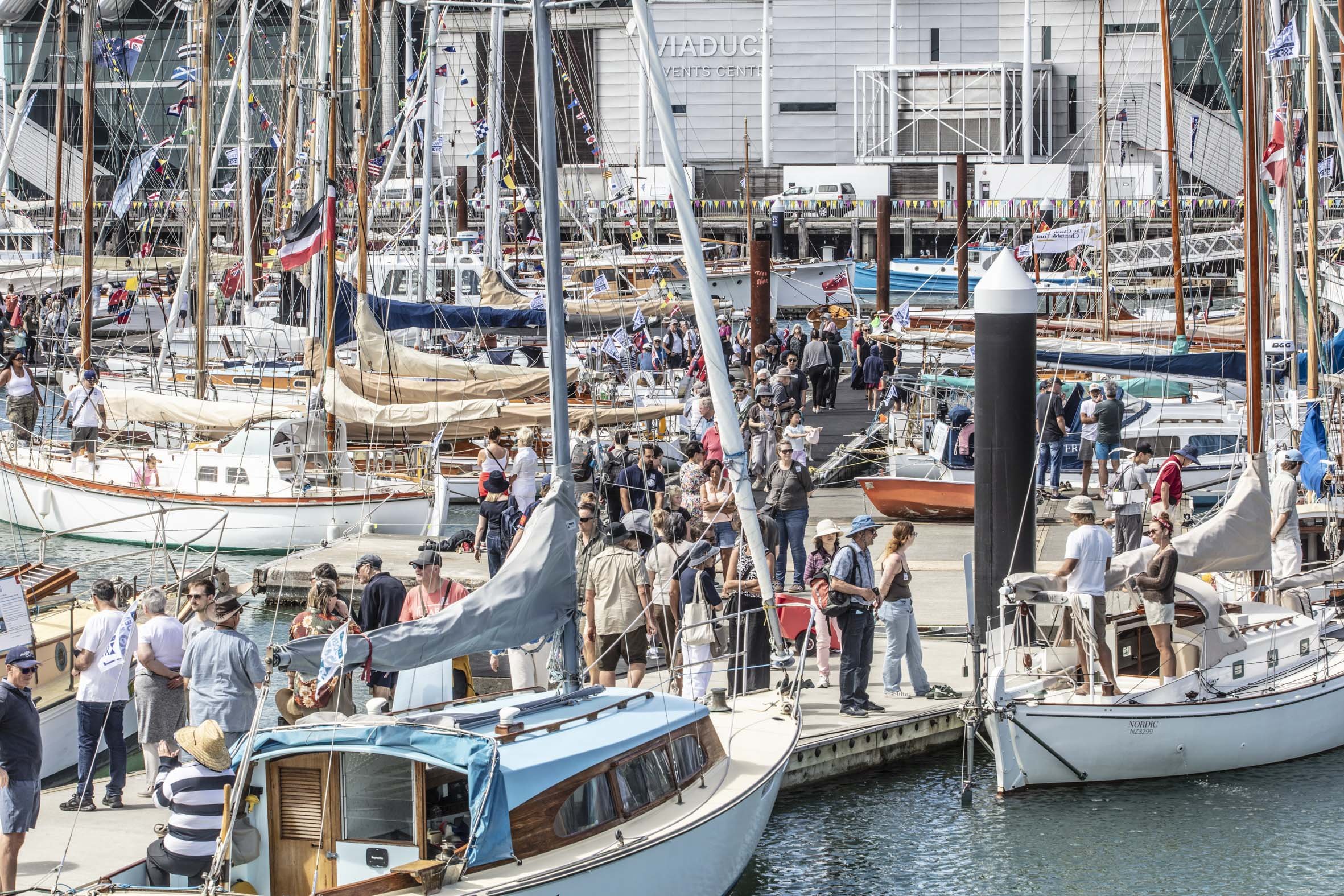
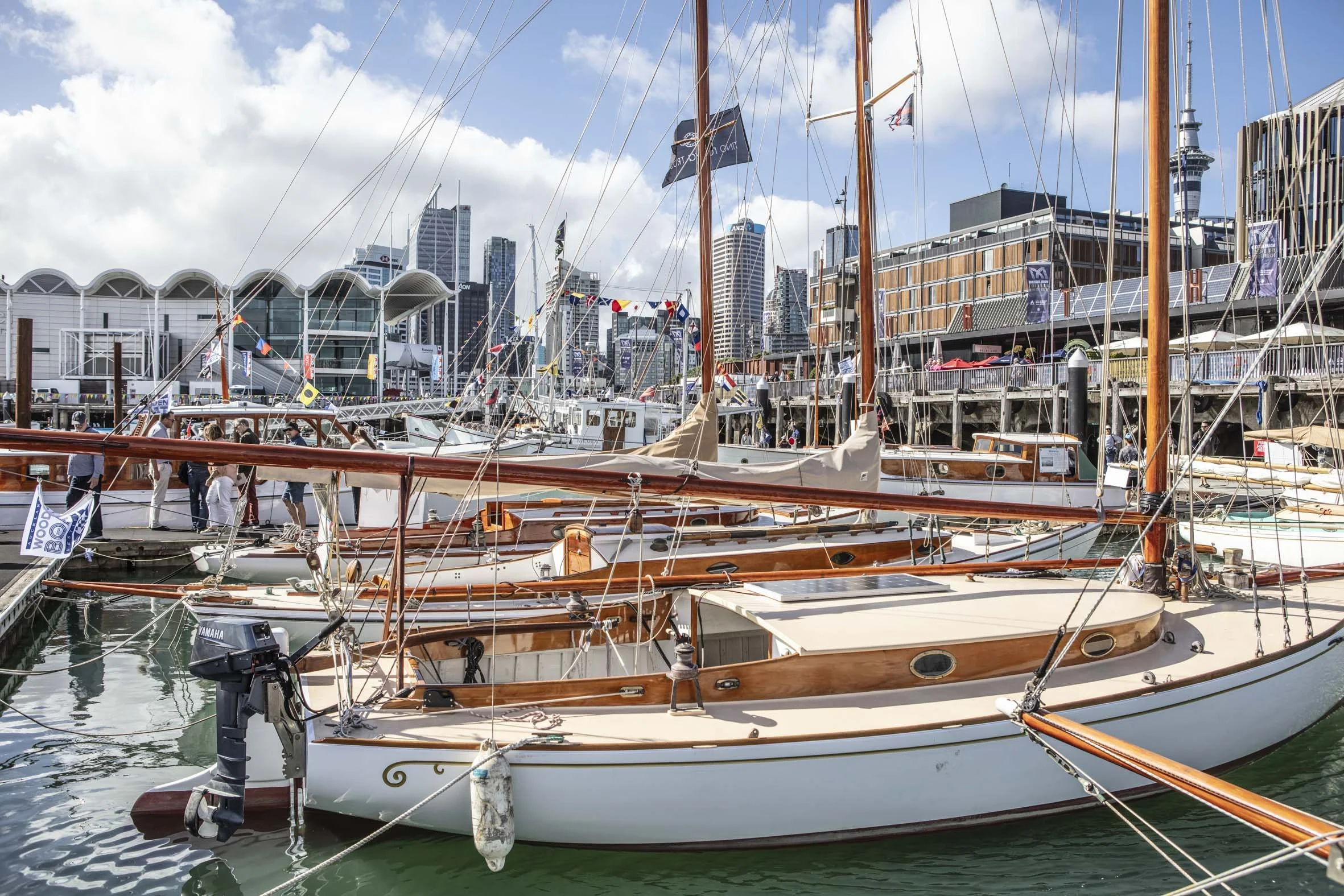
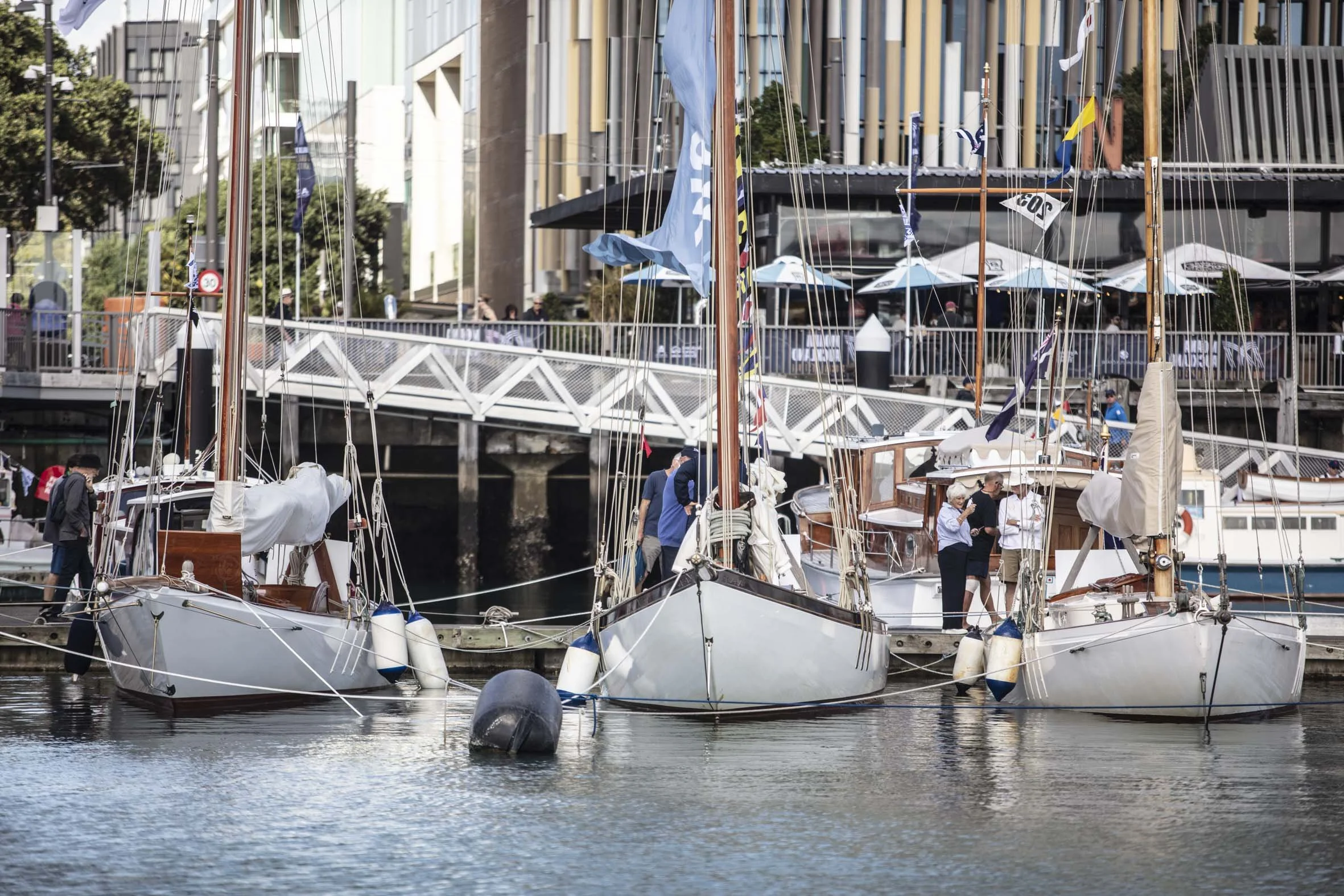
The centrepiece is of course Jellicoe Harbour, where despite the blustery build up to the event, the boat wranglers managed to berth over 100 boats with a web of lines and pontoons, ensuring the protection of precious craft despite the temporary nature of the setup.
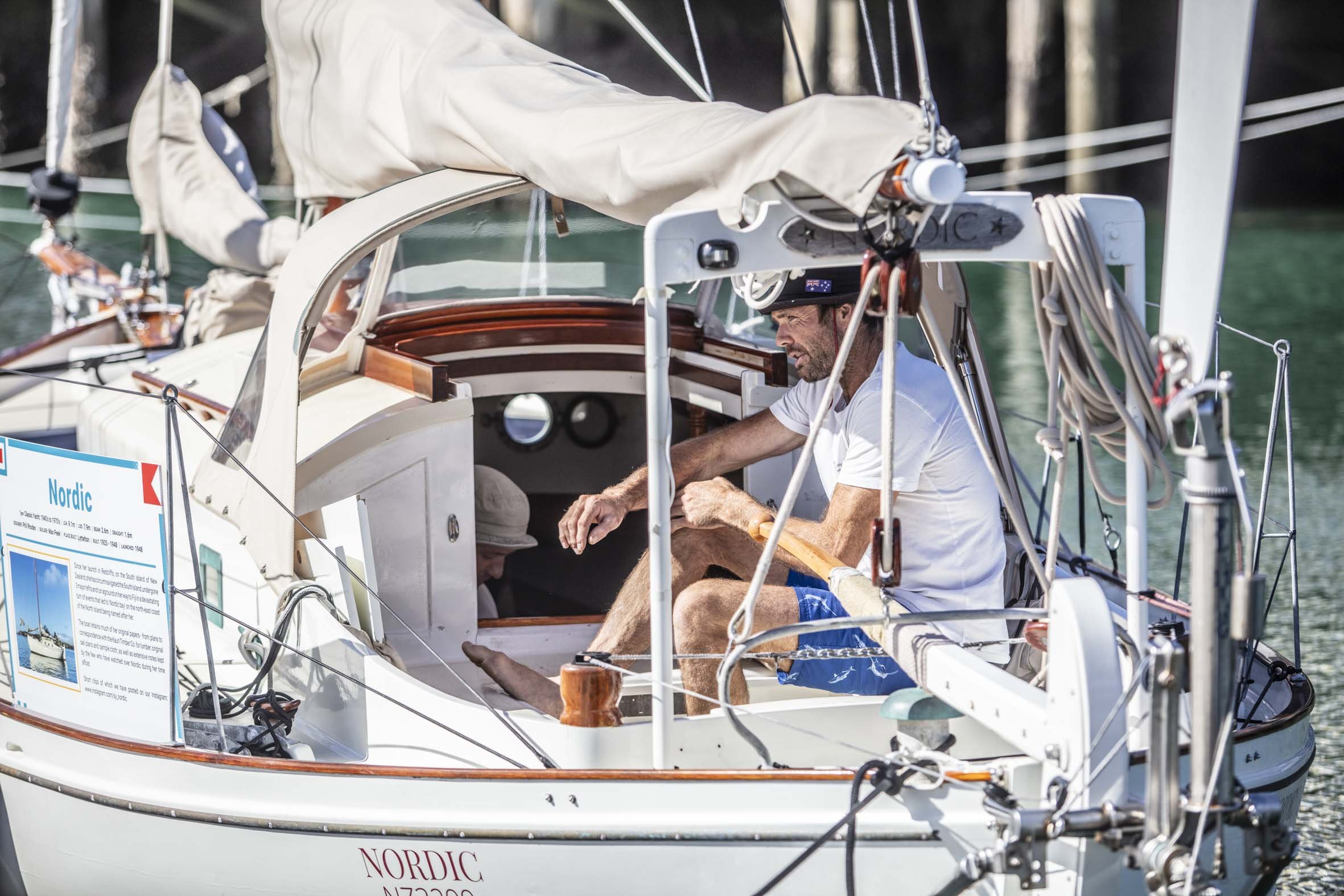
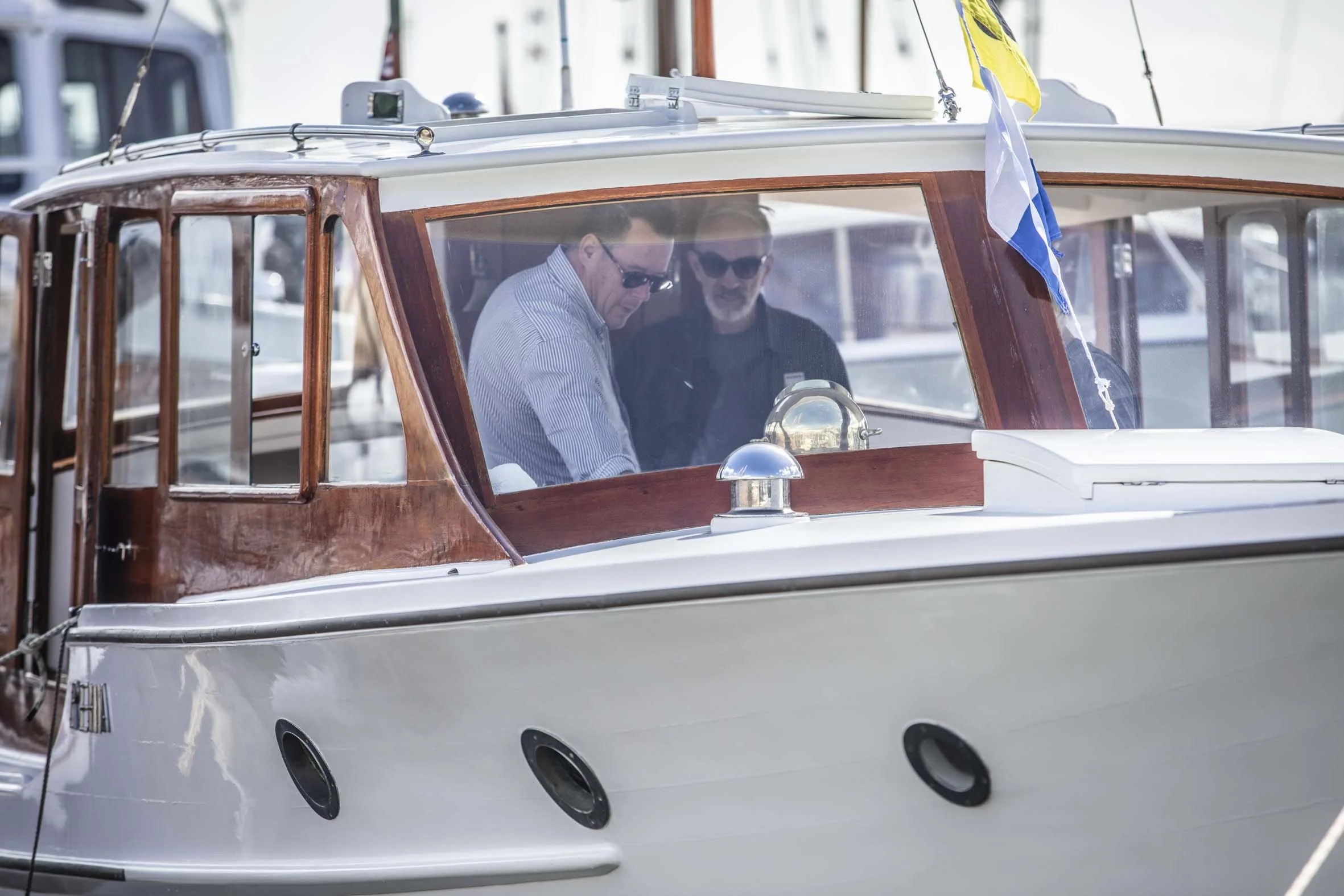
Boats displayed at Jellicoe are the beating heart of the festival.
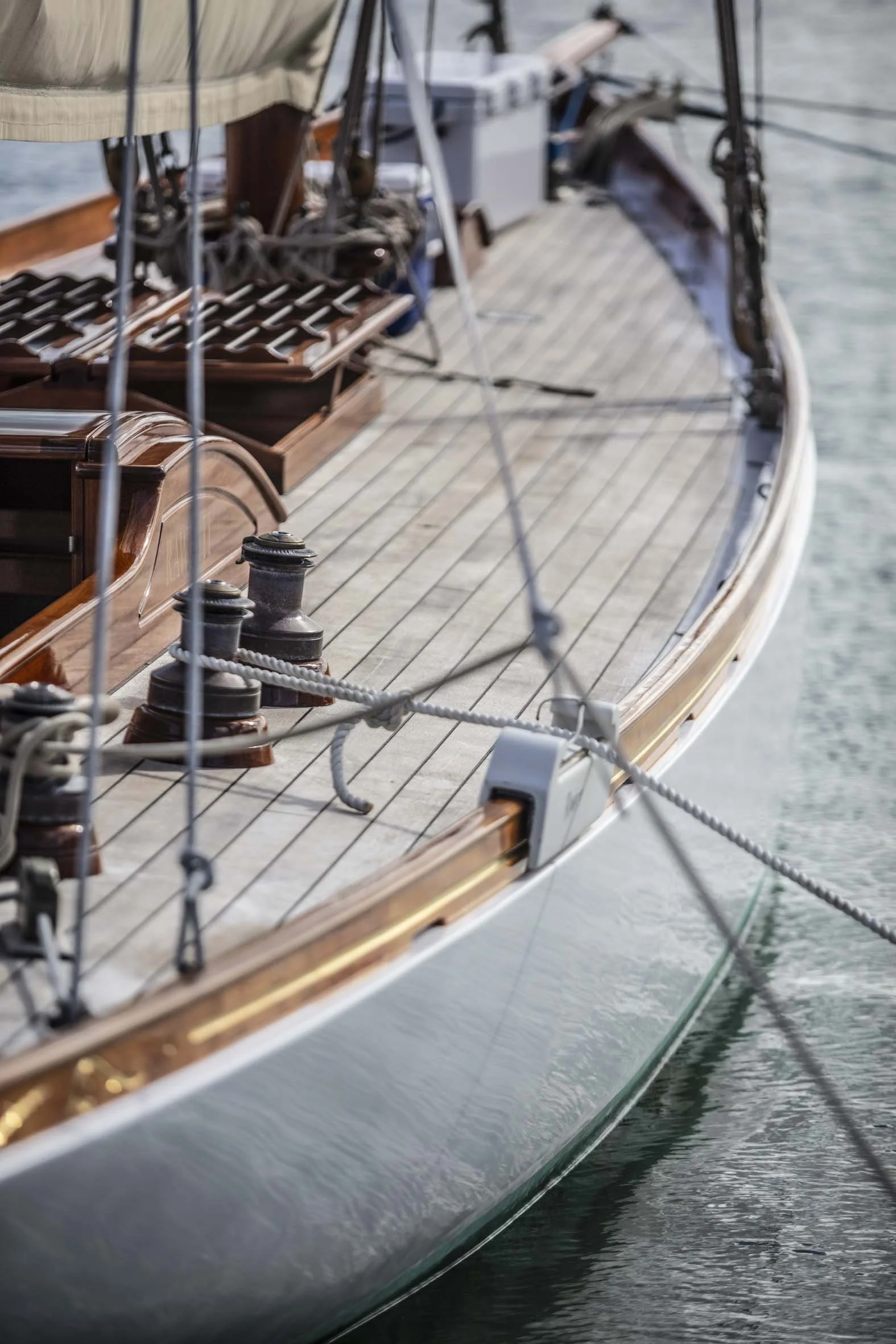
The quality and longevity of the craft is an extraordinary testament to two things. The passion with which Kiwi custodians look after their boats and the rot resistance of that gold standard timber, Kauri.
Here in Australia we may have developed a rich and broad tapestry of tradition around wooden boats, but in no port on the big island can you walk past 200 metres of restored gaff rigged centenarians, one after the other, after the other.
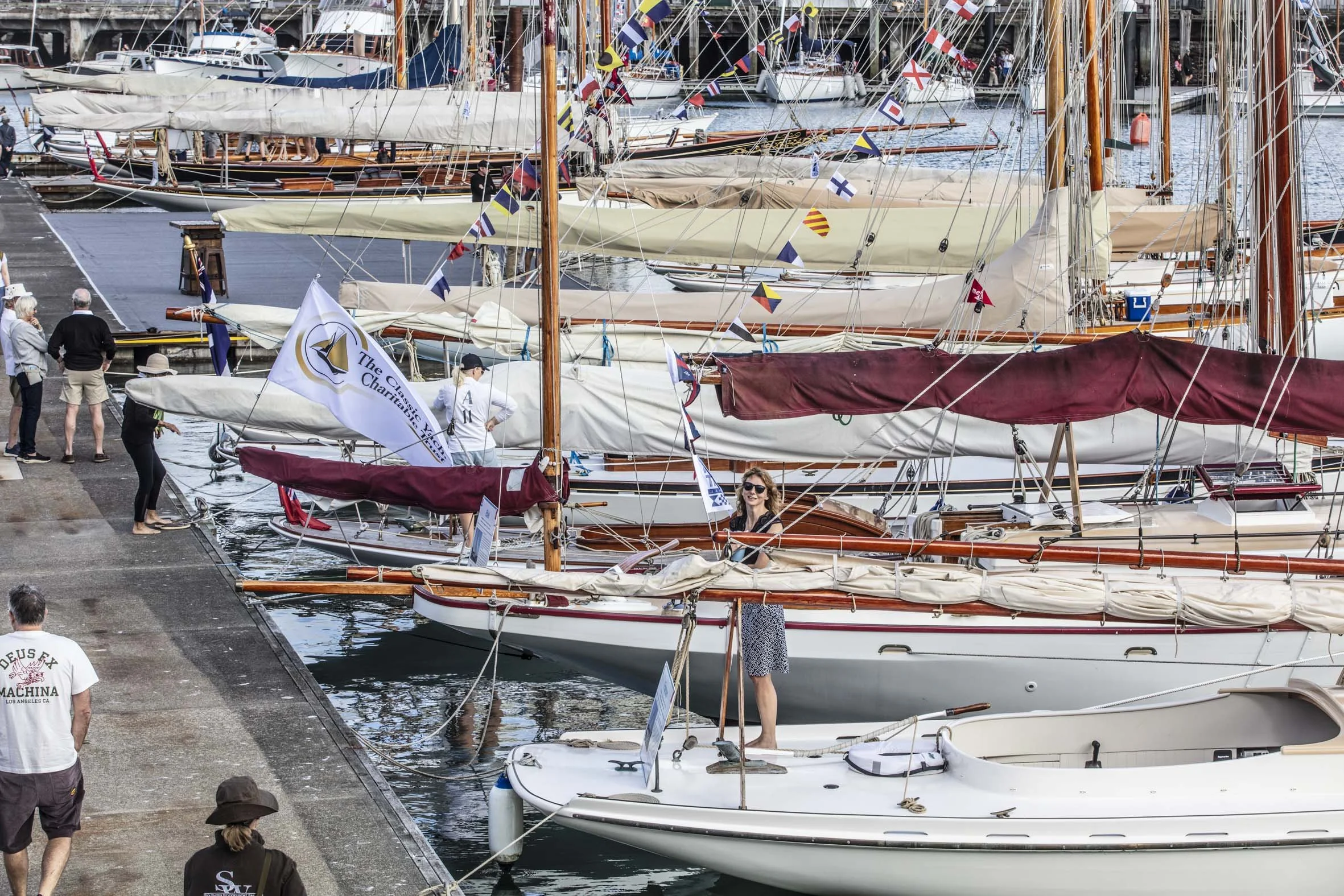
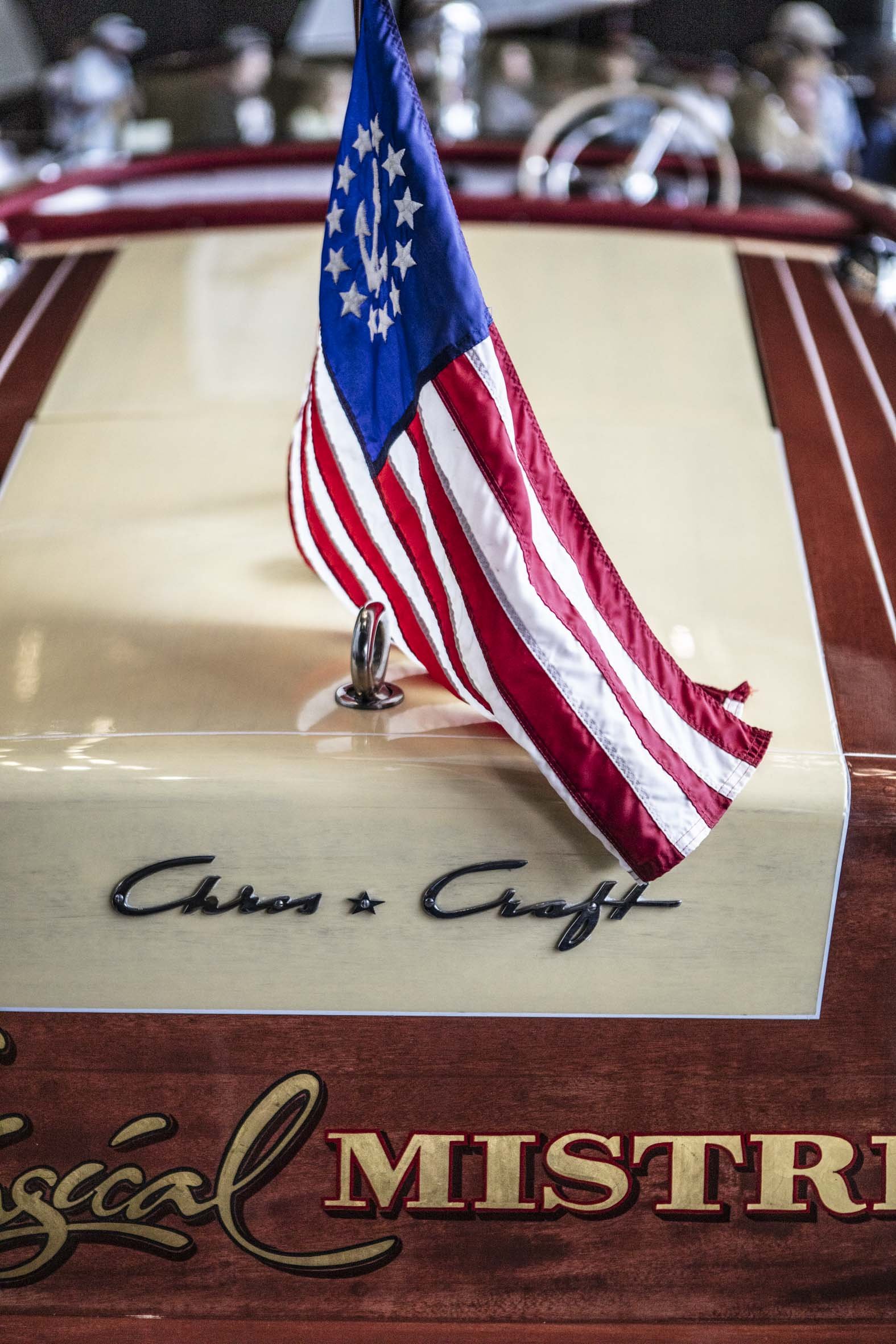
And it’s not just these cutters. A selection of the fascinating K Class yachts is moored beside them, Kauri launches draw sighs of admiration (or is it jealously?) and of course there are a few examples of designs such as TITUS CANBY and RAINBOW II that led the yacht racing world, with their Kiwi ingenuity, and no frills aesthetic.
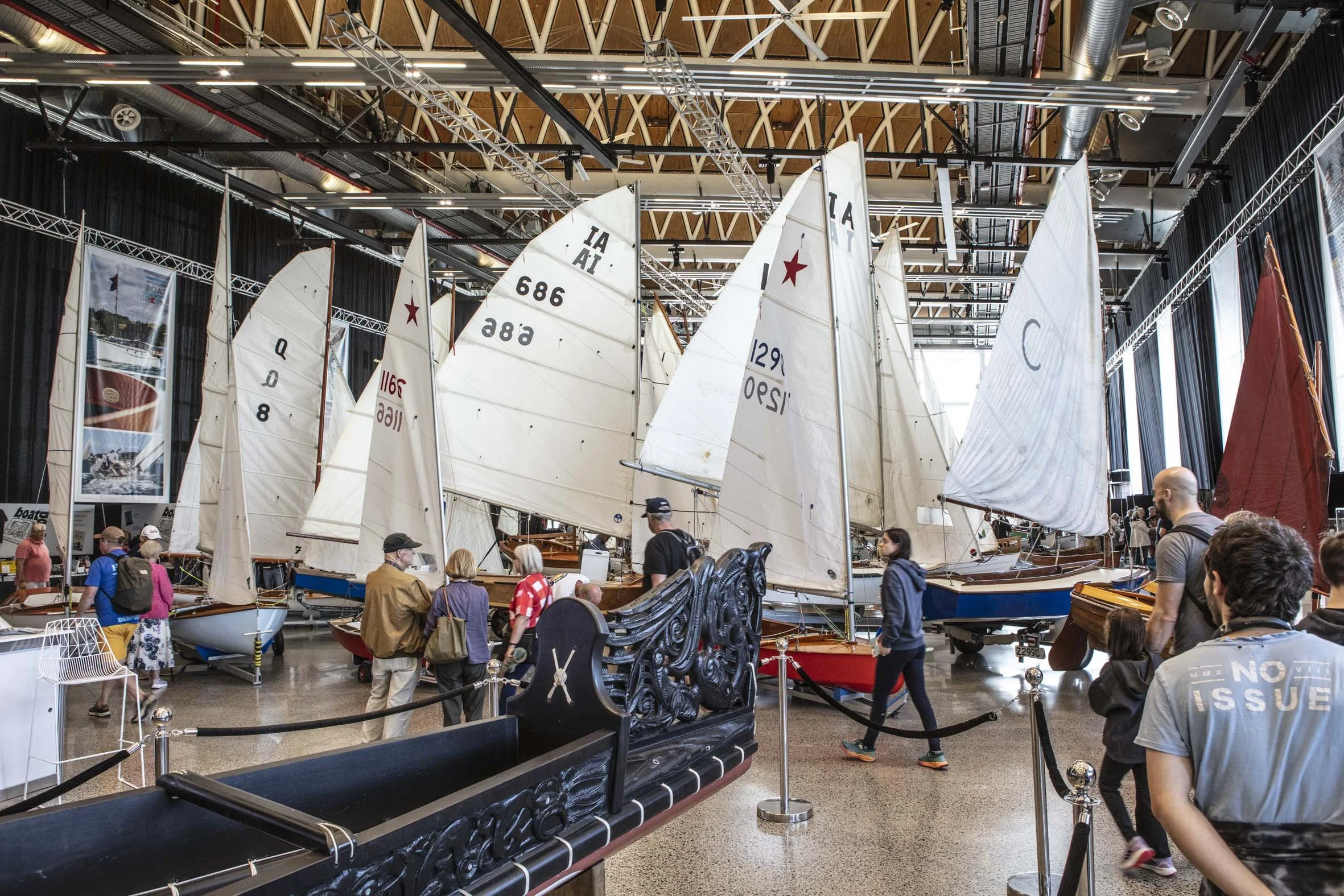
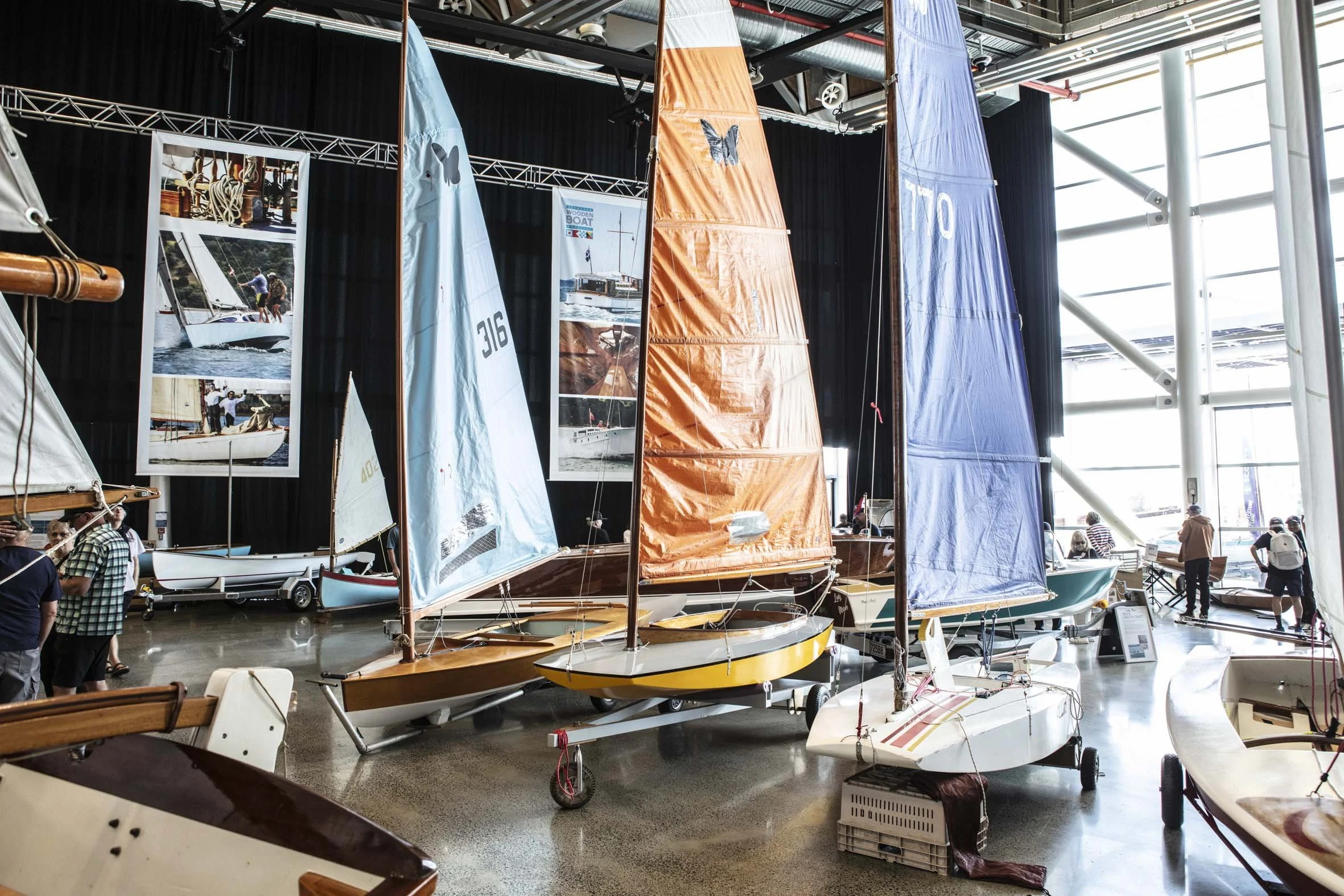
Just to the east of Jellicoe is the 6,000m² Viaduct Events Centre with its three levels and a large a clear-span 12-metre high spaces, ideal for displaying fully rigged sailing boats, opening onto Halsey Street.
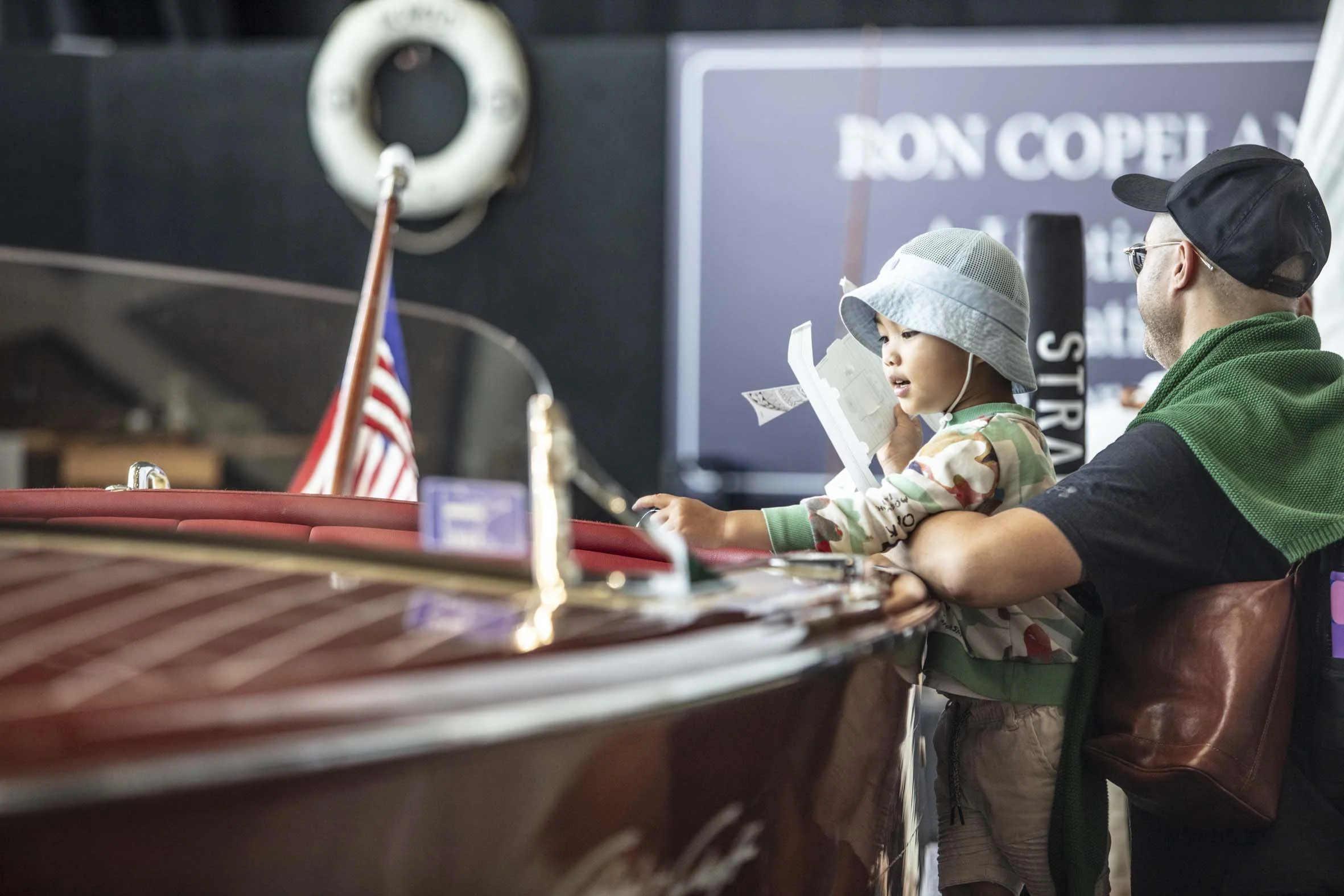
Ninety boats ended up in this precinct and it was here where the festival was enriched beyond the inaccurate cliche of “rich, white, males owning expensive yachts”. On display was a broad based, cultural presentation of what timber boats have meant to the New Zealand community and why they remain so relevant. In addition to the scores of classic dinghies, canoes and runabouts the space was filled with intricate exhibits such as the one by The Daring Trust, telling the incredible story of the DARING, a two masted schooner built in 1863. After being beached purposefully by Captain Phipps and his crew in 1865 this beautiful boat was discovered after a weather event in 2018 moved the sands to expose her near Muriwai in Auckland. She is now being preserved to make her available for a public display telling stories of the life and culture of the days when she was a trading the coastlines of Aotearoa.
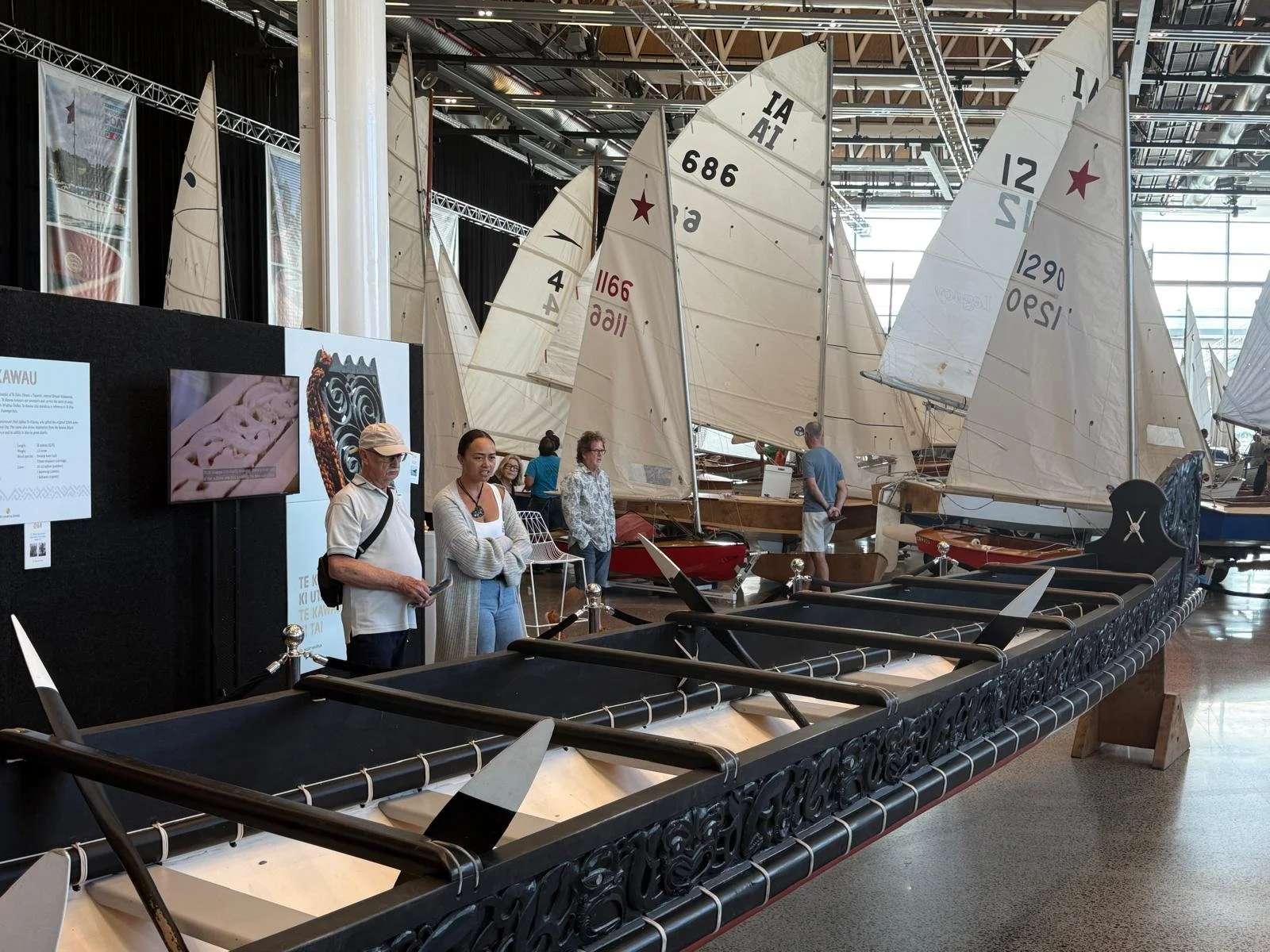
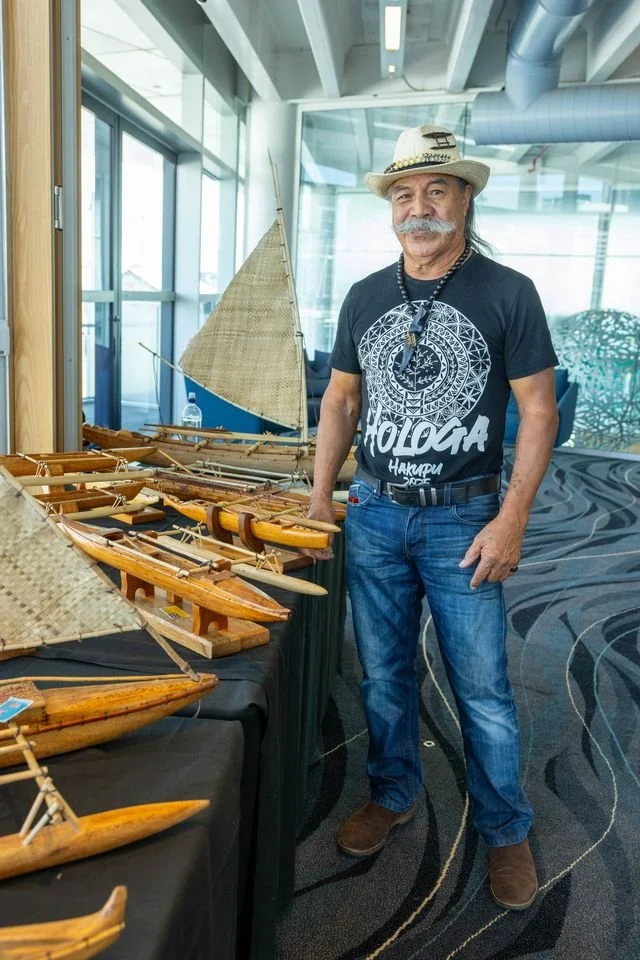
Throw in amongst this, the Ngāti Whatua Waka, Te Kawau, which lead Team NZ out everyday of racing in Barcelona, the great display from the Kauri Museum in Matakohe, and an extensive model boat collection, including examples of Sully’s Pacific vessels and suddenly a two and a bit day visit didn’t seem quite enough!
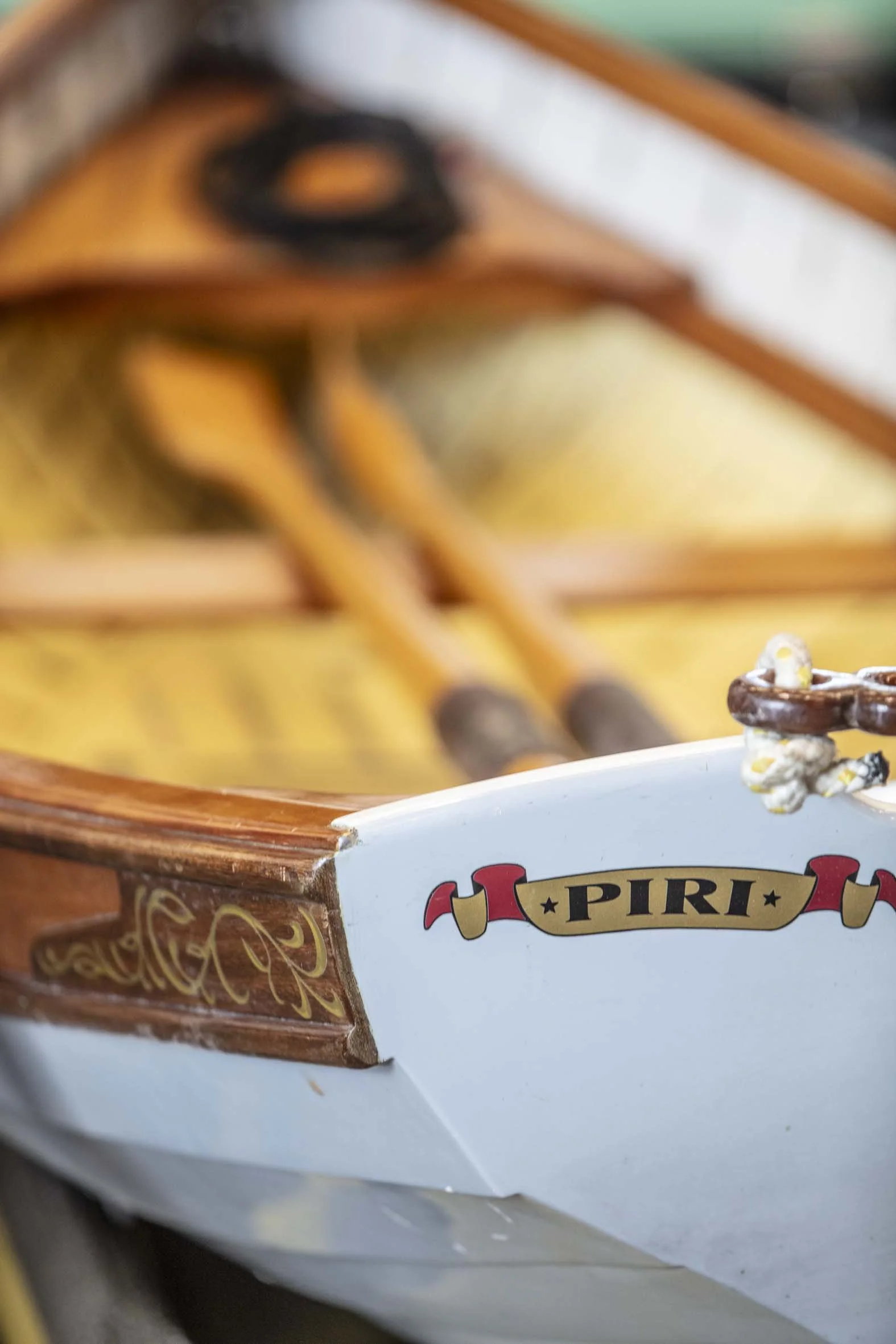
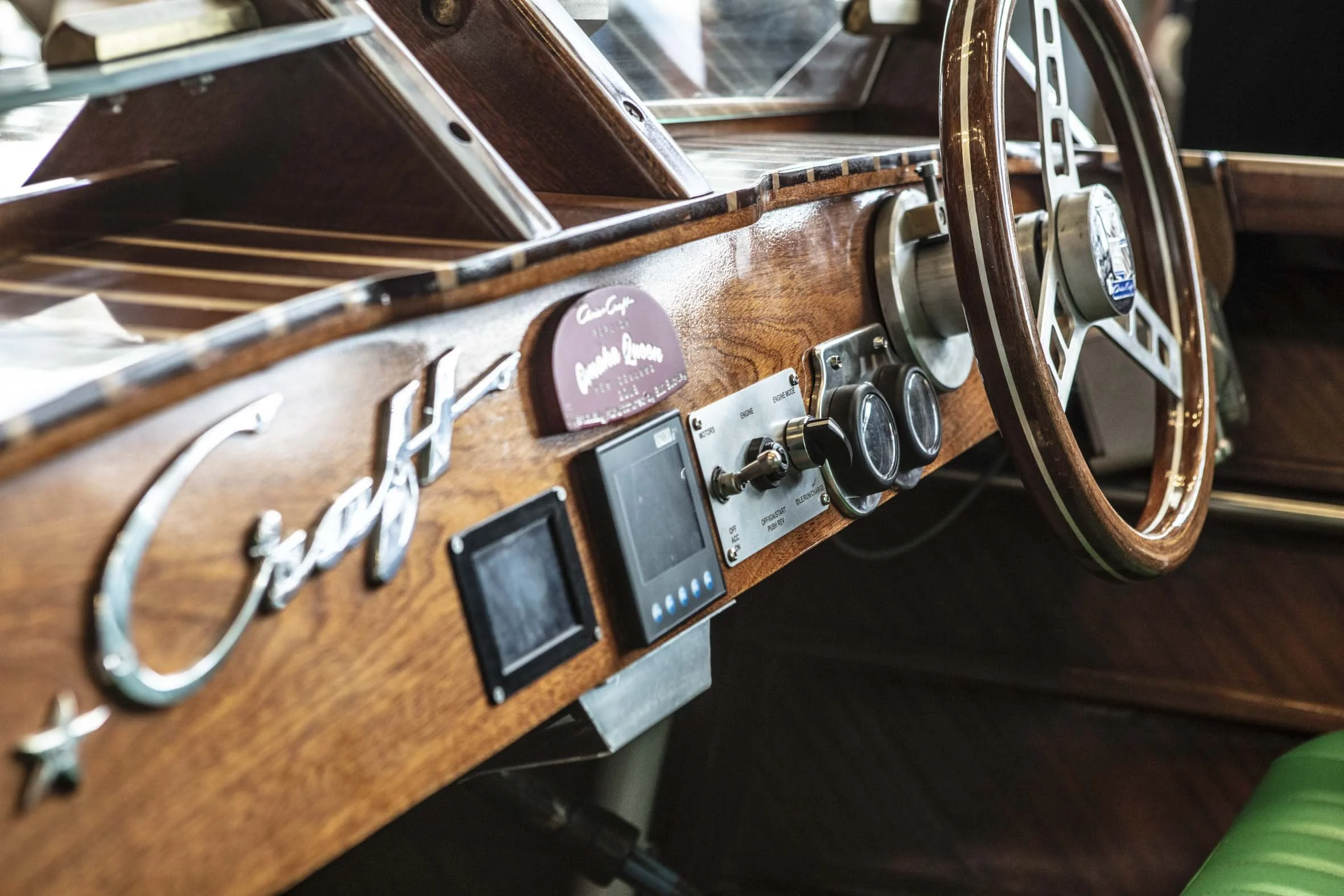
It was outside the Events Centre where the Australian connection was based. The Australian Wooden Boat Festival had sent a container over from Hobart filled with artefacts and stories from the Tasmanian Wooden Boat world. And perhaps more importantly it was accompanied by Paul Stephanus, the director of the AWBF along with a strong contingent of supporters and shipwrights who were more than ready to tell the story of the big sister festival across the ditch. And it wasn’t just the Tasmanians waving the flag with six stars. Spotted amongst the crowds were the Commodore of the Royal Yacht Club of Victoria, Damian Purcell, Australia’s most successful wooden boat builders, Tim and Sally Phillips, Larry Eastwood of “Restoring PETREL” fame, Ian Johnston, maritime author and one of the founders of the AWBF and Philip Brown custodian of ANITRA V and driving force behind so much Classic Yacht activity on Sydney Harbour.
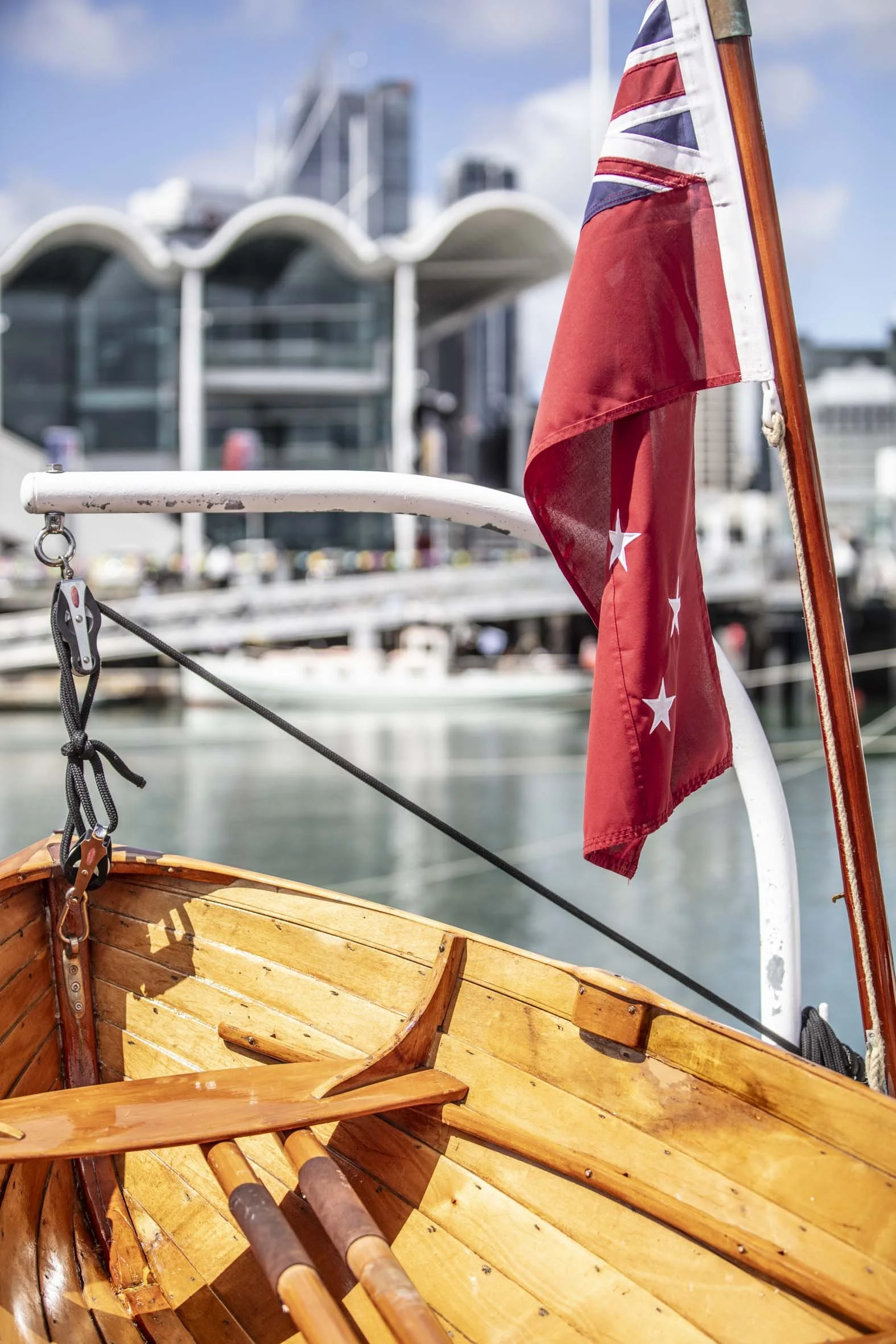
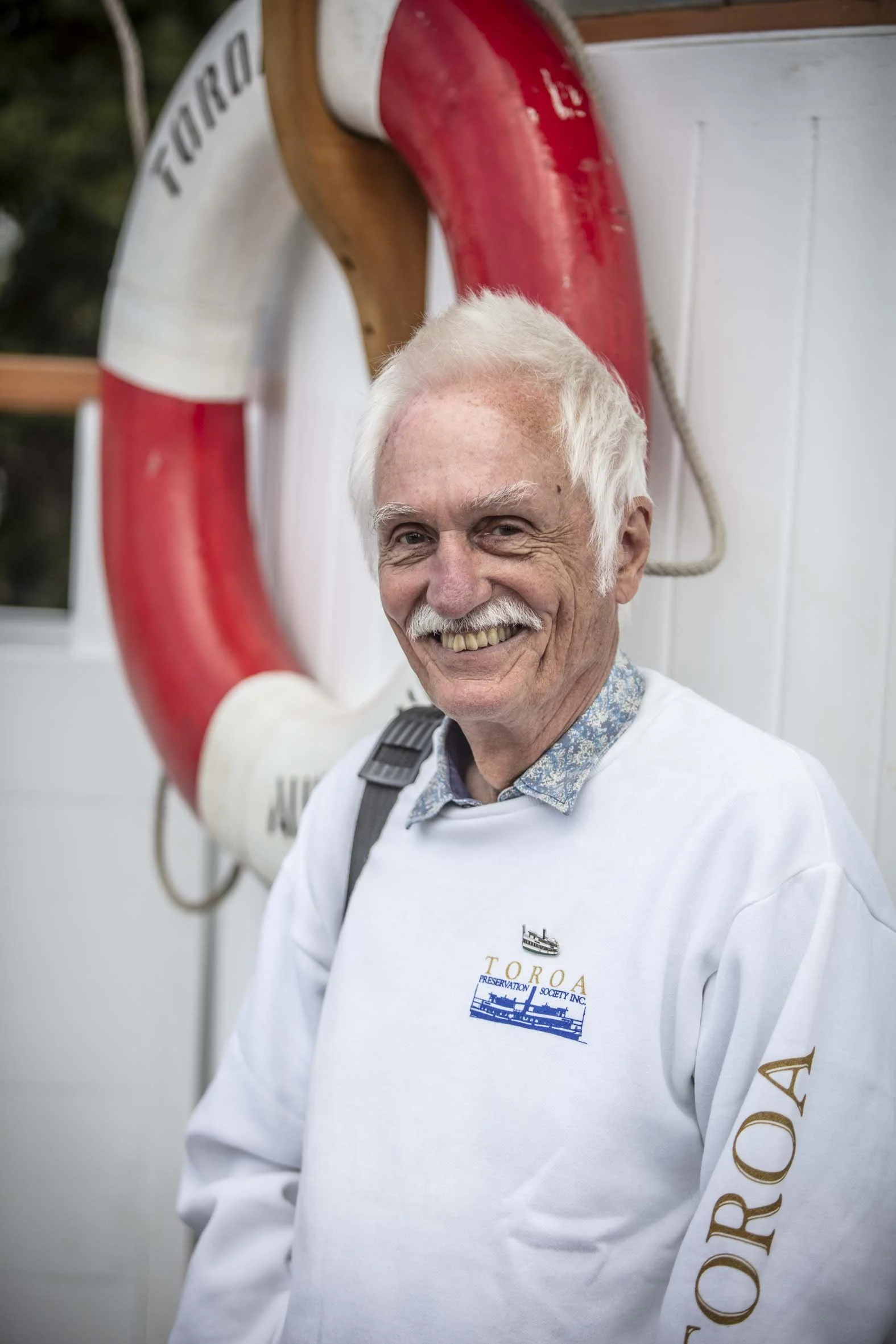
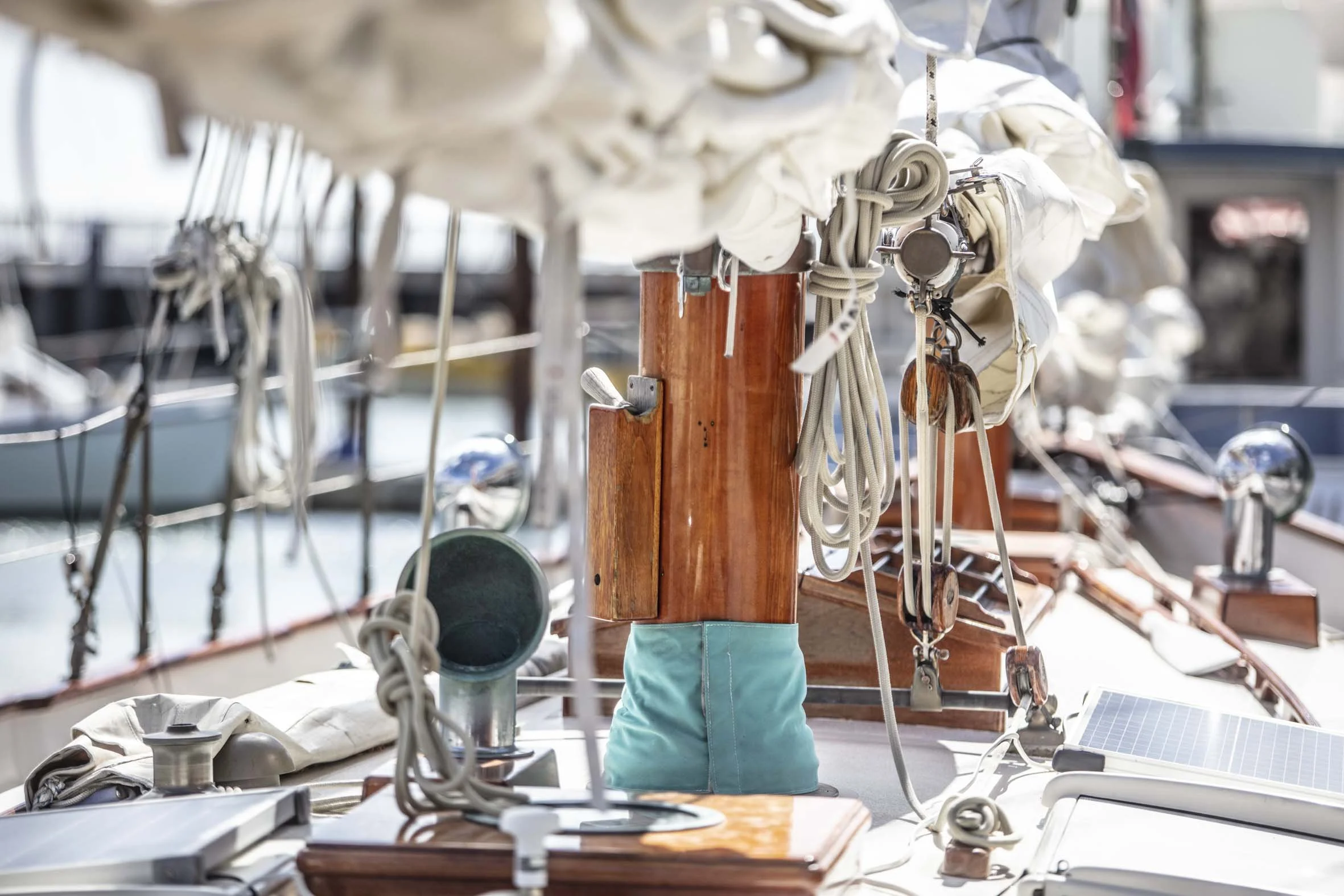
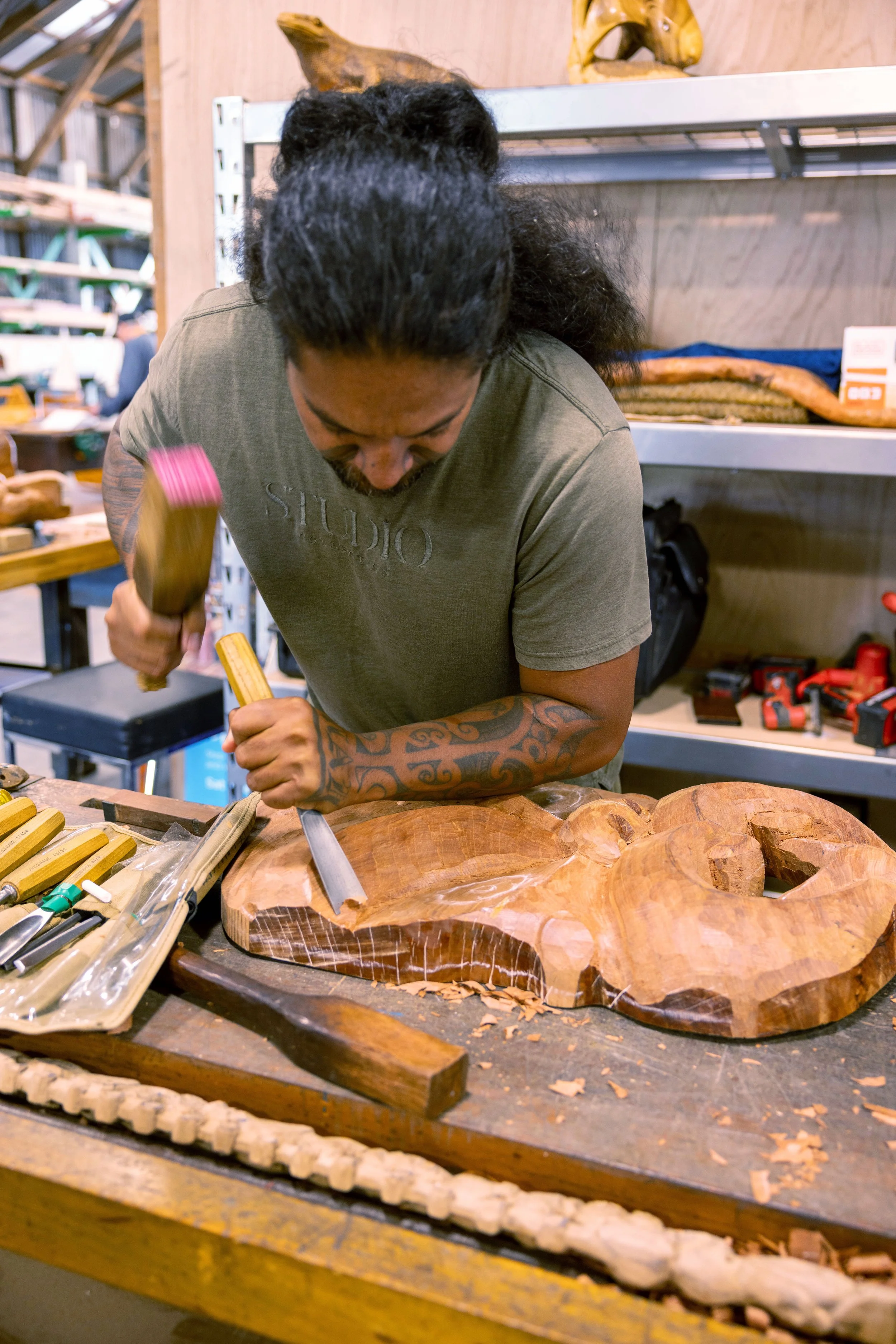
A pleasant five minute stroll west, past the moored boats, took you to Wynyard Point and the Percy Voss Shed. Here the atmosphere changed from the frenetic bustle of the harbour to the reassuring calm of an historic boatyard.
Born in 1897, Percy Vos’s boatbuilding apprenticeship was interrupted by World War I, during which he served with distinction at Passchendaele. On his return he established one of New Zealand’s most reputable boat building and design business, a story far too long and rich to be covered here. Nowadays the Percy Vos Boat Yard is a restored and working maritime heritage centre, managed by the New Zealand Maritime Museum and during the Festival the shed, with soft light drifting in from the huge doors open to the working harbour, hosted displays of Maori carving, Pacific waka building and the construction of a Frostbite dinghy by The New Zealand Traditional Boatbuilding School.
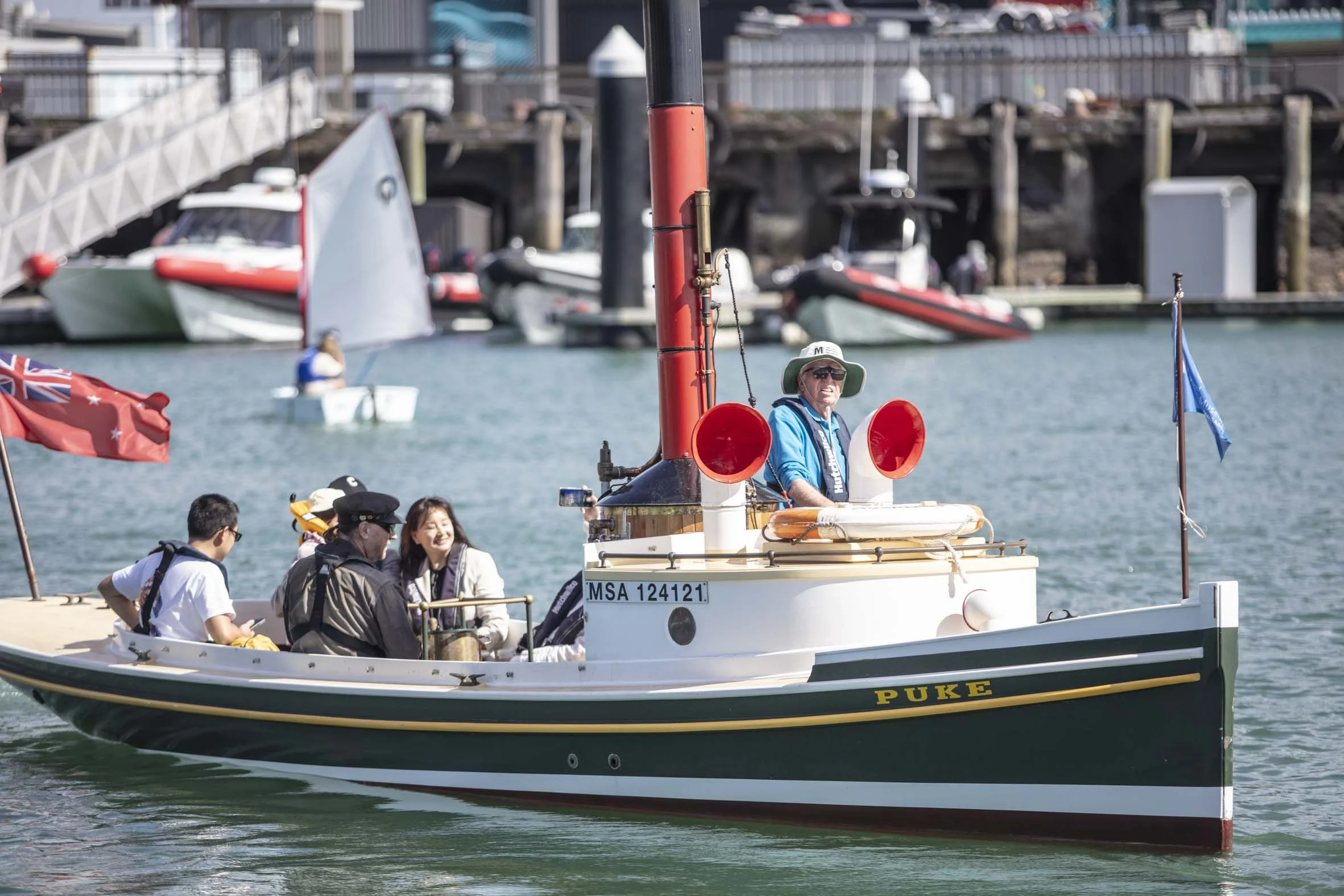
My involvement in the festival was through the “Speakers and Film” component, held at The Auckland Maritime Museum. If you could drag yourself away from watching that idiosyncratically Kiwi sport called Manu, and walk for five minutes to the Museum, you could not only check out world class museum displays, but also attend a series of talks by legends such as Lin Pardey of "Go Small, Go Simple, but Go Now!” fame and Peter McCurdy one of the founders and the first curator of the Museum talking about the restoration of the Steam Ferry TOROA
It was an honour to be invited to speak amongst such esteemed company and I very much enjoyed sharing a talk and images made during my experience sailing East African Dhows to a full house. As an example of the intricate cross referencing of talent, interests and expertise in the wooden boat world, I was delighted to see both the "Voice of the America's Cup." Peter Montgomery and cutting edge designer Guillaume Verdier (COMANCHE etc) in the audience. If there’s one thing these events are certainly not, its a monoculture! (We hope publish recordings of these talks in SWS soon)
It seems a little harsh to be offering suggestions as to how to enhance such a great event just a few days after it’s over. And anything I say the directors will already know. However, in the hope of improving on near perfection, I feel the event could be further enhances by more “on water” events and opportunities. And by that I mean sailing. The Hobart Festival features the Derwent Class World Champ’s offering visitors the opportunity to watch crew and boats be prepared to race; leave the dock; watch from spectator craft; arrive back after; be awarded with silverware.
Also, The Parade of Sail offers a unique spectacle and kick off to celebrations. I realise In Auckland there are limitations due to complex infrastructure required to tie up boats, however last weekend the overall feel of displays was quite static for a festival celebrating a mode of transport.
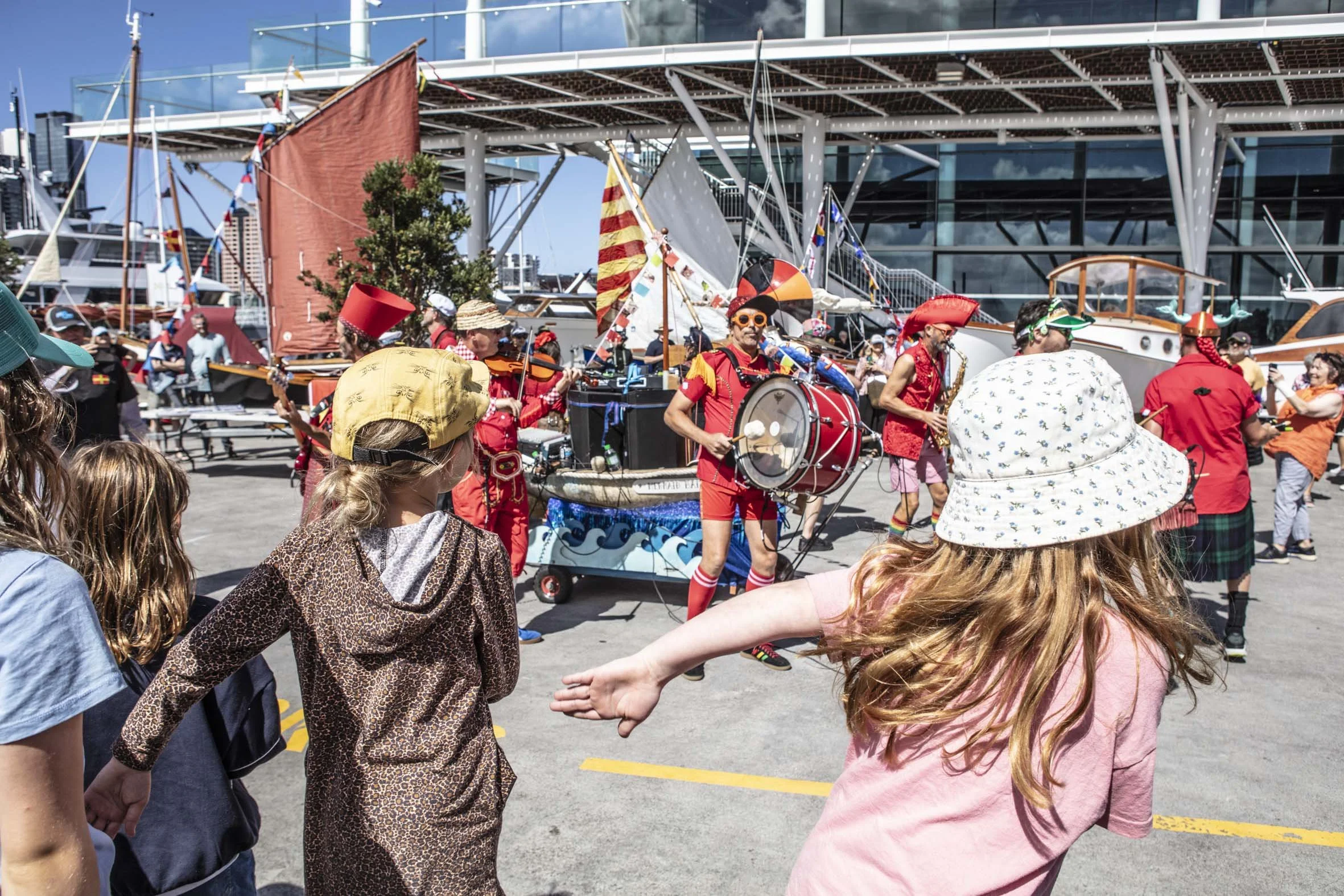
The musical and entertainment offerings at this festival were a great step forward (check out Mermaid Bait!) Though perhaps the most acute need for improvement comes in the marketing of the Festival, which I gather was somewhat taken out of the hands of the festival directors. Finding and motivating visitors is key. Spending time in cafes around town during the event and in conversation with locals on the street, the overwhelming response to news of the festival was “Sounds great! I’d have loved to have gone along, but I didn’t know it was on!” A culture of living beside the water is so strong in this city, that attendance shouldn’t be a problem. But people have to know!
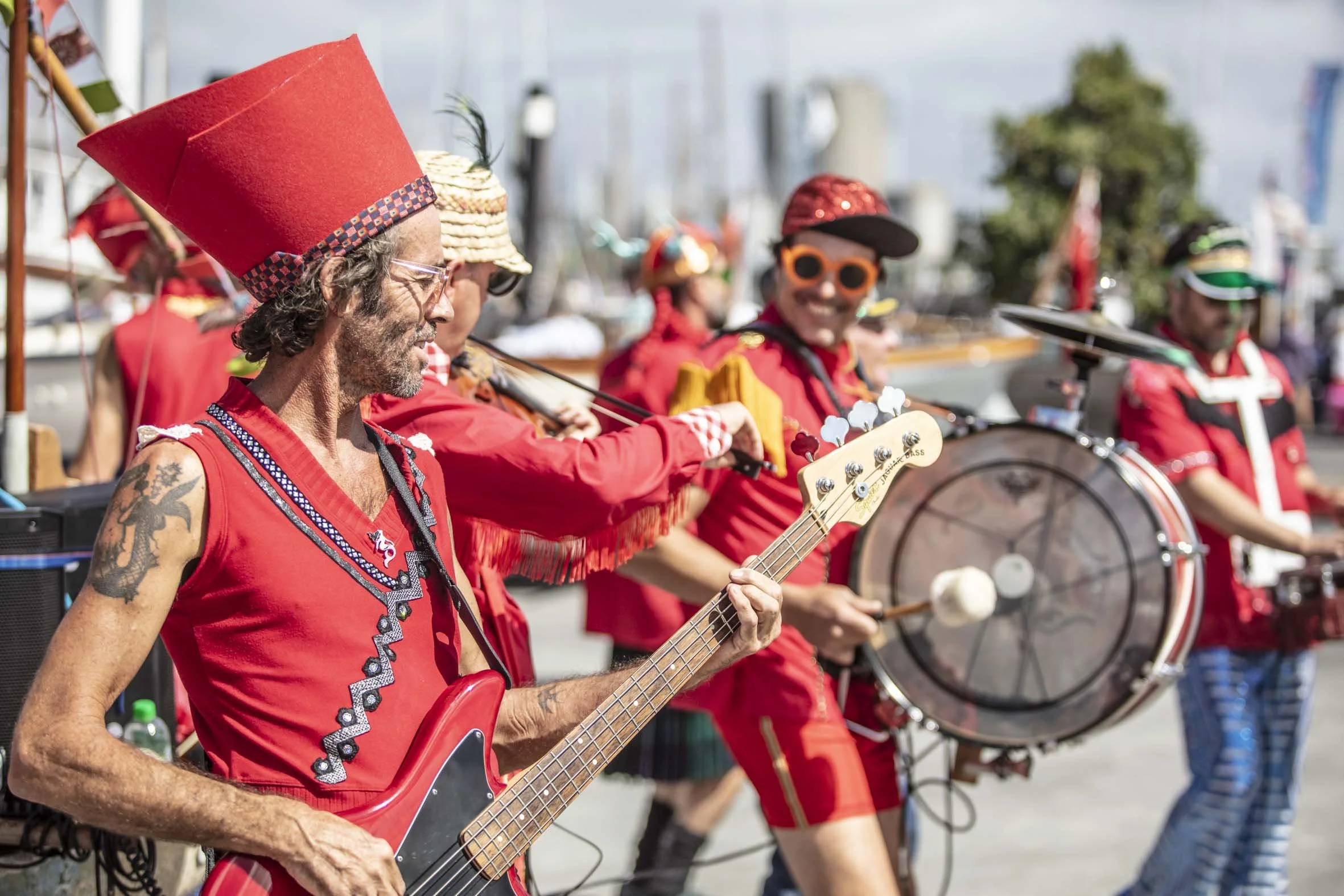
At the end of a festival such as AuckWBF 2026, there’s a temptation to think “What was all that about?” What did it achieve? Was the monumental effort really worth it? The answer, given with the objectivity of someone with no skin in the game, is a resounding “Yes!”
Remember back in 2000 when Team New Zealand defeated the Prada wearing Italians? Remember the sense of identity and pride in a small nation taking risks? It’s only when more people like Tony and Michelle and their talented team, put passion to work, that New Zealand can get back to being its very best self.
Well done!