
2027 Australian Wooden Boat Festival Program Launch
There’s never enough time at the AWBF to see everything and meet everyone, but with a good plan you can give it a crack!. And while your working on your schedule, at the risk of egocentricity, make sure you fit in these two items!
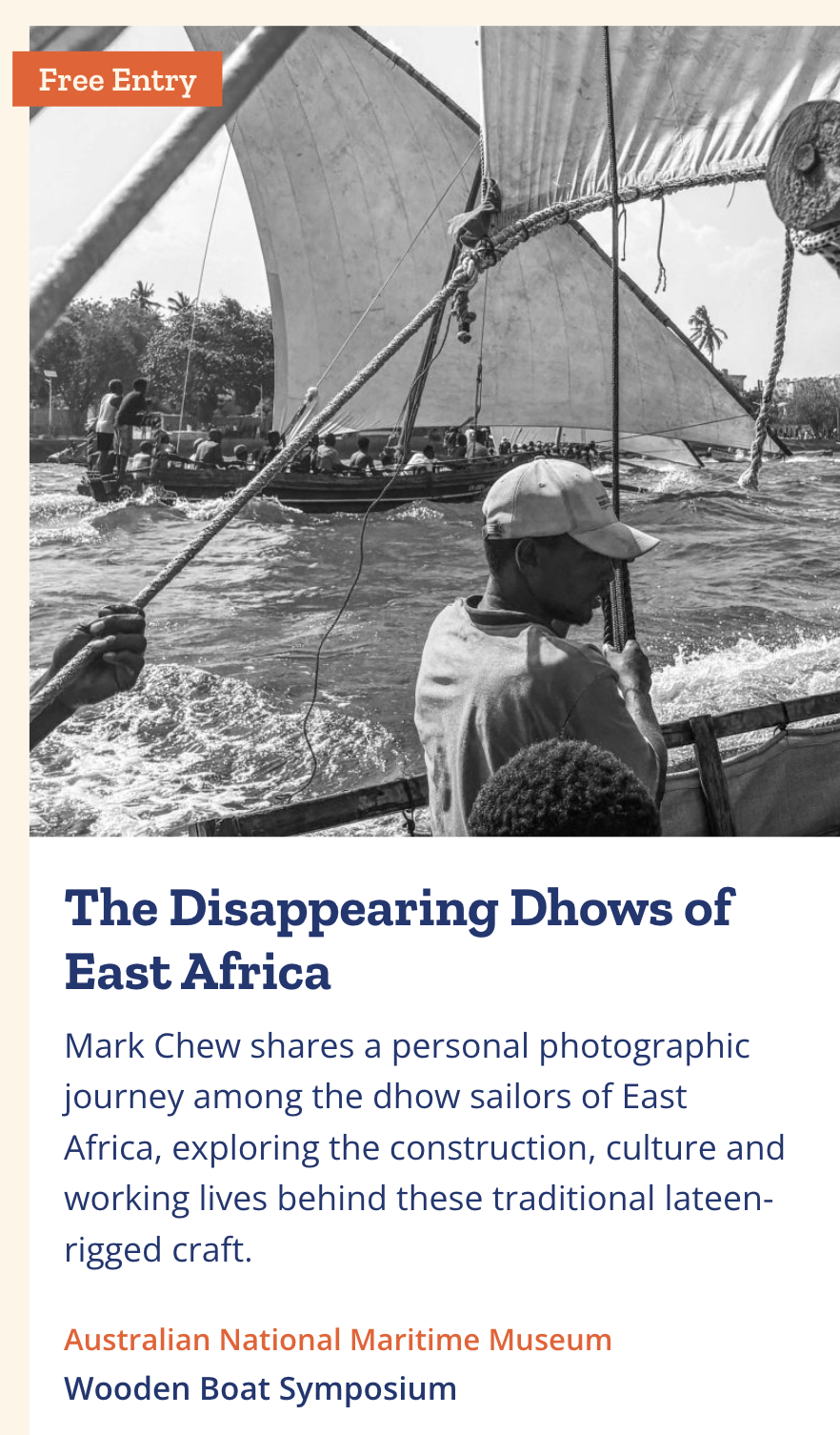
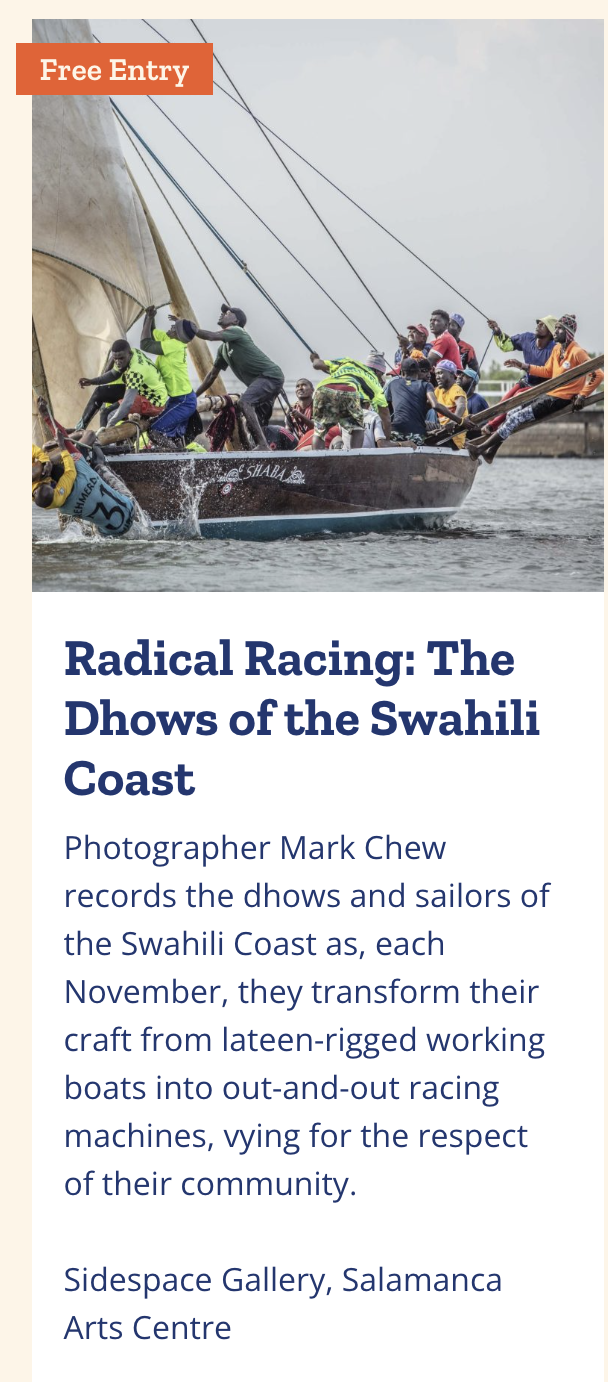
The Australian Wooden Boat Festival has officially launched its 2027 Festival Program, revealing a rich line-up of vessels, people, craftsmanship and maritime traditions set to transform Hobart's waterfront from 5–8 February 2027.
With Working Boats as its central theme, Tasmania's largest free event and the largest celebration of wooden boats and maritime culture in the Southern Hemisphere will shine a spotlight on the vessels that have carried people and cargo, supported livelihoods and connected communities for generations.
Hundreds of wooden vessels are expected to gather on Hobart's waterfront, from historic fishing boats and trading vessels to elegant yachts, tall ships and traditional sailing craft. The 2027 fleet will include visiting vessels from Bali, Sulawesi, Taiwan, Japan and New Zealand, bringing an international dimension to the Festival and celebrating the enduring traditions of wooden boatbuilding across the region.
AWBF General Manager and Festival Director Paul Stephanus said the Working Boats theme provides an opportunity to share the stories of the vessels and the people behind them.
"Our Working Boats theme celebrates the wooden boats that earn their keep, carry people and cargo, and connect communities. Every vessel has a story, and we're looking forward to bringing those stories together on Hobart's waterfront, whether they've sailed across oceans or just around the corner."
The four-day Festival will once again bring together boat owners, builders, craftspeople, maritime historians, sailors and enthusiasts from across Australia and beyond.
Returning Festival favourites include the Shipwrights Village, Noisy Boatyard, Wooden Boat Symposium, Little Sailors Village and Maritime Marketplace, alongside new exhibitions, demonstrations, performances and opportunities for visitors of all ages to experience maritime culture firsthand.
From traditional boatbuilding techniques and working demonstrations to maritime talks, heritage exhibitions, live entertainment, film, theatre and hands-on workshops, the Festival Program showcases the breadth of experiences planned for February.
The 2027 Festival poster celebrates one of Australia's most significant surviving working vessels, May Queen, depicted in an original painting by New Zealand marine artist A.D. Blake.
Australia's oldest trading vessel still afloat, May Queen spent more than a century carrying timber, apples and quarried stone along Tasmania's rivers and coastline. Today, she is a familiar sight in Hobart's Constitution Dock, maintained by a dedicated team of volunteers.
Gifted to the Festival by the artist, the painting depicts May Queen passing Tasman Island under sail, heavily laden and bound for Hobart, capturing the strength, character and enduring working heritage at the heart of the 2027 Festival theme.
The 2027 Australian Wooden Boat Festival Program and website are now live at www.awbf2027.org.au, giving visitors their first opportunity to explore the extensive range of activities, exhibitions, demonstrations and experiences planned for February.
The new website offers several ways to discover the Festival, including a digital program, dedicated program areas and searchable activity listings that can be filtered by date, time and interest.
Further program announcements will be made in the lead-up to the Festival, with the full schedule of activities and Festival Boat Directory available online in late January 2027.
The program was officially launched on Thursday 29 October at the Waterside Pavilion on Hobart's waterfront, bringing together a large gathering of the AWBF community, supporters, sponsors, partners and representatives from the maritime and tourism industries.
The launch featured addresses from City of Hobart Lord Mayor Anna Reynolds, representing the Festival's Major Partner, TasPorts Towage Tug Master Peter Manthorpe, representing Principal Partner TasPorts, and AWBF General Manager and Festival Director Paul Stephanus.
The occasion also celebrated an expanded partnership between the City of Hobart and AWBF, with a new six-year, multi-festival agreement securing the City's support for the 2027, 2029 and 2031 Festivals.
Historic wooden vessels on display outside the venue provided a fitting backdrop to the occasion, connecting the 2027 Working Boats theme with the people and vessels at the heart of the Festival.
The Australian Wooden Boat Festival returns to Hobart's waterfront from 5–8 February 2027. Entry to the Festival is free.
Explore the 2027 Festival Program: www.awbf2027.org.au
A Stolen Sailboat, a Kidnapping and a Stabbing, The Mid Pacific Story
Thanks to Malcolm Lambe for alerting us to this ripping yarn!
A crew lost at sea. It sounds like the plot of a Hollywood film, but it’s the very real story of Mid Pacific, a Gardner 6LX-powered sailboat built in Brisbane in the early 1960s. Designed for cruising Moreton Bay and game fishing along the Queensland coast, she would eventually become the subject of a theft that captured the imagination of an entire nation. Brett, John and Glenda Harper tell the story of how their family’s boat was built, stolen, lost, and finally restored to her former glory. You might want to pour yourself a rum for this one.
Cup Regatta #20 is done & dusted
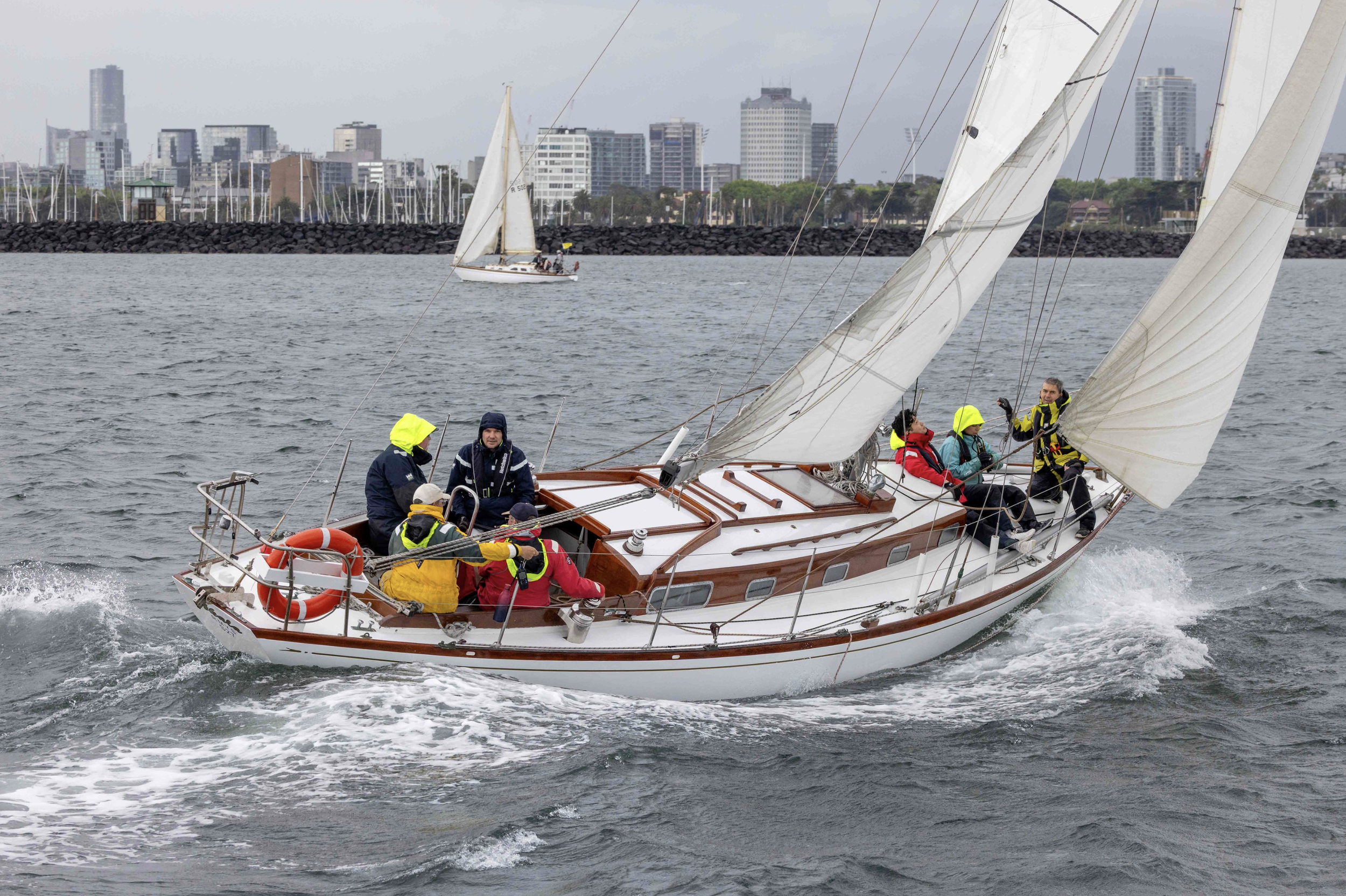
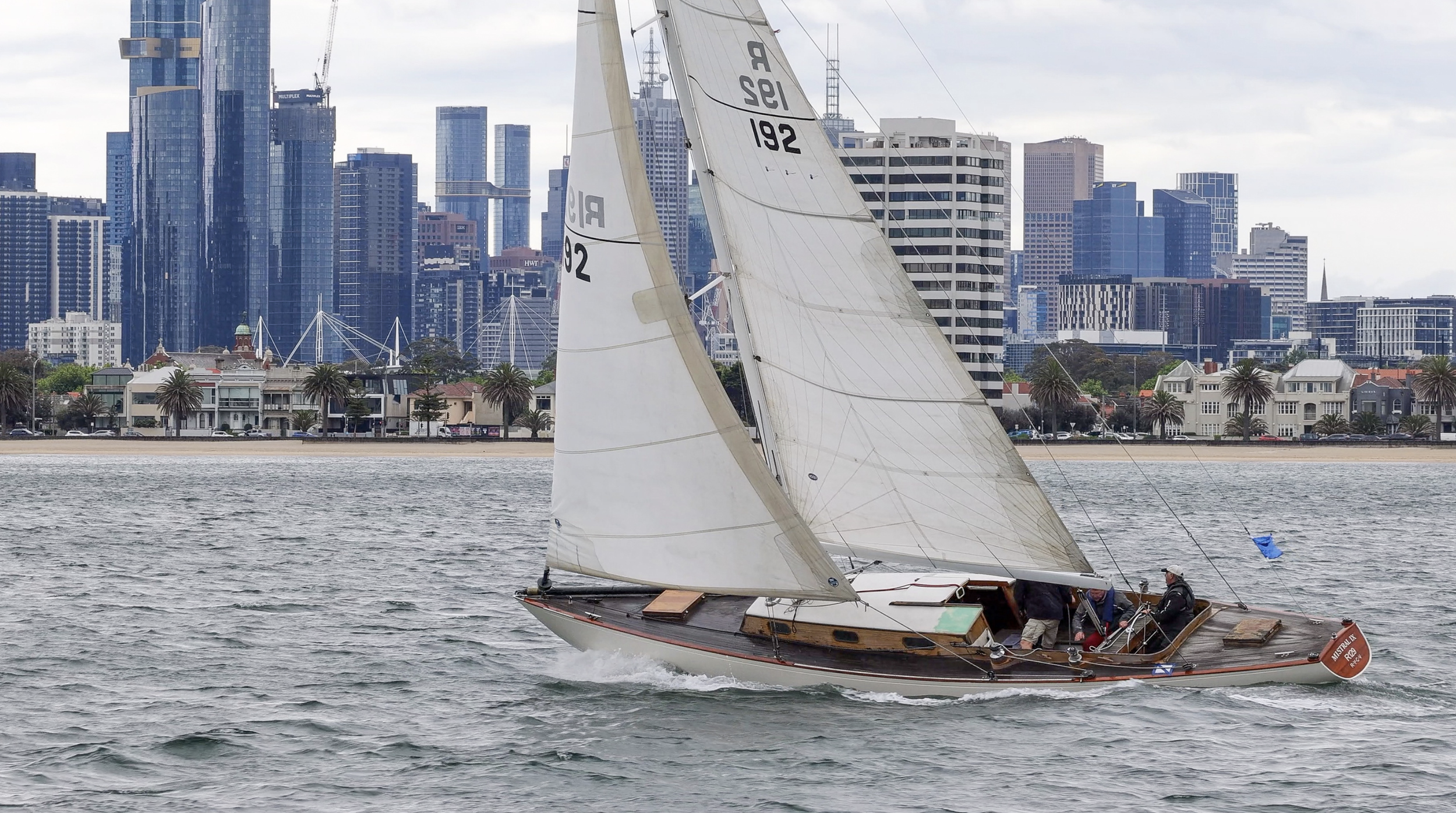
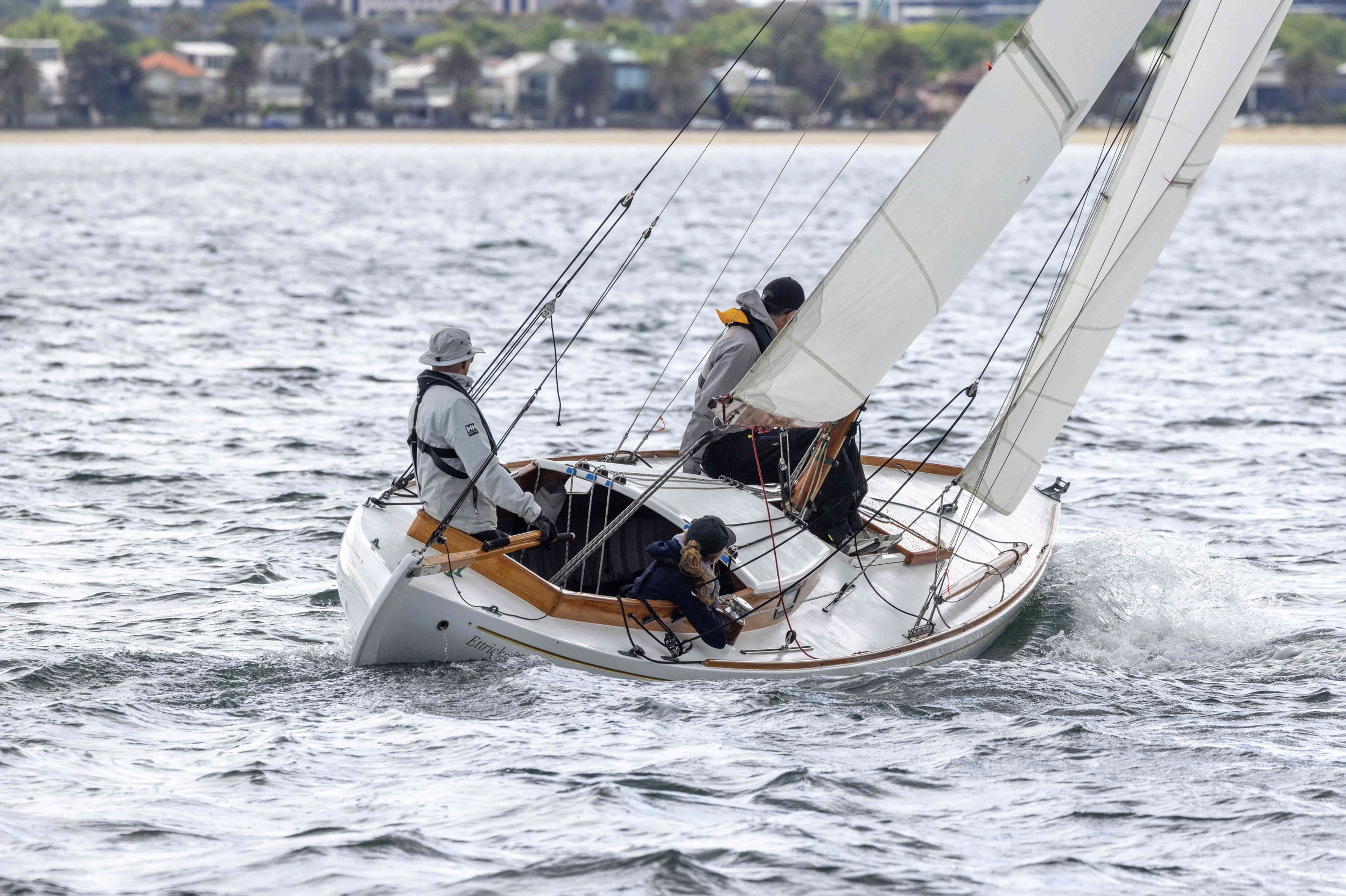
We are still hoping for an account of Melbourne’s premiere weekend of Classic Sailing… Any scribes out there??
In the meantime HERE are the full set of results… and Photo Galleries of each days sailing by Kiwi, Roger Mills are below
Congratulations to (left to right, click to enlarge)
AKALA, David McNeice
MISTRAL IX, Craig Black
ETTRICK, Gordon Tait
For winning there respective divisions!
How this 1898 catboat clone was reverse-engineered from a found relic
From Yachting World Magazine
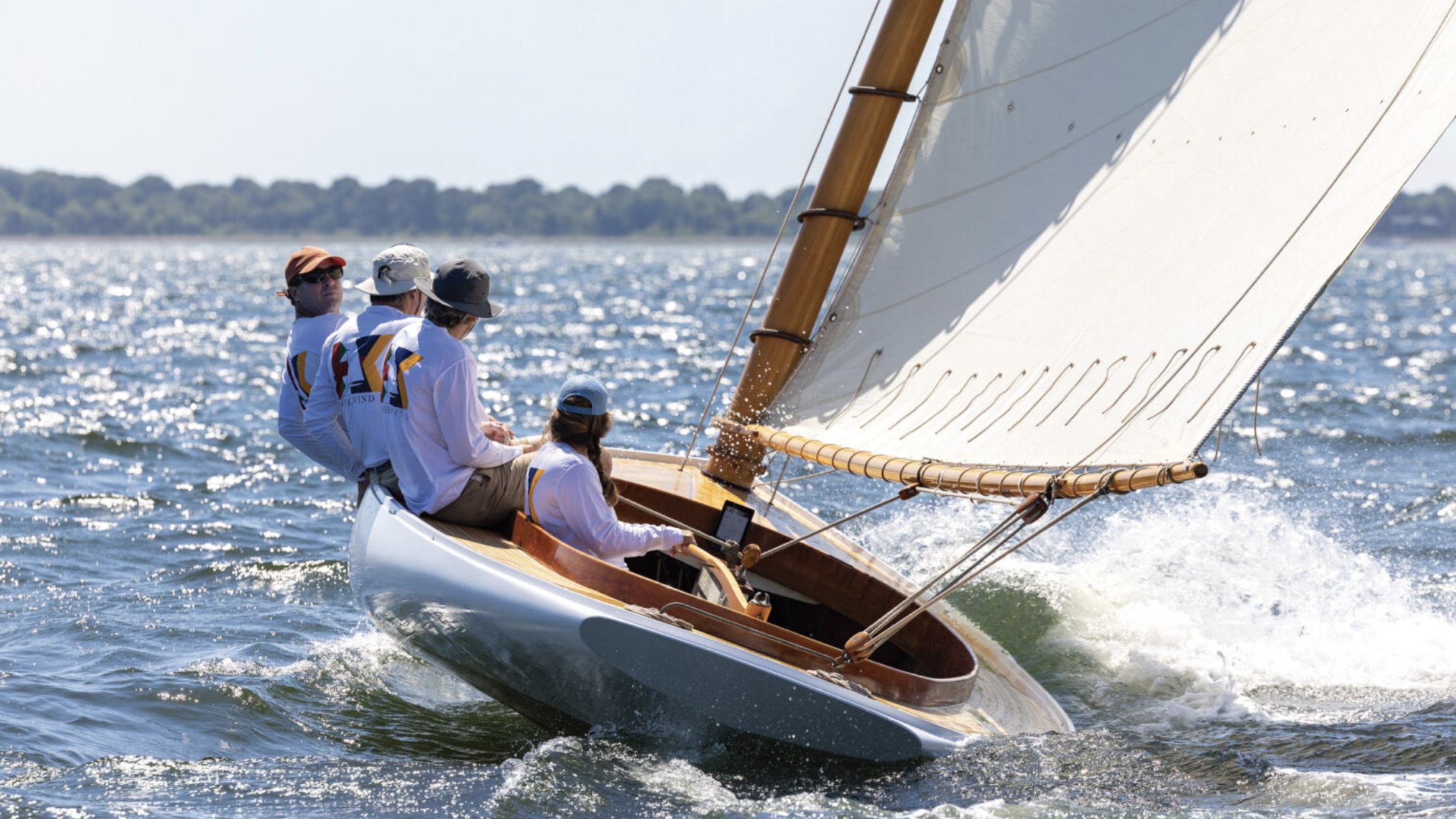
Whirlwind II is a true labour of love: a fleet-footed catboat design, just like one prized by shell fishermen 150 years ago and recreated for modern-day racing
Whirlwind II is the result of an intensive reverse engineering project, sprinkled with a healthy dose of creative license. She’s a near replica of a design by legendary US boatbuilder Gil Smith, circa 1898, and was largely created from a scan of a half model found buried in a closet at the Suffolk County Historical Society on Long Island, New York.
When catboats were de rigueur in the late 19th and early 20th centuries, Gilbert M Smith (1830-1940) was one of the most prolific designers of the time. His early years were spent mostly designing catboats for shell fishers, who favoured the shoal draught design for their speed in getting their valuable catch of oysters and clams back ashore as quickly as possible before they spoiled.
The unstayed catboat rig, which sits well forward, also allowed plenty of room for fishing gear in the cockpit. Later, as the catboat became more widely popular, Smith designed more pleasure and race boats. But they all shared one desirable characteristic: speed.
The high‑tech shipbuilding methods that helped Vikings dominate the seas
By Lisa Bennett in The Conversation
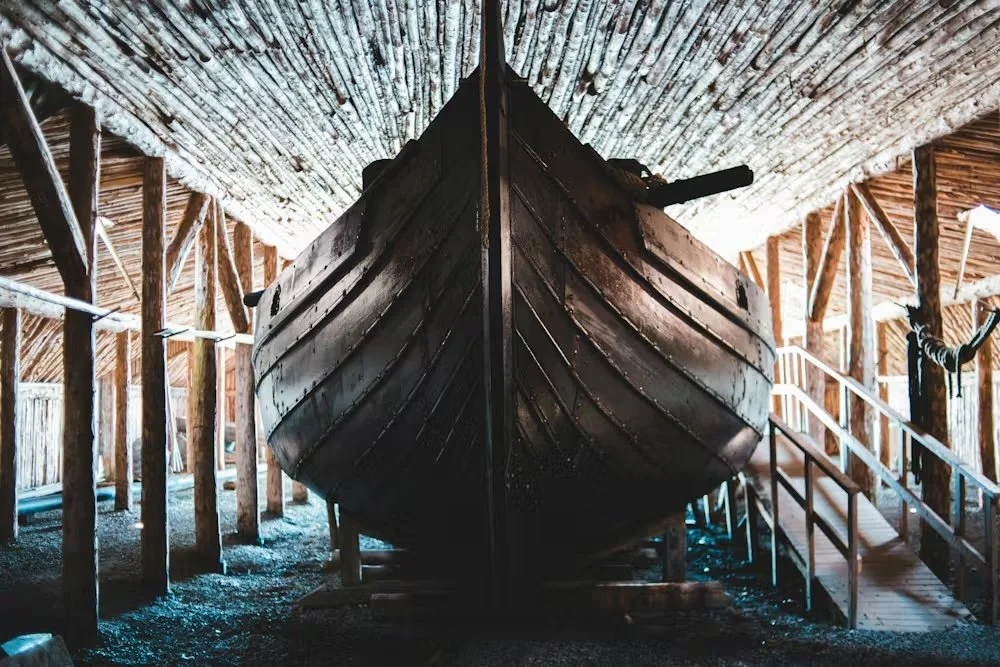
The long, curved sides of the hull on a Viking ship were assembled out of slightly overlapping planks. Pexels/Erik Mclean
Images of the sleek keels, elegant planks, and dragon-headed prows of Viking longships have been reproduced countless times on postcards, book covers, souvenirs and in television shows and movies.
These vessels are, quite literally, the poster-ships for the Viking Age, which was between around 750 and 1100 CE.
So what made these ships so special? And why were these advanced shipbuilding techniques so crucial to the Vikings’ success?
What drove this shipbuilding boom?
In Old Norse, there are two words for Viking: víkingr refers to a person, while víking is an activity. Neither word is inherently negative nor associated with violence.
A víkingr is someone (who may or may not identify as a pirate) who undertakes víking expeditions (sometimes to pillage, sometimes not), and whose life and livelihood have strong connections to the sea. By the mid-eighth century, these people were keen to expand their horizons and branch out from local economies. This coincided with a number of large and lucrative mercantile towns springing up around north-west Europe in this period.
Among other factors, Vikings travelled further westward and eastward as part of an ongoing and complex power grab for portable wealth, territory, and control of trade routes. From the 750s on, the Vikings’ advanced shipbuilding technology helped give them the edge.
Read on HERE
How the Charm of Boatyards is Their Slow Pace of Change – The Future of Boatyards VS a Cultural Lag
We love this piece by Steffan Meyric Hughes in this month’s Classic Boat Magazine. It’s right in the SWS sweet spot!
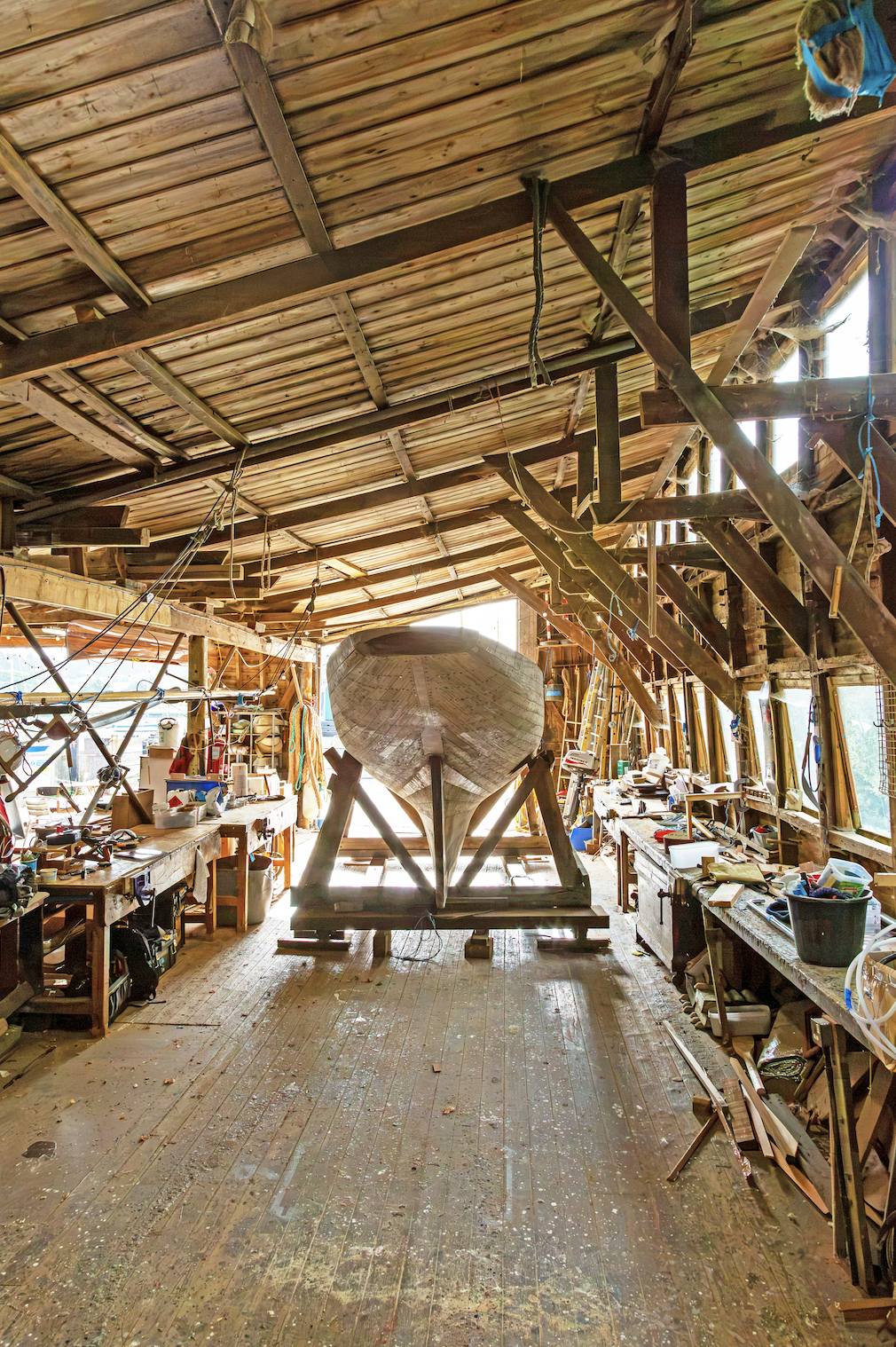
Credit: Den Phillips
There’s an old idea, prescient now, that people are happiest when change comes, but comes slowly enough to absorb it; neither stasis nor chaos. Most boatyards have stayed in the eddy of slow-moving progress, evolving grudgingly, dragged forward by the future surrounding them. The new flats sprouted up a couple of decades ago and continue to eat into banksides; luxury waterside living, the developers called it. In reality, a row of identical, introverted buildings along the creek’s brown water, disconnected from the marine world that featured in the brochure.
The men in the yard have been drinking from the same tea urn for at least half a century, the same mugs for half that time. The lathe, the drill press, the Wadkin band saw, perhaps a milling machine, hark back to the last glory days of ‘Made in England’, and they didn’t cost much, once the floor was reinforced and the forklift placed them down in a cloud of dust, never to move again. Cross-head screws appeared at some point; some yards still use slot heads almost exclusively, for boats and owners who still prefer the old ways. Pity the younger boatbuilder’s palms after removing hundreds over the course of a day with an old Stanley screwdriver with a translucent yellow and orange handle. At least he’ll know if he’s really cut out for this job.
Read on HERE
The Tryall: Australia’s earliest recorded shipwreck.
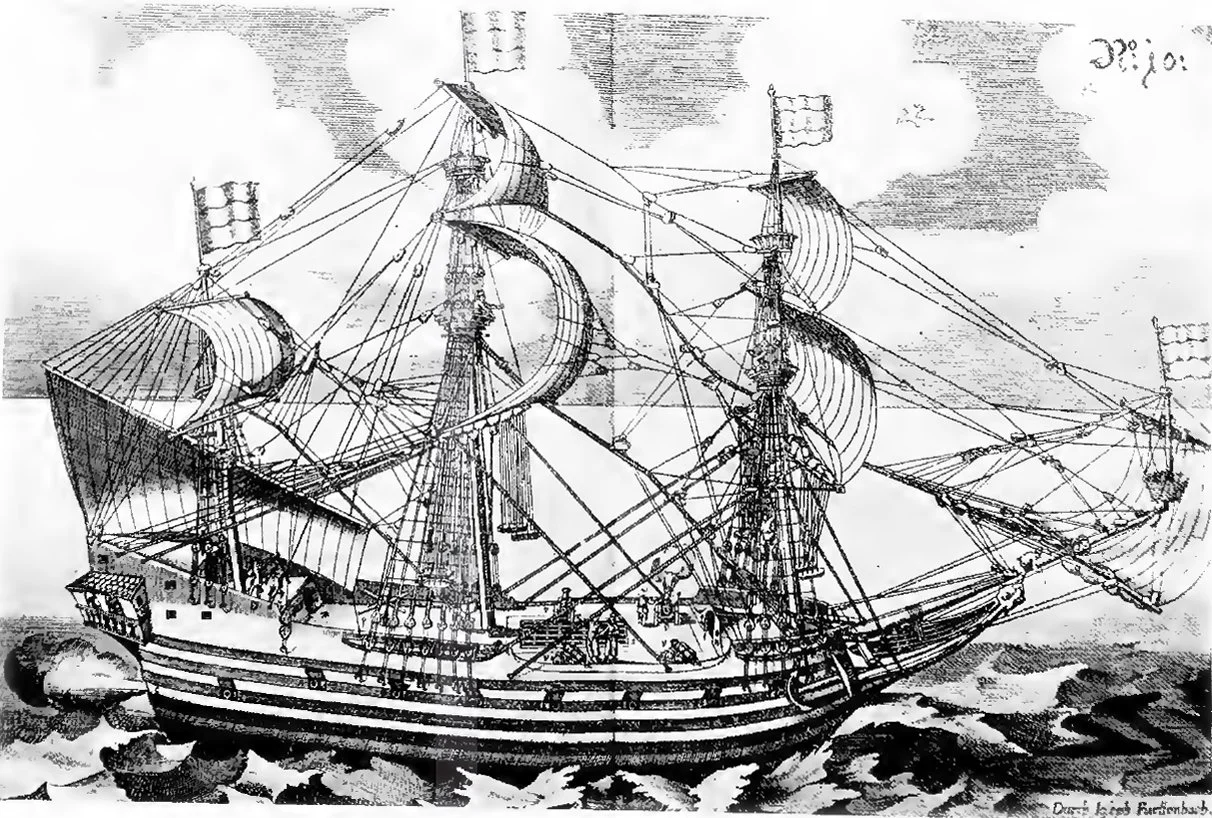
Example of a fully rigged ship of the early 17th Century, similar to the Tryall. Source: Sailing Ships by Chatterton, 1909.
From Tales from the Quarterdeck
Some people might be surprised to learn that the oldest recorded shipwreck off the Australian coast dates back to 1622. That predates Cook’s voyage up the east coast by 148 years. It occurred 20 years before Abel Tasman partially circumnavigated the island of Tasmania. Or just six years after the Dutch navigator Dirk Hartog nailed a pewter plate to a post near Shark Bay, recording his discovery of a big lump of land that had until then been unknown to anyone but its inhabitants.
The Tryall* was a 500-ton East India Company merchant ship launched in 1621. Her maiden voyage was meant to take her from England to the East Indies to deliver cargo before returning home with her hold filled with spices. The East India Company chose a master mariner named John Brooke to command the vessel on this most important voyage.
The Tryall departed from Plymouth on 4 September 1621 with a crew of about 140 men. Captain Brooke sailed down the west coast of Africa and pulled into Table Bay for water and fresh supplies. While there, he learned that a new route across the Indian Ocean had been established, cutting the sailing time to Batavia by several months. The traditional route to the East Indies had ships follow the coast around Africa’s southern tip, then pass through the Mozambique Channel. Once north of Madagascar, they would venture out into the Indian Ocean. The new “Brouwer Route,” as it was called, took full advantage of the roaring forties, which swirled around the bottom of the world unimpeded by any significant land mass. Captain Brooke received orders to take the Tryall below 35 degrees South and use the Brouwer Route. Brooke tried to hire a sailing master for this leg of the voyage, for neither he nor anyone else on the ship had sailed the southern route before. He was unable to recruit anyone, so on 19 March 1622, Captain Brooke sailed the Tryall out of Table Bay and into the unknown. Six weeks later, they were off the coast of Western Australia.
Read on HERE