
Flotsam & Jetsam 25.09.26 (Copy)
The Twofold Bay's final voyage
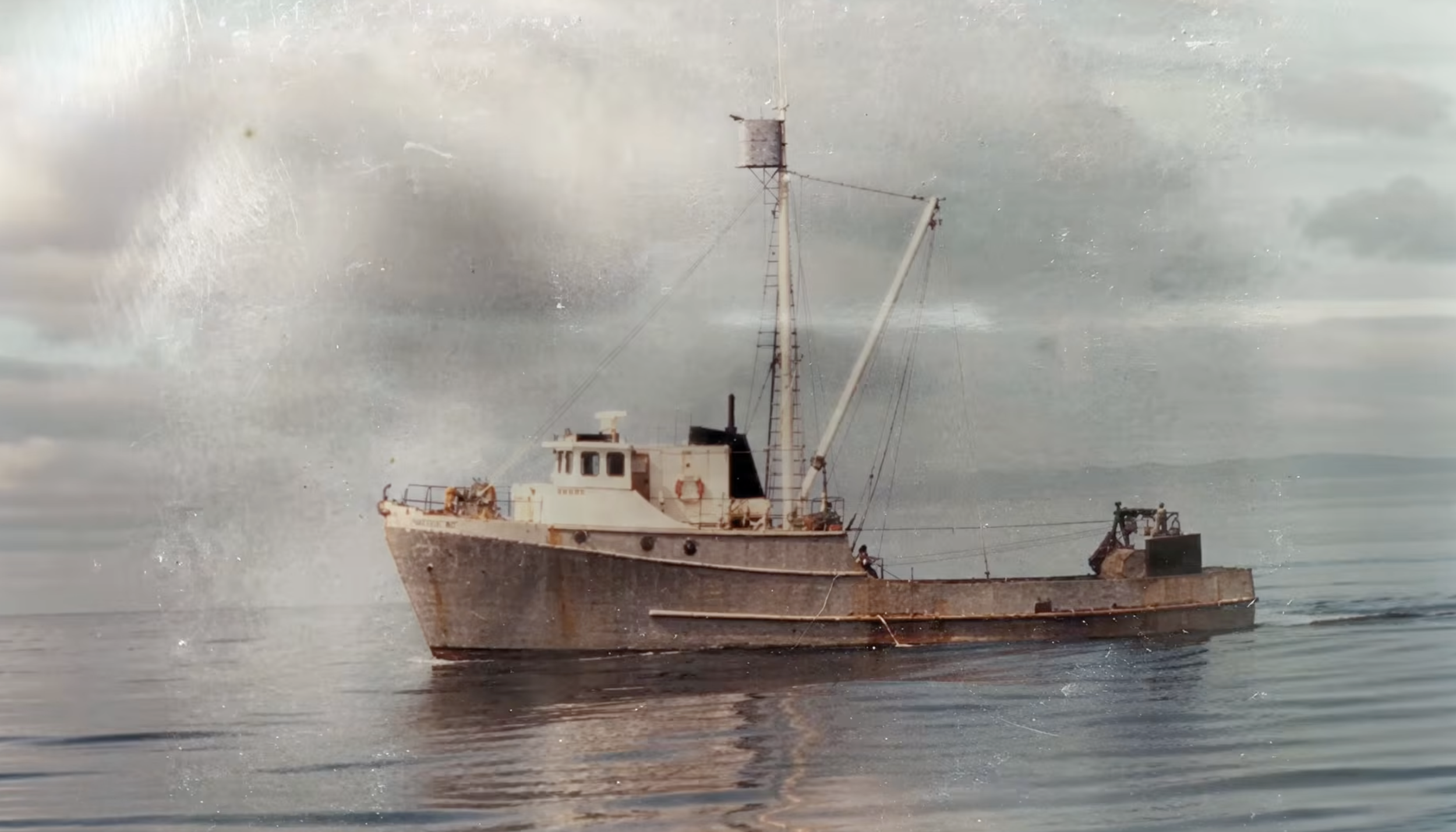
There is something charmingly naive and hypnotic about this short 16 minute doco. Sit back and let it wash over you!
After three years of hard work and preparation, this historic vessel was ready for her final voyage off the coast of Napier, New Zealand. But this wasn't just any sinking. Twofold Bay was about to become an artificial reef and a brand-new dive site, creating a legacy beneath the waves for generations to come. Join us as we follow the Twofold Bay on her final journey, from her official send-off and blessing to the challenging tow out through Napier's narrow shipping channel, before witnessing the incredible moment she slips beneath the surface for the last time. Hear from some of the people who helped make this project happen, and discover how a vessel that supported generations of fishermen is about to begin a whole new life beneath the ocean. This is the story of the Twofold Bay's final voyage — and her new life beneath the waves.
Opportunity or Slavery?
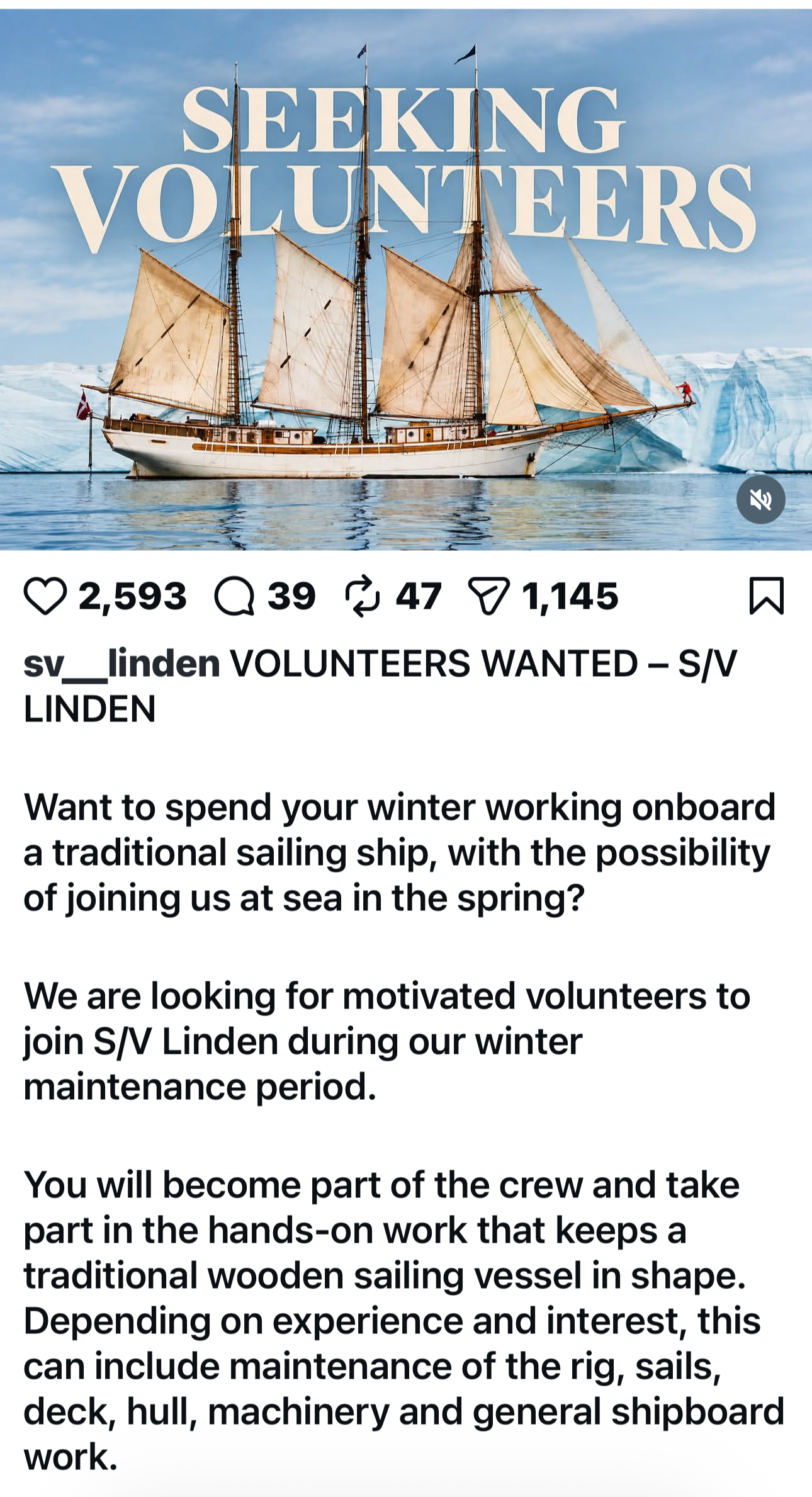
Interested to know what the readers think of this post from Sailing Vessel Linden.
Comments range from
“Hey Guys…This is borderline indentured servitude..please reconsider”
to
”Sweet dreams are made of this”
My feeling is that no one is making anyone sign up… and there might be good skills to be learned… but…..
Gaffer Revival at Hamble Classics 2026
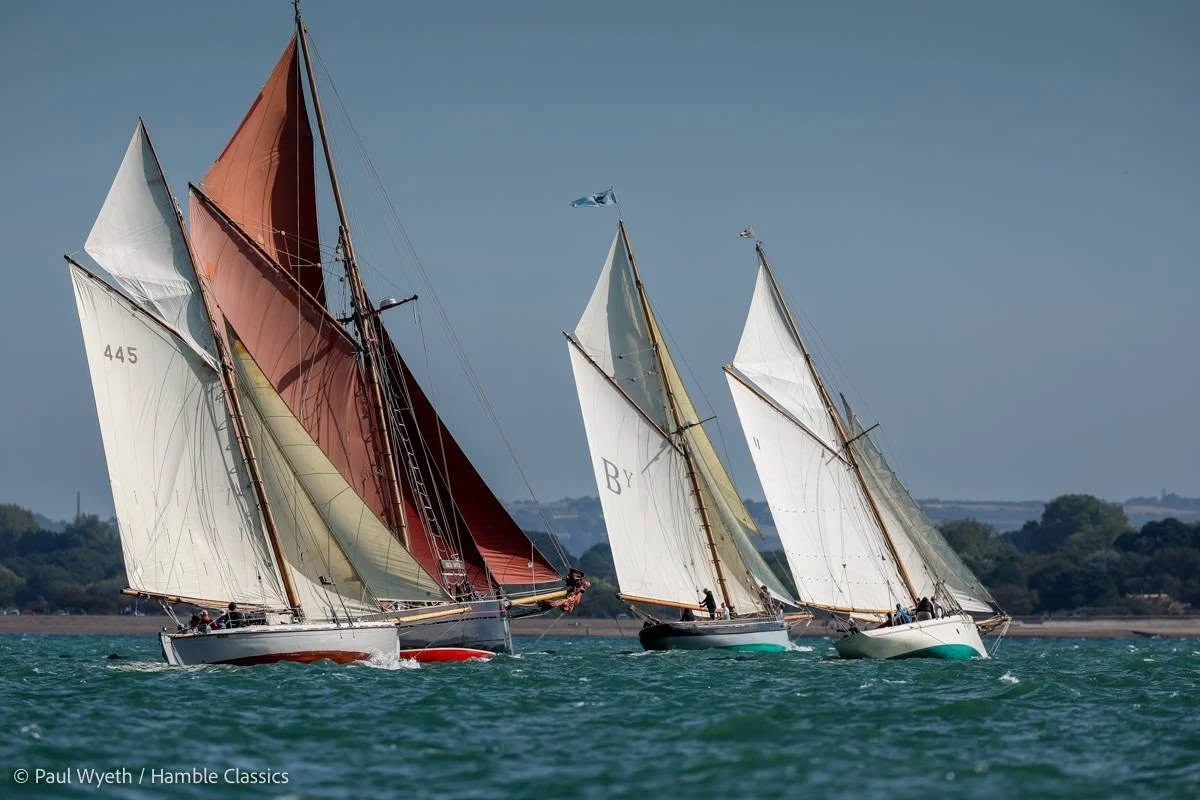
Image Paul Wyeth
The Hamble Classics Regatta is hosted jointly by the Hamble River Sailing Club for race management and the Royal Air Force Yacht Club as the shore base and social venue. The supporting partners are Spinlock, Classic Marine, OneSails, the Elephant Boatyard, Walcon Marine, Z-Spars UK, Hamble Yacht Services and Salcombe Gin.
While sunshine and a light to moderate wind forecast on both days might be everything that a Solent race officer dreams about, there were some surprises, and for the PRO Peter Bateson having got the first start sequence away on time in a solid but shifting 8-10 knot westerly breeze a giant hole engulfed the leading boats near the finish line at the Hamble Winter Series race mark - but they were soon rewarded with a stunning second race that had everyone smiling at the Elephant Boatyard sponsored rum party and Spinlock day prize giving at the RAFYC.
Sunday morning dawned with a brisker than expected south-easterly and a splashy ride to the starting area for the smaller boats in the ebbing tide, but it moderated to around 8-10 knots by start time. First away in the sequence on both days was the impressive class of large gaffers, comprising David Aisher’s 1888 45ft Gaff Cutter Thalia, Nick and Liz Harvey’s 1892 Falmouth Quay Punt Sophie, the Dauntsey School’s 59ft 1913 Jolie Brise skippered by Toby Marris, Ossie Stewart’s 1892 Linton Hope Thames One Rater Dorothy, and two newcomers, Josh Danziger’s 52ft 1911 Bristol Channel Pilot Cutter Cornubia, and Velsia, the 1890 Colin Archer Gaff Cutter that owner George Cox sailed up from Falmouth. Adding a touch of modernity was Richard and Louise Jacobs’ Ed Burnett designed 'Ivy Green’ built by the Elephant Boatyard in 2003, but this year yielding to Dorothy, Velsia, Jolie Brise and Sophie in the overall points .
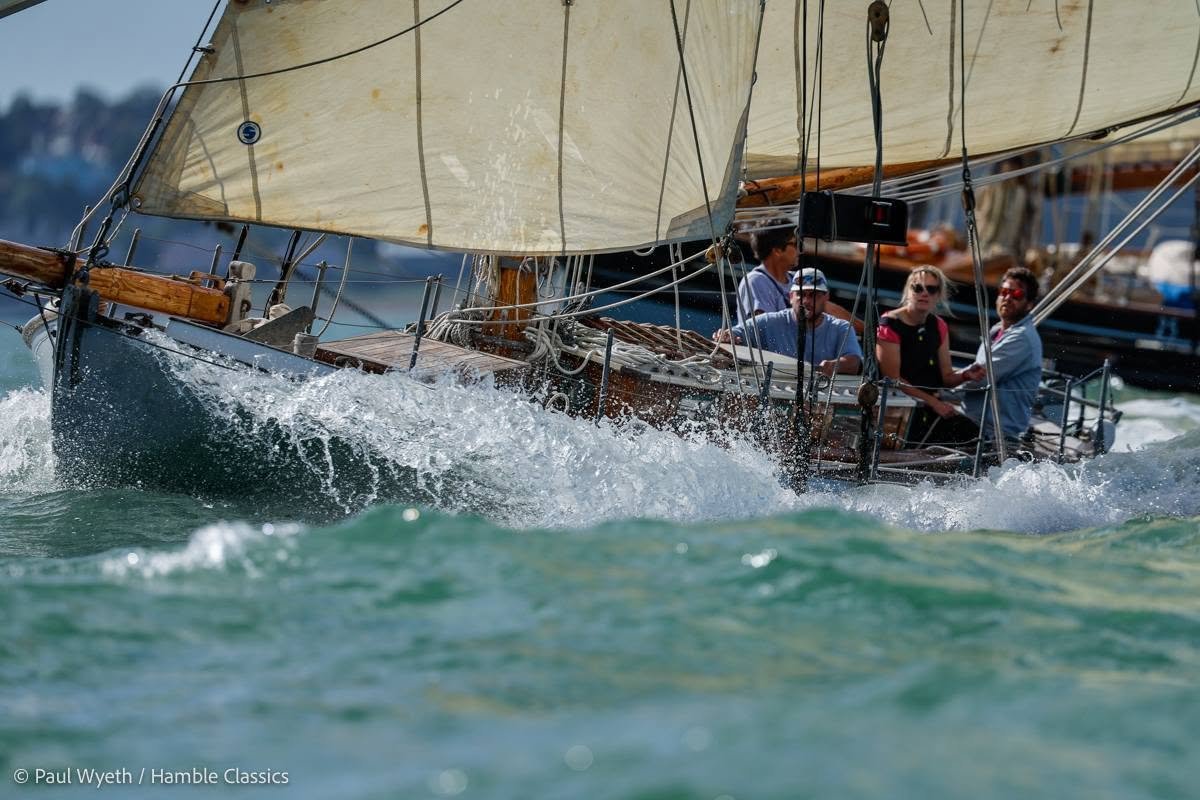
Image Paul Wyeth
In the IRC fleet of seven traditionally wooden-built yachts, four differently rated West Solent One-Designs, Harlequin owned by David Heritage, Suvretta by Tim Yetman, Enchanted by Claire Locke, and Erin owned by Angus Bates, were challenging the 1926 Johan Anker 6-Metre Sioma II skippered by owner Fenton Burgin, and the two magnificent Laurent Giles designed yachts, the 1952 Bermudian Yawl Lutine of Helford owned by James and Rachel Youngman and 1955 ocean racer Cetewayo steered by owner David Murrin. Harlequin would repeat her class win of last year but only one point ahead of Sioma II with Claire Locke’s pale blue Enchanted in third place overall.
The Forgotten Voyage: Ansel Adams on the ICW
By Peter Swanson from his Substack page “Loose Cannon”
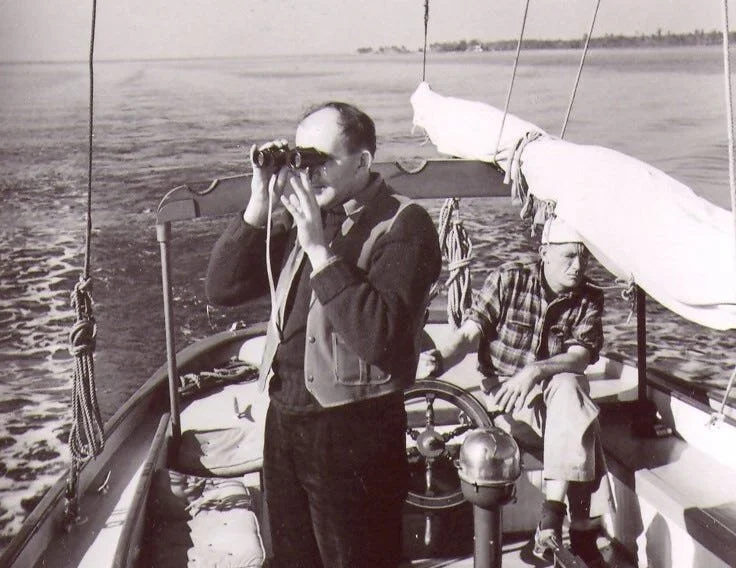
ANSEL ADAMS SCANS THE HORIZON on a 1940 trip down the Intracoastal Waterway. The great photographer took about 50 pictures that we cannot see, though we may see some photos of him taking the photos we cannot see.
Traumatic events mark the beginning and end of every American epoch. Their names begin with words like pre-war, post-war, pre-911, post-911 and, most recently, pre- and post-Covid.
The Atlantic Intracoastal Waterway is a national treasure. Once the purview of barges and other commercial traffic, the ICW extends 1,100 miles from Virginia to Key West, Florida, man-made canals linking a collection of inlets, rivers, bays and sounds.
Quite accidentally, the great American landscape photographer Ansel Adams documented the ICW one year before the Japanese attack at Pearl Harbor launched American involvement in World War II, a national trauma that changed everything. Adams photos depict an ICW at a moment before the deluge. Thereafter, as the generation that won the war ventured out in small craft, the character of the ICW transitioned from commercial to recreational.
By autumn 1940 Adams was well established as landscape photographer, though another year would pass before he would shoot his most famous photo of all, Moonrise, Hernandez, New Mexico. As with many of us, Adams was drawn to his first boating adventure by the contagious enthusiasm of a good friend.
Eight New Listings on the National Register of Historic Vessels (UK) “Vessels for Sale”
This beauty caught our eye!
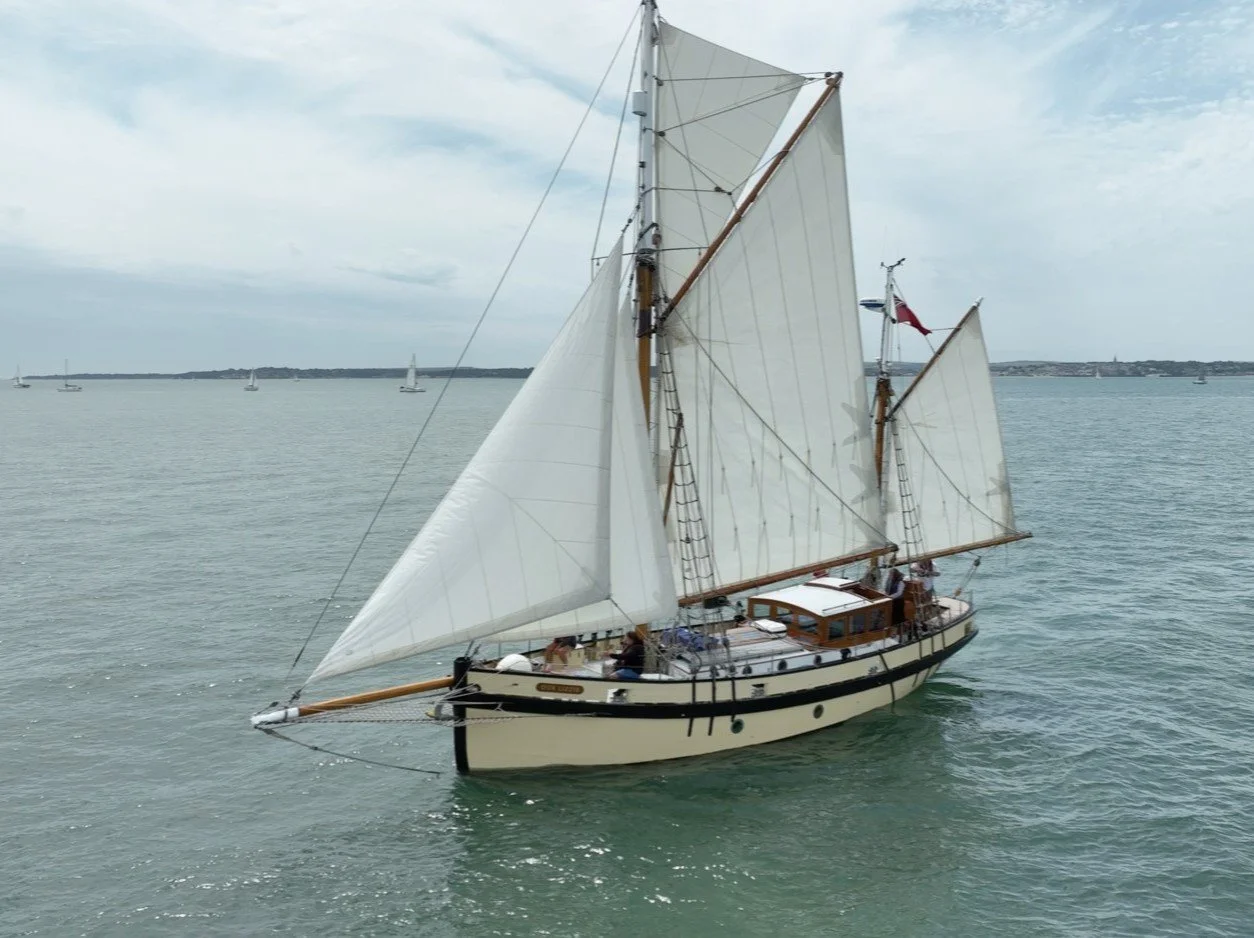
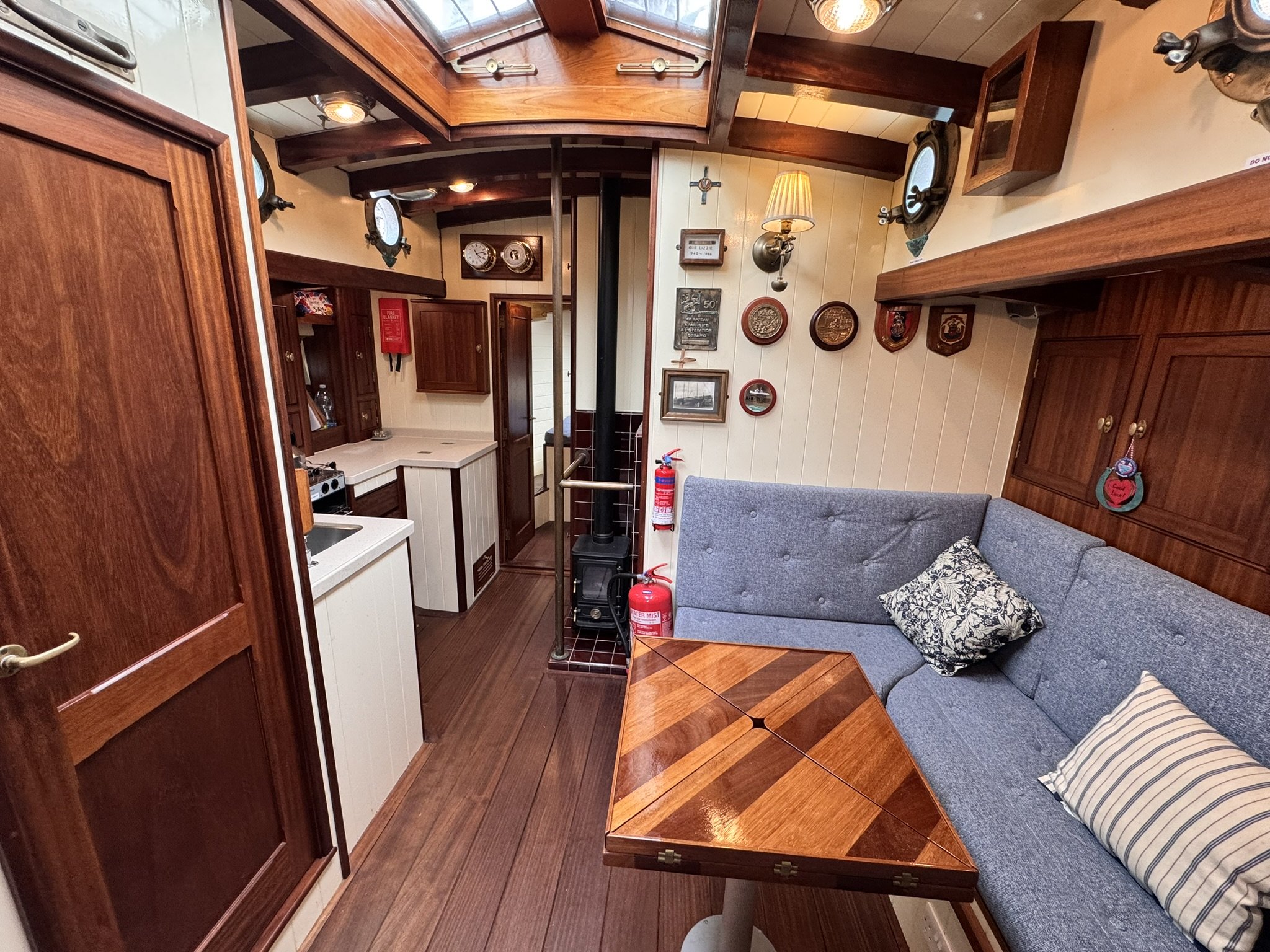
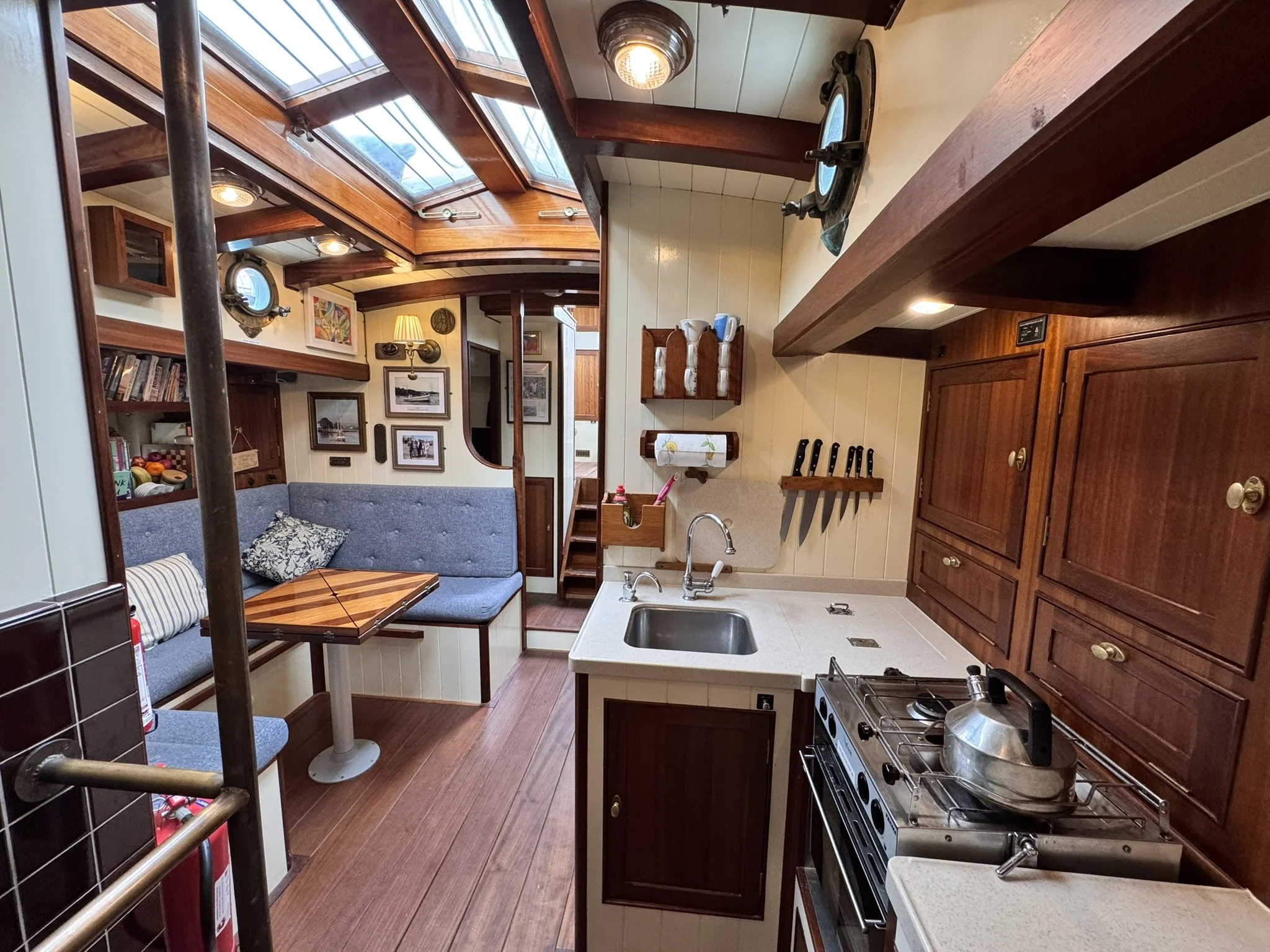
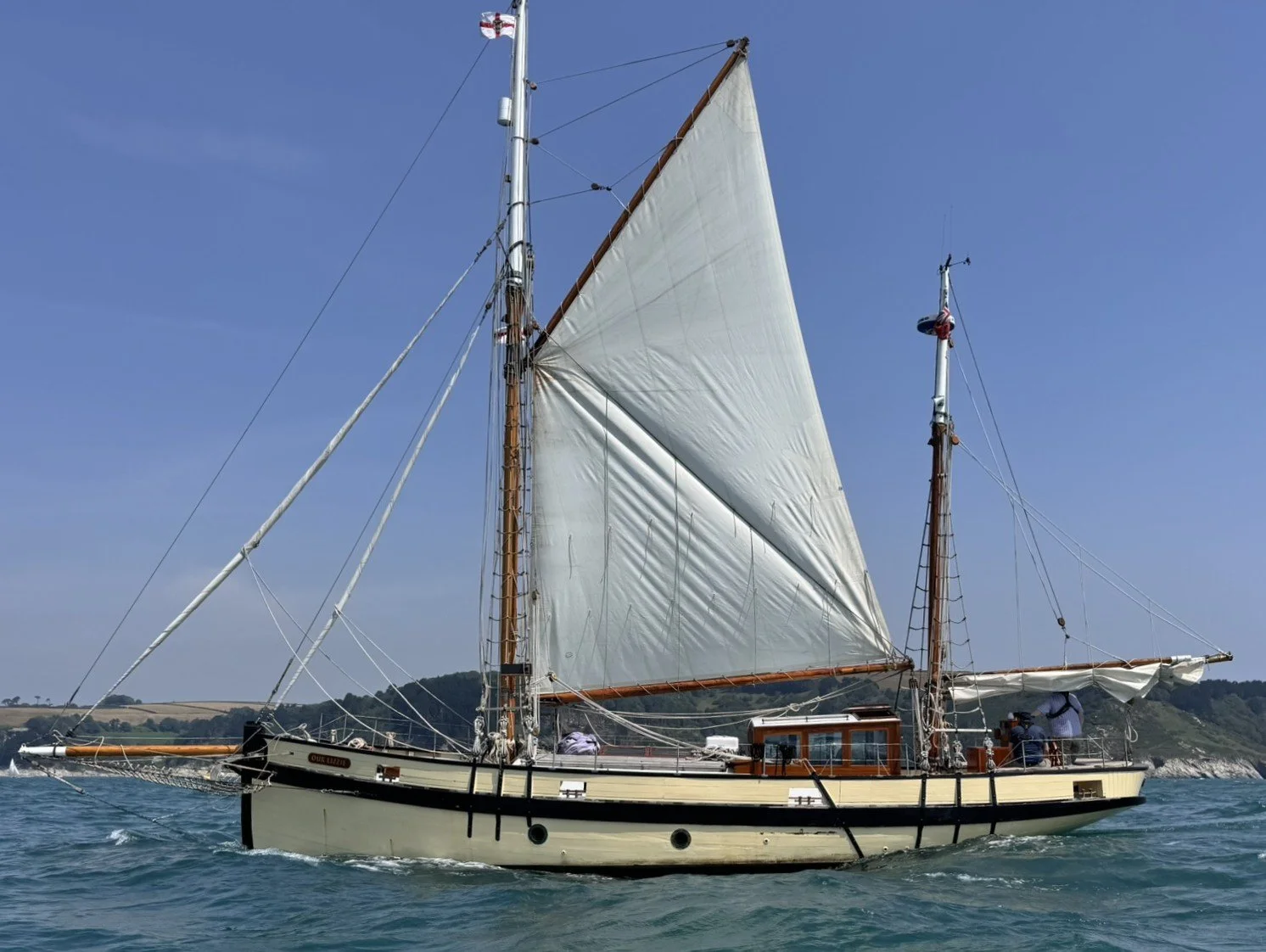
Designer: Traditional
Builder: W.J. Oliver & Sons
Year: 1920
Location: Hampshire
Length on deck: 46'
Beam: 14'2"
Draft: 6'1"
Tonnage: 34 tonnes displacement
Built by W.J. Oliver & Sons of Porthleven, Cornwall in 1920 as a sailing fishing drifter. She worked out of St Ives until 1934.
Originally fitted with a 2 mast lug rig, she has typical West Country fishing vessel lines except for her rather elegant counter stern which is very unusual and gives the hull a very attractive profile. There are only 3 known examples of these West Country boats with a counter stern, a design feature that helped the vessels stern lift to the waves when drifting with nets out.
Built at the time when engines were being fitted to the fishing vessels from new she had a 26hp Kelvin plus a 24hp Gardner auxiliary. This introduction of powered propulsion meant a change in the hull shape from fine underwater lines which maximised sailing performance, a necessity when fishing without an engine, to more full hull shapes giving more volume and therefore able to carry greater loads of fish. Later boats such as this one do not have the notorious sailing performance and speed of some of the earlier luggers, but they do make better private yachts as they offer a lot more space below decks and a very sea kindly motion.
This boat is a prime example of the design change, coupled with her elegant doghouse she is a real tardis of a vessel with excellent volume and living space below decks.
She was sold out of fishing in 1934 and converted to a yacht. Subsequently in 1939 she was engaged by the admiralty along with her then owner Mr Francis Bevan on a spying mission along the German Baltic coast looking for radar installations. She was then requisitioned by the Admiralty during the War and took part in Operation Dynamo thus becoming a certified Dunkirk Little Ship. After Dunkirk she had her masts removed and a gun fitted to the foredeck to be used on patrols around the south east coast. Following the Battle of Britain she remained in military service as a supply vessel based in Rothesey until the end of the war. A change of name to Freebooter in the late 1950’s followed a win in the National by a horse of the same name backed by her then owner.
Free Little Boat! in WA
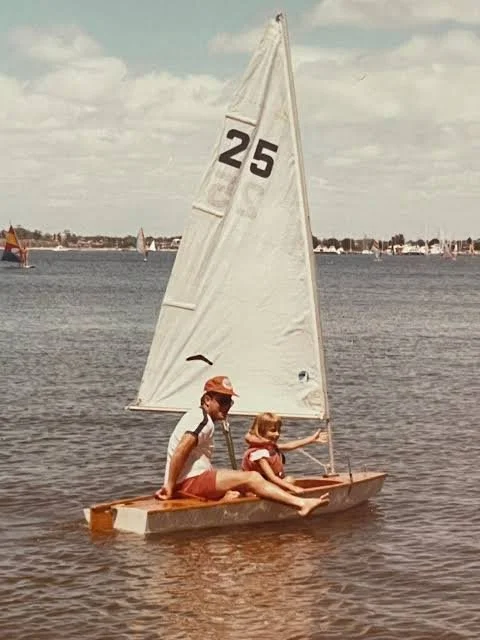
A Mudlark (but not the boat for free!)
Shane O'Neill writes to tell us…
I have a timber (plywood over frame, not stitch and glue) Mudlark dinghy that I would be happy to donate if it is of any use to your organisation. My children sailed it for a bit when they were small enough, but it needs a new home. The boat comes with spars, foils and 2 sails.
I'm happy to transport it to you if it's of interest- let me know.
And in case you were wondering….The Mudlark is the most junior of the eleven dinghy classes sailed at the Perth Dinghy Sailing Club. It is a small training craft constructed from plywood or fibreglass and its compact size (2.1 metre/20kg) allows easy handling and transportation on a car roof rack or in the rear of a station wagon or ute. The single sail is easy to manage and children as young as seven can learn to sail this wonderful boat. The Mudlark was designed locally in 1960 and has stood the test of time proving that this yacht is a perfect introduction to the sport of sailing. Many of todays' yachtsmen and women who begun their sailing careers in the Mudlark have competed and found success on the National and World stage. Most importanly, the Mudlark has introduced many of us to our sailing lifestyle and has provided a lifetime passion for the sport which has spanned many generations.
If you are interested contact us and we’ll pass it on..
Couple describe relief at rescue after whale destroys their yacht
A couple have spoken of their relief to be rescued after a sperm whale collided with their yacht.
Jeremy and Jemma Cooper told the BBC that they were 500 nautical miles off the coast of New Zealand when the boat, the Tai Tam, lurched port side and they knew they'd "been hit by something" - only to see a pod of six sperm whales swimming behind the boat. (Click Image to Play)
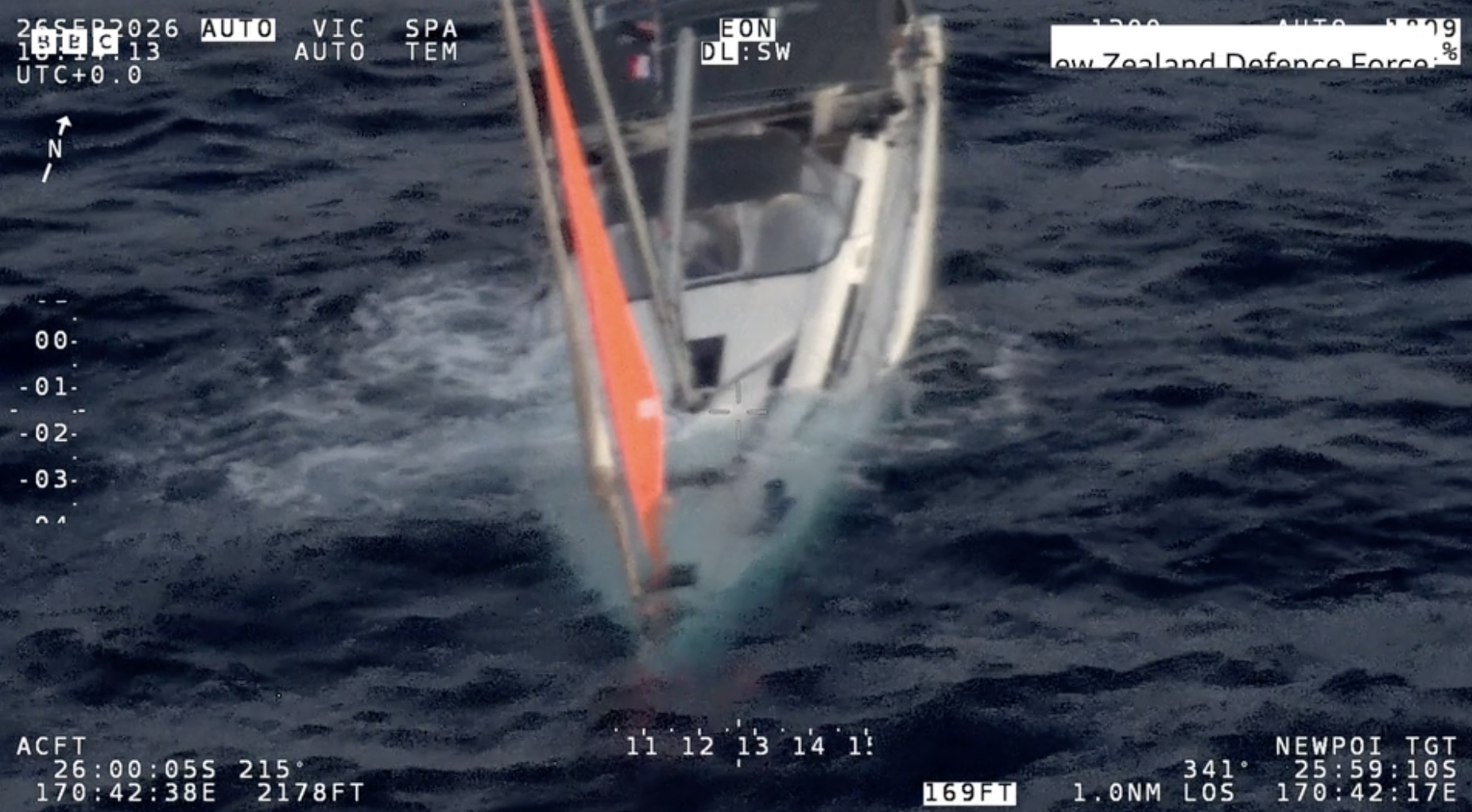
As their boat took on water and eventually sank, the Coopers and two other sailors aboard the vessel evacuated to a life raft. Seventeen hours later they were rescued by a container ship.
The couple told the BBC that, despite their ordeal, they would be out on the water again soon.
Pakistan's boatbuilders keep ancient tradition afloat
By Ayse Tasci-Steinebach in DW
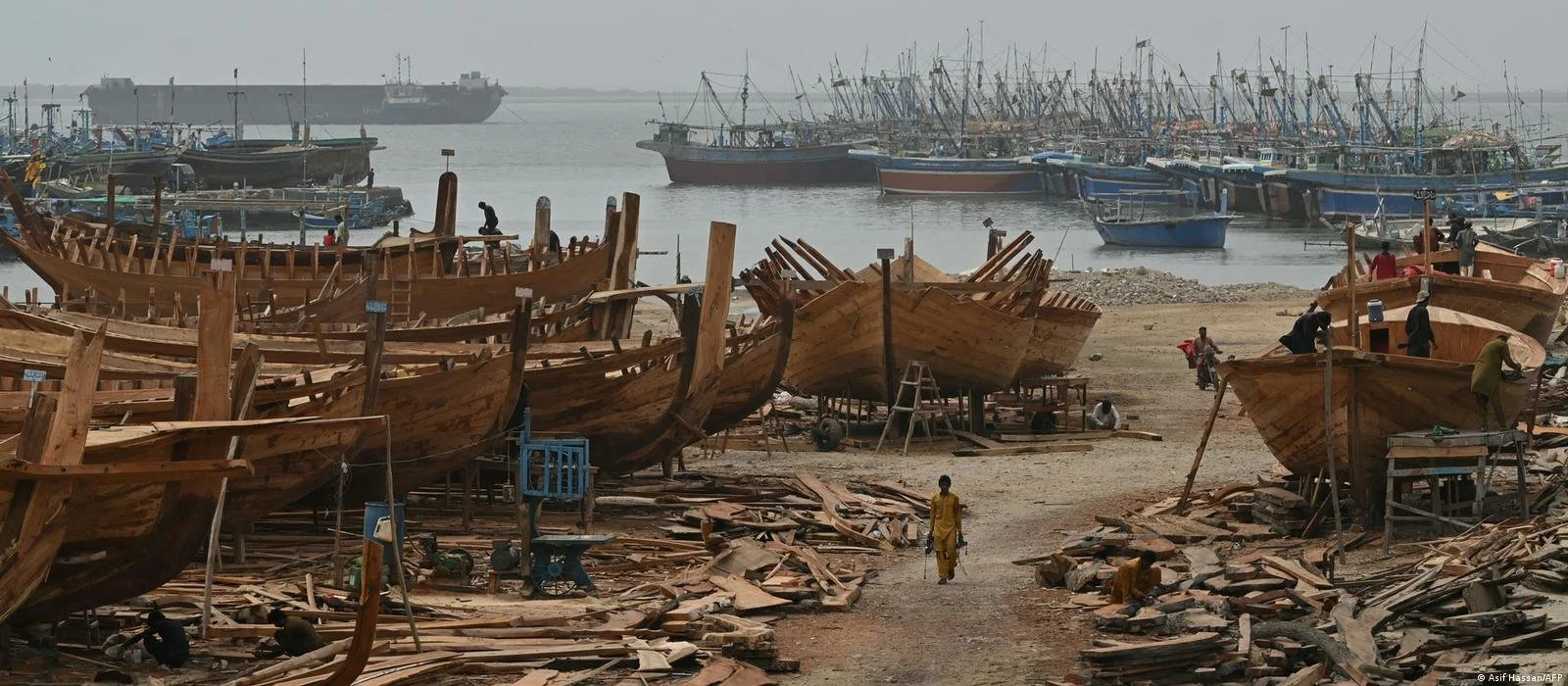
Image: Asif Hassan
In Karachi's coastal neighborhood of Ibrahim Hyderi, young boatbuilders are keeping a centuries-old tradition alive - building fishing boats by hand, plank by plank.
In Ibrahim Hyderi, a centuries-old coastal settlement on the outskirts of Pakistan's economic hub Karachi, fishing boats are still built by hand. Although it looks out of sync with the bustle of the megacity, the boatbuilders are preserving a tradition deeply intertwined with the port city's history.
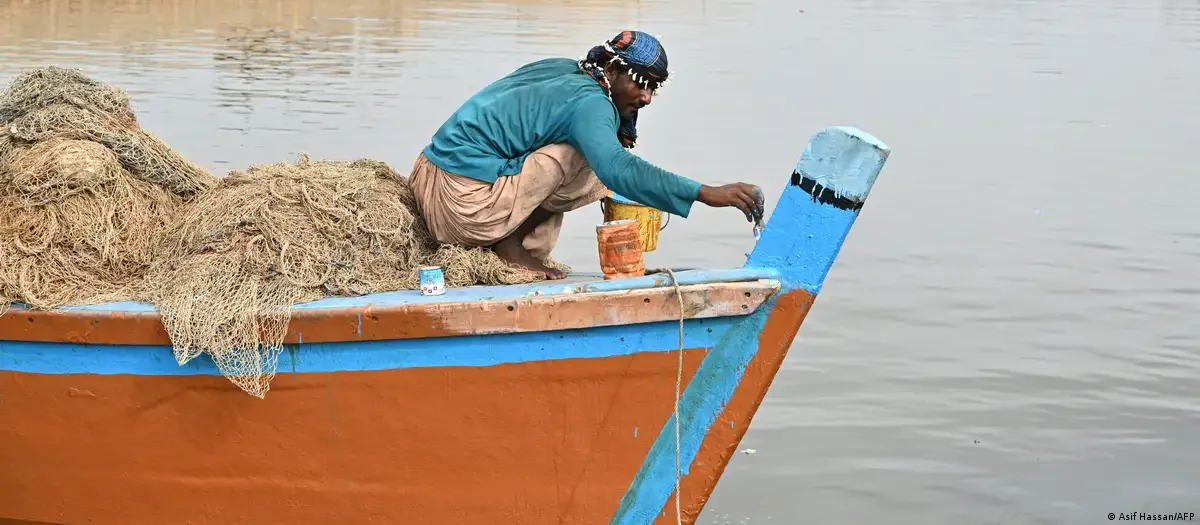
Image: Asif Hassan