
Living with Animal Aggression
This story has a personal angle, as one day soon we are going to decide to start to bring MATILDA home, a trip that will involve passing through the very same waters in which Orca attacks are becoming more prevalent
Humans have always been in conflict with other animals over food sources and territorial rights. Take for example the constant attacks on villages in Africa and India by herds of elephants. This is a clear case of competition for a food source, once habitat has been removed. The increased numbers of shark attacks in Australia probably has a slightly different root cause with longer-term trends such warming waters, shark population recovery, and more people using the ocean all being factors on influencing the very slight increase. And in North America grizzly and black Bear attacks are becoming more common especially in residential areas where violent encounters are increasing as they discover the ease with which a food can be found in rubbish bins.
But what makes the current Orca situation off the coast of Spain so different is the complete lack of factually based evidence for a motive
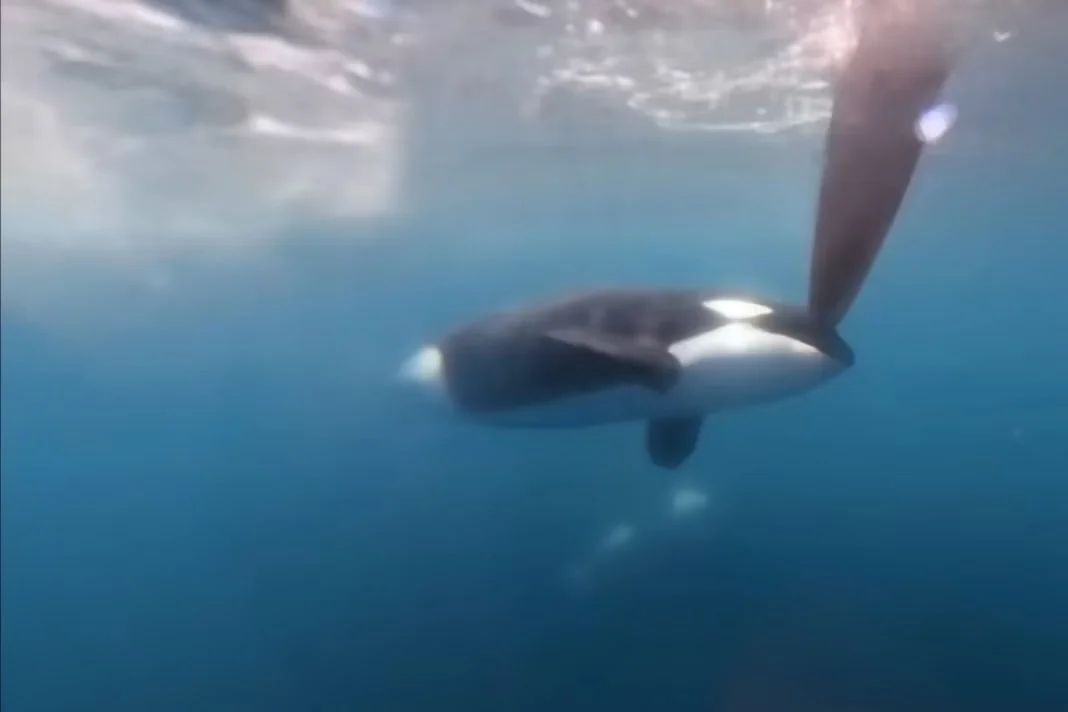
Since 2020, a subpopulation of orcas has been ramming boats and attacking their rudders in the waters off the Iberian Peninsula, and the behaviour shows no sign of stopping as 2026 continues. It began in May 2020 in the Strait of Gibraltar, when orcas started targeting slow-moving, medium-sized sailboats. Other incidents followed that July, both in the Strait and off the Portuguese coast, and by mid-August interactions were being observed further north off Galicia in Spain. While some Iberian orcas had interacted with fishing vessels for decades, sailboats and other smaller pleasure and professional boats only became targets starting in May 2020, marking a genuinely new behavioural pattern rather than an extension of existing habits.
Between 2020 and 2023 there were roughly 500 recorded orca-vessel interactions, more than 250 boats sustained damage, and four vessels sank outright, and more recent tallies put the total even higher — the research group GTOA has recorded nearly 700 interactions since the phenomenon began. Even so, only about 20 percent of vessels involved in physical interactions have suffered severe damage, and no human has ever been injured in any of these encounters. Year-by-year figures compiled by the Cruising Association show real fluctuation rather than a steady climb: 45 interactions from July–November 2020, rising to 145 in 2021, dipping slightly to 138 in 2022, then climbing again to 186 in 2023. Encounters typically last around 25 minutes on average, though some have stretched to two hours, and roughly 80 percent occur during daylight hours, with about 20 percent happening at night.
Last month brought one of the most concentrated bursts of activity yet. The series began on Monday 21 July off the Asturian coast, where the sailing boats "Maranig" and "Celia" needed help from Spain's sea rescue service after run-ins with the animals. The following day, matters escalated sharply near the northwestern tip of Spain. A pod rammed and sank an unnamed yacht roughly 1.3 miles from Estaca de Bares after destroying its rudder and leaving it taking on water; two crew members were pulled from the sea by a nearby private motorboat, and the Spanish Coastguard dispatched a helicopter to check for pollution from the wreck. That sinking wasn't an isolated event — the Coastguard logged four separate orca encounters in that same stretch of water on the same day. Spanish maritime rescue confirmed two further incidents near Estaca de Bares that same day, with the sailing boat "Chicharro" suffering rudder damage but still managing to reach the port of Viveiro under its own power, while the "Kador" reported a collision about 3.3 nautical miles offshore that rammed its hull without causing serious damage, also making it safely to Viveiro. A boat called "Glatisant" was hit the next day, Wednesday 22 July, rounding out a cluster of attacks concentrated on a narrow stretch of coastline between Asturias and Cape Ortegal within just a few days.
The animals behind these incidents are a small, well-documented clique rather than the wider population. Just three orcas were interacting with boats initially, growing to 14 by 2021 and 15 by 2022 — a number that has held steady since, with all of them individually identified by their dorsal fins. That sub-group comes out of a wider Iberian population that researchers put at fewer than 40 individuals in one recent estimate, classified as Critically Endangered by the IUCN due to low numbers of breeding adults and heavy dependence on Atlantic Bluefin Tuna as prey. The orcas involved tend to target a fairly specific range of vessels — averaging around 12 meters in length, mostly sailboats — and focus on the rudder in particular, sometimes breaking it off entirely and sometimes swinging the whole vessel around.
Scientists remain genuinely divided on why this is happening. Some lean toward play rather than aggression — National Geographic-cited experts describe the behavior as more likely play than calculated revenge, and one Portuguese boat operator even filmed orcas that appeared to be showing off a tuna they'd caught to human onlookers. Others favor a trauma-and-teaching explanation: marine biologist Alfredo López Fernandez has argued the behavior may trace back to a single orca, nicknamed White Gladis, who experienced a "critical moment of agony" involving a boat and then began deliberately making contact with vessels, a habit other researchers dispute — Andrew Trites of the University of British Columbia has pushed back, arguing that ramming a boat makes as little sense for an orca as running full speed into a brick wall would for a person. Still others point to boredom: some scientists suggest the young orcas responsible are essentially bored teenagers with more free time now that bluefin tuna, their preferred prey, have rebounded, meaning they spend less time hunting. Academic work has also flagged the risk of things getting worse — a 2024 University of Washington paper warned that although no human fatalities have occurred so far, the increasing frequency and intensity of interactions suggest such an outcome may only be a matter of time.
Beyond last month's Galician cluster, the geographic pattern has been shifting. A 2026-published academic review of the 2025 season found increased activity specifically off southern and central Portugal, beyond the earlier focus on Spain's Atlantic coast. One especially serious incident last October saw the Portuguese Air Force scramble a military helicopter to rescue a family of five, including three children aged eight, ten and twelve, after orcas rammed their 36-foot yacht roughly 55 miles southeast of Peniche; a fishing boat responded to the SOS before the family was airlifted to hospital, with no injuries.
The scale of the problem has spurred a formal monitoring infrastructure that sailors now rely on. The Atlantic Orca Working Group (GTOA) was formed in August 2020 specifically to study and monitor these interactions, and has become the primary scientific body coordinating data collection across Spain, Portugal, and Morocco. GTOA publishes a regularly updated "traffic light" map showing the probability of encountering orcas at different points along the Iberian coast, and the GT Orcas app shows recent sightings and interactions in real time. The Cruising Association recommends skippers research current hotspots before any Iberian passage and report encounters both via the app and in more detailed follow-up reports — advice that last month's cluster of incidents near Estaca de Bares only underscores.
Most importantly, I don’t want to see these beautiful creatures harmed. Once, from a yacht, I saw a pod close to the rocks while rounding Tasman Island into Storm Bay. Even from a distance they filled me with awe. (Luckily they hadn’t been talking to their northern cousins). But I’m also a sailor who thinks that it it’s important for humans to keep voyaging in small craft… and within reason do so safely. I’m certainly not a marine biologist, but given that both Humans and Cetaceans are considered to be two of the most intelligent species on the planet, then finding a way to co-exist must be within the realms of possibility?