
Flotsam & Jetsam 17.07.26
Back When Dumping a Little Petroleum Was a Righteous Small-Craft Storm Tactic
By Peter Swanson from his Loose Cannon Substack
While writing a story recently about a harbor plagued by petroleum spills, I was reminded of being a kid and reading about mariners using oil to help survive offshore storms. It was the 1960s, so the magazine might have been in Yachtingbefore it transmogrified into the sop to millionaires it is today.
“Storm oil,” they called it, and it could be deployed upwind in a container attached, for example, to a sea anchor, where it slowly released its contents. Like nutmeg on butternut squash, storm oil was effective even when applied in tiny amounts.
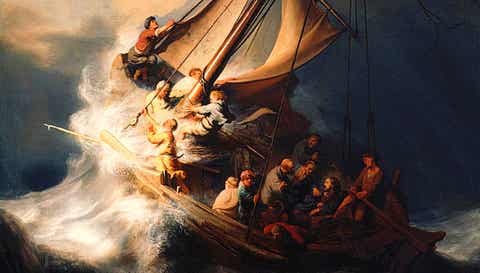
And, as the photo above was meant to suggest, the technique has been used since biblical times. As recreational boating was trending upward in the last century, boating magazines were launched to serve the new market, and one service to readers was to pass along wisdom of professional mariners.
Larry and the 1900 Logan Gaff Cutter, PETREL- Episode 17
Larry Eastwood details the construction process for the boat's butterfly skylight and foredeck hatches. The restoration work involves intricate woodwork, including creating ridge beams with integrated drainage, fitting custom hardware, and preparing the framework for glass installation to ensure the cabin remains protected from the elements.
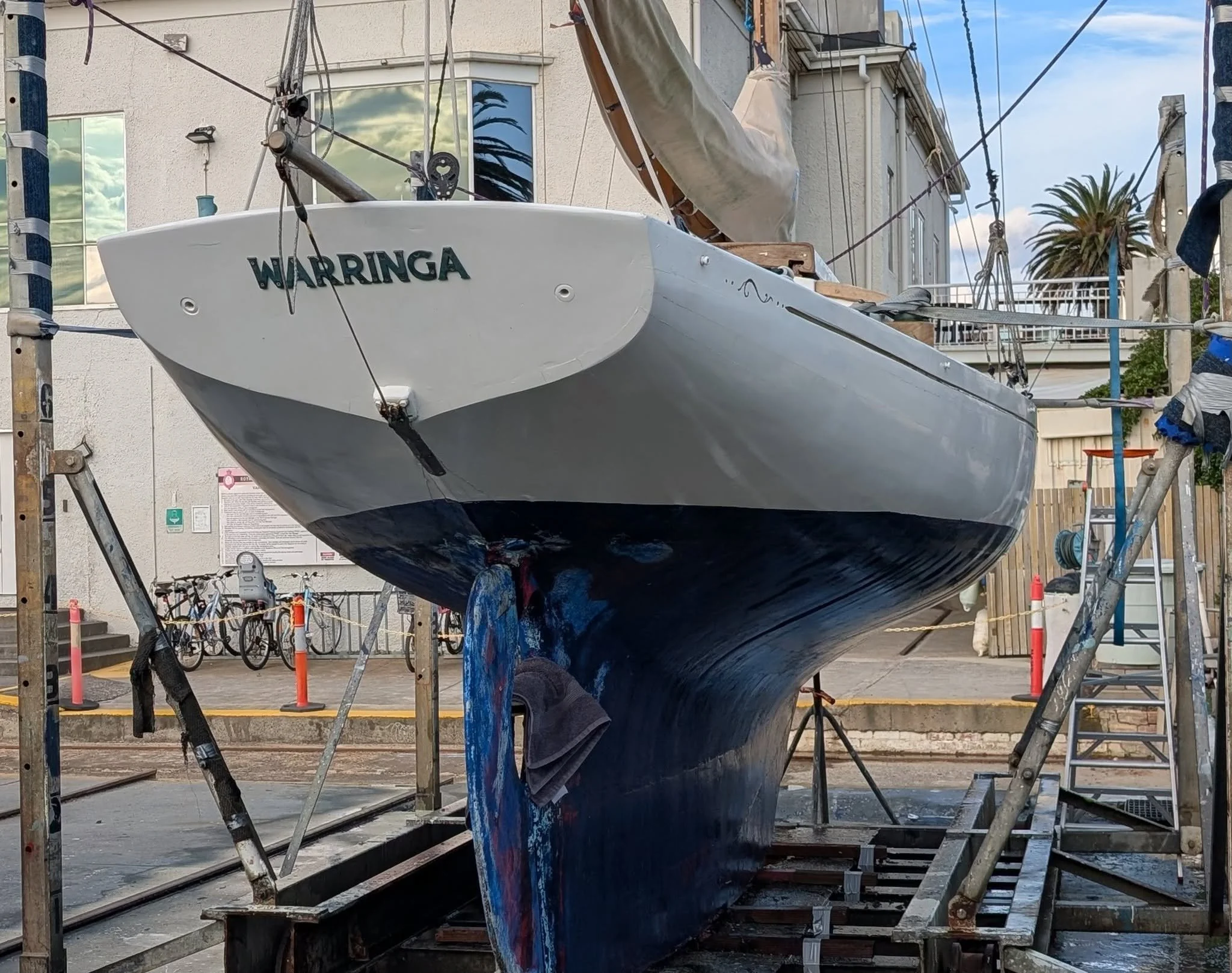
Jimmy Watson’s WARRINGA could be yours for around $12500
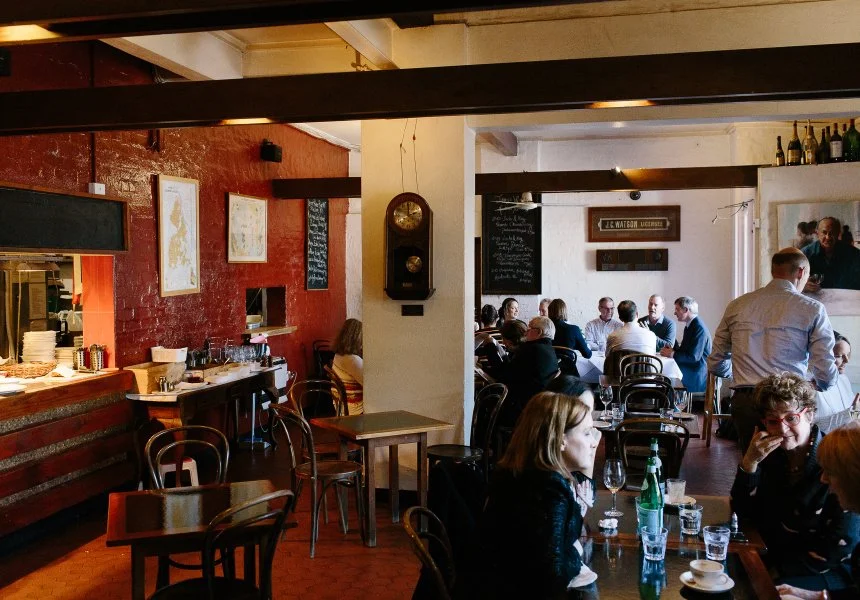
Any history of the Melbourne food and wine scene must include a chapter in Jimmy Watson. He was the son of a Tasmanian coal miner and an Italian immigrant, and the Carlton bar and restaurant he founded has played a huge role in influencing the way Australians approach eating and drinking, especially how they think about wine. He opened his first premises on Lygon Street in Carlton in 1935 after moving from nearby Fitzroy, at a time when most Australians drank beer, women rarely drank in public, and the standard wine offerings were cheap fortified port and sweet sherry. Jimmy set out to change that entirely, championing table wine with food, a very European idea that was seen as distinctly uncommon in Australia at the time — From around 1940 he began travelling to vineyards in north-east Victoria, buying large hogshead barrels of dry whites, young reds, and fortified wines directly from producers, which he'd bring back to Carlton to be sampled and bottled for sale. By 1960 the business had outgrown its space, and Jimmy commissioned a redesign of the three adjoining shops into a proper wine bar and bistro. The job landed with a young architect on the rise — Robin Boyd, delegated the task by his more famous colleague Roy Grounds — and the renovation was completed in 1963 a year after he died at the age of 58 The wine bar lives on… a genuine Carlton institution, still run by his descendants on the same stretch of Lygon Street nearly ninety years later.
What’s all this got to do with boats?
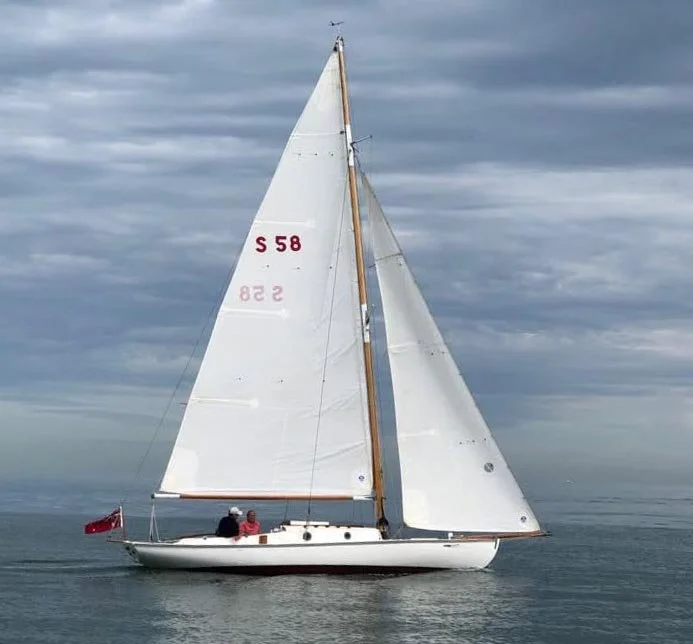
Well apart from food and wine Jimmy also loved a sail and so he got Jack Savage to design and him a boat that became WARRINGA, which is now for sale on the Gippsland lakes. But its not so long ago that she raced with Melbourne’s Classic Yacht Fleet on Port Phillip with some degree of success.
Her vital statistics are LOA 28’ LWL 23’ Beam 5’6” Draft 4’3” 2 and you can get more infomation by contacting her current custodian Tim Boucaut
Race to Alaska Wrap up
For three weeks, you’ve opened these emails to discover what went sideways while you were pretending to work. The answers usually involved salt-crusted electronics, dismastings, bad decisions near nameless islands, or a couple of human beings moving at 1.6 knots for the amount of time it takes to grow a turnip from seed. You watched entangled tracker lines careen into the bushes, while several thousand people leaned so close to their phone screens they could smell the bilge.
Now it’s over.
The tracker is static and the screens are cold. It started with seventy boats crammed into Point Hudson at dawn – they had no business sharing a zip code, let alone a starting line. Team Triple Threat dragged their trimaran across the shore-side gravel against a current that clearly wanted them elsewhere, clearing the start line with under thirty seconds to spare. Then came a Proving Ground so flat and hot that the kayakers embarrassed other competitors with thousands of dollars of high-tech rigging, leading into a Victoria Le Mans start that looked less like a race and more like an organized evacuation dodging floatplanes and baffled water taxis on their way out.
Then, for most of the next 700 miles, the wind blew almost exclusively from where everyone wanted to go. Sailors who brought fancy custom-stitched spinnakers got about twenty minutes of use out of them before packing them away wet to breed mildew. Stiff northerlies and insistent currents turned tracker lines into dropped-fettuccine-art, and Grenville Channel formed a giant, spiteful wind tunnel where Team Chilliwilliwa tacked fifteen times a mile just to stay in the same conversation with the shore.
Australian Three Peaks Race
And while one wonderful crazy adventure ends for this year another is being reborn on this side of the world….
On 1 July, the Royal Yacht Club of Tasmania hosted the official media launch for the return of the Australian Three Peaks Race, which will be held over Easter 2027 under the stewardship of RYCT. The event brought together representatives from the Australian Three Peaks Race Committee, Club stakeholders, supporters, media and members to celebrate the revival of one of Australia's most iconic endurance sporting events.
The launch provided an opportunity to outline the vision for the event's return, acknowledge the significant work undertaken by the volunteer committee, and reaffirm the Club's commitment to preserving and growing the unique legacy of the race.
The Australian Three Peaks Race is one of the world's most challenging endurance events, combining offshore yacht racing with mountain running in a format unique to Tasmania. The return of the race represents an exciting addition to the Club's event portfolio and strengthens RYCT's position as a leader in delivering iconic sailing and adventure events.
The strong attendance and positive media interest generated by the launch highlighted the enthusiasm for the event's return. Planning is now well underway, with further announcements and competitor information to be released in the lead-up to Easter 2027.
Is Oliver Widger a Modern-Day Donald Crowhurst?
From the Keeldragger Sailing Substack Page
Sometime this fall, a 30-year-old former tire company manager from Oregon is planning to sail alone, nonstop, around the world. He taught himself to sail from YouTube videos roughly two years ago. His longest offshore passage to date is a single month-long run from Oregon to Hawaii, during which his self-steering windvane failed. And he's doing all of it in front of an audience of millions.
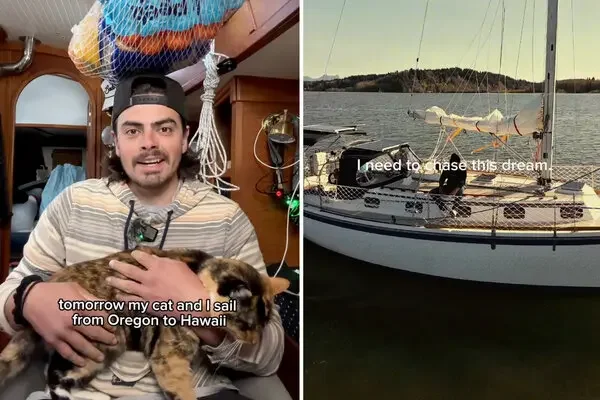
If that setup sounds familiar, it’s because we’ve seen this story before — in 1968, with a British businessman named Donald Crowhurst.
The comparison is too obvious not to make. But it’s worth making carefully, because the parallels are real, the differences are just as real, and the biggest difference of all is the reason this story is worth following in real time instead of waiting to read about it after the fact.
Eight Bells - Bruce Roberts
Over the years when I have been flicking through the pages of Trade-a-Boat or in more recent years the big on line brokerage aggregators, if I saw the name Bruce Roberts I flicked a little faster. But in retrospect perhaps I was being a little unfair because the Australian-born yacht designer’s stock-plan probably put more amateur builders on the water than perhaps any other naval architect of his generation, has died.
Roberts died in Spain on 5th July at the age of 91. He was born in Victoria, Australia, and trained through the Westlawn Institute of Marine Technology in the US before cutting his teeth running a boatyard in Brisbane, where he picked up practical boatbuilding skills alongside his formal design education. In 1968 (some accounts say 1966) he founded Bruce Roberts International Yacht Design, initially in partnership with Andrew Slorach, before opening an American design office in 1972 and expanding into a global operation with offices in the US, Holland, Ireland, and Spain.
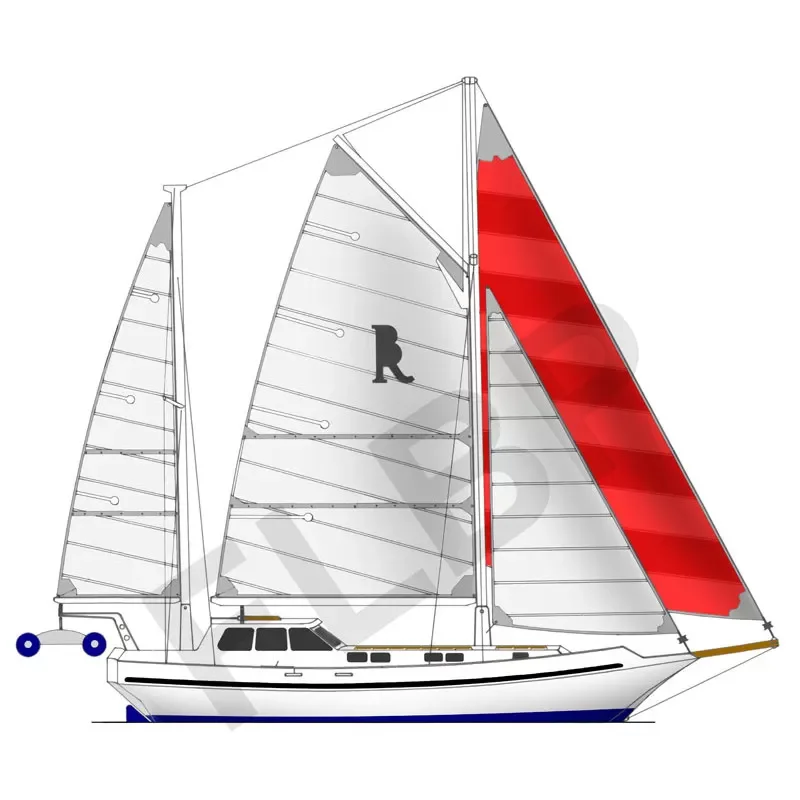
Over a career spanning more than five decades, Roberts became, by his own company's count, responsible for over 30,000 boats built worldwide — sail and power, in steel, aluminum, fiberglass, and wood epoxy. He was best known for democratising boat design: detailed, heavily annotated stock plans sold directly to home builders, most famously his "Spray" series of double-ended, heavy-displacement cruisers inspired by Joshua Slocum's famous vessel.
That accessibility is really the heart of his legacy — and also the source of the fair criticism his designs drew. Roberts' boats were, by the consensus of sailors and surveyors who dealt with them over the years, generally slow, heavy, and often only as good as the amateur who welded or laid them up; quality varied enormously, and some hulls suffered from drainage and corrosion problems traced to the kits themselves rather than poor building. They were not race boats, and few would call them cutting-edge naval architecture. But that was arguably beside the point. What Roberts actually delivered was a genuinely low barrier to entry: a backyard builder with modest skills and a modest budget could, plans in hand, put together a seaworthy long-distance cruiser instead of just dreaming about one. Whatever their design shortcomings, thousands of these boats did cross oceans, and thousands of people who otherwise would never have owned a blue-water yacht got to go cruising because of him.
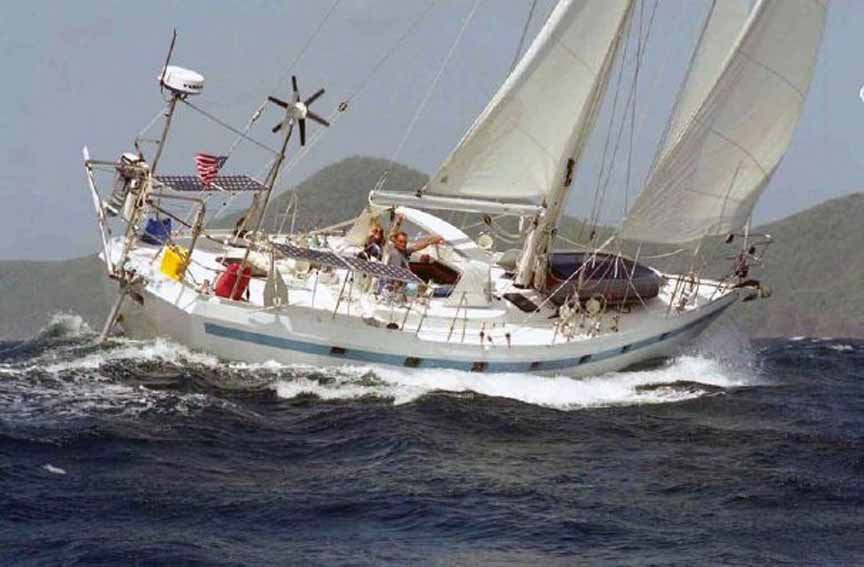
He's survived by that fleet — an enormous, scattered flotilla of amateur-built steel and fiberglass hulls still turning up on marina listings and cruising forums around the world.
Has technology reduced sailing’s spirit of adventure?
By Nikki Henderson in Yachting World.

Now that we’ve entered a new chapter in sailing with the proliferation of affordable, high speed internet at sea, is sailing still actually an adventure? Or has the age of ocean exploring come to an end?
A few weeks ago, I was chatting with a friend – a lifelong sailor from Brittany who ran a yacht delivery company in the era before GPS – about ‘the good old days’.
“It was much more fun back then,” he lamented, his eyes twinkling with nostalgia.
“But surely more stressful too?” I pressed him. “Entering somewhere like St Malo without GPS must have been pretty difficult, right?”
But I’d lost him to his dream-state, lusting over the romance of dead reckoning and the freedom of losing sight of shore.